 AJ
AJ
⚡️ Lebanese President Joseph Aoun called for pressure on Israel to withdraw from occupied territories on Monday, stating the ongoing presence undermined the legitimacy of the state, positioning the army as the cornerstone of stability for resident returns, while declaring that a return to ‘civil war in Lebanon’ is not on the table.
🔹 Negotiation remains the only option left after the war failed to achieve its objectives, with state leadership warning that continued Israeli intransigence actively thwarted the United States and Lebanese goals of restoring sovereignty, while clarifying that ‘suspending the claims’ is strictly negotiated to the negotiation period.

⚡️ Lebanese sources revealed on Monday that a visit is expected from CENTCOM commander Admiral Brad Cooper to Beirut this week, confirming that CENTCOM will present its report on the experimental areas to officials, noting that there is ‘no date set for Israel’s withdrawal’ in those areas.
⚡️ Israeli Ambassador to the United States Yechiel Leiter announced the next round of talks between Israel and Lebanon will occur July 15-16 in Rome at the ambassadorial level, while President Aoun will meet US President Donald Trump on July 21.
⚡️ President Aoun’s upcoming White House visit aims to complete the bilateral framework agreement and implementation mechanisms, coinciding with preparations for an American-sponsored military workshop in southern Lebanon.
🔹 The presidential talks with Trump will review Lebanese developments from the 1949 Armistice Agreement to the present day, focussing heavily on ongoing Israeli attacks, and their distinct repercussions on the people in southern Lebanon.
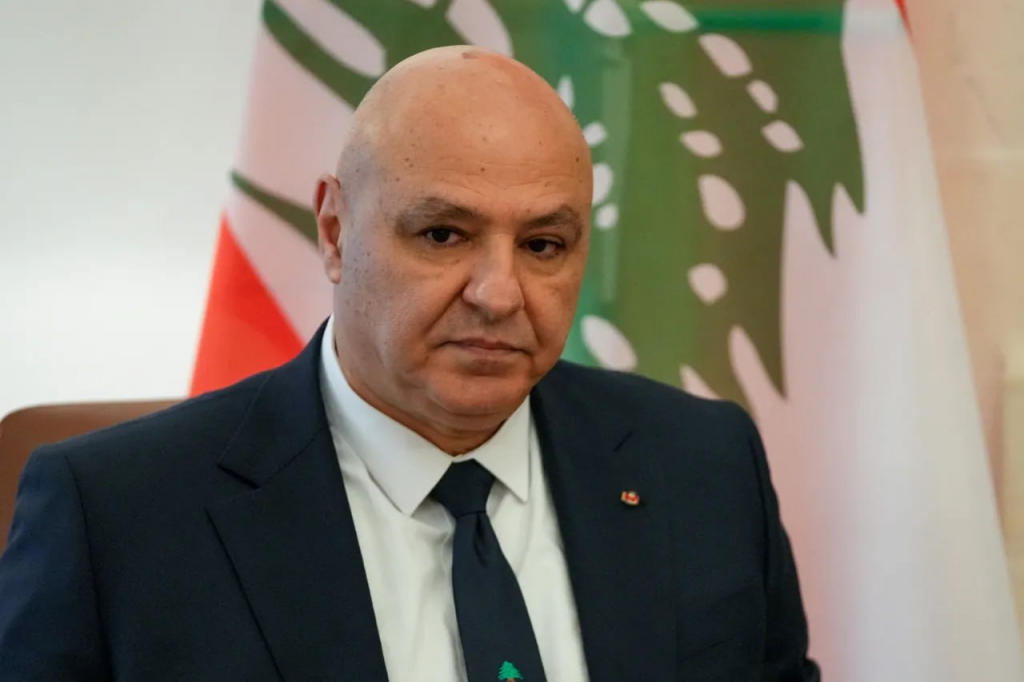
⚡️ However, President Aoun rejected meeting Israeli Prime Minister Benjamin Netanyahu while attacks continued in southern Lebanon, noting his 17-minute call with President Trump as ‘positive,’ and stated the framework agreement isn’t ideal, but reflected the ground realities and power balances.
🔹 President Aoun confirmed military communications advanced toward setting the first pilot area in Zawtar, Nabatieh, revealing that the proposal to place Ali Taher Hill under Lebanese control was accepted by Netanyahu, but rejected by Hezbollah.
🔹 The previous mechanism committee had been replaced with a tripartite format called ‘MCG4L’ under US General Joseph Clearfield operating from Awkar without direct coordination between Lebanese and Israeli officers.
⚡️ President Aoun denied reports about the creation of a new army brigade or subjecting officers to American vetting, confirming no objection to joining the ‘Geneva Cell’ ceasefire monitoring format alongside the United States, Iran, Qatar, and Pakistan.
🔹 Aoun stated his aligned relationship with Nabih Berri on the priority of rebuilding the south and facilitating resident returns, while defending diplomatic relations with Iran regarding Minister Michel Mansour’s participation in funeral arrangements.
⚡️ The United States are strictly insisting on establishing an army deployment mechanism in the initial pilot zones before July 11, according to a Lebanese ministerial source, who said the officials didn’t rule out expanding the pilot zones geographically to incorporate other southern towns in later stages.
🔹 According to media reports, the framework agreement is designed to create a conducive environment for direct negotiations under US support, establishing political cover to isolate local opposition, while sending a clear message to Tehran that the ‘separation of the Iranian and Lebanese tracks is actively underway,’ ultimately placing the responsibility on Iran and Hezbollah to comply.
⚡️ However, in another report, this time from Al-Jamahiriya was told by a responsible Lebanese security source that there was no indication of an Israeli withdrawal from the pilot zones specified in the June 26 framework agreement, saying that instead, Israel had deliberately increased airstrikes, drone hits, and house burnings.
🔹 The security source stated that the Israeli army’s claims regarding hundreds of Hezbollah members remaining in the south of the Litani River was a cover and justification to slow down or completely avoid pulling out of the designated areas.
⚡️ Intensive Lebanese-American consultations to revive the stalled pact yielded US assurances that Israel had no escalation plans unless attacked, alongside confirmations that the agreement remained under direct American supervision with serious implementation expected within the coming days.
⚡️ At 10am local time, the IDF issued official warnings directly threatening several Christian towns in the Marjayoun district of southern Lebanon, including Ibl al-Saqi, Qlaiaa, Burj al-Muluk, and Deir Mimas.
🔹 Military messages demanded residents to prevent the return of ‘strangers’ to their villages, holding locals fully responsible for any security incidents and stating that civilian safety couldn’t be guaranteed if the directives were ignored.
🔹 Security agencies urged Lebanese political authorities to treat the warning seriously, stating that the threats that follow local rejections of Netanyahu’s claims that Christian villages requested to be annexed by Israel, and could serve as a prelude to military attacks aimed at further depopulating the south.
Sources: Al-Arabiya, Al-Hadath, Lebanese President’s Office, Ynet, An-Nahar, Asharq Al-Awsat, Al-Jamahiriya, Al-Diyar