 AJ
AJ
The third week of the ceasefire has dawned and there are a lot of consequences around the world because of blockades by both Iran and the USA preventing virtually any movement out of the Strait of Hormuz, while companies refuse to either negotiate or pay the tolls to Iran to allow movement, nor do the country’s that own them, meaning many vessels and sailors are left stranded waiting for the blockades to be lifted, which is only part of the news from the US/Israeli War ceasefire recap Day 21 (April 29).
General News:

OPEC+ are expected to agree a small oil output quota hike of around 188,000 barrels per day on Sunday, despite the loss of a significant portion of its exports due to the US-Israeli war with Iran and the exit of the United Arab Emirates from the group, Reuters reported, stating that the decision indicated OPEC+ was adopting a ‘business as usual’ approach, while noting that the group’s exports had been severely impacted during the war, which began on February 28, and the resulting closure fo the Strait of Hormuz, meaning Crude oil output from all of the OPEC+ members averaged just over 35 million barrels per day in March, down from just under 43 million barrels per day in February.
France:
Jordan Bardella said that the Iranian war wasn’t a French war, but they were heavily suffering the consequences: “I have always been extremely cautious about this recurring temptation from Trump to want to orchestrate external interventions,” according to The Clash Report, adding that President Trump’s policy was now completely erratic and no one was able to predict what he wants: “By definition, when you change your position very regularly, when you are not consistent, you no longer provide certainty, especially as the leader of an Allied country,” he said: “And obviously, the situation harms the reliability and credibility of the United States on the international stage.”
Germany:
Foreign Minister Johann Wadephul said that Chancellor Friedrich Merz meant the remark that Iran was ‘humiliating’ the United States was a warning to Tehran, rather than a comment abusing the US or President Trump, in an attempt to defend the German first minister.
Chancellor Merz said later that the personal relationship between himself and President Trump was unchanged despite recent comments: “I had doubts from the very beginning about what started with the Iran war, and that’s why I put it out there,” he said: “We in Germany and in Europe are suffering considerably from the consequences – for example, from the closure of the Strait of Hormuz – this has direct effects on our energy supply and massive effects on our economic performance, and therefore, I am pushing for this conflict to be resolved.”
Finance Minister Lars Klingbell said: “Today we have to realise that Trump’s irresponsible Iran war and the worldwide energy price shock that was triggered by it have halved our growth – this is not our war, but we feel its impact massively – people feel it at the gas pump, companies face higher energy prices, the interruption of supply chains…”
Great Britain:
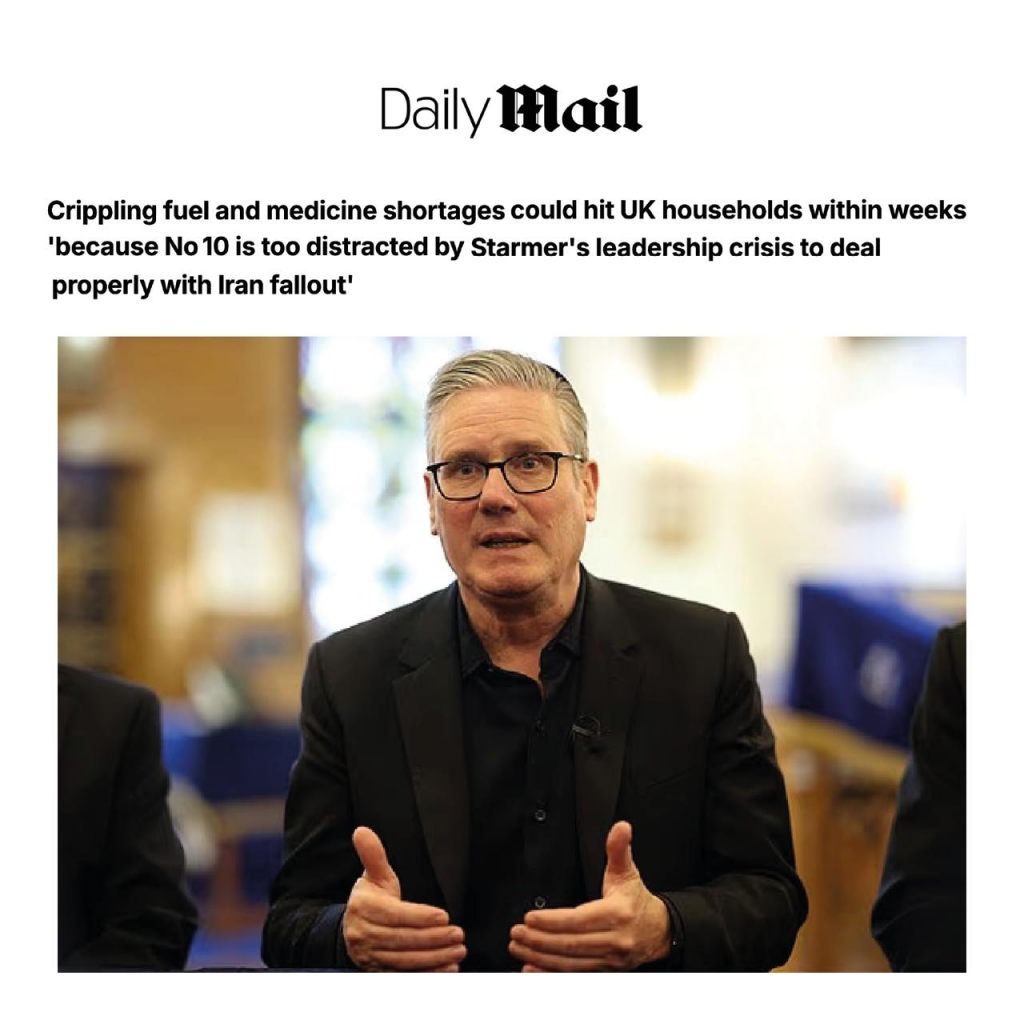
According to the Daily Mail, severe fuel and medicine shortages could hit English households within weeks, because experts warned that if the conflict continued, shortages could occur ranging from simple painkillers to vital medicines such as cancer treatments.
India:
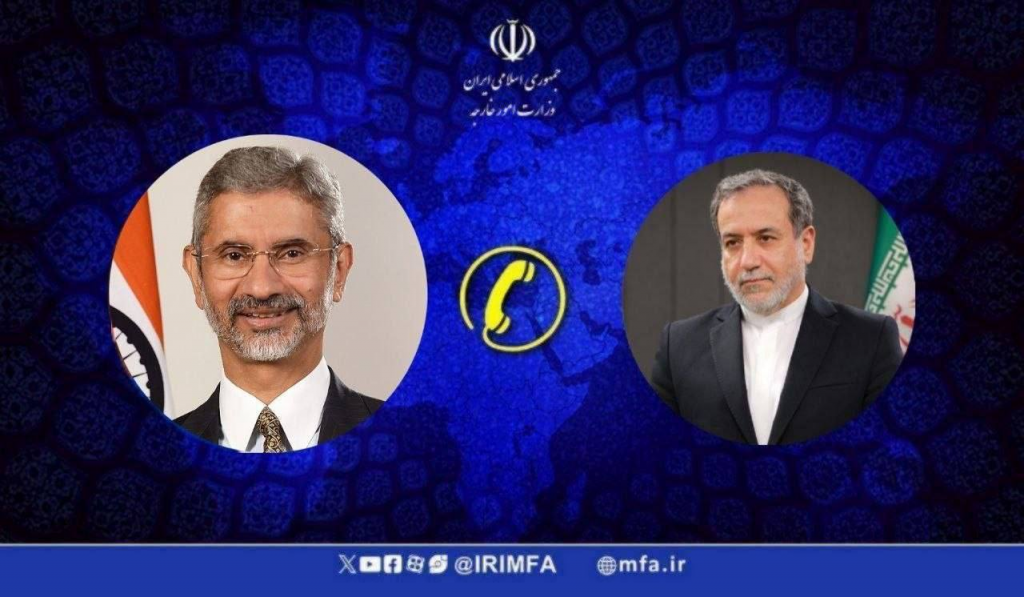
Foreign Minister of India Subrahmanyam Jaishankar spoke with FM Araghchi in a phone call on Wednesday, where they discussed the latest developments related to the ceasefire, bilateral relations, regional and international developments, as well as the possible safe transit of Indian cargo through the Strait of Hormuz.
Iran:
Six Iranian crew members from the Iranian-flagged container ship Touska have been released after the vessel was seized by the United States, while 22 others remain on the ship, and Iranian efforts are ongoing to secure their release, Tasnim News reported.
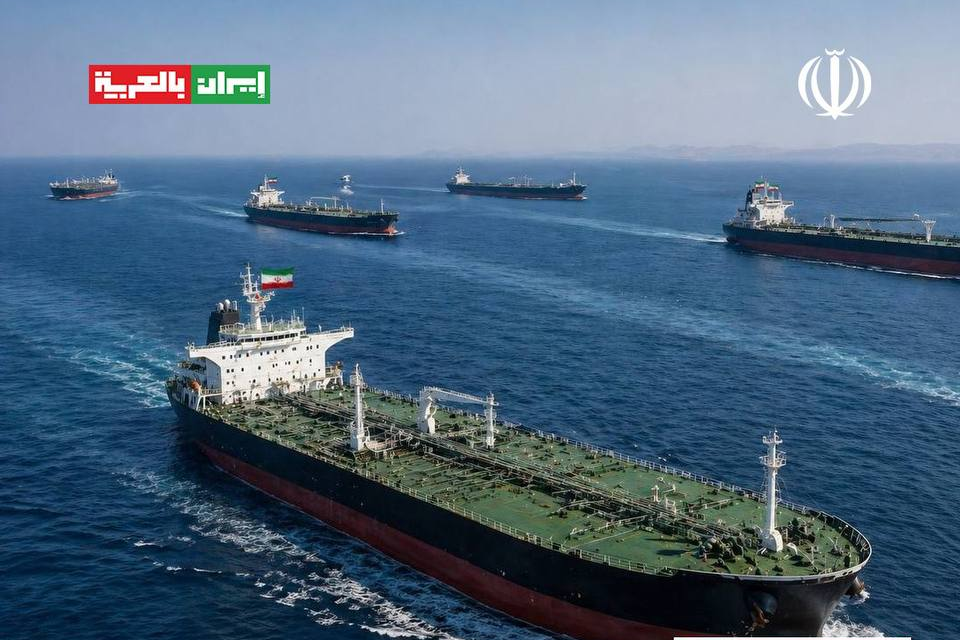
At least 17 ships crossed the Straight between Tuesday to Wednesday and into the US-imposed blockade line, with reports from IraninArabic suggesting that the ship included 6 oil tankers and 11 cargo ships.
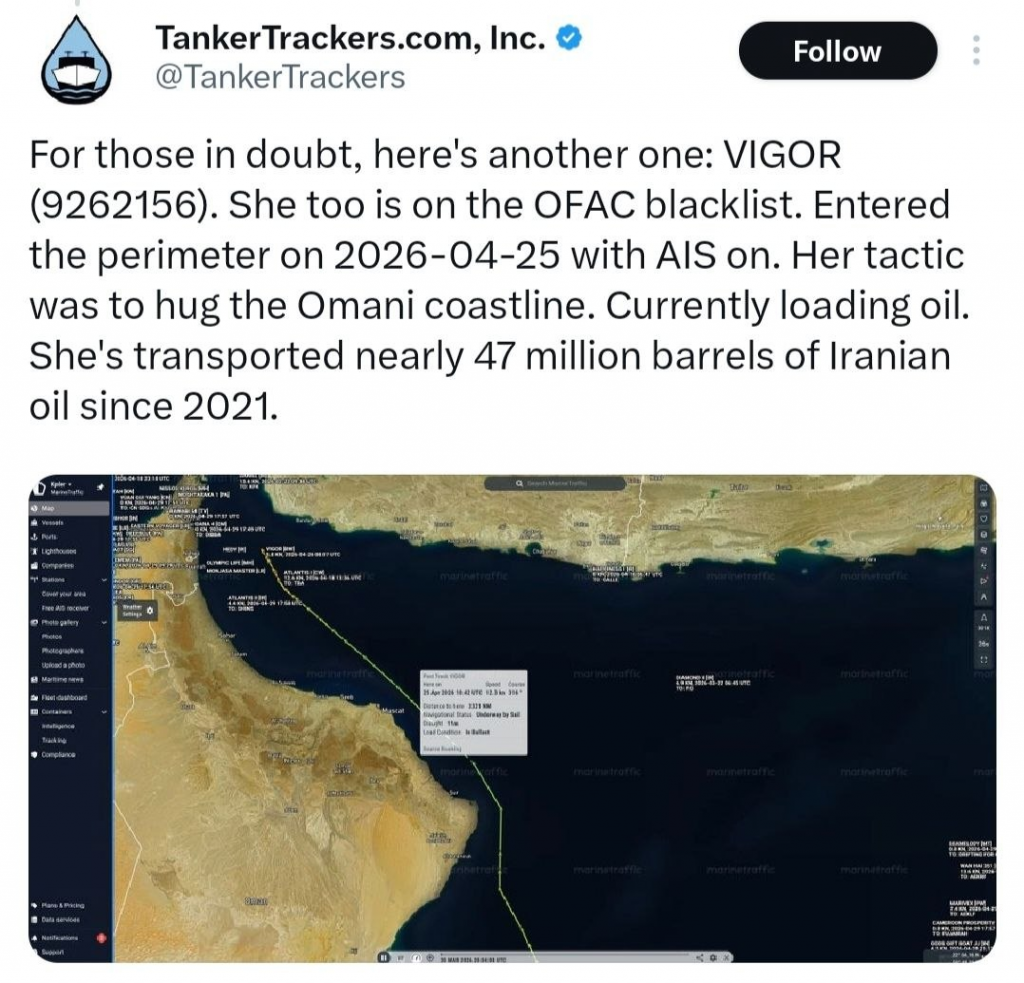
Tasnim News reported that an Iranian oil tanker passed through the Straight of Hormuz, citing Tanker Trackers, claiming that the tanker named Vigor, which is under US sanctions, passed through the Strait with its positioning system turned on during April 25 and entered Iranian waters, and was last seen loading Iranian oil, while the US claims to have blockaded the Strait – Iran claims the ship has also transported 47 million barrels of Iranian oil so far.
Passenger flights have resumed at six major airports in Iran, including Mehrabad, Mashhad, Shiraz, Zahedan, Gorgan and Urmia, while the airports of Kerman, Yazd and Birjand will also be phased into the country’s flight network in the coming days, reported Fars News Agency, advising that despite some limitations, air navigation services at several airports in the west and south are being prepared, and added that accorded to the announced plan, with the gradual removal of limitations, the airports of Isfahan, Kermanshah, Abaden, Ahvaz, Rasht, Ilam, and Ardabil will become operational in the next steps undertaken.
Iran’s UN Mission said on X that all of Iran’s enriched uranium has always been under full IAEA supervision, with no report of even one gram being diverted, claiming the US exploited the NPT Review Conference to portray Iran’s enriched uranium as a danger in order to divert attentions from its own violations and those of its allies in nuclear disarmament, adding that the UN Security Council, the IEAE Director-General and the Board of Governors not only failed to condemn the illegal acts, but most regrettably took actions that reversed the roles of victim and aggressor.
The Mission said in that the stability in the region can only be achieved through a permanent cessation of aggression against Iran, adding that Iran was not a party to the United Nations Convention on the Law of the Sea and is not bound by its provisions, IraninArabic reported.
Al Jazeera reported that the war had weakened the NPT and showed that not having nuclear weapons made countries vulnerable, saying that the pretext of ending the nuclear program undermine trust in the Nuclear Non-Proliferation Treaty, adding that countries now receive the message that not having nuclear weapons can make them vulnerable, and such attacks increase the motivation of countries to pursue a nuclear deterrence.
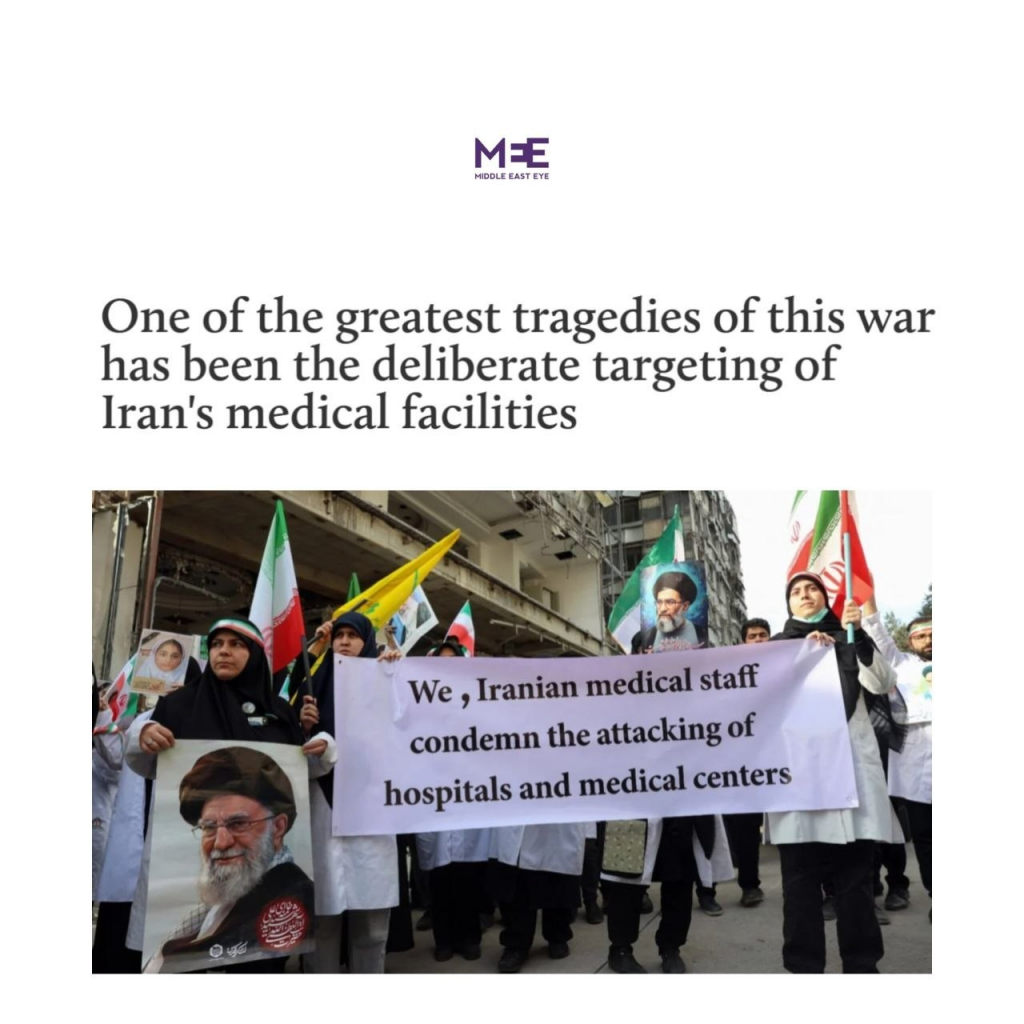
One of the greatest tragedies of this war was the deliberate targeting of medical centres in Iran, reported the Middle East Eye, stating that the targeting of institutions such as the Pasteur Institute and Tofigh Daru Complex had weakened the capacity to produce vaccines and medicines, and its consequences for public health could be widespread and long-term.
Iran’s terrorist Hakouk Movement deputy Mukaddas Al-Khufaji said that they had called for the swift implementation of death sentences against convicted terrorists, at a time when some Sunni deputies are calling for a halt to their execution, Sabereen news reported, adding that the parliamentary demand to halt death sentences against terrorists are suspicious and they would not accept their passage.
Russia’s Presidential Aide Yuri Ushakov reported that President Putin welcomed US President Trump’s extension of the ceasefire with Iran, during a call that was held earlier on Wednesday: “Vladimir Putin believes that Trump’s decision to extend the ceasefire against Iran is correct, which should give a chance for negotiations and generally help stabilise the situation,” he said, adding: “At the same time, the Russian President drew attention to the inevitable, extremely harmful consequences not only for Iran and its neighbours, but also for the entire international community.”
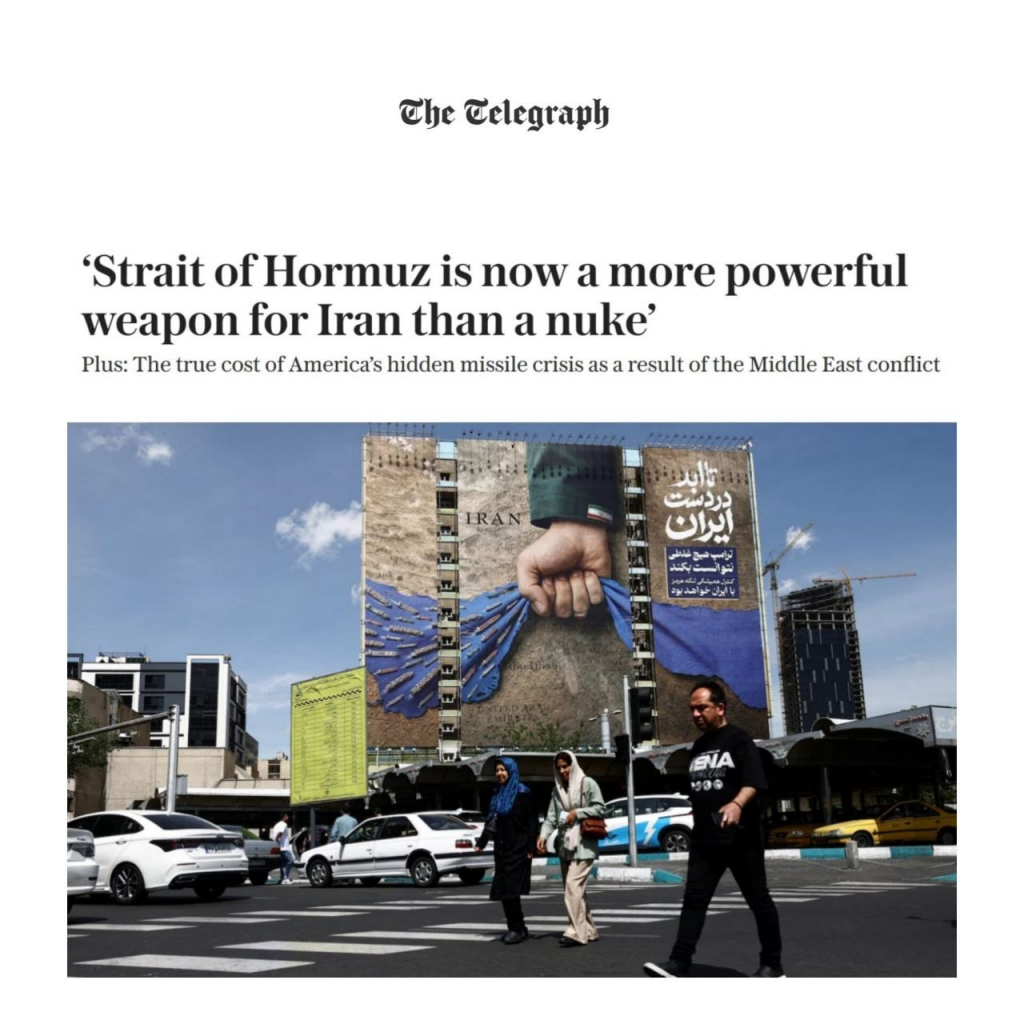
The Telegraph wrote that The Strait of Hormuz was now a weapon for Iran deadlier than a nuclear bomb, noting that the control over the Strait of Hormuz is an offensive and active weapon that Iran was currently using to paralyze the Western economy, adding that Iran had proven that by controlling the energy prices, it can bring the US to its knees without crossing the nuclear red line.
CNN reported that recent shipping data showed that most ships that crossed the Strait of Hormuz in recent days had taken a route that appeared to have been designated by Iran, noting that about half of the ships were loaded in Iranian ports, defying the US blockades.
Fox News suggested that Iranian-linked oil tankers had been spoofing their ID’s as they exited the Strait of Hormuz and past the US Naval blockade by spoofing and disguising themselves as Iraqi ships.
Bloomberg suggested that Tehran could be bringing older vessels back into service as pressure mounted on its oil export system after noting that an ageing Iranian supertanker named the Nasha had appeared near Kharg Island after years off shipping trackers, claiming the vessel’s reappearance could indicate Iran was seeking additional floating storage or transport capacity as sanctions and maritime restrictions allegedly tighten, adding that Kharg Island remained Iran’s main oil export terminal, and growing congestion there had increased scrutiny of how Tehran could be managing crude shipments.
Spokesperson for the Iranian Parliamentary Energy Committee said that closing the Bab al-Mandab Strait could post serious challenges for the West, and Iran’s cards at this stage were much stronger, more valuable and influential than the American options, IraninArabic reported.
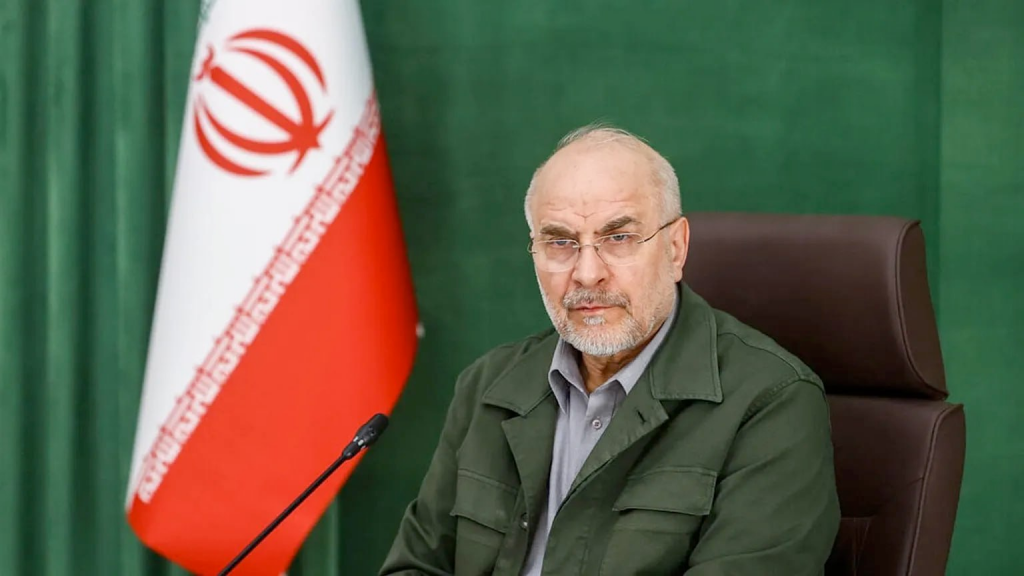
Parliamentary Speaker Mohammad Bagher Ghalibaf detailed the US and Israel’s successive failed pots in a statement: “From the assassination of the Supreme Leader and military commanders in an attempt to end military operations in three days, to destroying Iran’s offensive systems, psychological warfare, activating separatists in the west, and a coup attempt on Chaharshanbeh Suri – all defeated by the Iranian people and security forces,” he said,
Ghalibaf said that a ground attack test in Isfahan also became another Tabas, but now, the US has entered a new phase, with a naval blockade and economic pressure to create internal divisions: “The only way to counter the enemy’s plot is to maintain unity,” he said: “Officials are all united under the Supreme Leader’s orders, and the Iranian nation will achieve a brilliant victory.”
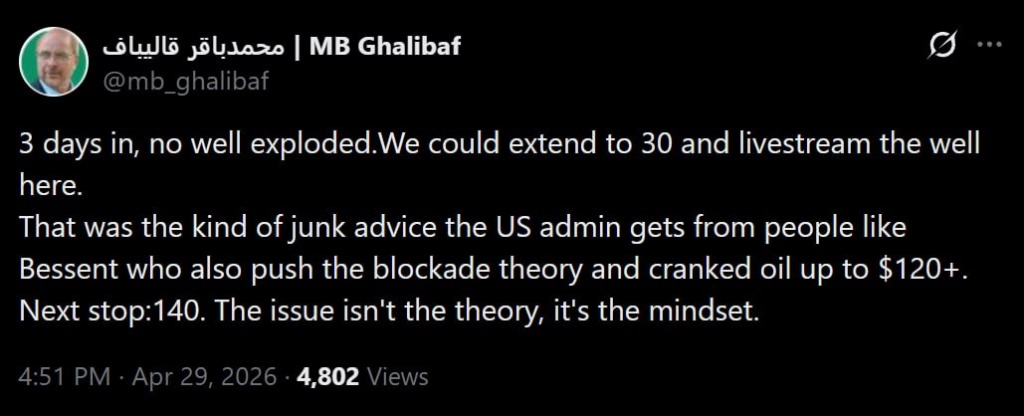
The Speaker mocked Trump late on Tuesday evening using the X social platform, along with the US Treasury Secretary Scott Bessent, saying oil will reach $140 after breaking $120 a barrel earlier in the day.
Spokesperson for the Security and Foreign Policy Committee in the Iranian Parliament, Ibrahim Rezaei, said that Iran will not compromise on the nuclear issue, stating that Iran had many surprises in store, ‘and the enemy will not be able to achieve through negotiations what it failed to achieve on the battlefield,’ according to IraninArabic, adding: “The naval leaders of the Revolutionary Guard have informed us that even if all the armies of the world were to gather, they would not be able to break the Iranian control over the Strait of Hormuz.”
Foreign Ministry spokesman Ismail Baghaei hit back at allegations from the Secretary-General of the Gulf Cooperation Council regarding Iran’s performance in the war, stating the governments of the GCC should take steps to gain Iran’s trust, which requires compensating for the losses inflicted on the Iranian people, while adding that some member governments participated in the aggression, effectively turning themselves into partners of America and Israel in committing heinous crimes against the Iranian people.
Member of the National Security Committee of the Iranian Parliament Ali Khodriyan warned that immigrants in the UAE were advised to leave the country as soon as possible, because Iran will attack the UAE in a way that will leave no technology in the country, should attacks resume, adding that all negotiations are taking place on the orders of the Leader of the ‘Islamic Revolution’ and the Speaker of the Iranian Parliament Mohammad Bagher Ghalibaf, who is personally managing the talks.
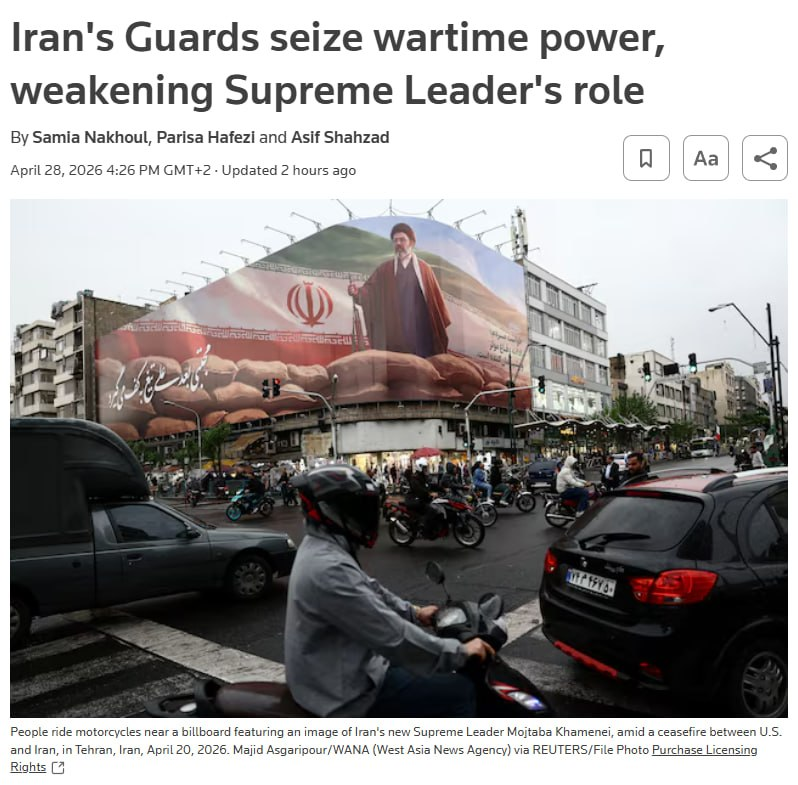
Reuters reported that Iran had shifted to a collective wartime leadership that was dominated by the IRGC and the Supreme National Security Council following the death of Ali Khamenei early in the war, claiming that while Mojtaba Khamenei remained formally at the top, some sources alleged his role is largely symbolic, legitimising decisions made by military leaders rather than directing policy himself.
On the ground, IRGC Commander-in-Chief Ahmad Vahidi had emerged as a key decision-maker and central figure in negotiations, including during the ceasefire, and analysts say the main obstacle to a deal is not internal divisions in Tehran but the gap between US proposals and what hardline IRGC figures are willing to accept, Reuters concluded.
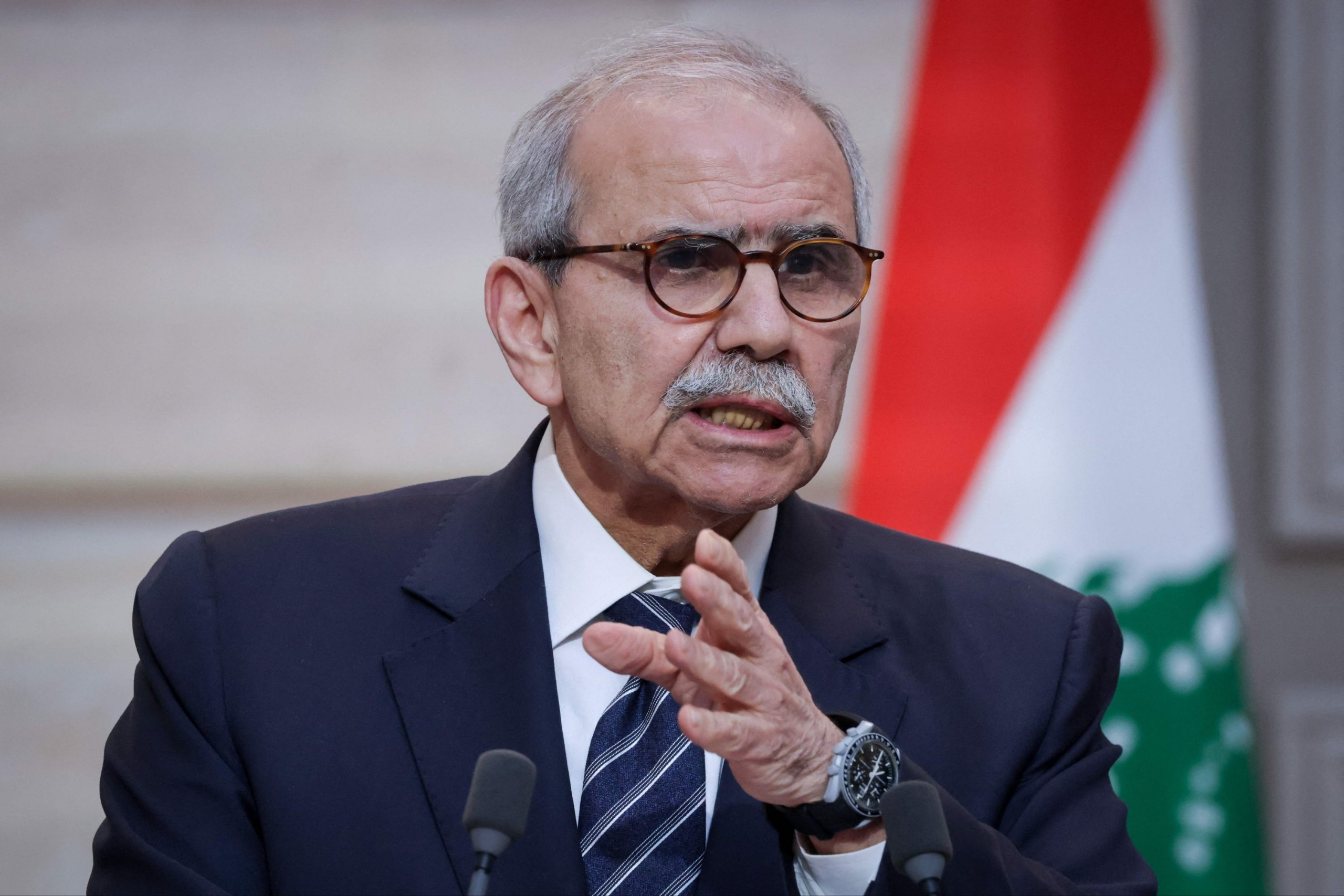
Despite the Reuters report and President Trump’s claims recently that Iran’s leadership was fractured, Justice Minister Amin Rahimi confirmed that the Supreme National Security Council ultimately makes decisions regarding war and negotiations, based on the country’s interests, with final approval from the Supreme Leader: “There is a unified and coherent approach in the country in these areas,” he stated.
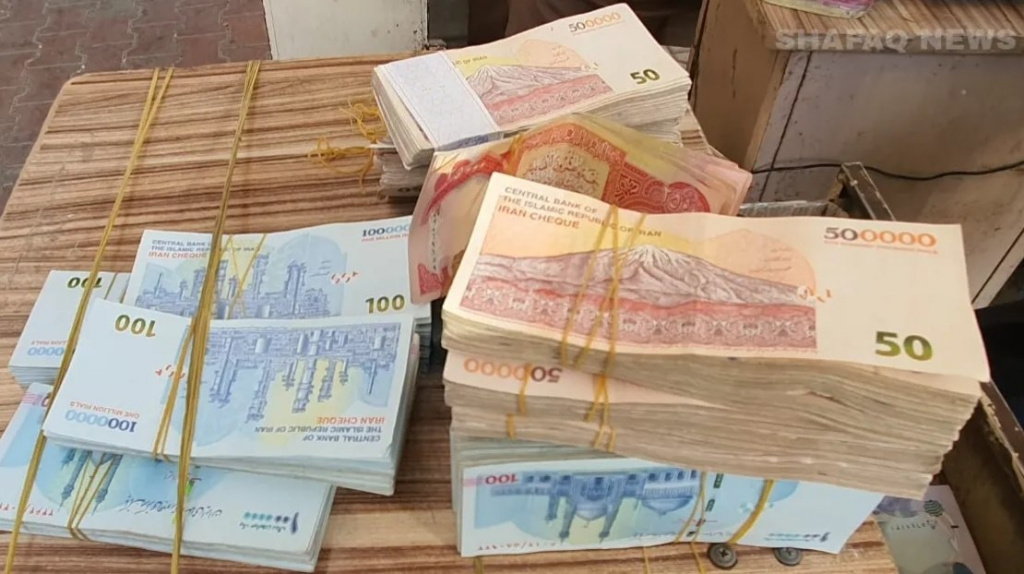
Iran’s toman has hit a new low, with the US dollar surpassing 180,000 tomans, up from 160,000 from the previous day, but it opened on Wednesday at around 165,000 tomans and continued its decline amid renewed US sanctions, the ongoing US naval blockade, and political uncertainty over the war, intensifying public concern over economic stability.
Fars News Agency claimed a source in Iran’s oil ministry confirmed oil revenues were flowing in dollars and not yuan, as previously reported, stating that crude was being sold at more than double the price of the same period in January-February (Bahman), and the return of oil currency to the central bank was taking place without any issues, and Fars added that tanker tracking data showed that exports had increased to just under 2 million barrels per day, despite the US Naval blockade, while since the blockade began, 15 million barrels of oil had been exported.
The Commander of the Iranian Navy said on Wednesday night that Iran had closed the Strait of Hormuz from the Arabian Sea side, noting that if the ‘enemy’ advances further, action would be taken against them, Al Jazeera reported, claiming that the Iranian ships were in constant movement to and from the country’s ports monitoring the maritime traffic.
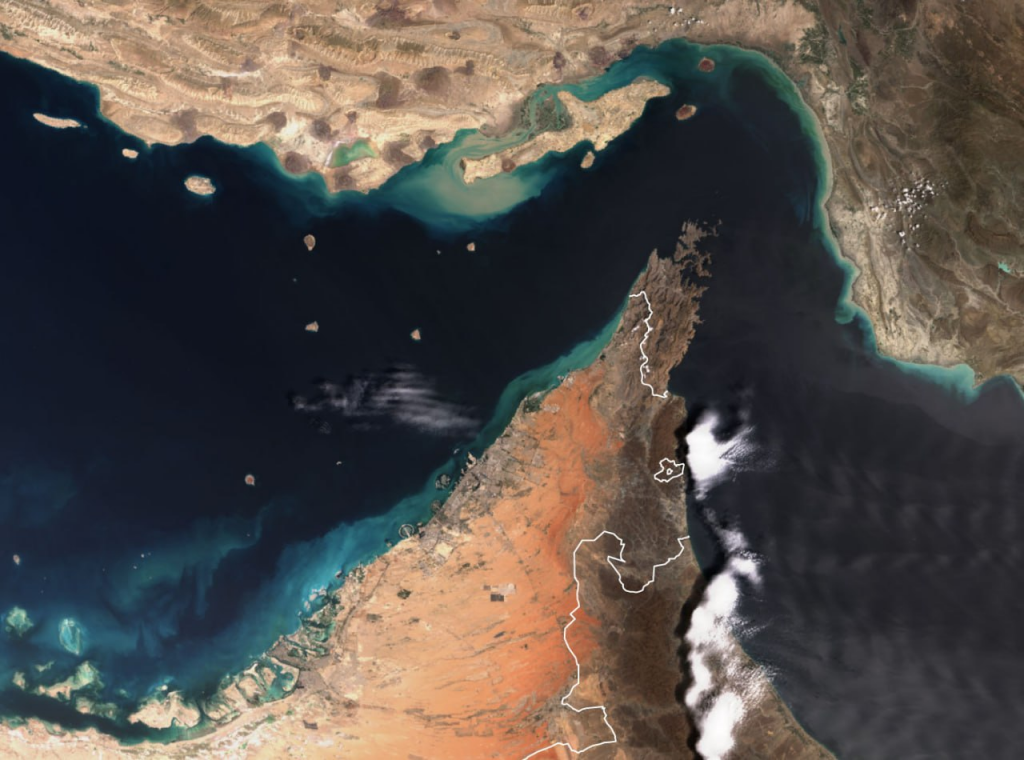
Nearly 2,000 ships and 20,000 sailors are still stranded in the Persian Gulf and unable to cross the Strait of Hormuz effectively, which remains effectively closed, Tabz Live reported.
US Central Command Chief Admiral Brad Cooper announced that US forces had redirected the 42nd commercial vessel attempting to violate the blockade on Iranian ports: “Right now there are 41 tankers with 69 million barrels of oil that the Iranian regime can’t sell – that’s an estimated $6 billion-plus from which Iran’s leadership cannot (currently) financially benefit,” he said, adding that the blockade was highly effective and the US forces remained fully committed to the total enforcement of the blockade.
Iraq:
Iraq’s Prime-Minister-Designate Ali al-Zaidi is forming a new government based on parliamentary weight, reported Shafaq News, stating that a preliminary cabinet map had emerged, with allocations shaped by election results along with proposals during the formation talks, with various groups set to manage individual projects, while al-Zaidi has formed two teams, one for a government program and one for selecting ministers, and has 30 days to secure parliamentary confidence under Article 76 of the constitution.
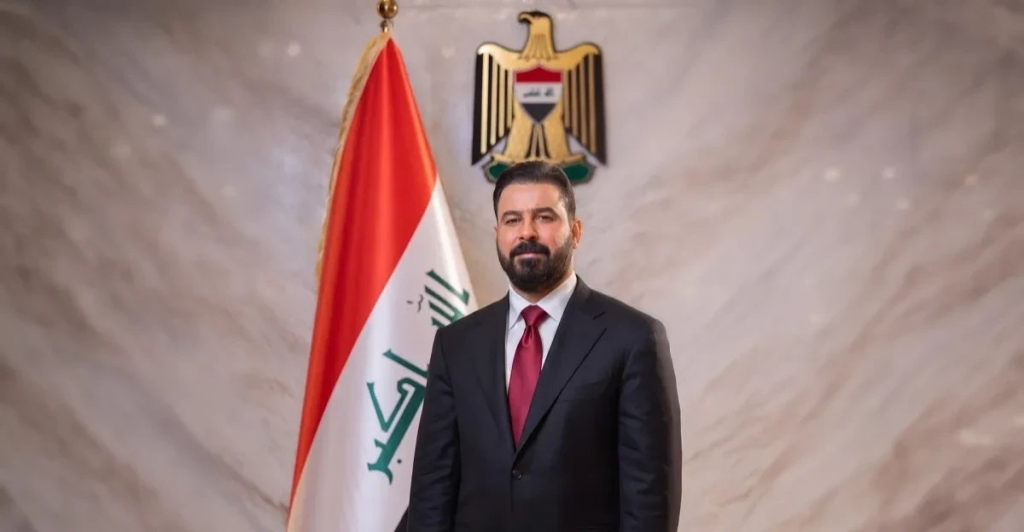
The United States welcomed the designation of Al-Zaidi as Iraq’s Prime Minister, with the US embassy in Baghdad extending its ‘best wishes’ and voicing support for Iraq’s sovereignty and ‘security free from terrorism, Shafaq News reported.
Air defences, most likely a US C-Ram system, shot down a drone inside Baghdad’s heavily fortified Green Zone late in the evening, and unconfirmed reports indicated explosions were heard close to the US embassy in the capital, Warfront Witness reported.
Israel:
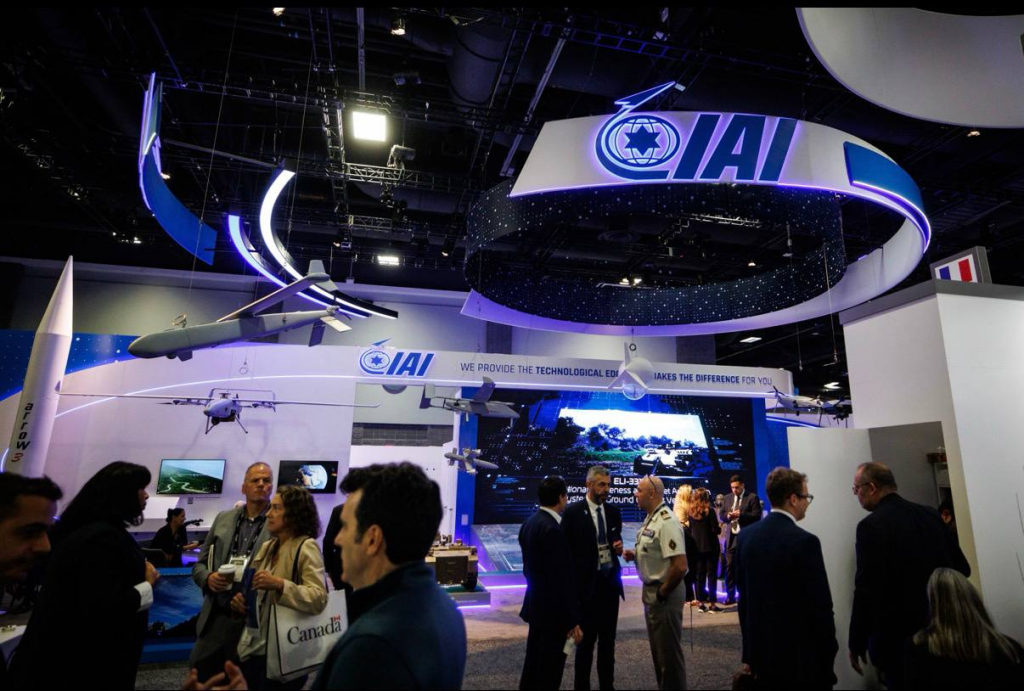
Bloomberg reported that Israel was preparing to sell stakes of up to 30% in its two largest defence companies this year to help finance rising military spending following the wars on all fronts, claiming that Israel Aerospace Industries could be listed on the Tel Aviv Stock Exchange for an estimated valuation of 100 billion shekels ($34 billion), while Rafael Advanced Defence Systems may pursue a private placement through TASE UP at an estimated 60 billion shekels, but officials added Israel may later raise divestments to no more than 49%, and the planned sales could deliver billions of shekels to Israel’s budget, which is under pressure from war spending, despite the defence being allocated 143 billion shekels in the 2026 budget, more than double pre-war levels.
Kan News reported that Prime Minister Benjamin Netanyahu had scheduled a smaller security cabinet meeting which met for hours to discuss Lebanon and Iran, but during the discussion the Israeli Prime Minister also spoke with President Trump, and according to an Israeli source, Trump wanted to continue the naval blockade, believing it would bring about Iranian ‘surrender’ and acceptance of his nuclear terms, however, if this don’t happen, the IDF and the US Central Command were preparing to renew strikes on Iran.
Japan:
Prime Minister Suga Takaichi announced that a Japanese tanker carrying around two million barrels of oil from Saudi Arabia passed through the Gulf and exited the Persian Gulf, Israeli N12 reported, adding that Takaichi expressed thanks to President Masoud Pezeshkian.
Pakistan:
Prime Minister Shehbaz Sharif described the 21-hour long negotiation session between the US and Iran on April 11 as a marathon session, reiterating that Pakistan made full efforts to help establish peace in the region, along with Field Marshal Asim Munir, Foreign Minister Ishaq Dar and other senior figures playing key roles, which helped secure an extension of the ceasefire which remains in effect, adding that before Araghchi travelled to Russia, Pakistani officials spoke with him by phone and said he expressed sincere intent regarding his meetings in Oman and indicated that, after consultations with Iran’s leadership, a positive response could come soon.
Qatar:

His Excellency the Prime Minister and Minister of Foreign Affairs held a telephone conversation with the Iraqi Prime Minister-designate, offering the support of the UAE in the election and going forward, the Qatar News Agency reported.
Saudi Arabia:
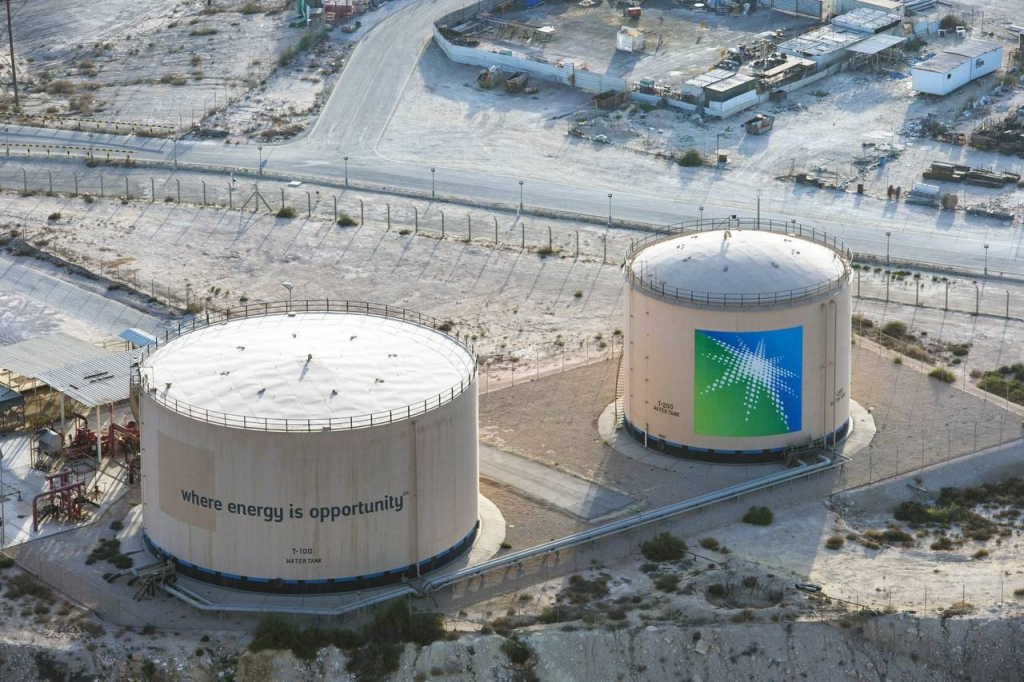
TotalEnergies have announced that the SATORP refinery has now become operational and has resumed activities as of Wednesday, however, Bloomberg reported that Saudi Aramco suspended liquefied petroleum gas deliveries through May after damage caused to its Juaymah export facility, pointing out that the disruption reportedly began after a support structure collapsed at the site in February, cutting off supplies before the wider Middle East conflict escalated, and Aramco had told some customers it had been unable to complete the necessary repairs, which meant exports may remain offline even if regional shipping routes improve.
UAE:
Following the country leaving OPEC, the UAE are reviewing its role and contributions across multilateral organisations, but is not planning any additional withdrawals at this time, an Emirati official told Reuters, adding that the move was part of a broader strategic reassessment of its memberships, rather than a wave of exits, amid tensions with Saudi Arabia and shifts following Iran.
After withdrawing from OPEC, the UAE announced it was going to start significantly increasing its production of oil in order to ‘meet the world’s requirements,’ claiming that by exiting OPEC, the United Arab Emirates was no longer bound by production quotas and could produce and export as much oil as it wished, Middle East Spectator reported.
Tasnim News shared a Semafor report which claimed that after the start of the Iran war on February 28, the situation in the Abu Dhabi real estate market, a key location for people moving to the UAE, had changed drastically, stating that the volume of transactions had dropped by 16% compared to the previous month.
USA:
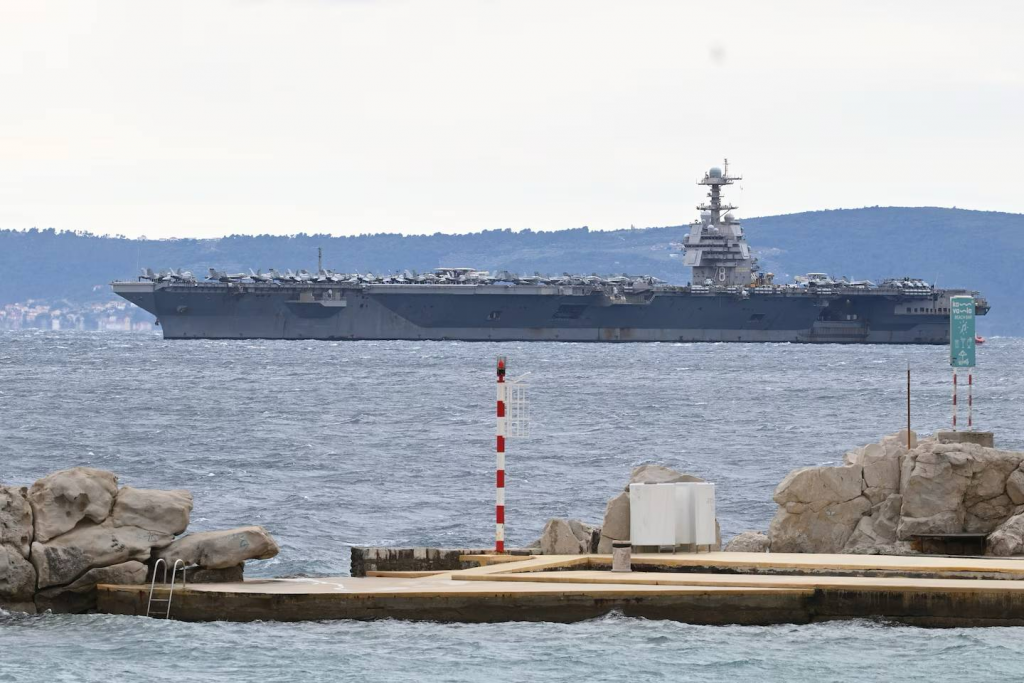
The USS Gerald R Ford is expected to depart the Middle East in the coming days after a 10-month deployment, to undergo necessary repairs, according to The Washington Post, which will leave the USS George H W Bush and the USS Abraham Lincoln operating in the Arabian Sea to enforce the blockade on vessels carrying oil or goods from Iranian ports.
A US Navy MQ-4C Triton surveillance drone was damaged mid-flight over the Persian Gulf on April 27, but managed to land safely with no images, which comes just weeks after a separate Triton crash (April 9) in the same region, stated the Clash Report, adding it was significant because the Tritons were rare, high value ($240 million) ISR assets.
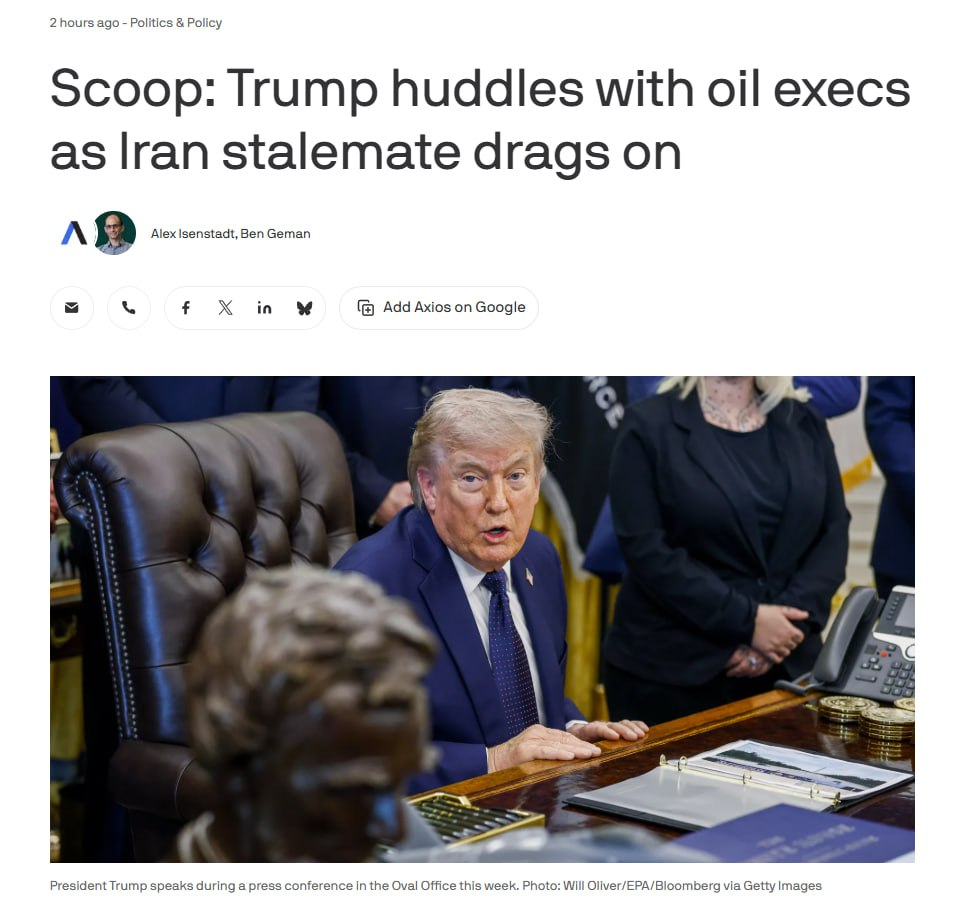
President Trump and senior aides met with oil and gas executives at the White House on Tuesday evening to discuss the energy impact of the Iran war and broader market conditions, reported Axios, claiming officials said talks covered domestic production, developments in Venezuela, oil futures, natural gas, and shipping, while attendees included Chevron CEO Mike Wirth, White House Chief of Staff Wiles, Treasury Secretary Bessent, US Special Envoy Witkoff and Jared Kushner. Israeli Kan News and Reuters reported that Trump and oil company executives discussed measures to sustain the maritime blockade of the Strait of Hormuz, for months if necessary.
Meanwhile, AJ News reported in yesterday’s recap that gas prices had spiked in the USA, citing sources, which has increased by another 70¢-90¢ in multiple states, including Michigan, Illinois, Indiana and Wisconsin, with some rising to as much as $5 per gallon in a single day, adding that the average price across the country was $4.30 per gallon, the highest since July 2022.
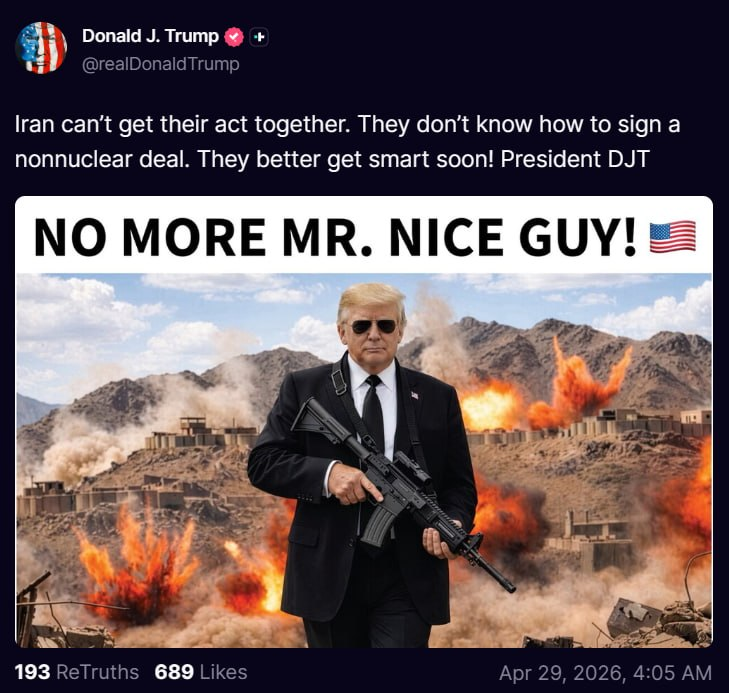
Only Melania Trump knows why President Trump was awake at 4am (Eastern Standard Time), but Trump shared a Truth Social warning ‘No More Mr Nice Guy,’ while writing: “Iran can’t get their act together, they don’t know how to sign a non-nuclear deal – they better get smart soon.”
Speaking in the Oval Office to reporters, Trump was asked what involvement Russia wanted in the Iran situation following the President’s call to President Vladimir Putin.
President Trump replied: “He told me he’d like to get involved in the enrichment if he can help us get to it, I said I’d much rather have you be involved with ending the war with Ukraine, to me, that would be more important because we’re not going to let Iran have a nuclear weapon.”
Trump later told Axios that the US was going to continue the Naval blockade on Iranian ports until there was a nuclear deal on the table, rejecting Iran’s recent proposal to reopen the Strait of Hormuz first in a like-for-like blockade lift, stating Trump saw the blockade as ‘somewhat more effective than bombing’, that they are ‘choking like a stuffed pig’, and that ‘they can’t have a nuclear weapon’, Trump added: “They want to settle, they don’t want me to keep the blockade, I don’t want to lift the blockade, because I don’t want them to have a nuclear weapon.”
However in a separate post, Axios also claimed US Central Command had prepared a plan for a short and powerful wave of strikes on Iran aimed at breaking the negotiating deadlock, which appeared to contradict Trump’s previous statement that the blockade was better than bombing.
Axios continued to warmonger later, claiming that President Trump was set to receive a briefing from the US Central Command on potential military actions against Iran, including options for a range of strikes, operations in the Strait of Hormuz, and securing nuclear material, claiming that officials told them the blockade remained the primary strategy, but military options were still under consideration.
Vice President JD Vance claimed the recent Atlantic report claiming he was repeatedly questioning Pentagon assessments of the war against Iran, telling Fox News that there is a lot in the Atlantic story that is attributed to people who described themselves as ‘Vance advisors,’ saying: “It could be a random person off the street that I’ve talked to once at the WHCA dinner – nobody close to me was speaking to that reporter – of course, I’m concerned about our readiness because that’s my job, it’s my job to make sure that we’re on top of every issue.”
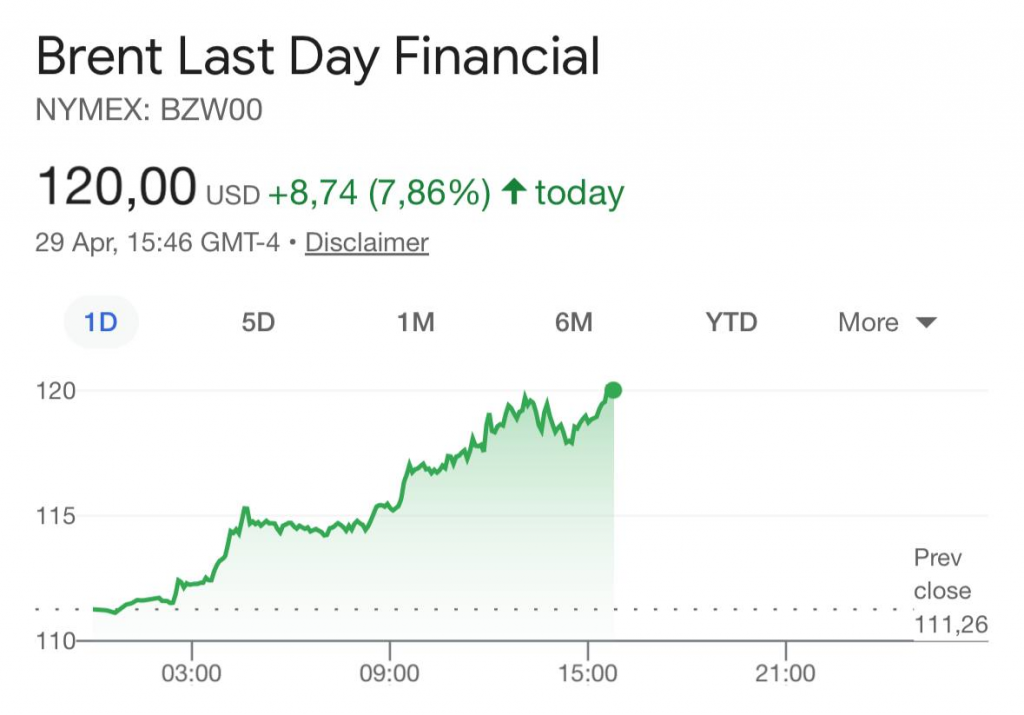
Brent crude oil futured jumped to 119.20 per barrel, hitting a record high not seen since mid-March, amid President Trump’s rejection of an Iranian proposal and rising fears of a renewed war with Iran, later jumping to more than $120 a barrel after questions with reporters appeared to suggest the war could last another three weeks or more with an extended blockade a couple of hours after the markets had opened, and the last update of the night was that prices were continuing to rise, with Brent Crude up over $126 per barrel and WTI over $110.
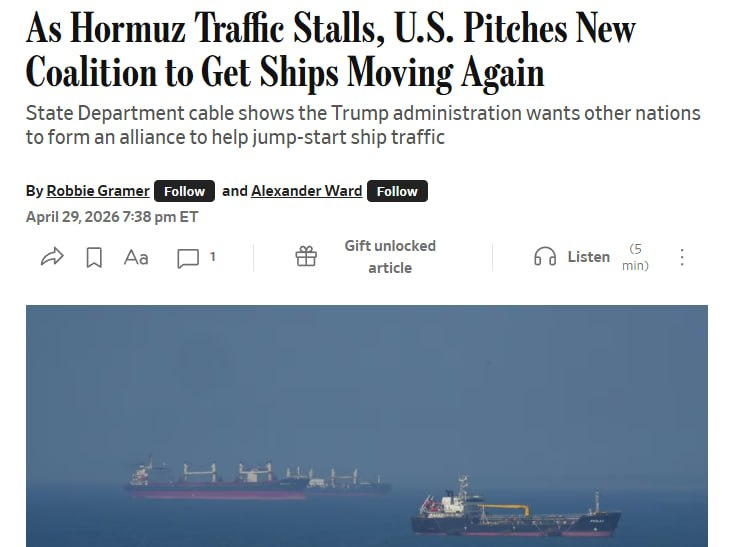
The Trump administration is asking countries to join a ‘Maritime Freedom Construct’ that would see countries involved share information, coordinate diplomatically, and enforce sanctions to help reopen the Strait of Hormuz, according to the Wall Street Journal, stating that the MFC would be a joint effort between the US State Department and US Central Command.
US Central Command have asked for the Army’s Dark Eagle hypersonic missile to be sent to the Middle East for possible use against Iran, Bloomberg reported, noting they would be used to target ballistic missile launchers deeper within Iran, while if approved, it would mark the first operational deployment of the US hypersonic missile system, which has faced delays and hasn’t been declared fully operational, and the request reportedly stated that Iran had moved launchers beyond the range of the Precision Strike Missile, prompting the need for a longer-range option, but no final decision had yet been made.
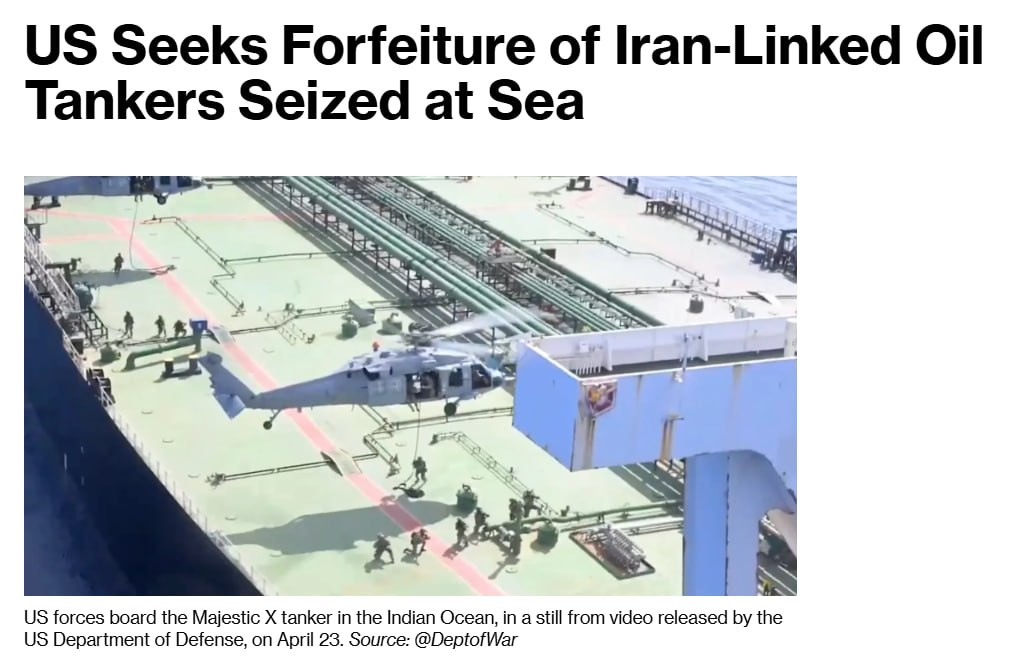
Bloomberg also reported that the US was seeking the forfeiture of two Iranian-linked oil tankers seized at sea as part of enforcement actions tied to pressure on Tehran, stating that the US Department of Justice had already initiated the forfeiture process for the Tifani and the Phoenix, previously registered as the Majestic X, in INDOPACOM’s area of operation.
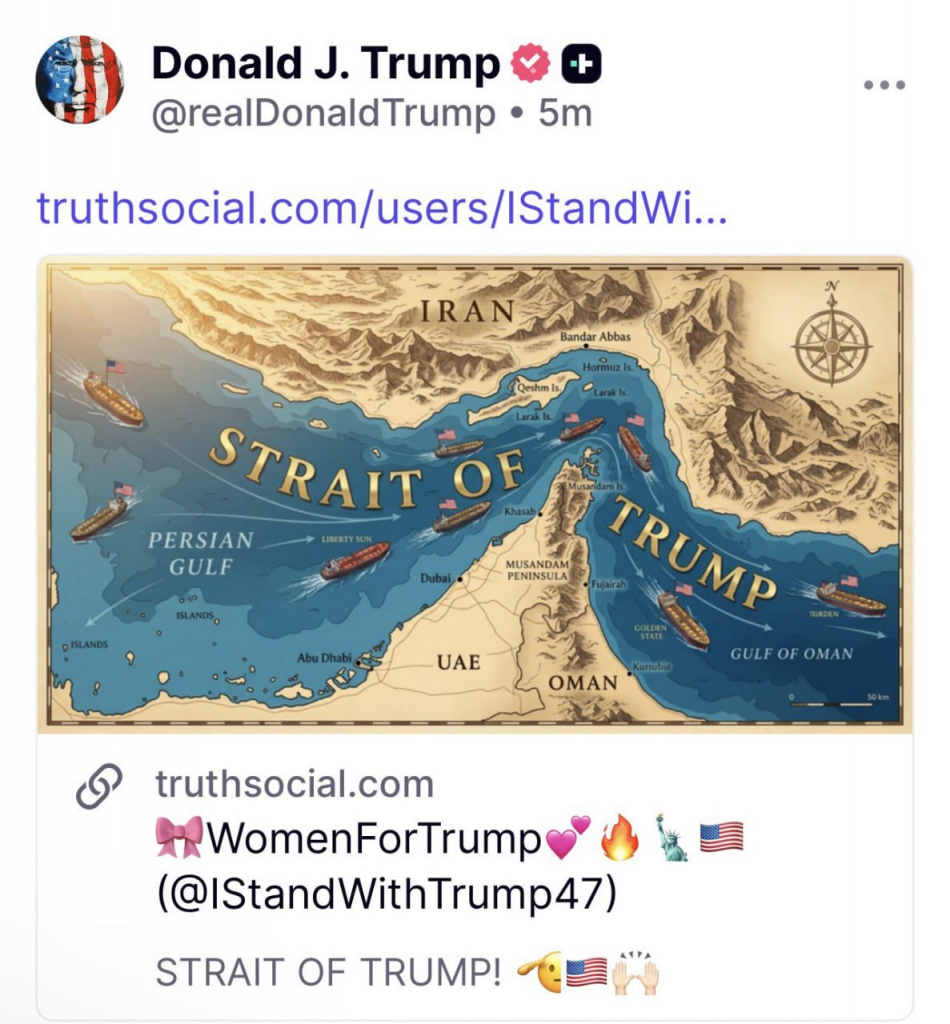
During the evening, President Trump reposted a previously published photo of the Strait of Hormuz which had been labelled as the ‘Strait of Trump.’
Yemen:
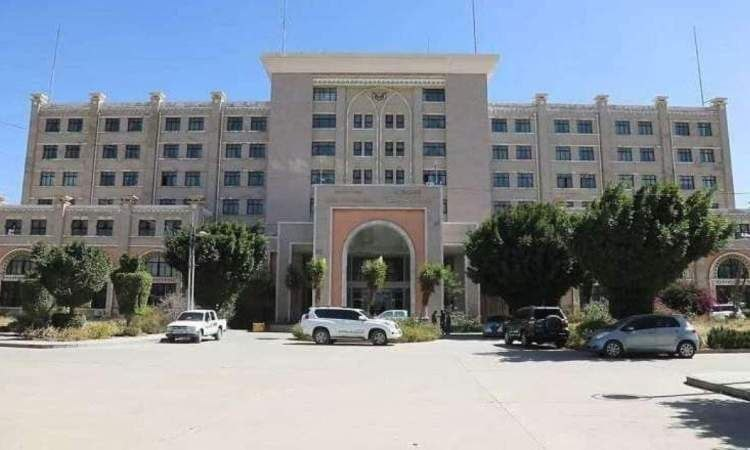
The Yemeni Ministry of Affairs warned against the ‘adventurism and brutality’ of the Trump administration in the Persian Gulf and announced Sanaa’s support for Iran’s actions in the Strait, reported Irib News, stating that Yemen condemned the US piracy in the Sea of Oman, the attacks on Iranian commercial ships, as well as the detention of their crews, which they consider a clear violation of international laws and freedom of navigation.