 AJ
AJ
⚡️ Lebanon update for July 2 includes comments from President Aoun and PM Salam, along with activities by the IDF.
🔹 President Joseph Aoun released a statement regarding the framework agreement, saying: “We have neither conceded nor surrendered any of Lebanon’s rights,” stating that the agreement reached in Washington upheld the authority of the Lebanese state and protected their sovereignty.
🔹 Aoun rejected rumours regarding the dismissal of the Army Commander and heads of the security agencies, stating that they remained fundamental to maintaining security and extending the authority of the state across all Lebanese territory.
🔹 The President said: “We reject any attempt to drag Lebanon into civil strife,” saying that he commended Speaker Nabih Berri’s role in preserving national unity, and reaffirmed that the people of southern Lebanon deserved to return to their homes and live in safety: “Free from the repeated cycles of war, destruction, and displacement,” he added.
🔹 However, the return home wouldn’t be as simple for some residents, as the IDF bulldozed the road from Hammoul area to Aita al-Shaab to set up crossing gates in the security of zone in southern Lebanon.
🔹 UNIFIL told LBCI that the issue of Israel setting up crossing gates in southern Lebanon was being investigated, adding that the Israeli army had previously placed obstacles on several roads in Naqoura.
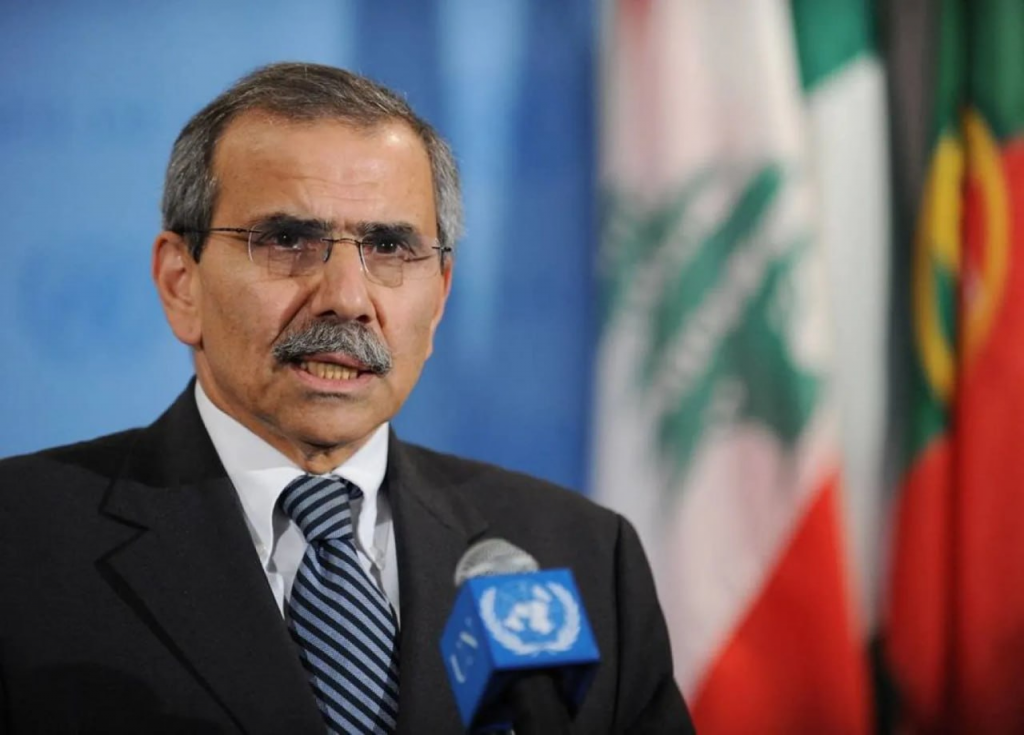
🔹 Prime Minister Nawaf Salam told LCBI that the parties who are firing should stop: “Hezbollah and the Revolutionary Guards should stop fighting, not me,” he said, adding that he was one of the first to welcome the ceasefire initiative: “There are misconceptions about the Israeli withdrawal from Lebanon within 60 days, but this is not mentioned in the text of the agreement,” Salam added.
🔹 Head of the Popular movement Najah Wakim warned that the country could face deep institutional fragmentation, similar to the 1983 period when the army split during a civil war, arguing that the current trajectory could lead not only to divisions within the army but also across state institutions more broadly, warning of possible state collapse, adding that they key question was whether such an outcome would benefit Lebanon or push it toward a renewed civil war.
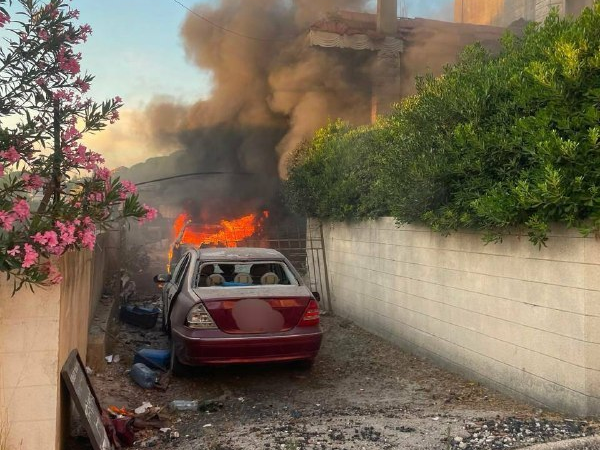
🔹 Israeli Forces opened fire with fire with machine-gun bursts, along with tank shelling, which was heard in the area of Kfar Tebnit where the Israeli Army is stationed, as well as in the occupied town of Barashit in the security belt, along with a drone strike which struck a parked car in Nabatieh al-Fawqa, and the army continued burning houses in the occupied town of Beit Yahoun throughout the night.
🔹 Throughout the day, two consecutive drone strikes targeted Nabatieh al-Fawqa, while the IAF opened fire on an Islamic Health Authority Civil Defence team attempting to extinguish the blaze and search for casualties, while in the eastern sector, the IDF bulldozed land on the outskirts of Shanouh and Halta, while firing toward an approaching vehicle near Ibl al-Saqi Spring.
🔹 By nightfall, the IDF had expanded to Beit Yahoun, Ainata, Hadatha, and the outskirts of Rsheif, where homes and agricultural land were set ablaze and multiple demolitions were carried out, and IAF vehicles were also seen advancing between Merkabah and Houle.
🔹 The IDF are preparing for the possibility the ceasefire could collapse, so military officials are drawing up contingency plans for renewed large-scale operations in southern Lebanon (and Iran if they attack), should Hezbollah fail to disarm.
🔹 While the tripartite agreement signed at the weekend envisioned a phased, conditions-based Israeli withdrawal as the Lebanese Armed Forces (LAF) verifiably disarmed Hezbollah in designated pilot zones, military planners still remained sceptical.
🔹 The IDF warned that Hezbollah may exploit the diplomatic process to regroup, rearm, and rebuild infrastructure north of the Litani River, so the IAF are maintaining their current forward positions and have made clear they will not withdraw from any area until the LAF demonstrates it can independently prevent Hezbollah from re-establishing a military presence.
🔹 The military have communicated to the political leadership that it required clear triggers and timelines for resuming operations if Hezbollah is found to be violating the terms of the framework (they weren’t included in and are expected to be a part of).