 AJ
AJ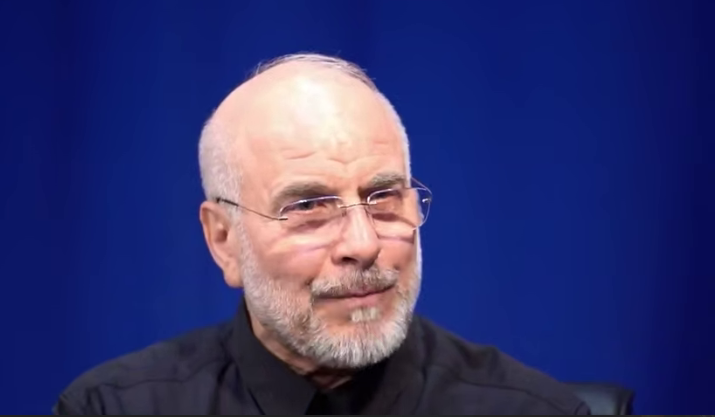
⚡️ Iranian Parliament Speaker and lead negotiator Mohammad Bagher Ghalibaf appeared on a live Iranian broadcast to discuss the current negotiation process, explain conditions of the Memorandum of Understanding, and discuss ongoing situations Iran find themselves facing in relation to the implementation of the MoU.
🔹 Ghalibaf said that two actions took place after signing the memorandum on the evening of June 14, which was the announcement of the end of the war by the Prime Minister of Pakistan, along with Trump’s tweet about the lifting of the naval blockade, which are considered important events of the memorandum: “We are currently pursuing the dialogue phase to implement article 13 of the Memorandum,” he added.
🔹 The Speaker said Iran were involved in a war that was extensive both geographically and in its scope, but aside form the fact Iran had a wider geographical area, this was a full-scale war, however, the resistance front also had a wide range from southern Lebanon to Yemen and Iraq.
🔹 Ghalibaf said that in Clause 1 of the Memorandum, the United States had committed and guaranteed the war in Lebanon would end, the people would return to their land, and Lebanon’s national sovereignty over its territory would prevail, which he described as a great victory, and added that Iran were now pursuing its definitive implementation.
🔹 According to Ghalibaf, tensions have arose within Iran, because the incidents which have been seen at night are because certain groups wish to reject passage through the Strait of Hormuz under Iranian arrangements and take actions outside the agreement: “Naturally, the Islamic Republic is committed to ensuring that passage through the Strait of Hormuz is definitely carried out in accordance with the Memorandum,” he said.
🔹 Ghalibaf said that Iran considered the events happening in the Persian Gulf at night a violation of the MoU and would definitely respond to it, stating that in the latest ceasefire violation, US bases in Bahrain and Kuwait had been targeted, noting that the process showed Iran were serious about implementing the MoU, as they were in talks, but if the US didn’t want to fulfil their commitments in the talks, Iran were ready for war.
🔹 According to Ghalibaf, the situation with Lebanon is different because the Israeli regime occupied parts of southern Lebanon militarily, and military clashes there had been intense: “Of course, you saw that after signing the MoU, attacks in southern Lebanon significantly decreased,” he stated.
🔹 Ghalibaf said that the MoU is a document of the defeat of the US and Israel, noting that the ‘Zionist regime’ opposed the understanding, stating that after the signing, Israel launched a heavy attack on Lebanon and sought to occupy some important areas to disrupt the agreement.
🔹 According to Ghalibaf, these events led Iran to head to Switzerland, where the main issue pursued was the ceasefire in Lebanon, then after the follow-ups, the volume of attacks on Lebanon wasn’t as comparable as before.
🔹 Ghalibaf said that a joint committee between Iran, the US, and Lebanon is being established to realise Lebanon’s national sovereignty, adding that the Iranian ambassador is also Iran’s representative to the committee.
🔹 Television highlighting developments has been good for the country, Ghalibaf said, but added that it should also mention how the situation in Lebanon was before and how it is now.
🔹 In the field of diplomacy, Iran are also seeking to pursue talks to realise the five conditions that must be immediately implemented or whose implementation process must have started right after the signing of the Memorandum, Ghalibaf added.
🔹 Ghalibaf stated that Iran’s negotiations were only until the signing of the MoU and after that, there had only been discussions to implement the five clauses, noting that the trip to Switzerland was also to discuss this implementation process, and in the discussions, Iran followed up on the results of previous negotiations to ensure they were realised.
🔹 According to the Speaker, negotiations with America was negotiating with a ‘treacherous enemy who will act against us whenever we get the chance: “Only someone prepared for war can negotiate well,” he said, adding: “It is good to see what Sheikh Naim Qassem and the people of Lebanon say about this understanding and what some of our friends inside say.”
🔹 US Secretary of State Marco Rubio’s actions in the Gulf countries were against the MoU and aimed at provoking the countries, Ghalibaf stated, adding that disagreements existed even within the US, because Rubio pursued one approach, and Vice President JD Vance the other, questioning what actions Rubio took on Thursday on the sidelines of the Gulf of Bahrain.
“All of it was against the actions of the Memorandum and the Gulf countries, and again he actually sensitised and provoked them against the Strait and… well, they are our enemies, we have a memorandum, and we stand firmly” he said, adding that Rubio is following up on the Washington memorandum attempting to pursue the Abraham Accords and normalise Lebanon’s relations with Israel, but the MoU preserved Lebanon’s independence.
🔹 Ghalibaf said the guarantee for implementing the understanding was their power, not a UN resolution: “One of our honours is that our offensive power and missile power are absolutely non-negotiable,’ he said, adding: “Our people, the people sent to the field, now stand firm regardless of their tendencies and preferences, and they continue to stand firm.”
🔹 Alongside that, Ghalibaf continued, there was also the resistant front and resistance cores: “Do you remember when they used to talk about JCPOA one, JCPOA two, and JCPOA three?” he asked, adding that no longer existed: “We do not negotiate with anyone about the issue of resistance and the resistance cores.”
🔹 Ghalibaf said that those who came to overthrow Iran didn’t recognise the resistance front: “Today, the US has guaranteed that the resistance front will remain in Lebanon,” he said.
🔹 In the nuclear field, Iran are not members of the NPT and cooperated with the agency, stating their red lines in the area was clear, because enrichment was their right, and said they observe the NPT commitments, but this matter wasn’t negotiable, adding that these are elements of Iran’s power and guarantee against US greed.
🔹 Ghalibaf said that whenever the US took an action against Clause 1 in the area of ending the war, Iran responded action for action, noting the events happening in the Strait were for that reason, while the events Hezbollah responded to in Lebanon were also for that reason.
🔹 “Even once, we fired missiles twice at the Zionist regime because of an action they took in Lebanon that was part of ending the war; we have shown a reaction, so we both negotiate to achieve wherever there is logic and agreement, and where there is no language of logic and agreement, we use the language of force,” Ghalibaf said.
🔹 Ghalibaf said that in Iran, in diplomacy and in all Iran’s matters, strength is in logic: “We hope the other side also pursues this with logic, but the Americans, because they are bullies and have a spirit of arrogance, their logic is power, and where their logic is power, we respond with power, even while we have an agreement,” adding that negotiations with the US were now finished: “14 clauses have been approved, and until the first 5 clauses are fulfilled, we will not enter into the other issues.”
🔹 Clause 4 of the memorandum stated that immediately upon signing, the US would lift the naval blockade and stop its harassment or obstruction against Iran, then within 30 days, the naval blockade will be completely ended.
🔹 “On the night of Sunday, June 14th, we only initiated the MoU, and the final digital signature was made on Thursday – in diplomatic process, once initiated, the next step was a more formal aspect than a substantive one – that same night we stipulated that since the blockade imposed by the enemy was against the ceasefire and the enemy carried out this act during the ceasefire, Trump should announce the end of the blockade, and this was done,” adding that this action demonstrated the power and diplomacy of Iran and was the kind of action that had to be taken.
🔹 Ghalibaf stated that since the day the naval blockade had listed until Tuesday, Iran had exported more than 40 billion barrels of oil, noting the blockade was against human rights and the ceasefire: “When the blockade was lifted, the enemy retreated and navigation for commercial ships and oil tankers of the Islamic Republic of Iran in the Sea of Oman and the Strait of Hormuz was opened,” he said.
🔹 The Speaker said the agreement text stated that passage through the Strait was without cost for 60 days, which he said was due to the insistence of regional countries and the coastal countries of the Persian Gulf, and was mainly for ships that were in the area at the start of the war due to the Strait being closed.
🔹 Sovereignty over the Strait belonged to Iran and Oman, Ghalibaf reiterated, stating that passage is subject to arrangements determined by Iran, although Iran would consult with the coastal countries of the Persian Gulf: “Iran will under no circumstances relinquish its rights in the Strait of Hormuz, as these are our territorial waters,” Ghalibaf claimed.
🔹 The Strait is Iran’s most valuable weapon so it must be properly safeguarded, Ghalibaf said, stating Iran must increase the prosperity of the Strait day by day: “Restrictions should be imposed on the US and Israel, but traffic will increase,” he said, adding: “We most show the world that security here is increasing day by day and even the insurance costs for ships are decreasing.”
🔹 “Some said lifting sanctions was an empty promise, but the sanctions have been lifted and Iranian oil is sold 20% more expensive, and the money is deposited into Iranian accounts,” he said, stating that although it was possible the US could break its promise, Iran already distrust the UC and were ready for any reciprocol action.
🔹 The host said that the last condition mentioned in Clause 11 is about the release of blocked funds, meaning twelve billion dollars: “Of course, last week there was a serious discussion that the US President said the money is only allowed to be used for buying grain, and that too from American Farmers,” asking whether this was true.
🔹 Ghalibaf replied the rumours were false, saying that according to the MoU, out of $24 billion of assets in various countries, $12 billion are to be given to the Central Bank so that it can purchase any goods it needs, at any price and in any currency worldwide: “This is possible and the process is underway” he said.
🔹 “This is the power of the Islamic Republic,” Ghalibaf concluded: “Enjoy it, be proud of it and stand by it – we must lift the economic pressure off the people’s shoulders, and we did this with dignity, and this is a document of America’s defeat.”