
 AJ
AJ
How low can they go – Relentless repetitive rhetoric by Trump & Wright in attempts to drive down price of oil
Oil prices had jumped more than 2% as Monday started, following strikes on Saudi Arabia and missiles that targeted ships violating Iranian regulations in the Gulf, as well as President Donald Trump’s refusal to answer a journalist’s question whether a US Navy vessel had been targeted as he left Ireland on Sunday.
Brent crude had risen to $107.51 per barrel and WTI to $103.32, according to reports by Reuters and Al Mayadeen, noting that both had briefly climbed more than 3% when the markets opened.
The gains follow Friday’s closure of Saudi Arabia’s East-West pipeline following a drone strike, an outage that threatens up to 4% of global oil supply, with varying statements giving varying degrees of damage and restoration times.
Yanbu’s existing stocks could maintain exports for around five to seven days, while estimates for repairing the pipeline range from several days to as long as six weeks, but Saudi Arabia hasn’t provided details on the extent of the damage or how long the pipeline will be offline.
Sana’a forces reaching the strategic island of Perim as it tightened its strategic control on the Bab el-Mandeb, another corridor with around 5% of global oil supply, also led to the market fluctuations, causing oil to surge over 8% in the past week alone, and crossing the $100 a barrel price for the first time since July.

CENTCOM chief Admiral Brad Cooper was welcomed by Saudi Crown Prince Mohammed bin Salman in Jeddah on Monday, following two reported calls by MbS to President Trump over the weekend requesting help with the Houthis following the capture of Mocha and Perim Island, and Cooper had been in Saudi Arabia last week for coordination when the Yemeni western coast had collapsed.
The escalating tensions with the Houthis in Yemen continue to shake global markets, reported Yediot Ahronot on Monday, claiming that disruption to shipping traffic in the Suez Canal is causing significant damage to Egypt, which is now trying to act through diplomatic channels.
According to Arab reports, Cairo has refused direct maritime coordination with the Houthis so that they didn’t legitimise them, instead promoting a mediation initiative between Saudi Arabia and the Houthis, recognising that only a comprehensive military de-escalation would restore security to shipping lanes and halt price surges.
Iranian Foreign Ministry spokesman Esmaeil Baghaei confirmed during a Monday press conference that the Omani-Iranian meeting had been cancelled at the request of Saudi Arabia, advising the media not to jump to speculation over President Trump’s propaganda that Iran was involved in the attack on the East-West pipeline, and stressed that the US were the reason the Strait of Hormuz would not be reopened any time soon.
A senior Gulf official later allegedly told Axios that Saudi Arabia had submitted amendments to the proposal for the Strait, concerned that its language could effectively establish a new status quo in the waterway that would be unacceptable to Riyadh and other GCC states.
ATTEMPTS TO DRIVE DOWN PRICES
US Energy Chris Wright was the first to attempt to drive the prices down, saying that Iran has a choice, either return to the international community and bring peace, and the chance for prosperity for their 90 million citizens of the country, economic growth, and prosperity for the region, or continue down a deceptive, hidden, sinister path to develop nuclear weapons, which ultimately will not be successful.
Wright said that Iran had brought huge economic upheaval, death, and destruction to the region as they pursued this for decades, so it was time for Iran to make a choice, because Iran don’t have many cards in their hand, and the United States has made tremendous progress.
The Energy Secretary claimed, despite reports to the contrary from throughout intel, opsec, and even US media, that an average of up to 10 million barrels of oil and oil products were moving on water through the Strait of Hormuz.
“You will see that number grow in the coming weeks, and then you add in the flows from bypass lines, we’re up to 13, 14, 15 million barrels a day of energy flow out of the region,” he claimed, stating: “So the significant majority of what was flowing before the conflict, not fully back yet, but continued very strong progress, and we will continue to do that,” adding that: “The ball is in Iran’s court to bring peace back to the region.”
A reporter from Al Jazeera challenged Wright over discrepancies between the US claims about oil flows through the Strait and independent tracking data showing fewer than four vessels crossing per day, but the Secretary denied any inconsistency, saying he usually cites a seven-day rolling average alongside single-day figures, adding that the post-conflict record remained nearly 18 million barrels in one day, and that flows are trending upward.
Wright said that US-escorted vessels transit Hormuz at night with their transponders switched off, making them largely invisible to commercial tracking services: “We know exactly what flows through the Strait of Hormuz,” he claimed, adding that the US figures were based on the ‘exact vessels and cargoes crossing each day rather than estimates.’
Meanwhile, the first declaration of a repair time for the Saudi Arabia pipeline also came from the Energy Secretary, who stated that the pipeline was expected to be up and running ‘very soon’ following drone attacks which were allegedly launched near the Iraqi border with Iran.
Wright claimed there had been a huge disruption in Russian diesel exports, which were affecting the markets, because they were a meaningful exporter of diesel, but today, ‘they’re not exporting any,’ adding that Russia was a small exporter of gasoline: “Now they’ve become a meaningful importer of gasoline.”
The Energy Secretary then claimed that Iran had turned up attempts recently to disrupt energy flows, noting that the country had built up a lot of missile and drone stockpiles: “So they have caused trouble in the short run, certainly, they’ve spread fear in the short run,” he admitted, adding: “I’m pretty confident you will see increased flows and oil products through the Strait of Hormuz in the coming weeks and months regardless of what Iran does.”
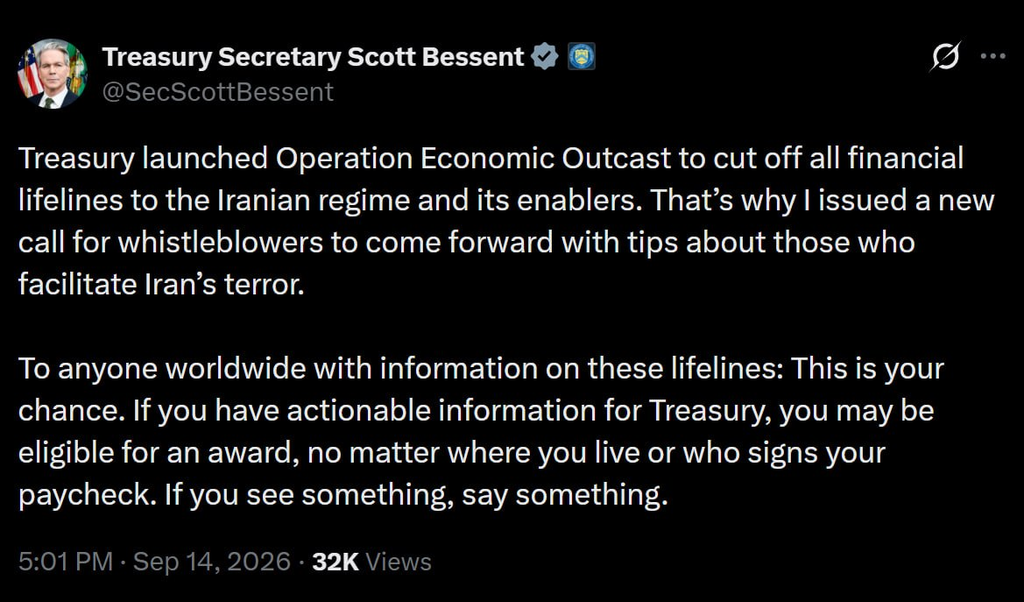
Soon after, Treasury Secretary Scott Bessent took to X with a statement offering a reward for credible information about facilitators of Iran, saying that the Treasury had launched Operation Economic Outcast to cut off all financial lifelines to the Iranian regime and its enablers.
“That’s why I issued a new call for whistleblowers to come forward with tips about those who facilitate Iran’s terror,” he wrote: “To anyone worldwide with information on these lifelines: This is your chance. If you have actionable information for Treasury, you may be eligible for an award, no matter where you live or who signs your paycheck – if you see something, say something.”
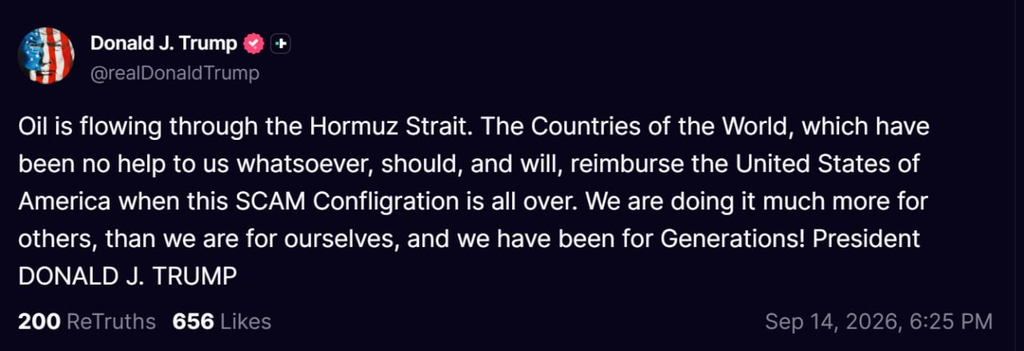
President Trump took to Truth Social on Monday evening supporting Energy Secretary Chris Wright’s previous comments, first stating that oil flow was moving through the Hormuz Strait: “The countries of the world, which have been no help to us whatsoever, should, and will, reimburse the United States of America when this SCAM Conflagration is all over,” adding that the US were doing it much more for others than themselves: “And we have been for Generations.”
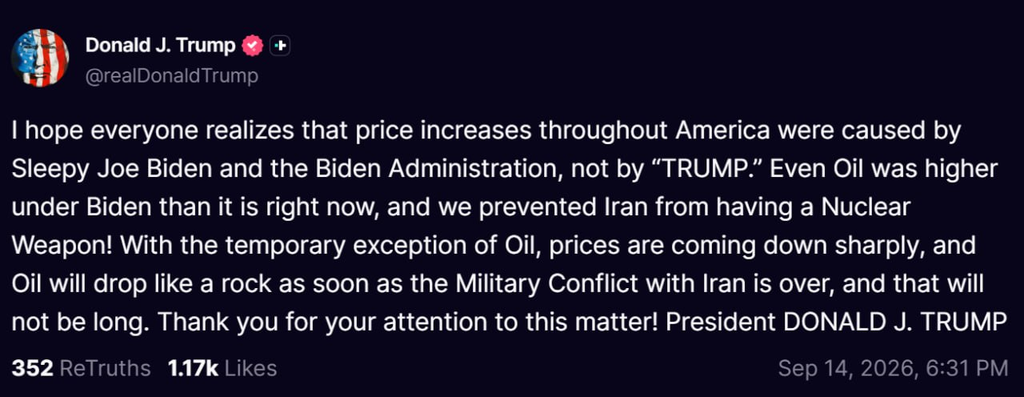
Trump then took to Truth again within a matter of minutes, claiming that the increases throughout the USA were caused by Joe Biden and the Biden administration rather than the Trump administration: “Even oil was higher under Biden than it is right now, and we prevented Iran from having a nuclear weapon,” he wrote, adding that with the ‘temporary exception of oil,’ prices are coming down sharply, and oil will drop like a ‘rock’ as soon as the ‘military conflict’ is over, and that will not be long.
OUTLOOK
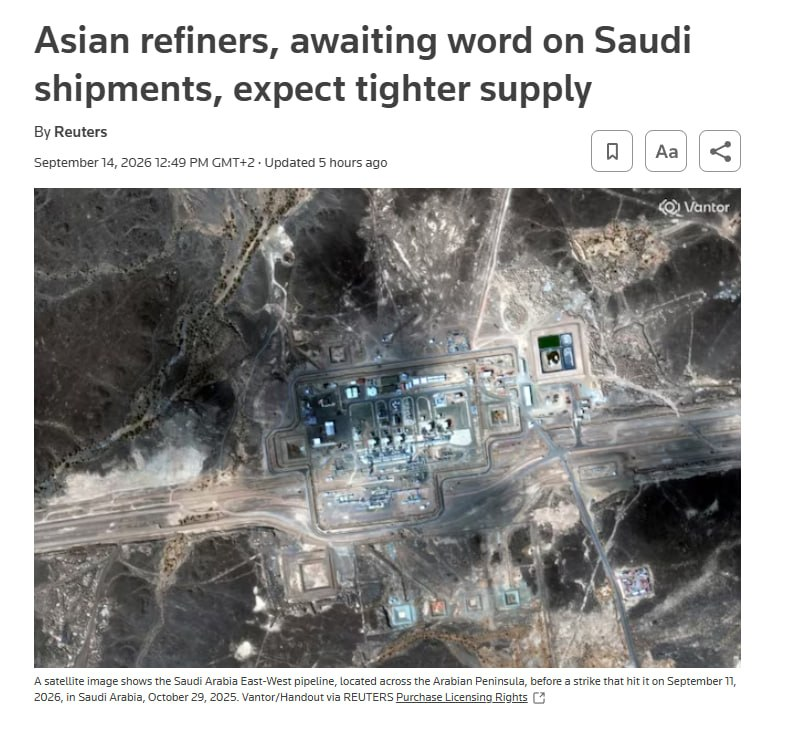
Asian refiners are preparing for tighter supplies and higher prices for sour crude as they await clarity from Saudi Arabia following the shutdown of the East-West Pipeline, Reuters reported on Monday evening, noting that prices rose around 3% on Monday, while Saudi Aramco has yet to provide customers with updated supply allocations or shipment schedules.
Some refiners have been warned of delayed loadings from the Red Sea port of Yanbu, although no new dates have yet been provided, while others expect delays as buyers compete for limited alternative sour crude supplies from Iraq, the UAE, and elsewhere.
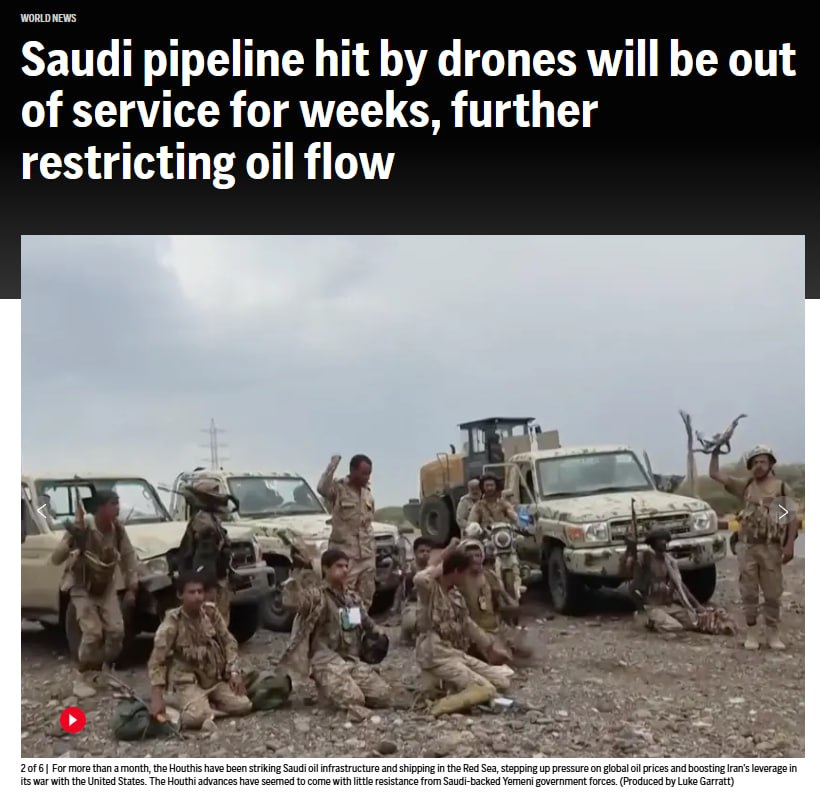
Regional officials told the AP that the pipeline is expected to remain largely out of service for three to five weeks while repairs are being carried out, noting the damage included a major pumping facility, and the pipeline could operate at reduced capacity during repairs, although it remained unclear how much oil could actually pass through it.