 AJ
AJ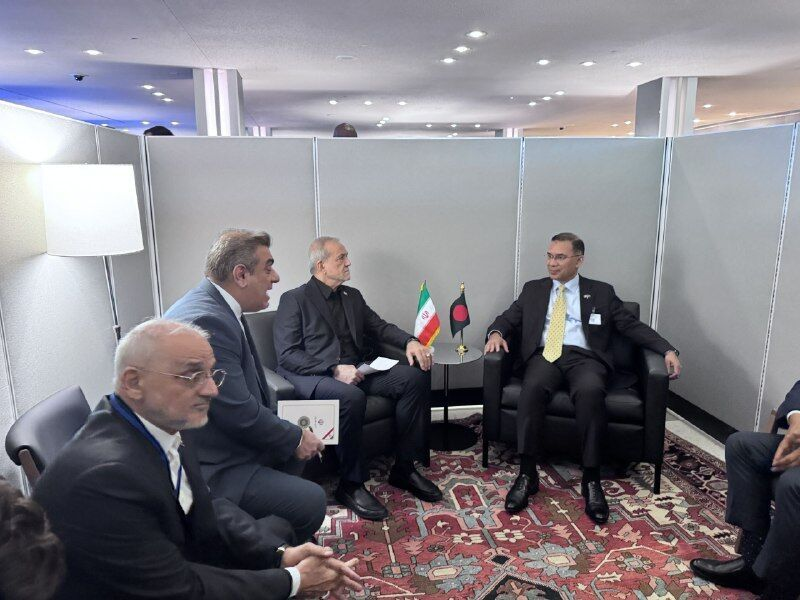
Pezeshkian and Araghchi on the sidelines of the UNGA
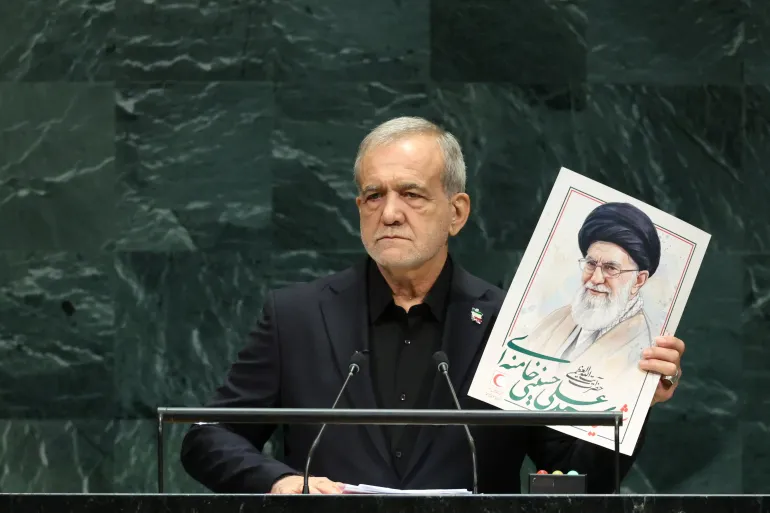
Iranian President Masoud Pezeshkian had travelled to the USA on Tuesday night, ready to appear at the United Nations General Assembly to deliver a speech that was subsequently praised by several high-ranking Iranian officials including Parliament Speaker Mohammad Bagher Ghalibaf.
Foreign Minister Abbas Araghchi had already arrived prior to the President and held several meetings on the sidelines of the UNGA on Tuesday, while both the President and the FM held various meetings with different world leaders and officials over the course of Wednesday.
Pezeshkian first sent National Day greetings to Saudi Arabia, highlighting the close cultural, economic, and political ties between Iran and Saudi Arabia in a message to King Salman, saying these commonalities provide a solid basis for friendship, and can further strengthen the relations between the two, expressing hope that both sides continue to deepen bilateral ties across all fields.
The President sent a separate message to Crown Prince Mohammed bin Salman, expressing hope that the two countries’ existing capacities would help expand brotherly relations in political, economic, and cultural areas.
Pezeshkian met Swiss President Guy Parmelin in his first round of bilateral meetings, which took place following the speech to the UNGA in which the President said that the war had been imposed on Iran and declared that Iran would never stop defending itself, but it wouldn’t shy away from negotiations to achieve peace, while also presenting a book titled “American Aid to the Iranian People.”
During a meeting with European Council President Antonio Costa, Pezeshkian said that Iran had seen inaction rather than neutrality from some countries during the recent war, calling on European states to reconsider their approach and maintain greater independence, adding that European countries deprived themselves of a role in international developments by aligning with hostile US actions.
Pezeshkian criticised Europe’s approach to the snapback mechanism and the 2015 Iran nuclear deal, saying European governments’ positions reduced their ability to influence international developments, while referring to comments by the NATO Secretary General about European countries’ assistance to the United States during the war, calling for a reassessment of European policies.
According to the President, regional security should be the responsibility of countries in the region, stating that Western intervention had adversely affected security beyond the region, and although Costa called for a European role in addressing regional issues, Pezeshkian said Europe’s alignment with Washington had limited its ability to play such a role.
Armenia’s Prime Minister also sat with the President, discussing Iran’s policy of expanding cooperation with neighbouring and regional countries, with implementation of bilateral agreements, particularly on regional transit routes, among the governments priorities, while the Armenia Prime Minister also stressed the need to accelerate the implementation of bilateral agreements which would contribute to regional development and peace.
The President also held talks with Iraqi Prime Minister Ali al-Zaidi and Tajikistan counterpart Sirojiddin Muhriddin, as well as Norwegian Prime Minister Gahre Stare, and Bangladesh Prime Minister Tarique Rahman, on the sidelines of the UNGA.
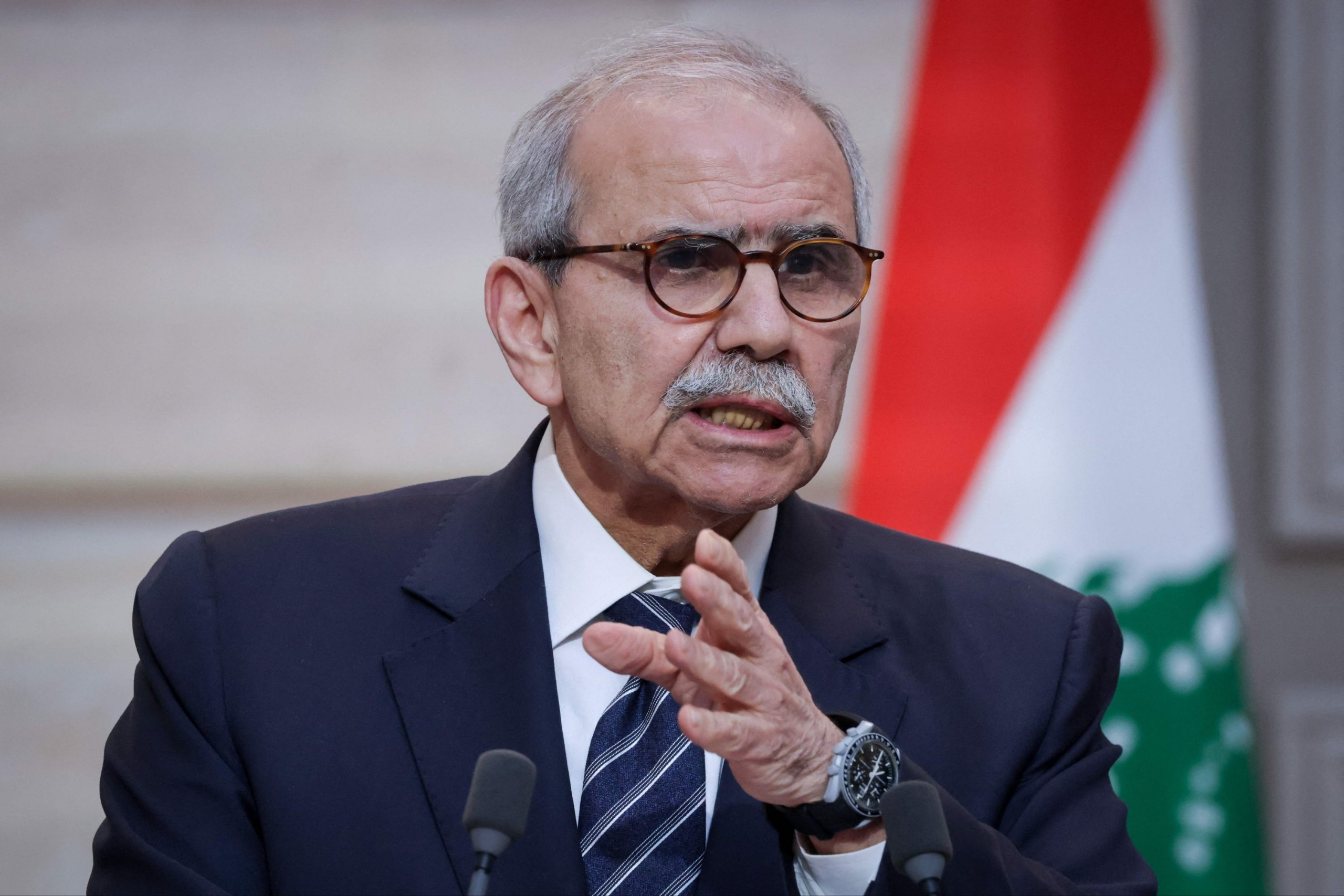
Speaking to the press outside afterwards, Pezeshkian said that no power can destroy Iran because the country has deep historical routes, stating that Washington was pursuing a force-based approach in different parts of the world, stressing that US sanctions were incompatible with international law and humanitarian principles.
Pezeshkian pointed to US actions involving Venezuela, Cuba, and Greenland, saying such an approach had not previously been expressed so openly, as the US even speaks of destruction of a country, adding that Iran has deep historical routes that cannot been destroyed, and the Iranian people remained present on the field despite all the presusre they had faced.
FM Araghchi referred to the NATO Chief’s claims of providing support for the US-Israeli aggression against Iran in a post on X, warning European officials about the consequences of facilitating and backing war crimes.
Araghchi mentioned the issues he shared with European officials, including EU Policy Chief Kaja Kallas, during their bilateral meetings on the sidelines of the UNGA: “In meetings with @KajaKallas and other EU counterparts, I warned of the severe long-term consequences of facilitating and supporting Israeli-US war crimes, whether in Gaza or Iran,’ he wrote.
“That major folly aside, @SecGenNATO should know by now that grovelling never satisfies a bully,” rebuking Mark Rutte and reposting his claim of Europe’s support for American and Israeli attacks on Iran.
Rutte remarked that ‘it would have been impossible to do Operation Epic Fury without having Europe as a power projection platform for the US,’ confirming that ‘4,000 planes had taken off from European bases’ in support of the war on Iran.
Araghchi also met German Foreign Minister Johann Wadephul and Tajik Foreign Minister Sirojiddin Muhriddin on Wednesday, while on Tuesday he met with the Foreign Ministers of Switzerland, Italy, France, Austria, the Netherlands, Belarus, Greece, Iraq, Qatar, and EU Policy Chief Kaja Kallas.