 AJ
AJ
Persian Gulf Day was celebrated in Iran, an event marked by many officials including a statement by Supreme Leader Mojtaba Khamenei, while the Trump administration considered whether to continue the blockade, with advice sought from Admiral Brad Cooper among others, as a 60-day deadline under US law approached, and also news from other countries affected by the war, in the US/Israel Iran War ceasefire recap for day 22.
Iranian Officials Spoke On Persian Gulf Day:
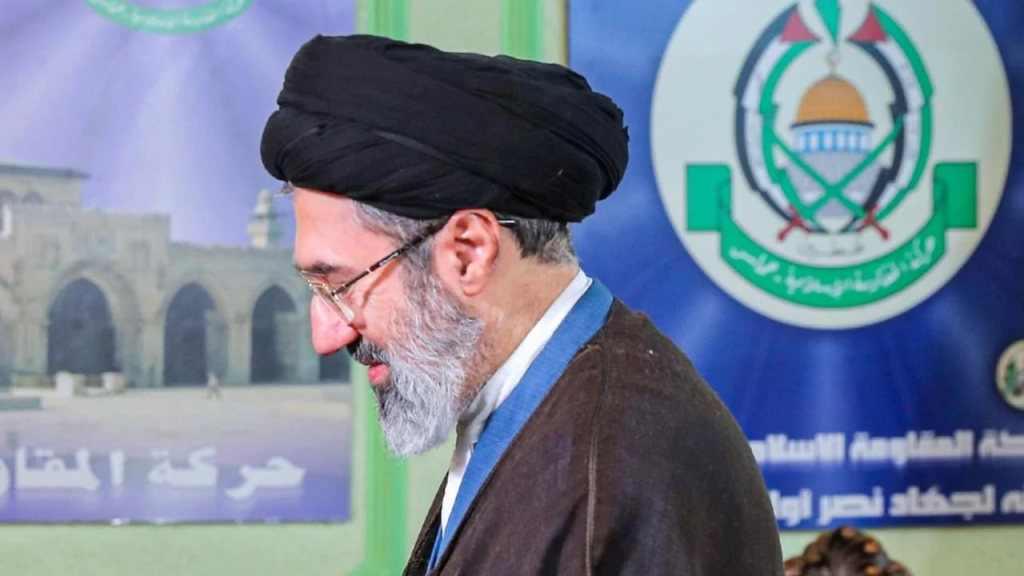

Supreme Leader Ayatollah Mojtaba Khamenei released a message marking Persian Gulf Day, describing the waterway as a divine gift and a strategic asset that has long attracted foreign greed, stating that Iran has made the greatest of sacrifices to secure the Persian Gulf’s independence, including the liberation of the Strait of Hormuz, which became the basis for the national day, adding that the Islamic Revolution was a turning point that shortened the hands of the arrogant powers in the region, and referred to ‘the biggest military deployment and aggression by the world’s bullies’ over the past 60 days, saying America’s humiliating defeat in its plan is now writing a new chapter for the Gulf and Hormuz.
Khamenei stated that it had become clear to world opinion and even to regional rulers that the ‘presence of America is the most important factor of insecurity’ and that US bases cannot guarantee their own security, let alone the country they’re trying to protect, arguing that the future of the Gulf will be one without America, serving the progress and welfare of local nations, and said that Iran would secure the Persian Gulf through its new management of the Strait of Hormuz to end hostile exploitation of the waterway: “The rules of law and the new management of the Strait of Hormuz will bring comfort and progress for the benefit of all nations an the region,” Khamenei added.
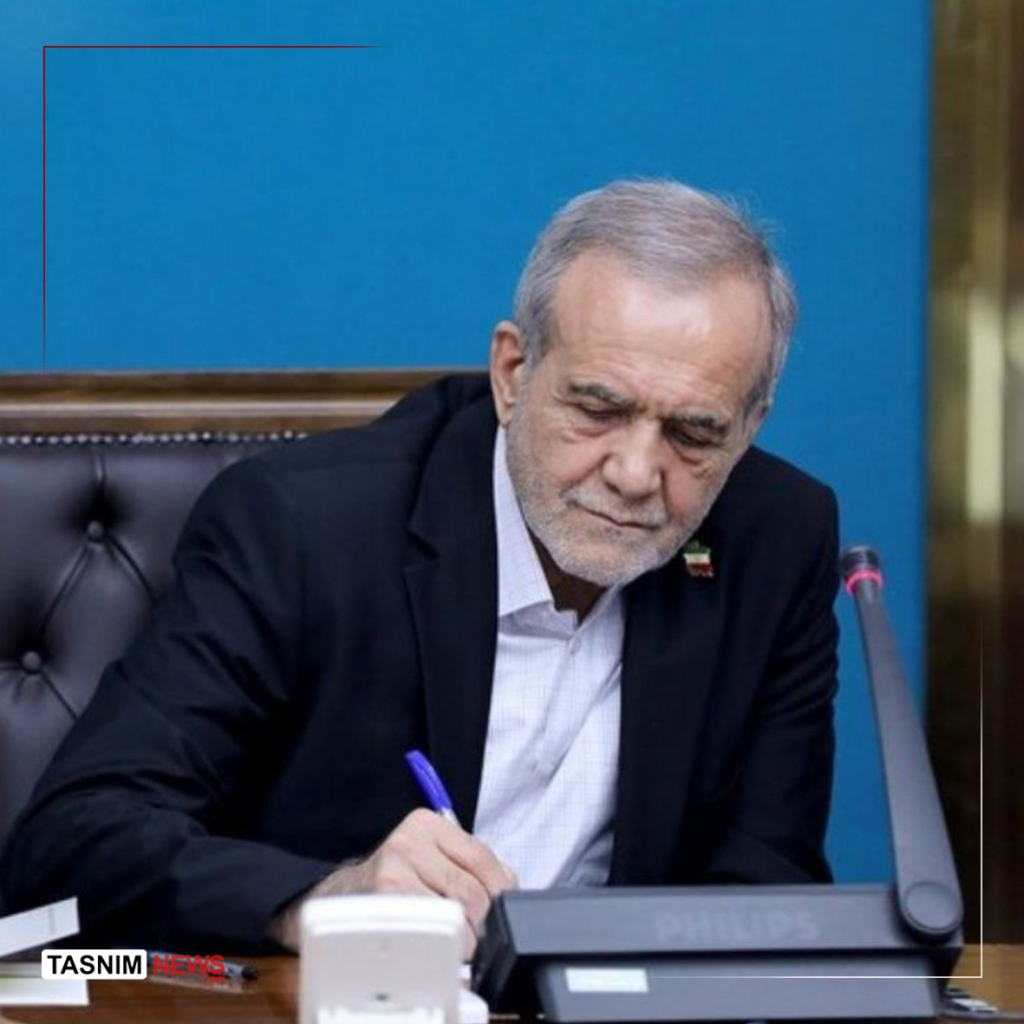
President Masoud Pezeshkian said on Persian Gulf Day that the insecurity in the Gulf lies with the United States and the ‘Zionist’ regime, warning that the Persian Gulf is not a place for imposing unilateral foreign wills, and the security of this strategic area can only be ensured through cooperation among littoral countries, adding that any attempt to impose a naval blockade and restrictions is contrary to international law and against the interests of the people in the region, causing instability, and is doomed to fail (full comments on AJ News).
Vice President Mohammad Reza Aref said the region is currently in a sensitive situation and on the verge of major transformations, while the security of the Persian Gulf is an issue that will not be subject to negotiation for Iran, both its government and its people.
Advisor and Assistant to the Leader of the Islamic Revolution, Mohammad Mokhber, said on Persian Gulf Day that the sovereignty of the Persian Gulf belonged to the Iranians, and the naval blockade would not return Iran to the Stone Age, but the hegemonic system would inevitably enter an ice age.
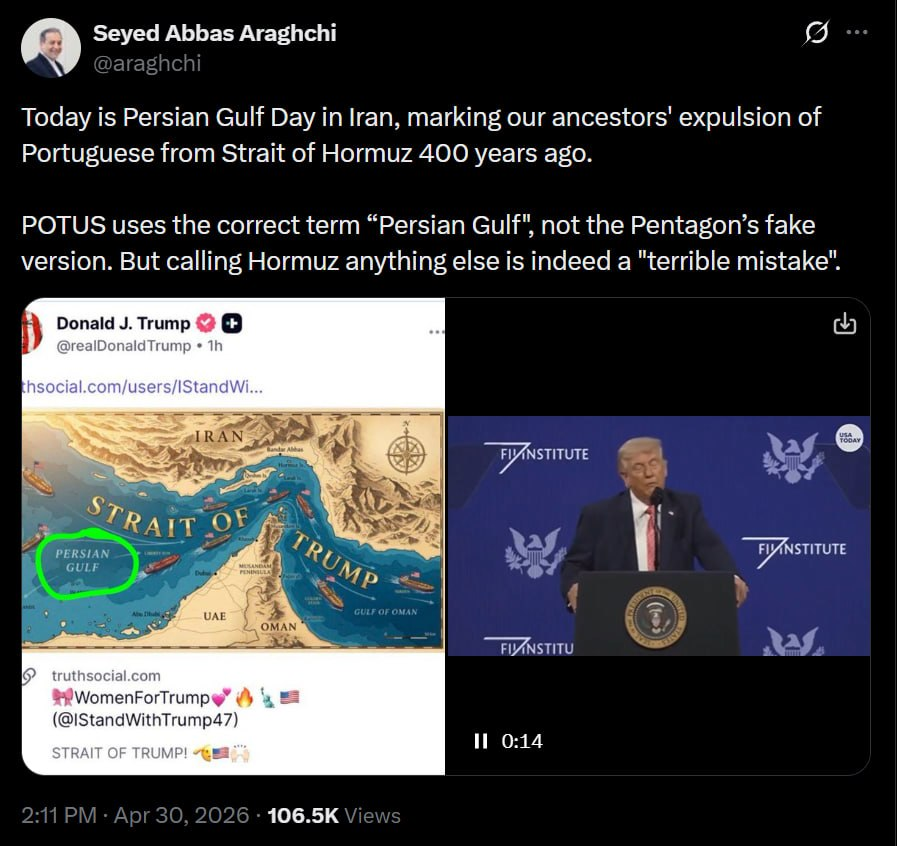
Foreign Minister Abbas Araghchi said that today is Persian Gulf Day in Iran, marking ‘our ancestors’ expulsion of Portuguese from the Strait of Hormuz 400 years ago,’ adding that POTUS used the correct term ‘Persian Gulf,’ not the Pentagon’s fake version, but calling Hormuz anything else was a ‘terrible mistake.’
Government spokesperson Fatemeh Mohajerani said that any attempt to impose a naval blockade and maritime restrictions is doomed to failure, stressing that the Gulf is not an arena for imposing unilateral foreign will, and its security depended on collective cooperation and mutual respect for the sovereignty of coastal issues: “Any such blockades is against international law, contrary to the interests of regional peoples, and harmful to global peace and stability,” she added.
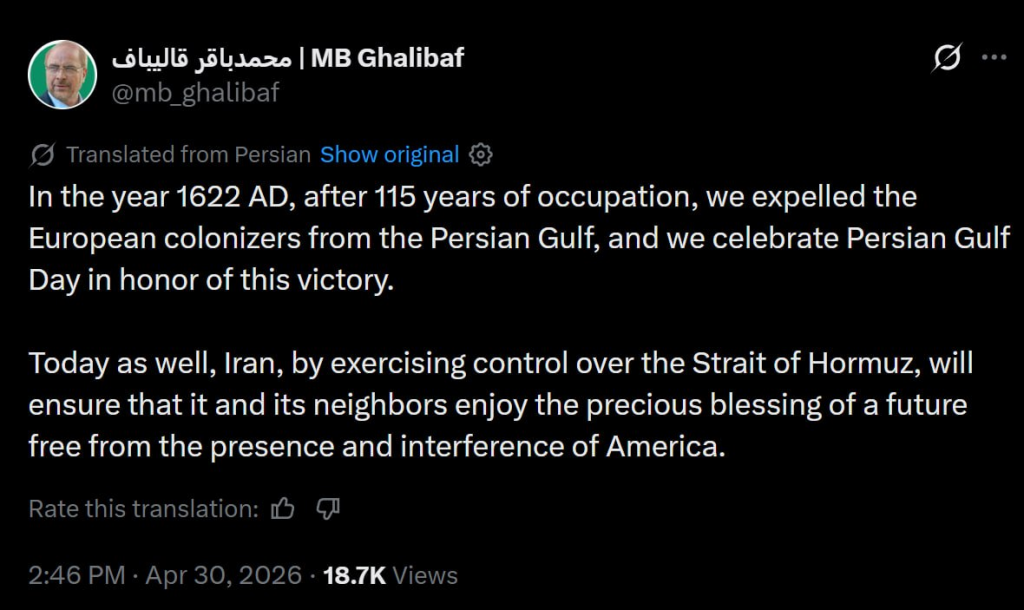
Parliament Speaker Mohammad Bagher Ghalibaf said: “In the year 1622AD, after 115 years of occupation, we expelled the European colonizers from the Persian Gulf, and we celebrate Persian Gulf Day in honour of this victory – today as well, Iran, by exercising control over the Strait of Hormuz, will ensure that it and its neighbours enjoy the precious blessing of a future free from the presence and interference of America.”
Judiciary Chief Gholam-Hossein Mohseni-Eje’i took to social media on Persian Gulf Day, writing: “In the recent war, the aggressive enemy clearly realised that the balance of power in the Persian Gulf favours the nation and forces of Islamic Iran – Iran has established a new order in the Persian Gulf, and today the previous borrowed and imported security structure has collapsed – On Persian Gulf Day, we honour the memory of all the devoted brave souls of Islamic Iran and the valiant border guards of the Persian Gulf, from Rais Ali to Tangseeri.”
News from Iran:
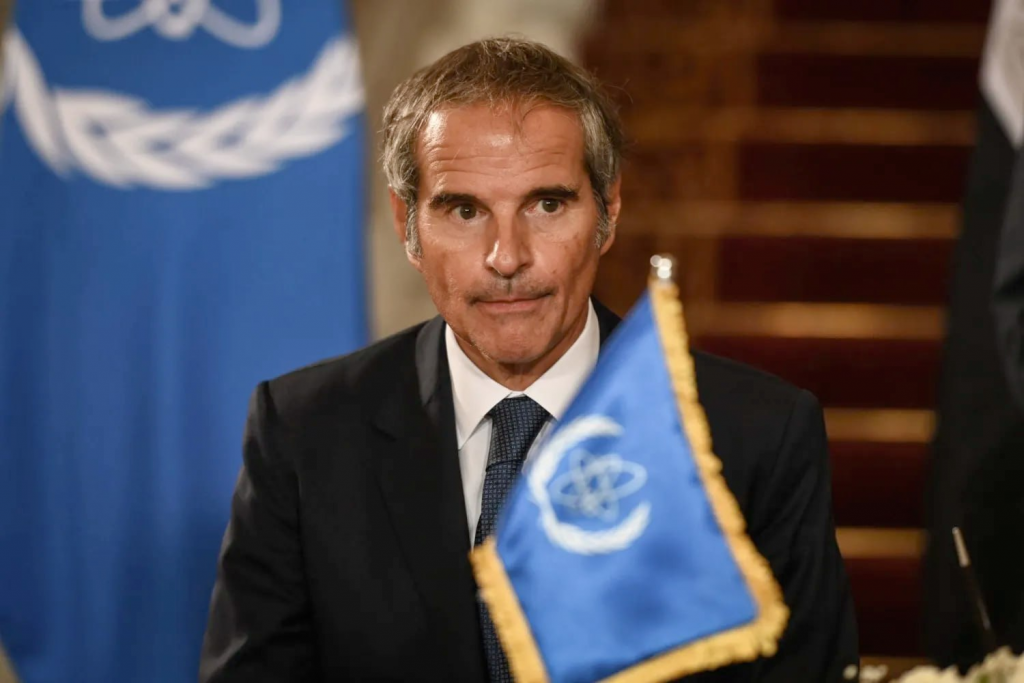
IAEA Chief Rafael Grossi claimed most of Iran’s highly enriched uranium stockpile was still at the Isfahan nuclear complex, which was struck in last year’s 12-day war and again in the current conflict, reported Asharq Al-Awsat, noting that satellite imagery showed damage from recent strikes, while Iran had announced a new enrichment facility at Isfahan last June, but it appears to have been spared.
Discussions with Russia and others regarding removing the enriched material are currently under way, but the process is complex, requiring either a political agreement or a major US military operation, and Grossi noted that the IAEA has held separate talks with the US and informal discussions with Iran trying to bring peace between the two nations.
Judiciary Chief Gholam-Hossein Mohseni-Eje’i said on Thursday that the United States were wrong to say that a criminal whose hands were stained with blood should not be executed, referring to President Trump attempting to stop the executions Iran had planned following the January protests, claiming that one of the rightful demands is the swift, precise, and just pursuit, trial, and punishment of the ‘enemy’s foot soldiers’, a process that is powerfully ongoing in the Judiciary.
Mohseni-Eje’i said that the political and propaganda apparatus of the invading enemy, which was compiled of ‘vile and malicious elements,’ said that a certain criminal should not be brought to justice or executed, but no other country has a right to make such statements, and Iran would continue in the legal trial and punishment of criminals, paying no heed to the rhetoric of the arrogant and their propaganda mouthpieces, Fars News reported.
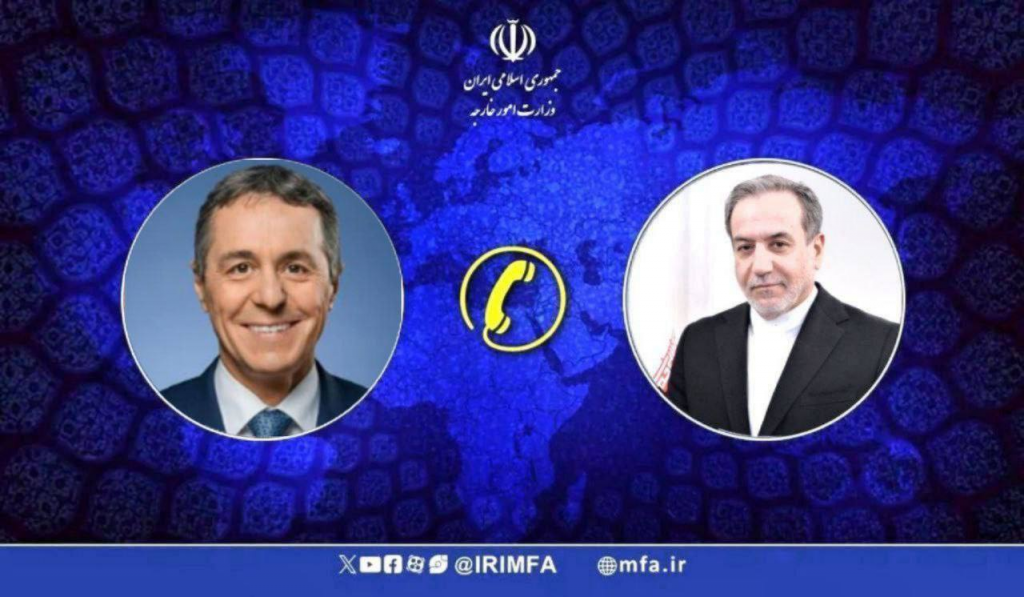
Foreign Minister Abbas Araghchi held a call with Ignazio Cassis, the Minister of Foreign Affairs for Switzerland, discussing bilateral relations, along with the latest regional and international developments, Tasnim News reported.
The Minister of Industry, Mining and Trade disputed recent claims of problems in the steel industry, stating that planning for the supply of steel sheets needed by automakers has been completed by the end of the year and its provision is guaranteed, claiming that last week, 164 thousand tons of sheets were offered, of which only 92 thousand tons were sold, and said a sudden increase in car prices is not reasonable because the rumours spread of the steel shortage were false to drive up car prices.
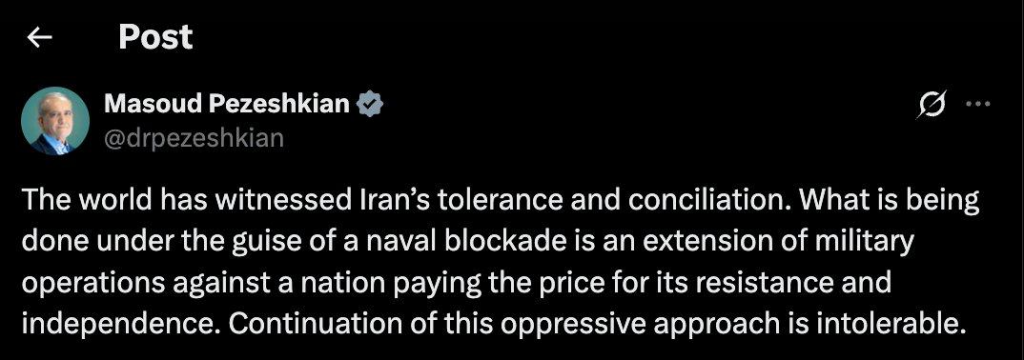
President Pezeshkian shared a post on X on Thursday evening, stating that the world had witnessed Iran’s tolerance and conciliation, and what was being done under the guise of the naval blockade is an extension of military operations against a nation paying for the price for its resistance and independence, adding that the continuation of this approach is intolerable.
Despite AJ News sharing info from Kpler and Bloomberg that said Iran had up to 30 days worth of storage available, Israeli i24News claimed that Iran’s storage capacity was expected to run out within 15 to 60 days, claiming that once storage was exhausted, Iran would be forced to reduce or even close its oil wells, causing significant damage as restarting production takes a long time, and the 45-day range depended on whether Iran resorted to using old tankers, which can degrade oil quality.
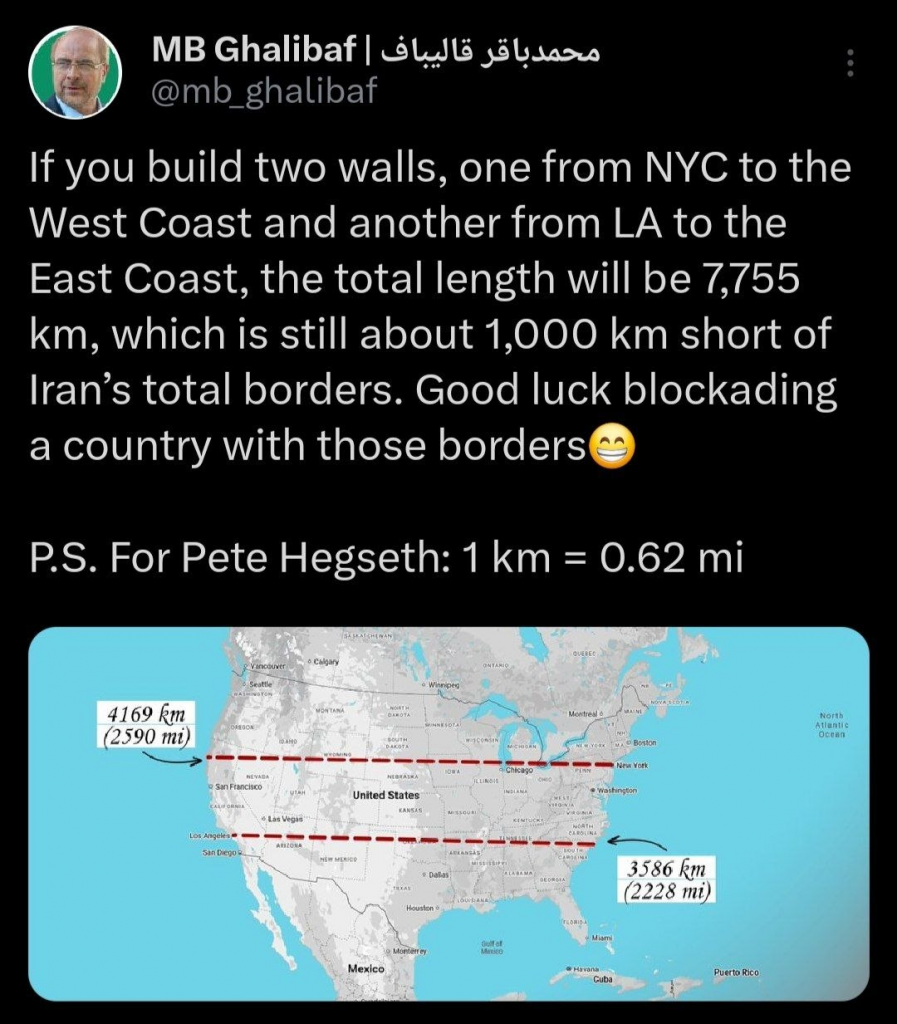
Parliament Speaker Mohammed Bagher Ghalibaf mocked Secretary of War Pete Hegseth’s knowledge of geography in a post on X, wishing good luck to Hegseth in his attempts to blockade a country with borders the size of Iran.
During the evening, footage was published that claimed the Iranian air defences were active in Tehran, as reports from Iranian media indicated another round of shooting had started, but Tasnim News later clarified the air defences were attempting to shoot down drones or small aircraft in the sky following sightings of drones above Tehran, and locals reporting they saw quadcopters.
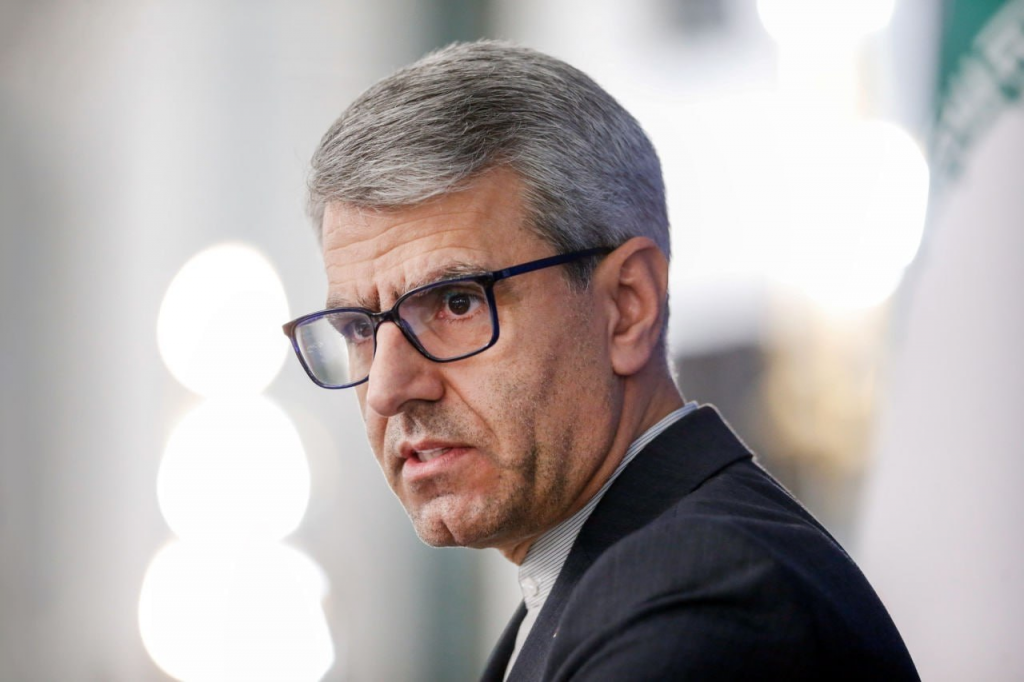
Foreign Ministry spokesman Ismael Baghaei cautioned domestic media against instantly translating and publishing every US tweet or statement, saying many posts could be inaccurate or deliberately misleading, adding that the US and Israel were known for breaking their promises and Iran’s power remained the greatest guarantee against the repetition of war, noting that Israel had consistently violated previous ceasefires, while questioning how Iran could trust the other side with long-term commitments when it even fails to honour temporary ones.
News from the USA:
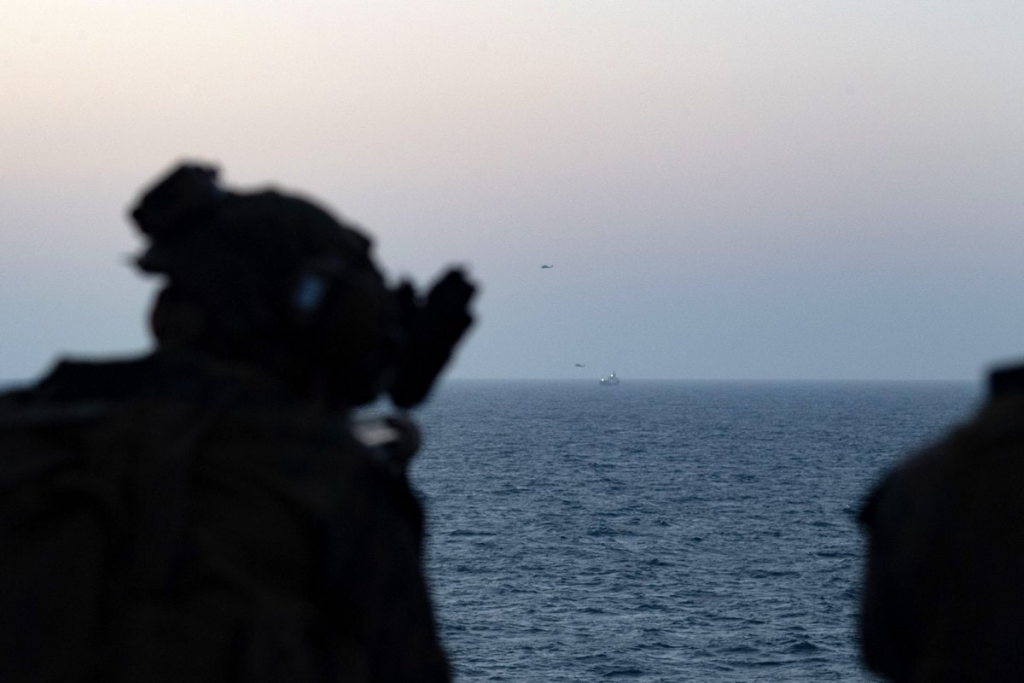
US Central Command reported on Thursday that they had redirected 44 commercial vessels to Iranian ports that had attempted to pass the US Naval blockade.
President Trump’s administration have been facing pressure over the past three days as they face a Friday deadline under the 1973 War Powers Resolution, which requires military action authorised by the President end after 60 days unless Congress has approved it or declared war, according to the Associated Press, claiming a White House official said the administration was in ‘active conversations’ with lawmakers on addressing the deadline, noting that the administration can request a 30-day extension by notifying Congress in writing, but it has not indicated publicly whether President Trump intends to do so, while Secretary of War Pete Hegseth and Chief of Staff General Dan Caine have been facing questions for more than two days before a potential vote takes place.
Officials close to Trump have provided justifications, such as Pete Hegseth, who said at a congressional hearing that a ceasefire had been established for more than 20 days, meaning that the administration didn’t need to obtain war authorisation from Congress, because military activity was ‘paused’, (despite activity in turning ships around or seizing Iranian ships), while on the other hand, Republican Speaker of the US House of Representatives Mike Johnson denied the entire issue that there was a war in Iran: “I don’t think there is any bombing or exchange of fire right now – we are seeking peace, and I am not very inclined to stand against the administration amid these sensitive negotiations.”
A US State Department spokesman said President Trump’s goal was to ensure Iran cannot obtain a nuclear weapon, according to Al Jazeera, claiming the spokesperson said Trump preferred face-to-face talks and was ready to hold them, but would not send envoys on an 18-hour journey just to look at a paper, stating that the US wants to obtain Iran’s enriched uranium to prevent the development of a nuclear weapon, while the spokesman also thanked allies for their coordination and assistance, adding that the US does not want a bad deal with Iran like the one signed by Former US President Barrack Obama.
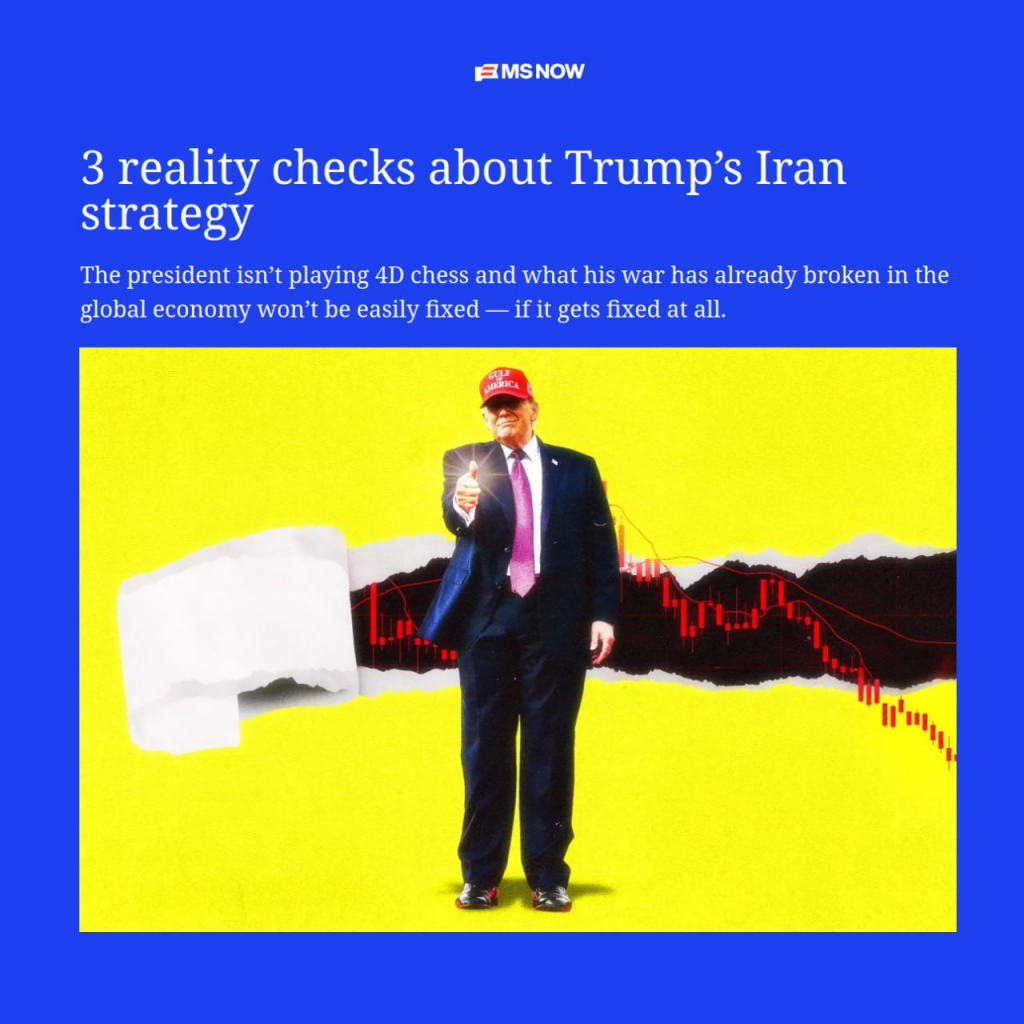
US Network MS Now reported that there were 3 harsh realities coming to light about President Trump’s strategy against Iran, with the first being economic disruption, both locally and globally, which would be hard to repair and wouldn’t be easily fixed, while there was almost no progress towards peace and Trump looked like he was out of options, and developments have now gotten out of the President’s control having burned bridges, facing $6 gasoline prices, destroyed military bases and no exit strategy, adding that Trump is not a chess player, but more of a gambler who had lost all his capital on the false assumption that Iran would quickly collapse in the early days of the war, following intelligence provided earlier in February at the White House by Israeli Prime Minister Benjamin Netanyahu.
President Trump told Newsmax late in the evening: “We have already won, but I want to win by a bigger margin,” claiming that if the US left the region now, it would take Iran 20 years to rebuild if they could, but it’s not good enough: “We have to have guarantees that they will never have a nuclear weapon,” the President added.
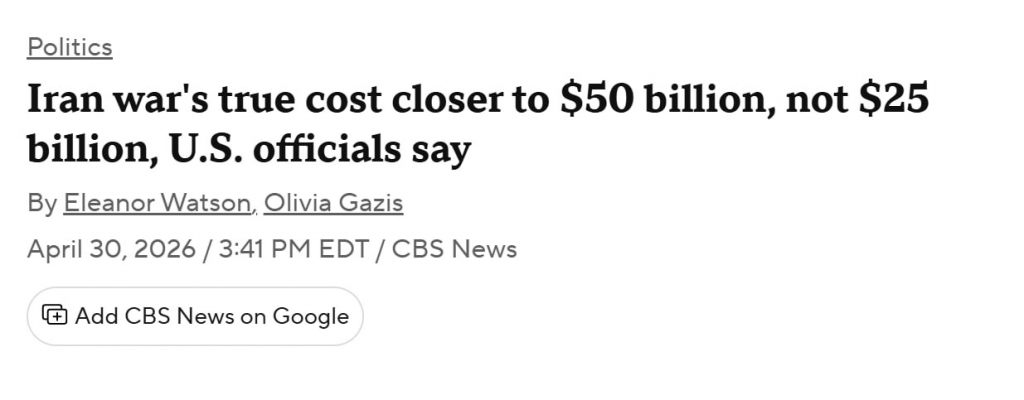
Officials told CBS News that the real cost of the war is around double of the $25 billion publicly cited by the War Department in their recent Congressional testimony, with the total closer to $50 billion, stating that the higher estimate includes losses not fully reflected in the official figures, such as the destroyed equipment and the damaged facilities, as well as the need to replace expended munitions.
Late on Thursday evening, the Trump administration had allegedly determined that ‘for the War Powers Resolution Purposes, the hostilities that began on Saturday, February 28 have terminated,” a senior official told NBC News, which came on the eve of a 60-day ceasefire deadline for congressional approval.
Centcom Commander Admiral Brad Cooper briefed President Trump in the Situation Room about the potential ‘final blow’ to Iran, according to Fox News, claiming that targets included remaining military assets, leadership and infrastructure.
Other news from around the globe in relation to Iran:
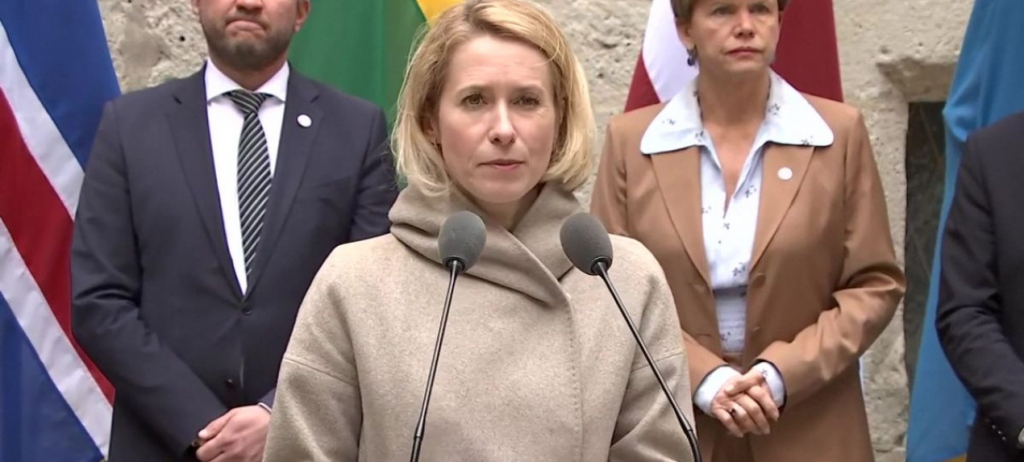
EU Foreign Policy Chief Kaja Kallas said on Thursday that the severe consequences of the Strait of Hormuz blockade were felt across the board and there was no easy exit ramp: “There is no swift exit from the standoff in the Strait of Hormuz in sight, and the consequences are negative across the board – the global economy is reeling,” she said, adding that Russia was gaining fresh revenue from higher oil prices, while US weapon deliveries to Nordic and Baltic countries were facing delays.
Kallas said that the freedom of navigation in the Strait was non-negotiable for the EU and that EU member states had agreed to expand sanctions on Iran: “For Europe, freedom of navigation is non-negotiable, EU foreign ministers have already agreed to expand sanctions on Iran over shipping restrictions, and our naval operations can play a greater role in restoring energy and trade flows,” Kallas said, adding that Tehran’s nuclear, missile and proxy programs must be addressed: “Tehran’s nuclear and missile programs, as well as its support to terrorist groups in the region and beyond must be addressed – these issues cannot be put on the back burner.
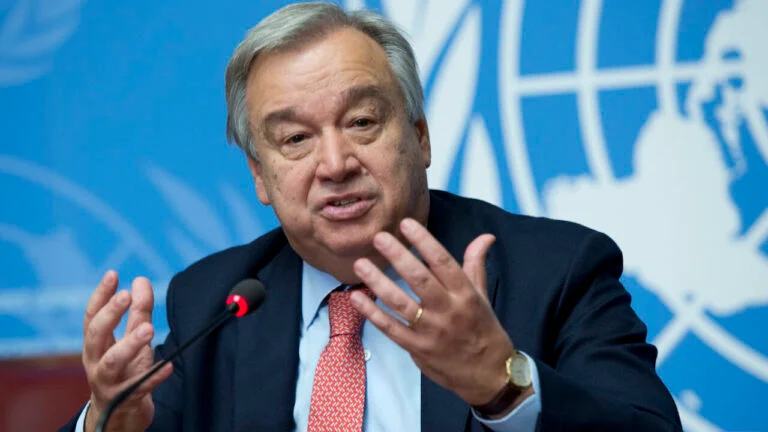
UN Secretary-General António Guterres also addressed the consequences from the blockade, warning that it would cause lasting pain, including lost jobs, deeper poverty and more hunger, claiming that in a best-case scenario where restrictions are lifted soon, global growth will still drop to 3% while inflation would climb to around four-and-a-half percent, he said, noting that if the disruption dragged on, 32 million people could be pushed into poverty and 45 million could face extreme hunger, warning that a severe scenario through year-end would see inflation past 6% and growth plummet to 2%, risking a global recession, calling for the navigational rights to be restored immediately to prevent a global catastrophe.
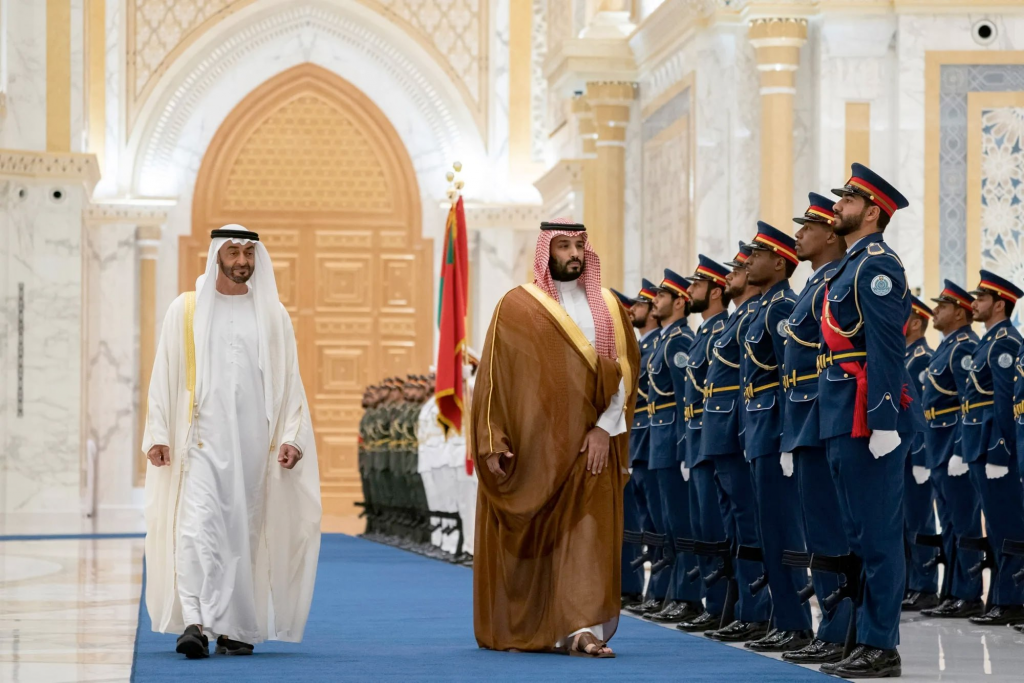
The United Arab Emirates has quit OPEC, citing the need to respond more nimbly to the energy crisis caused by the Iran war, Bloomberg reported, stating the move followed escalating tensions with Saudi Arabia, OPEC’s dominant member, claiming that the two Gulf neighbours had clashed over production quotas, with the UAE seeking to boost output while Saudi Arabia pressed for supply restraint.
According to Bloomberg, the rivalry between both neighbours has also played out in Yemen, where Saudi Arabia said its fighter jets struck a UAE weapons shipment in December, as well as in Sudan, where the UAE has been accused of backing the Rapid Support Forces. The UAE has also pushed to join attacks on Iran and reopen the Strait of Hormuz by force, while Saudi Arabia favoured diplomacy, and the two are competing economically, with Saudi Arabia trying to lure finance firms from Dubai to Riyadh.
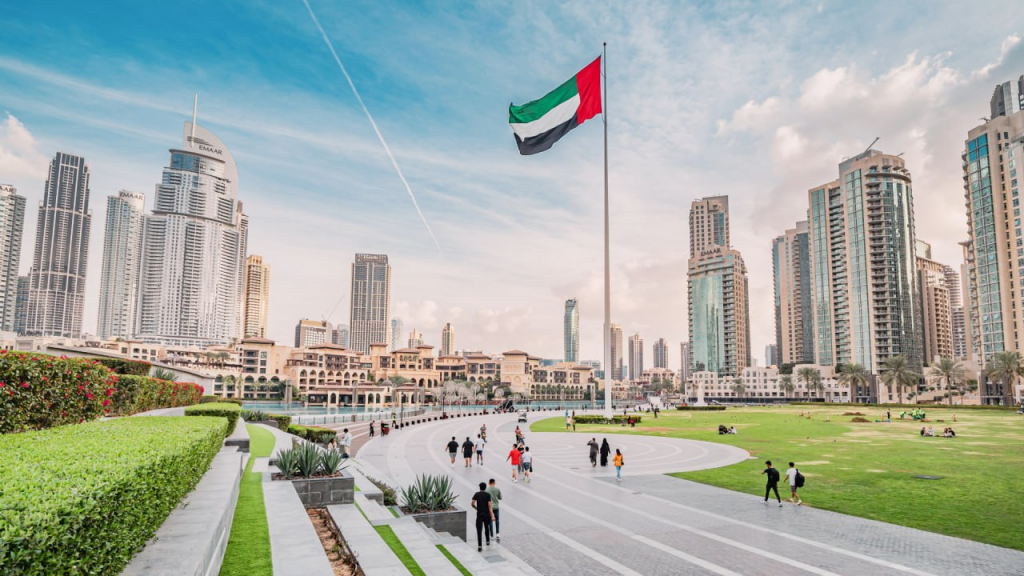
UAE’s government have issued a travel ban for its citizens travelling to Iran, Lebanon, and Iraq, while urging those already in those countries to leave immediately and return home, citing ‘regional developments.
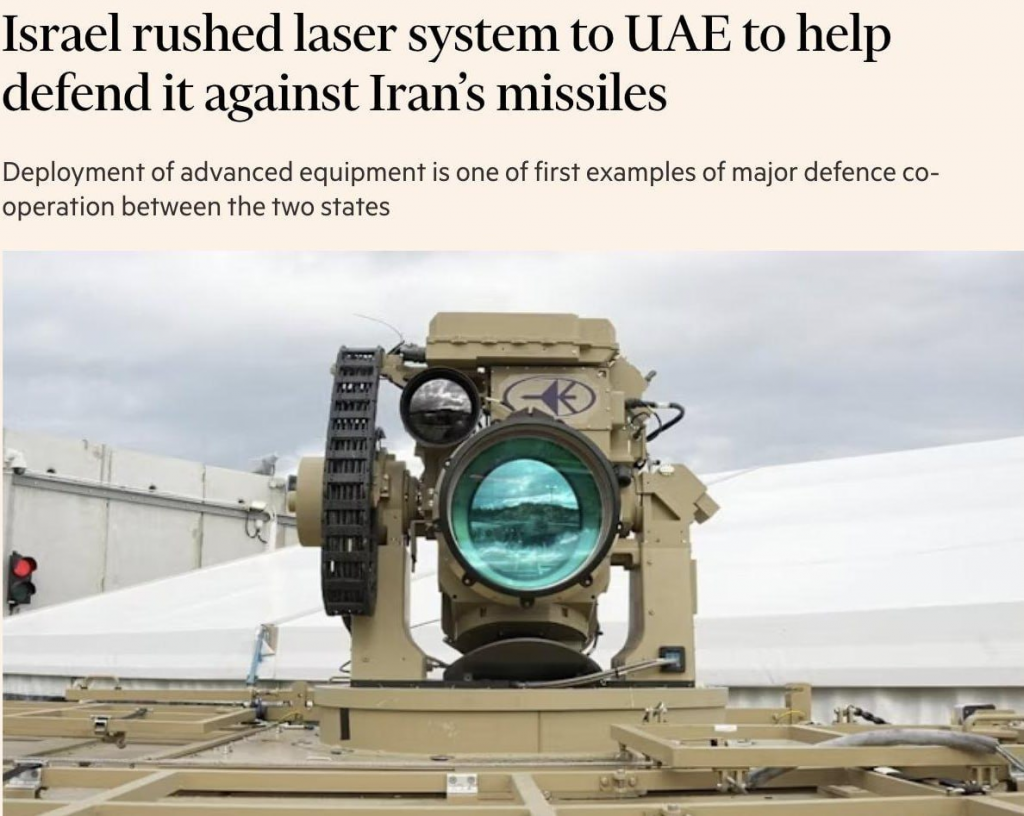
Israel quietly supplied the UAE with a compact drone-detection system known as ‘Spectro’ during the Iran war in an effort to boost early-warning capabilities, reported the Financial Times, adding that the assistance included the deployment of advanced air defence systems such as Iron Beam and Iron Dome, along with Israeli personnel and real-time intelligence sharing, enabling detection of incoming drones from distances of around 20km.

Heavy declines were reported on the Pakistan Stock Exchange (PSX) in Thursday’s trading, with its overall index dropping by 4,786 points, a decline that reflected increased external risks and economic pressures, Tasnim News reported.
The downward trend was mainly down to reports about the possibility of the Emirati company ‘Etisalat’ reconsidering its investment portfolio in Pakistan, which intensified concerns about foreign capital outflow, while the rise in Brent oil to $126 due to the continued blockade in the Strait and President Trump’s warnings about prolonged blockades added to the negative market sentiment, causing rising energy costs and increased interest rates, putting additional pressure on the manufacturing and industrial sectors, making the short-term outlook of Pakistan’s capital market look more uncertain.
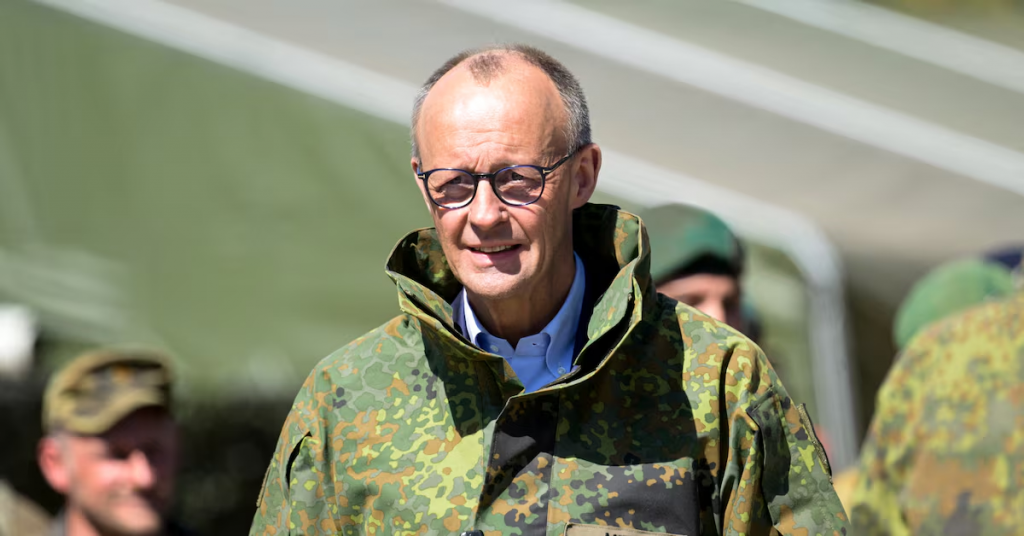
German Chancellor Friedrich Merz said that Germany were committed to quickly ending Iran’s blockade of the Strait of Hormuz, claiming that if the necessary conditions were met, then Germany stood ready to engage militarily to ensure the freedom of sea routes: “I have called for sanctions pressure on Tehran to be increased again because if the Strait of Hormuz remains blocked, it will have massive economic damage for all of us – Iran must come to the negotiating table, it must stop playing for time, it must not continue to take the entire region, and ultimately the world – hostage,” he said, adding that the military nuclear program in Iran must be ended, while there must be no more strikes against Israel and the partners in the region.
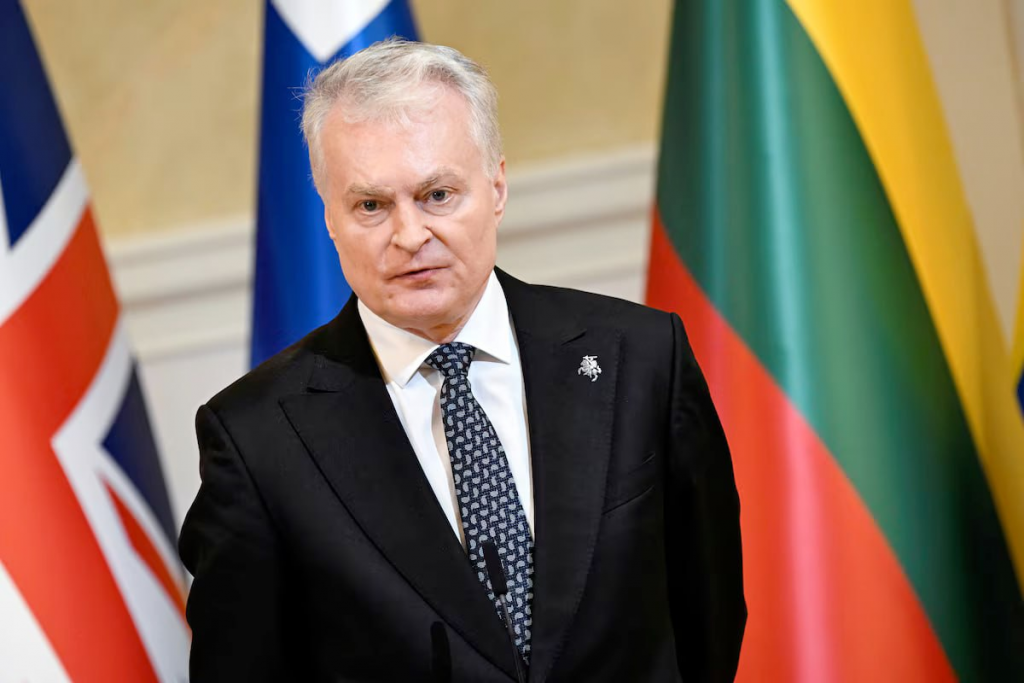
Lithuanian President Gitanas Nauseda has said that he supports his country joining the US freedom of navigation mission in the Strait of Hormuz that was announced in yesterday’s recap, telling a news conference he would present the proposal to the State Defence Council and would need a mandate from parliament, and it comes as the United States pushes for other nations to help restore freedom of navigation in the strait, as oil prices surged to their highest in more than four years on fears of longer-term disruption to global fuel supplies, Reuters reported.
Israel’s Ministry of Defence have announced that its air and sea bridges are expanding, claiming that within 24 hours, two cargo ships and several transport aircraft had arrived carrying thousands of tons of air and ground munitions, military vehicles, JLTV armoured vehicles, and other equipment, totalling 6,500 tonnes, while Defence Minister Israel Katz said his role was to ensure the IDF received all necessary means to operate with ‘full force’ against ‘enemies whenever and wherever required,’ adding that since the start of ‘Operation Roaring Lion,’ more than 115,600 tonnes of military equipment had reached Israel via 403 flights and 10 cargo vessels.
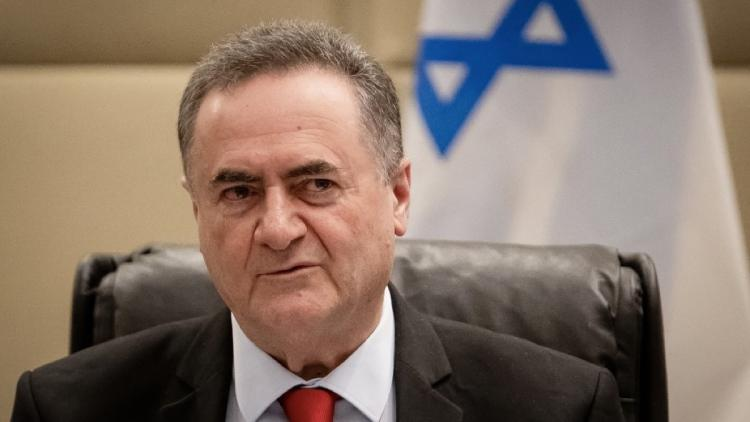
Warnings came from Israeli Defence Minister Katz Israel they may ‘soon be required to act again’ to eliminate ‘existential threats’ posed by Iran, despite claiming that Israel supports ongoing diplomatic efforts with Iran, stating: “Iran has suffered extremely severe blows over the past year, blows that have set it back in all areas, President Trump, in coordination with Prime Minister Benjamin Netanyahu, is leading the effort to complete the campaign’s objectives in a way that ensures Iran will not return to being a threat to the existence of Israel, to the United States, and the free world for generations to come,” adding that Israel supports this effort and provides the necessary backing: “But we may soon be required to act again to ensure objectives are achieved.”
Scaremongering came from Israeli Channel 12 on Thursday evening, claiming that Israel was preparing for the possible collapse of US-Iran negotiations, alleging that heated discussions were under way ahead of a decision by President Trump on whether to continue the blockade, noting that cabinet ministers assessed a high likelihood that the US would strike Iranian gas, energy and governance infrastructure, while adding that in response, Iran’s Supreme Leader threatened to attack US forces in the Gulf, saying ‘their place is at the bottom of the sea,’ while also threatening to close the Bab al-Mandeb Strait.
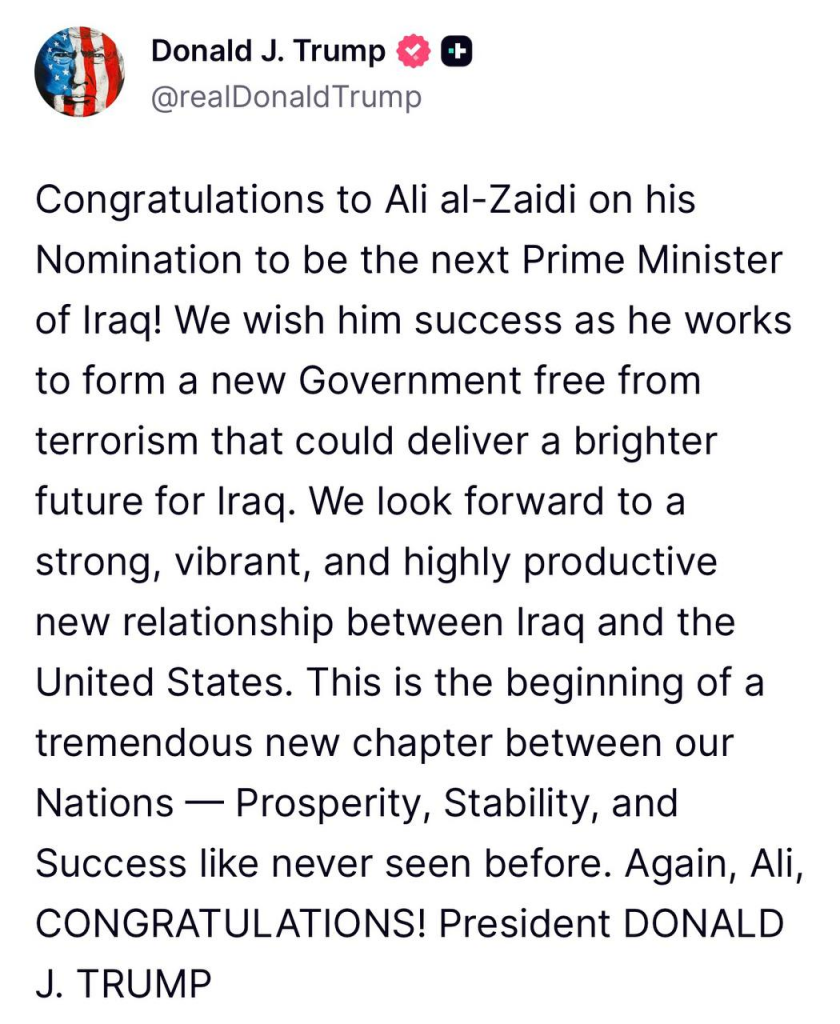
Iraqi Prime Minister-designate Ali Falah al-Zaidi received a phone call from both President Trump and US envoy Tom Barak, who congratulated him on his formal appointment to form Iraq’s new government, while Trump extended an official invitation to visit Washington after the government is formed, and the two discussed strengthening bilateral strategic relations and cooperation to enhance stability in the region.
A source from the Iranian Kurdistan Democratic Party told Rudaw News that at 22:40 on Thursday evening, an attack with four drones targeted the vicinity of the Azadi camp in Kuysinjaq, adding that there weren’t any casualties and only material damage was reported.
Oil surged to a four-year high after Axios reported that US president Trump was going to receive a briefing on new military options for Iran from Centcom Commander Admiral Brad Cooper on Thursday, as Brent jumped to over $126 a barrel, the highest since the 2022 Ukraine invasion, as the report indicated that a ‘short and powerful’ wave of strikes – likely including infrastructure targets – is under consideration, and the Strait of Hormuz remains effectively closed, while Trump has said he would not lift the naval blockade without a nuclear deal, that led to the current stalemate.