 AJ
AJ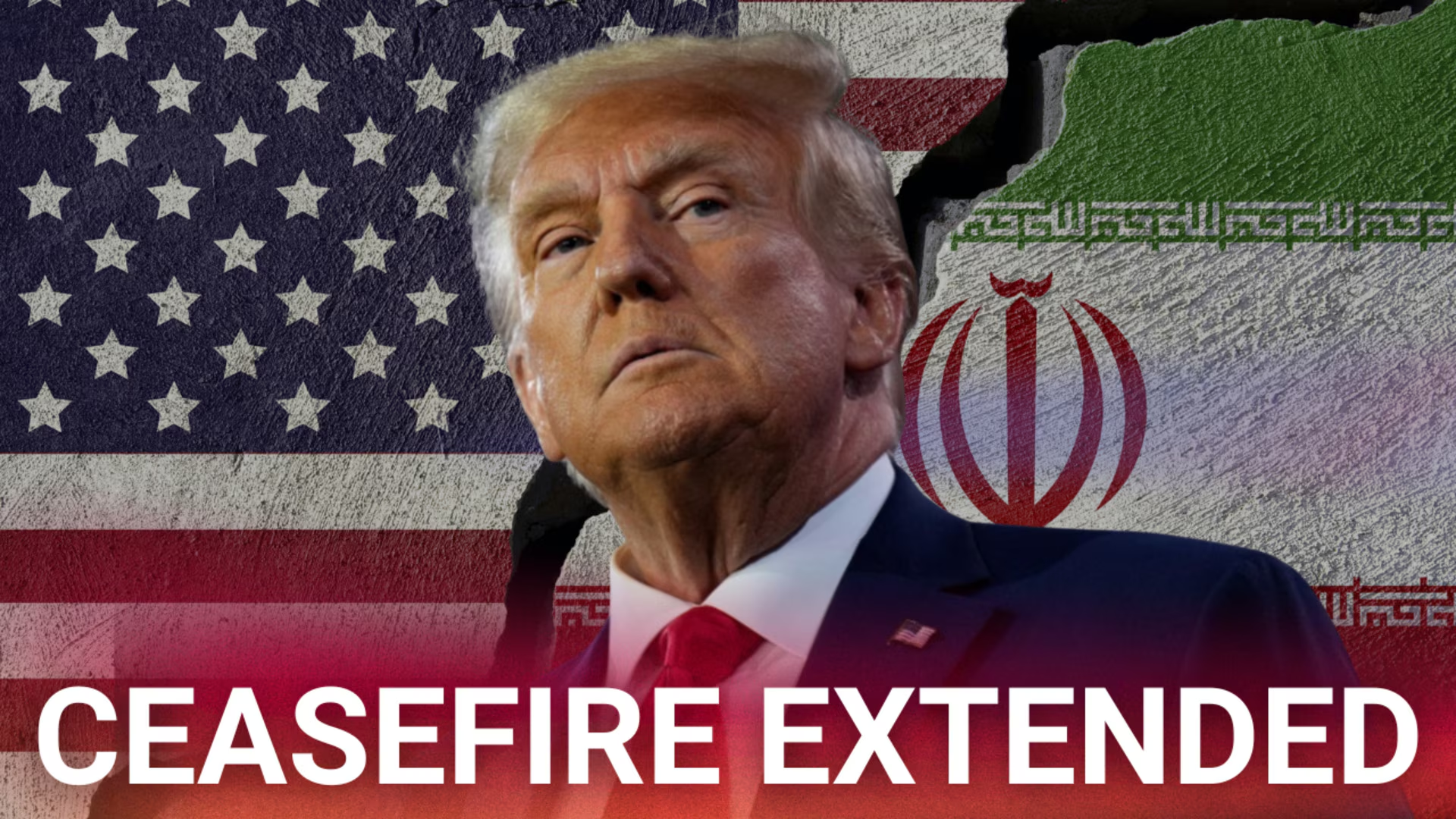
President Donald Trump extended a ceasefire deadline that was set in place by himself, citing a discord in the Iranian government and allowing time for Iran to approach the US with a proposal, which led to several reports from different agencies that all seemed to contradict one another, as AJ News takes look at the main talking points around the negotiations, the Strait of Hormuz, and other news from the region during the US/Israel Iran war ceasefire recap day 15 (April 22).
Strait of Hormuz:
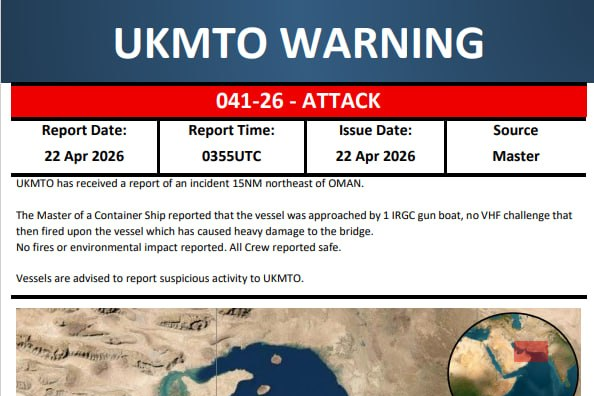

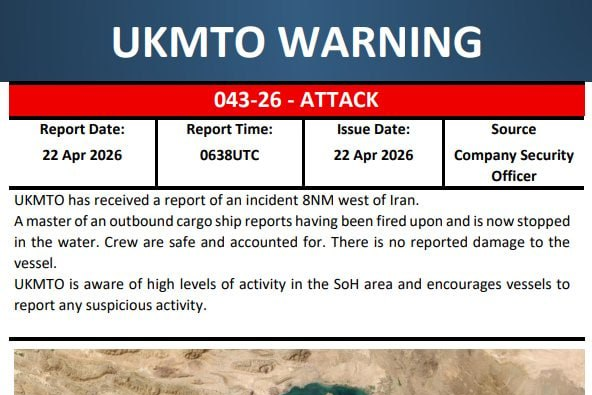
During the early hours of Wednesday morning, around a day after the US seized the Touska by disabling the engine room, capturing the crew and the cargo, Iran’s promised retaliatory strike occurred, as IRGC gunboats approached a container vessel 15 nautical miles northeast of Oman and fired at it (causing heavy damage), while a cargo ship was fired upon several times by the IRGC around 8 nautical miles west of Iran.
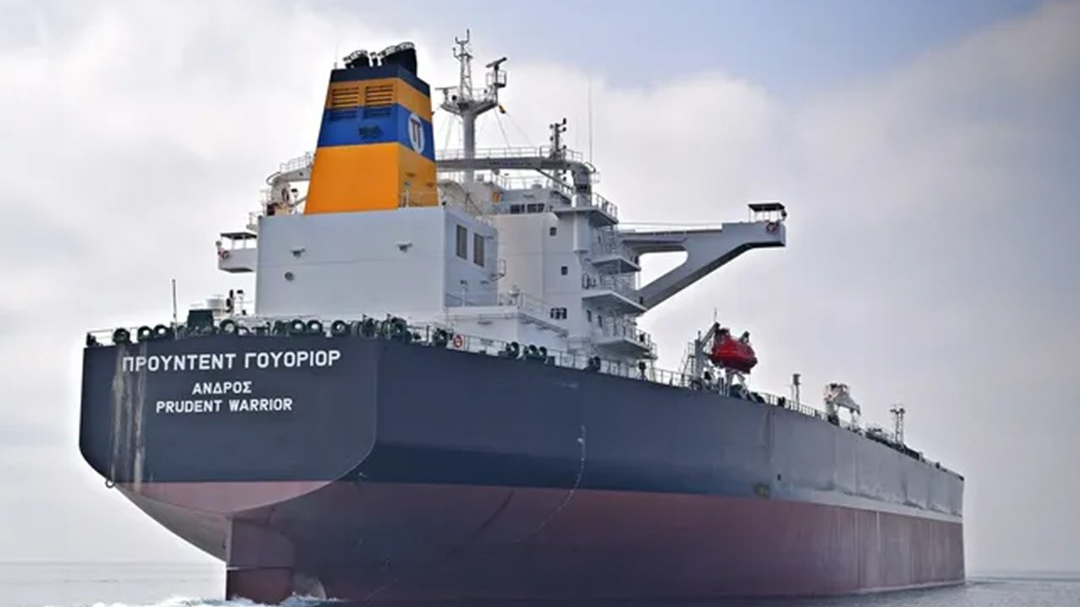
Official statements from the IRGC Navy confirmed that one of the ships captured and seized had been the MSC-FRANCESCA, which had been taken due to its liks with Israel, along with as-the-yet-to-be-identified EPAMINODES, and the IRGC Navy added that both ships had violated maritime security operations without necessary permits and tampering with navigation systems.
Fars News Agency stated that the IRGC targeted a third vessel, the Greek-owned vessel named Euphoria, which was now anchored off the Iranian coast, adding that forces also seized the previous two vessels as they were attempting to pass through the Strait of Hormuz, causing them to run aground, Al Mayadeen reported.
President Donald Trump’s blockade of Iranian ports, meanwhile, didn’t appear to be working as well as previously thought, after the Financial Times reported that 34 Iran-linked tankers had broken through the blockade, noting that according to data from marine cargo tracking company Vortexa, at least 19 Iranian-linked tankers had left the Persian Gulf heading towards the Sea of Oman, while 15 had entered the Persian Gulf from the Sea of Oman, and at least six of those were confirmed to be carrying Iranian crude oil with more than ten million barrels.
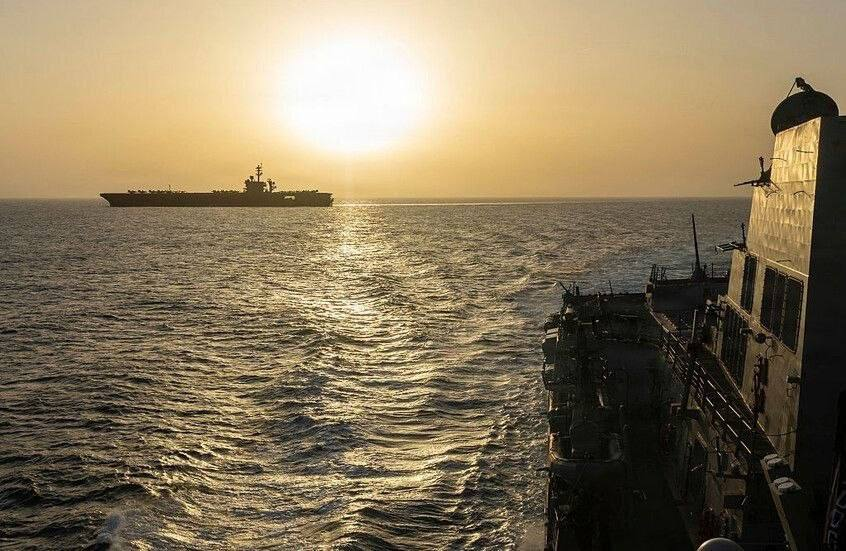
In an attempt to save some face, the US Central Command reported they had successfully returned 29 ships to Iranian ports since the blockade began, up by one from Monday, showing that sending a fleet of at least 48 ships towards the naval obstacle has helped some bypass any threats.
Meanwhile, Iran’s blockade of the Strait of Hormuz for any vessel that isn’t from an Iranian port, (which is the remainder of vessels currently present in the Strait), are unable to move due to an Iranian-enforced blockade that resulted in the earlier ships being attacked, and warnings that other ships will suffer the same consequences if they attempt to pass.
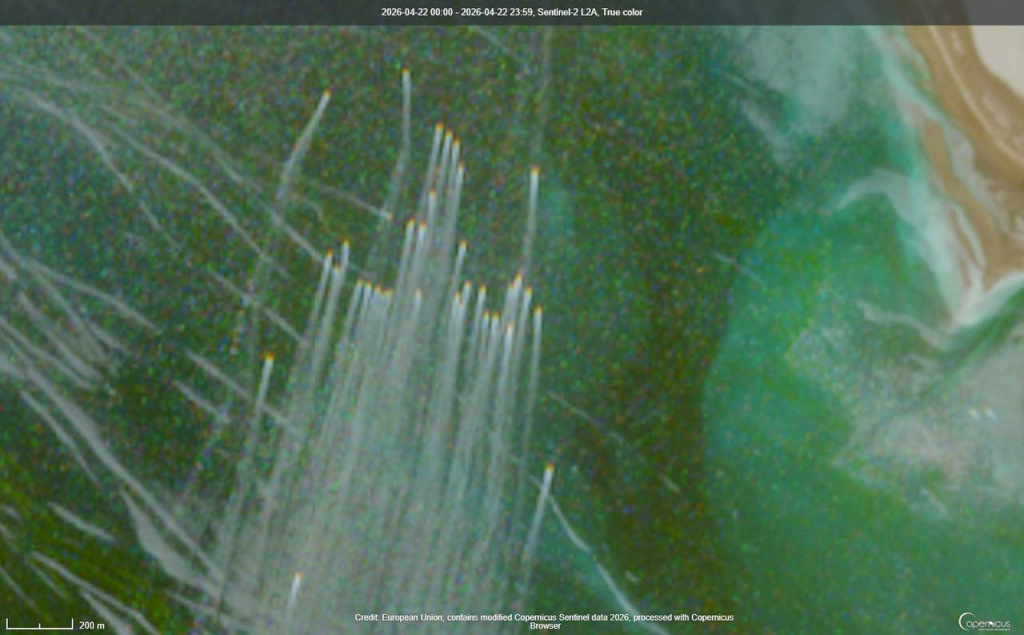
Satellite imagery published by the IRGC and circulated through social media showed a huge swarm of 33 fast attack boats belonging to the IRGC Navy returning to the coast after patrolling in the Strait of Hormuz, contradicting President Trump’s claims the navy had been ‘completely and utterly destroyed,’ and these boats likely took part in Wednesday’s attack on the three vessels in the Strait, seizing two of them.
Clearing the Strait of Hormuz completely of mines could take up to six months according to the Pentagon, with operations unlikely to begin until the war with Iran ends, reported the Washington Post, stating that estimates were shared during a classified briefing to the House Armed Services Committee, where US lawmakers were told Iran may have placed more than 20 naval mines in and around the Strait, some deployed remotely using GPS technology to avoid detection, while others had been laid by small Iranian boats.
Although the US military intercepted at least three Iranian-flagged tankers in Asian waters, they weren’t seized and are instead being redirected away from their positions near India, Malaysia and Sri Lanka, reported Reuters citing shipping and security sources on Wednesday.
One vessel was reported to have been the Deep Sea supertanker which had been partially loaded with crude and was last seen on its public tracking transponder off Malaysia’s coast a week ago. The smaller Iranian-flagged Sevin had a maximum of 1 million barrels and was carrying 65% of its capacity when it was intercepted and was also last seen off the coast of Malaysia one month ago, while the third ship was the Iranian-flagged supertanker Dorena, which was fully loaded with 2 million barrels of crude and was last seen off the coast of southern India three days ago.
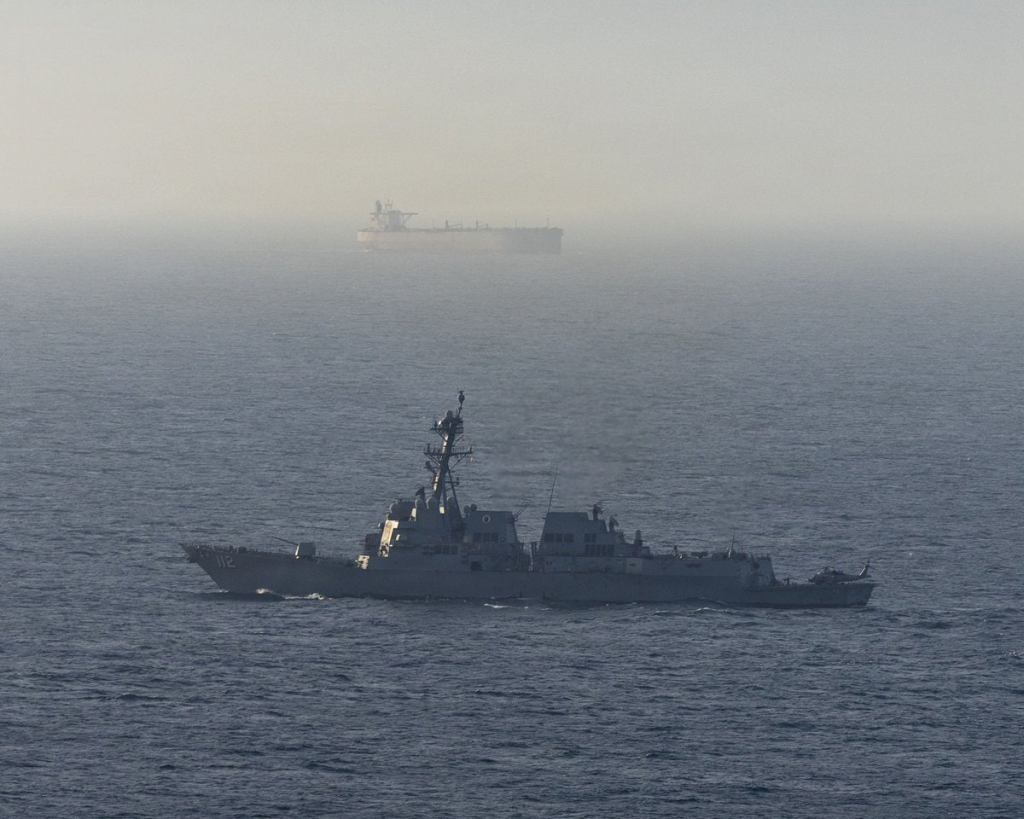
US Central Command published a statement saying that media reports of several commercial ships evading the blockade, including M/V Hero II, M/V Hedy and M/V Dorena, were inaccurate, stating that Hero II and Hedy did not sail past the blockade as part of a flotilla that ‘ferried’ millions of barrels of oil to the market, adding that they were anchored in Chah Bahar, Iran, after being intercepted by US forces earlier this week, noting that the Dorena had been under escort of a US Navy destroyer in the Indian Ocean after previously attempting to violate the blockade.
Ceasefire talks:
Pakistan warned Iran on Tuesday that it couldn’t guarantee a ceasefire extension if Iran didn’t attend the negotiations, but Iran replied they wouldn’t attend any new round of talks until the US naval blockade of the Iranian ports was fully lifted, which reportedly left Pakistani mediators ‘fuming with anger,’ according to Al Arabiya.
Spokesperson for the Iranian Foreign Ministry Esmaeil Baghaei responded to Pakistan’s request to extend the ceasefire by saying that Iran wasn’t the initiator of the war and its actions were in line with legitimate self-defence, that Iran’s Armed Forces were ready to firmly defend the country, adding that Iran would use every opportunity to hold the aggressors accountable and demand compensation, while Iran would only take part in negotiations once a ceasefire which consolidates Iran’s defensive achievements has been proposed.
Baghaei later said that no decision had been made about a new round of talks mainly because of the confusing messages that have come from the United States, while noting ceasefire violations including the attack on Iranian vessels and the crew of the Touska having been taken hostage, adding that at the same time, threats of war crimes are made including genocide along with the bombing of bridges and power plants, which isn’t the behaviour of a country that is really serious about a diplomatic peace process.
Iran’s Ambassador to Pakistan Reza Amiri Moghadam met with Pakistani Prime Minister on Wednesday morning to discuss the ongoing peace efforts a day after President Trump unexpectedly extended the ceasefire after Iran had called their bluff.
As Washington woke up, US officials reported to Axios that Trump was offering a limited time window of 3-5 days for Iran to respond with a clear negotiating position, stating bluntly: “Trump is willing to give three to five days to allow the Iranians to get their shit together – it is not going to be open-ended,” and this timeframe was later confirmed to be around the stock market closure time in the USA for the weekend, as well as the approximate arrival times of the George H W Bush and the Gerald R Ford strike groups in the Gulf region.
NYP quoted President Trump as saying that there was ‘good news’ on a possible second round of talks which could come as soon as Friday, saying ‘its possible when asked about a potential breakthrough, while WSJ reported sources in Islamabad had pointed out positive efforts with Tehran, suggesting negotiations could resume within 36 to 72 hours as Iran worked to form a more unified position, but Iran’s Tasnim News Agency later said that Iran had ‘no plans to negotiate on Friday, and there had been no change in Iran’s plan to not participate in the negotiations until the US have removed their blockade of Iranian ports.
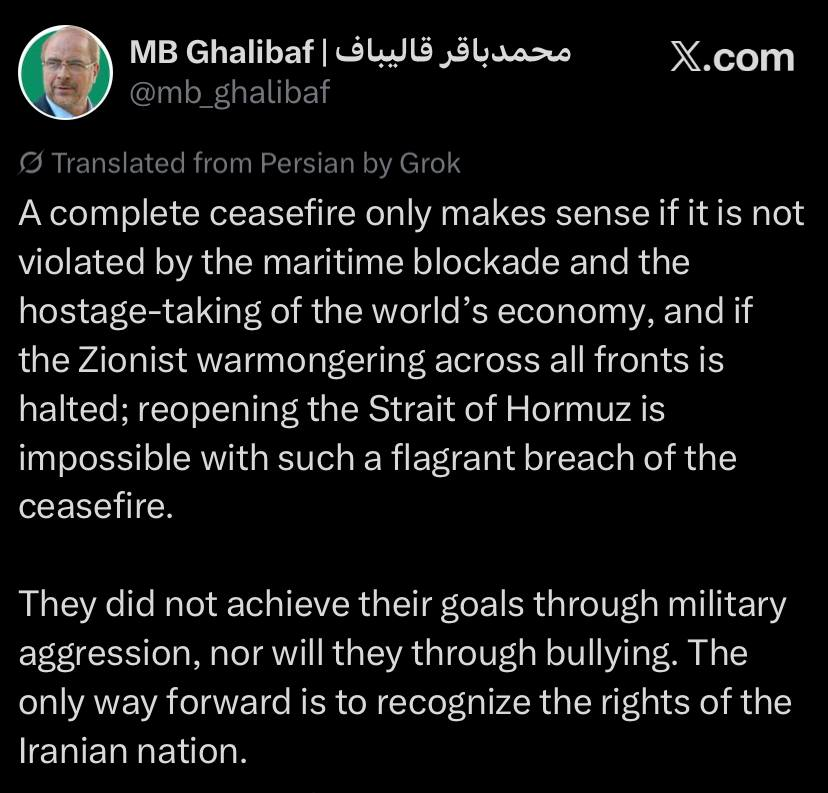
Iranian Parliament Speaker Mohammed Bagher Ghalibaf summed up the day perfectly on X, when he stated that a complete ceasefire only made sense if the US didn’t go and break it by imposing a maritime blockade and taking of hostages, stating that the reopening of the Strait of Hormuz was impossible with such a flagrant breach of ceasefire, adding that the US didn’t achieve their goals through military aggression, and they wouldn’t succeed with bullying, so the only way forward was to recognise the rights of the Iranian nation.
Axios attempted to say that ceasefire negotiations were going to be held in 3-5 days as America woke up and Fox News said a White House official had told them that the ceasefire would be extended by three to five days, but this was later disputed by Israeli Channel 12 and Kan News, claiming the United States had communicated with Israel that the deadline set for Iran was Sunday, and then it was disputed again when Press Secretary Karoline Leavitt said no deadline date had been set by President Trump.
Other News:
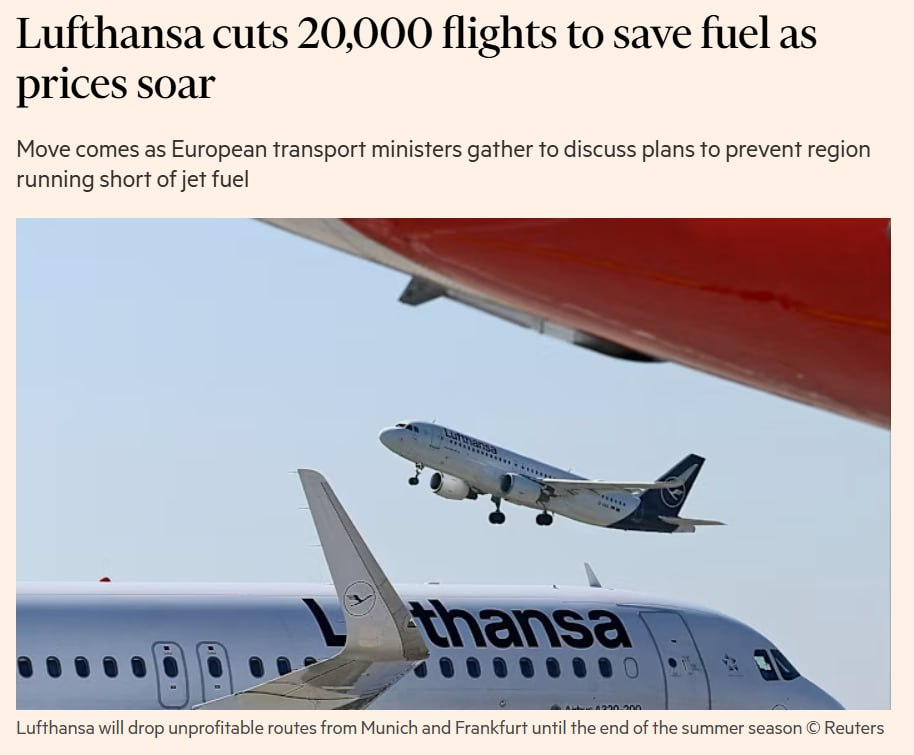
Germany: Lufthansa is set to cancel around 20,000 short-haul flights between May and October, approximately 120 per day, in a major cost-cutting move due to jet fuel prices doubling during the Iran War, reported the FT, stating that cuts were expected to save roughly 40,000 tonnes of fuel and mark one of the largest schedule reductions by a global airline to date in response to rising energy costs.
Iran: Foreign Minister Abbas Araghchi held a call with Afghanistan counterpart Amir Khan Muttaqi, as the ministers discussed latest regional and bilateral relations, reported IRIB News, later confirming a call also took place with Italian FM Antonio Tajani, where they both exchanged views as they discussed the latest regional developments and other issues related to the ceasefire and diplomacy, as well noting aggrievances because European countries had been silent regarding the aggression near Iranian nuclear facilities., Al Mayadeen reported.
Iran: Despite more than 2,000 attacks on Iran’s power grid facilities, the Deputy Minister of Energy for Electricity and Energy said that blackouts were always resolved in less than one hour, stating that Iran was among the 5 countries that manufacture power plants and grids, with 150,000 employees working in the electricity industry and 30,000 working around the clock to ensure a 24/7 service, IRIB News reported.
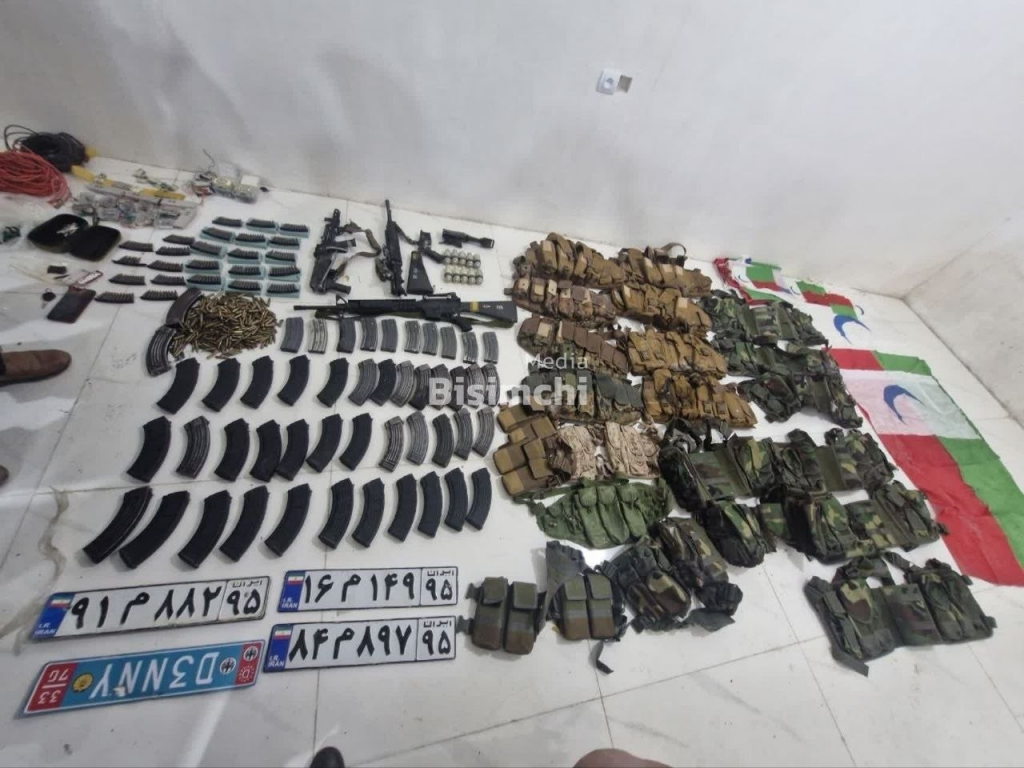
Iran: An Israeli-backed militia group called Jaish Al-Adl attempted to enter Iran from the southeast border with Pakistan and was immediately neutralised by several border guards, who stated that several ‘terrorists’ were killed, while weapons, explosives and various pieces of equipment had been seized.
Israel: US officials are uncertain about who is making decisions in Iran due to a power struggle between the IRGC and the civilian leadership, reported Israeli N12, stating that the Iranian Supreme Leader Mojtaba Khamenei is reportedly not communicating with the rest of the leadership and there is a rift between the negotiating team and the military, adding that a US official noted there was a complete divide within Iran between the negotiating team and the military, with neither side having full access to the Supreme Leader.

Kuwait: Sky News correspondent and media personality Yida Hakeem made a public call for the release of her fellow journalist Ahmed Shihab, who was arrested in Kuwait as a result of his coverage of the recent war.
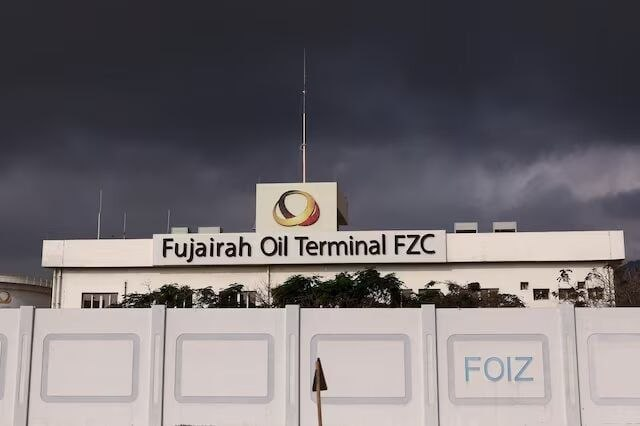
UAE: Unprecedented decline in oil reserves at Fujairah port following the disruptions that have been caused in energy supply to the region have led to their lowest levels in 9 years, after data released on Wednesday morning showed refined oil product reserved at Fujairah port had reached 7 million barrels.
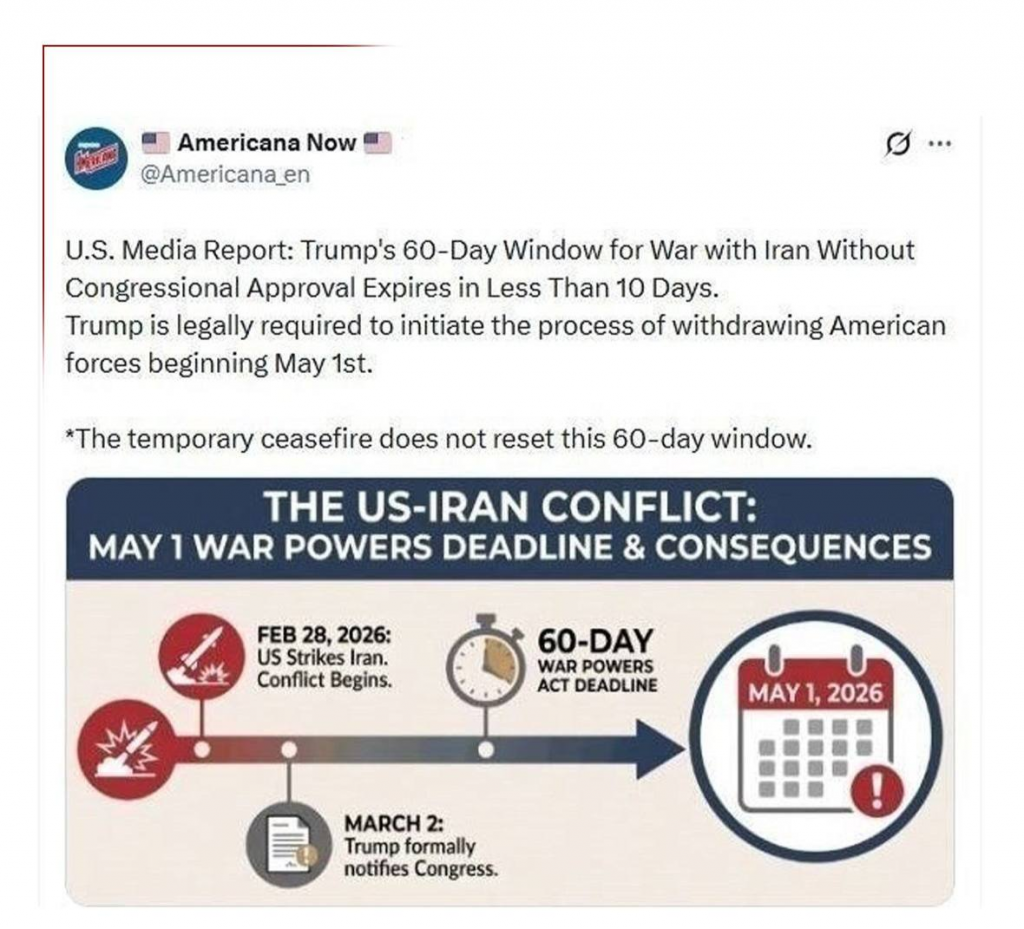
USA: There were just 10 days left until the end of President Trump’s deadline of 60 days for the war with Iran without the need for Congressional approval, which would mean that Trump would legally be obliged to start the process of withdrawing the US forces from the region around May 1, and a temporary ceasefire doesn’t reset the 60 day deadline, IRIB News reported.
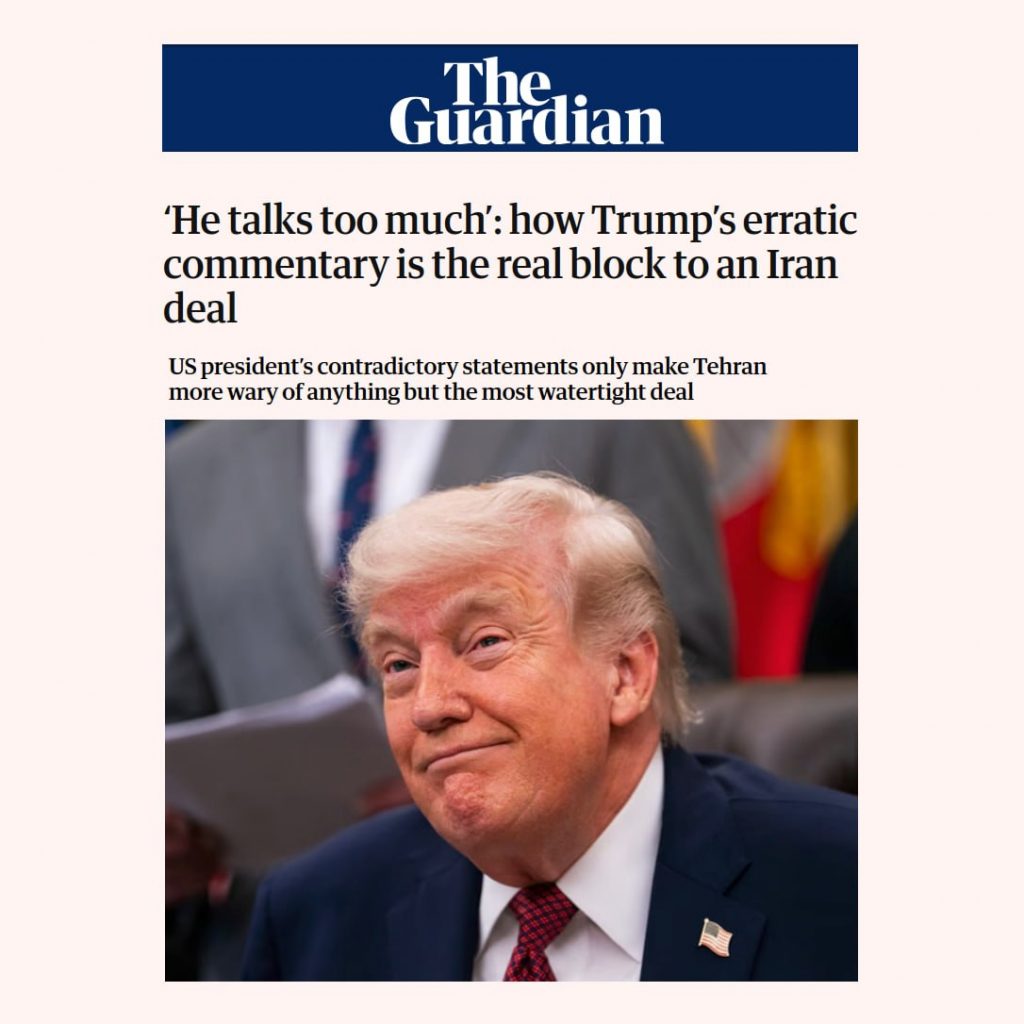
USA: President Trump’s excessive and capricious remarks are the real obstacle to an agreement with Iran, reported The Guardian, noting that contradictory statements have made Tehran cautious and sceptical about anything other than a complete impermeable agreement, and by changing positions hourly, Trump had effectively discredited the position of the US President, while for Iranian diplomats, the question had arisen as to what benefit there was in negotiating with a government whose morning words contradict its evening tweets and comments.
USA: Extraordinary market timing was detected again this week, after traders placed a staggering $430 million in bets on lower oil prices just minutes before President Trump officially announced the US-Iran ceasefire extension, War Spectators reported.
USA: Former Secretary of State John Kerry told the Late Show that Netanyahu had presented the Iran War to their administration too, which was met with a swift no, stating that the prediction at the time had been regime change, and that people would rise up, but none of that happened, so Obama said no, Bush said no, Biden said no and the US were lied to about what the war was really about: “Don’t ask them to send their sons and daughters to fight,” he added.
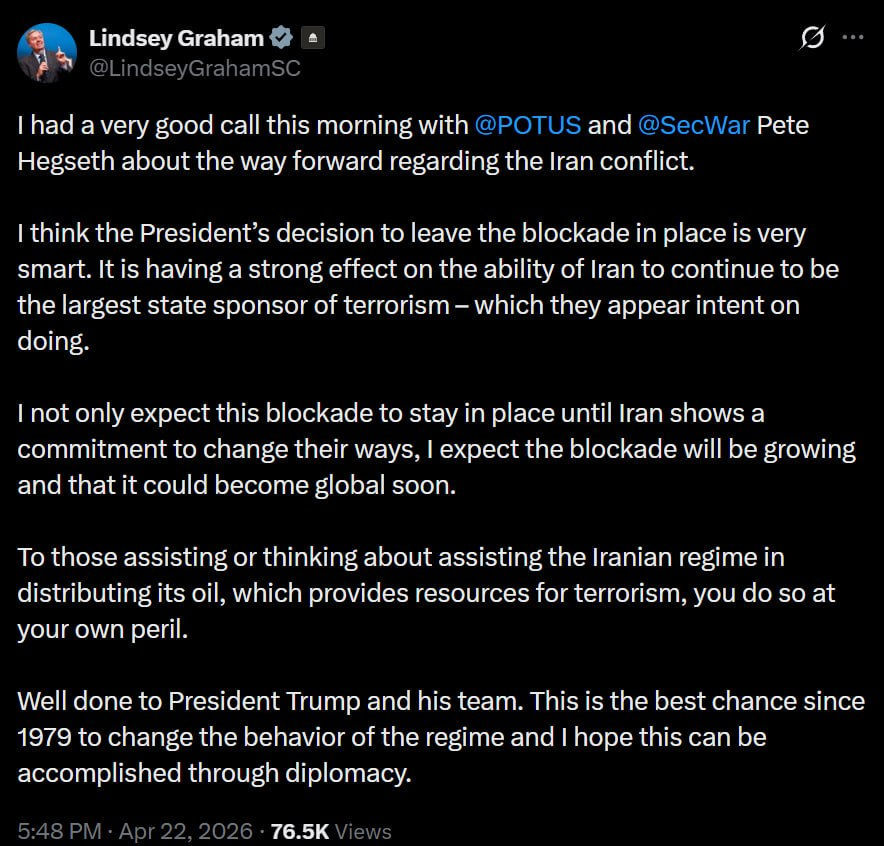
USA: Republican Senator and warmonger Senator Lindsey Graham said on X that the President’s decision to leave the blockade in place was smart because it was having a strong effect on the ability of Iran to continue to be the largest state sponsor of terrorism, not only expecting the blockade to stay in place until Iran showed a commitment to change their ways, but for it to be growing and noting that it could become global soon.
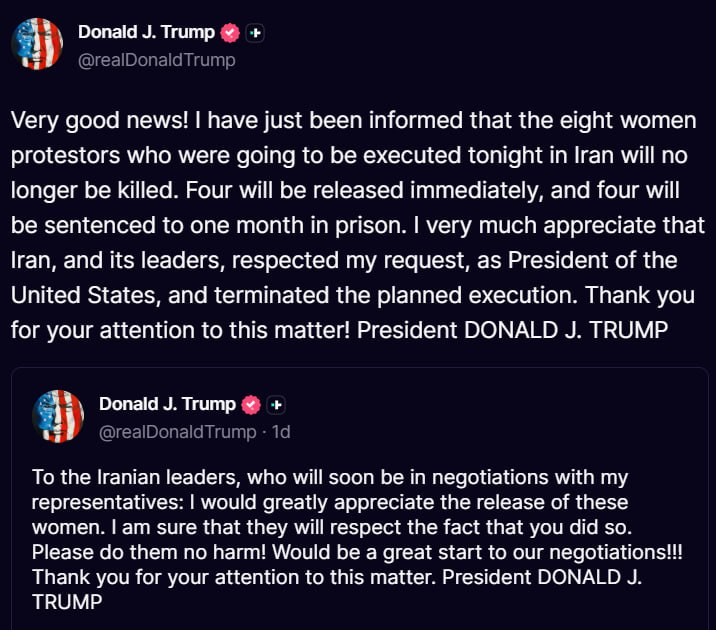
USA: President Trump took to Truth Social saying that great news had been received and Iran were due to release some of the women allegedly due to be killed on Wednesday, while others were going to be imprisoned for a month.
USA: White House Press Secretary Karoline Leavitt then reiterated that the women had been saved and only President Trump could have done this, while adding that journalists shouldn’t trust Iranian media and only trust official US administration sources.
USA: Later, Iran’s Judicial officials republished comments from Tuesday night’s original demands from President Trump for the release of the eight women, where they noted that the women’s images were AI-generated, the post had emanated from one Telegram account and was widely shared, and that there had been no women arrested or awaiting death, claiming instead Trump shared fake news.
[Just in case you missed the recap for April 21, you can read it here.]