 AJ
AJ
The US/Israel/Iran recap for 19 May includes a lot of distrust, clandestine operations and secretive talks talking place, making negotiations severely difficult as many countries have different demands of the US, without actually helping the US to fulfil those demands. Meanwhile President Trump continued to repeat previous statements in multiple TV appearances, Iranian officials responded, and others had their say.

President Trump’s comments to the press:
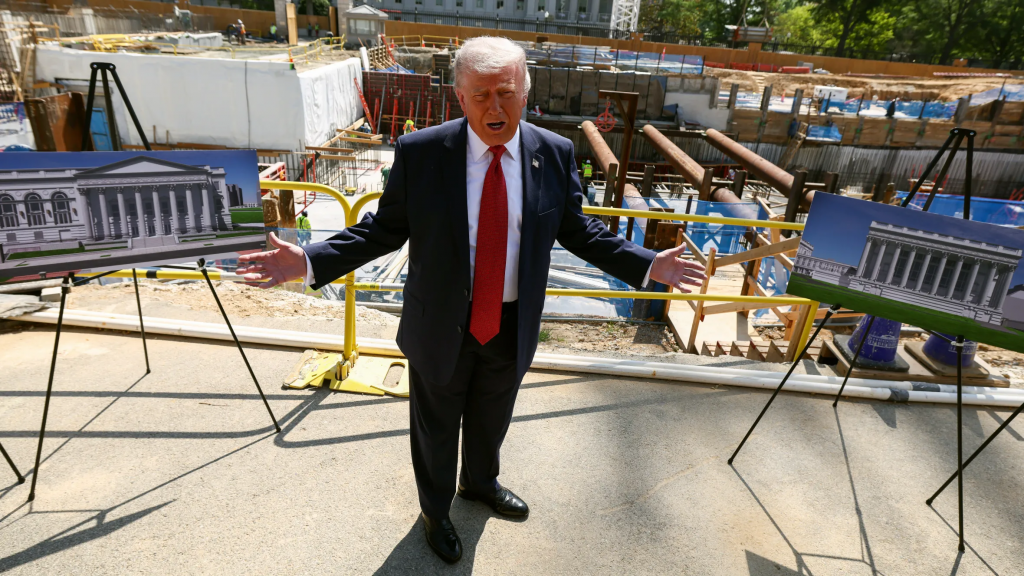
⚡️ President Trump was stood in front of the construction site of the new ballroom being built at the White House, no doubt to showcase its progress to the world in an attempt to gain more funding for the project, while answering questions over a range of topics, including comments about Iran.
🔹 Asked how close Trump was to striking Iran on Monday, Trump replied that he was one hour away: “We were all set up to go,” he said, stating it would’ve been happening right now, but Iran are begging to make a deal: “We may have to give them another big hit, I am not sure yet, [but] you will know very soon,” he added.
🔹 Trump claimed again that a call was received asking to delay strikes because the Middle East were close to agreeing a deal, allegedly saying: “Sir, could you give us a couple of more days because we think they’re being reasonable?” despite denials throughout Tuesday morning from representatives of the UAE, Qatar and Saudi Arabia.
🔹 According to Trump, even Iran knew that the US was going to attack, without Trump having to say anything: “I was an hour away from making the decision to go in today,” he said, stating if that happened the press discussions would be about the war instead of the ballroom.
🔹 Changing tone from needing to get the ‘nuclear dust’ because it would make the ‘fake media happy’ and would help ‘save face,’ the president said on Tuesday: “I think it’s important to get the nuclear dust, maybe psychologically more than anything else.”
🔹 Asked how long Iran have to come to the table, Trump replied “two or three days,” adding: “Maybe Friday, Saturday, Sunday, maybe early next week, a limited period of time,” which also gives a chance for the markets to close at the weekend, as well as big announcements that could drastically reduce or increase prices.
🔹 Trump said he gets told the war is unpopular, but the president thought it the opposite: “I don’t really have enough time to explain the war to the people – I am too busy getting it done,” he said, stating that whether it’s popular or not popular: “I have to do it.”
🔹 Claims then came that Iran had little means in which to retaliate, this time alleging that 82% of missiles were gone, while their capacity to build was very small because the US and Israel had hit all of Iran’s manufacturing areas, adding that the same thing was with drones, but admitted Iran ‘still have a little capacity.’
🔹 President Trump said the Strait of Hormuz is not Iran’s, its international waters, so Iran had no right to claim it and they’d learned their lesson: “If I left today, it would (now) take them 25 years to rebuild, but we are not leaving, we are going to do it right,” he said.
🔹 Trump concluded saying that he thought the market would go down 25%, which he was okay with, in order to get rid of a ‘potential nuclear holocaust,’ stating: “Going down 25% is okay if you get rid of a nuclear holocaust – most people agree with me.”

US Vice President’s comments on Iran:
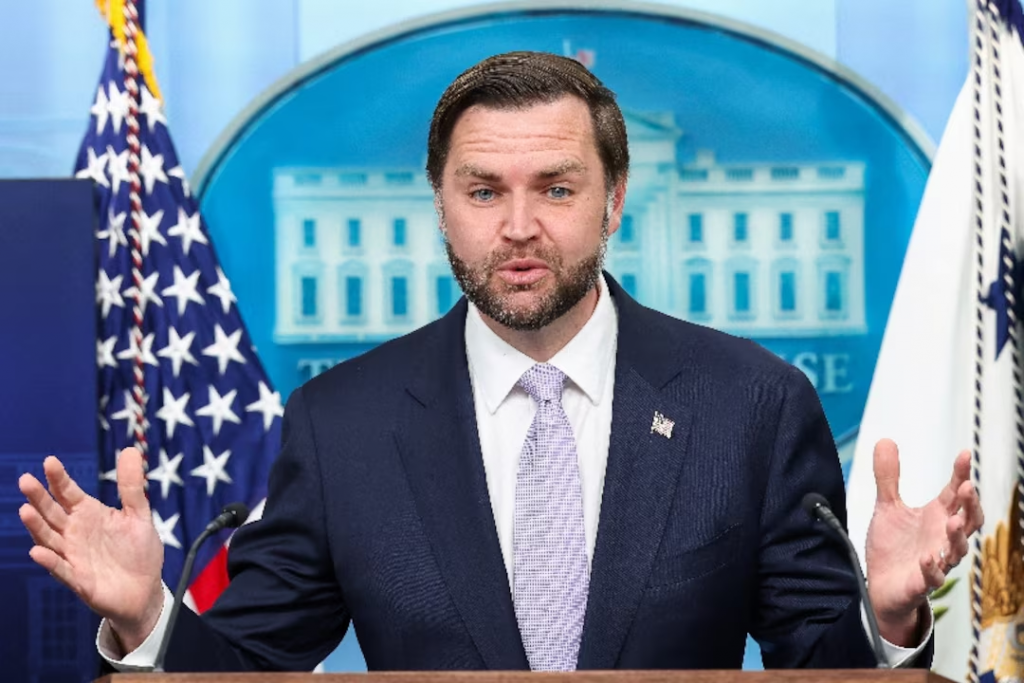
⚡️ US Vice President JD Vance held the week’s White House Presser, as main Press Secretary Karoline Leavitt was still on maternity leave, where the VP offered various comments about the current situation with Iran.
🔹 Asked whether Vance thought Iran would make a deal, he replied: “How could I possibly know? I think the Iranians want to make a deal, they recognise a nuclear weapon is America’s red line, but we don’t know until we sign a deal,” adding that there had been many drafts, but he couldn’t say with confidence they’d reach a deal until they signed a negotiated agreement.
🔹 Vance said there isn’t going to be a deal that allowed the Iranians to have a nuclear weapon: “So as [Trump] just told me, we’re locked and loaded – we don’t want to go down that pathway, but the President is willing and able to go down that pathway if we have to.”
🔹 The Vice President also denied reports claiming the Trump administration could allow Russia to store Iran’s uranium as part of a nuclear deal, saying: “The idea has never been our plan.”

Negotiation efforts:
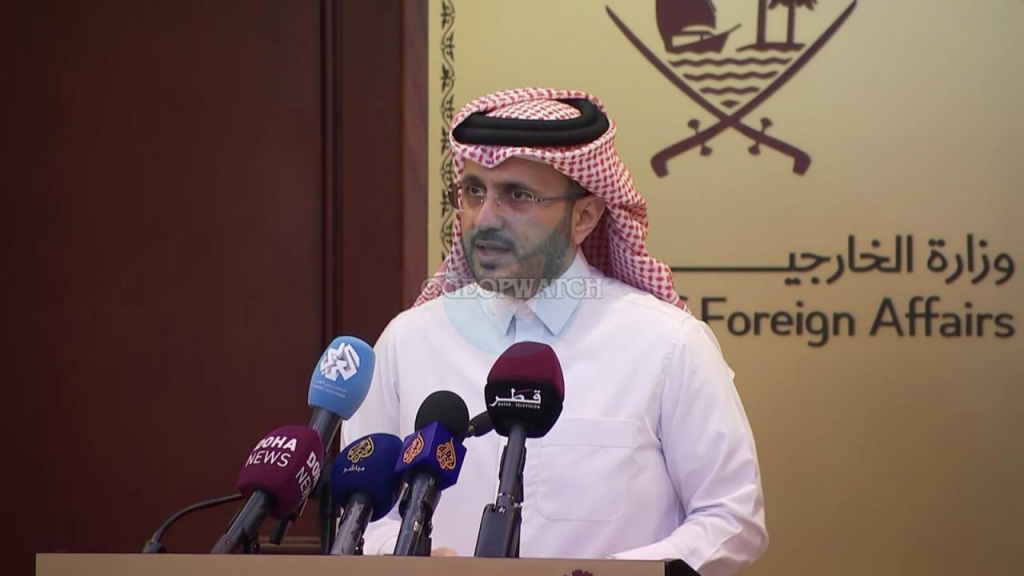
⚡️ Qatari Foreign Ministry Spokesperson Majed al-Ansari reaffirmed Doha’s full support for Pakistan’s mediation efforts between the US and Iran, describing them as serious and deserving of more time.
🔹 Al-Ansari called for the immediate restoration of freedom of navigation in the Strait of Hormuz, stating its closure violated international law and that no country, including Iran, had the right to obstruct it.
🔹 The Spokesperson stated that the recent passage of two Qatari gas carriers through the strait wasn’t a signal of a return to normal navigation, and said that Qatar’s priority is a permanent resolution to the crisis rather than a temporary truce.
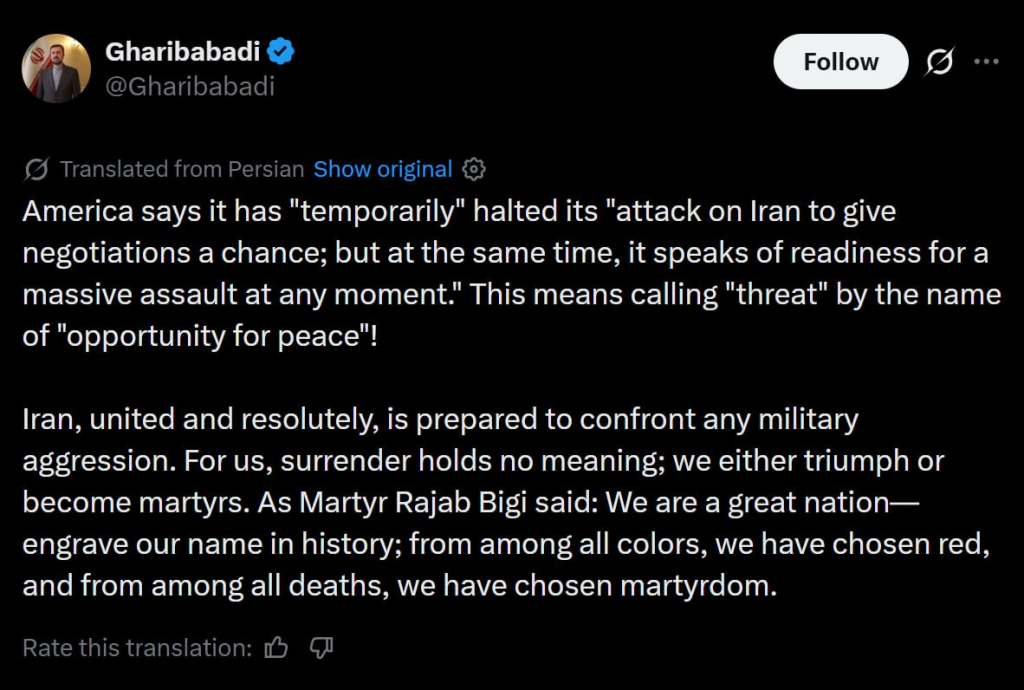
⚡️ Iranian Deputy Foreign Minister for Legal and International Affairs, Kazem Gharibabadi, said on X that the US had temporarily halted an attack on Iran to give negotiations a chance, but at the same time, spoke of a readiness for a massive assault at any moment: “This means calling threat by the name of opportunity for peace,” he wrote, warning that Iran were united and resolutely prepared to confront any military aggression.
Secret and not so secret attacks in the Gulf:
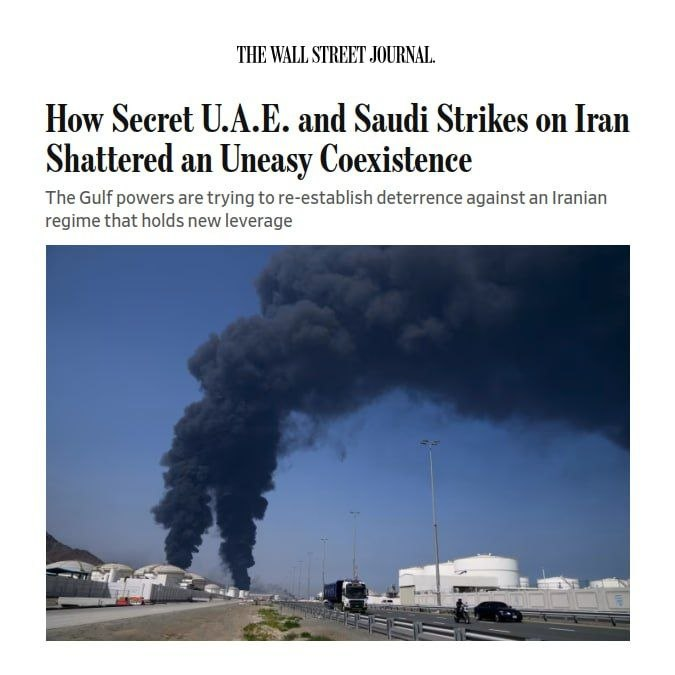
⚡️ Secret attacks carried out by the UAE and Saudi Arabia on Iran have shattered what was a fragile and tense coexistence in the region, according to the NYT.
🔹 According to the report, the period of cautious détente between Iran and the Gulf Arab countries had effectively come to an end, noting the diplomatic reconciliations over the previous years had never truly meant the end of security cooperation and only created a fragile co-existence, a situation that was eventually shattered by the recent war and reciprocal attacks.
🔹 Iran now had more leverage than before, the WSJ continued, pointing to developments from missile and drone capabilities to proxy force networks and its geopolitical position in the Gulf and the Strait of Hormuz.
🔹 Even if the Arab countries or the US managed to strike Iran’s infrastructure, Tehran is also capable of inflicting heavy economic and security costs through the region using countermeasures, leaving Saudi Arabia cautious about entering a war of attrition, due to concern about damage to economic projects.
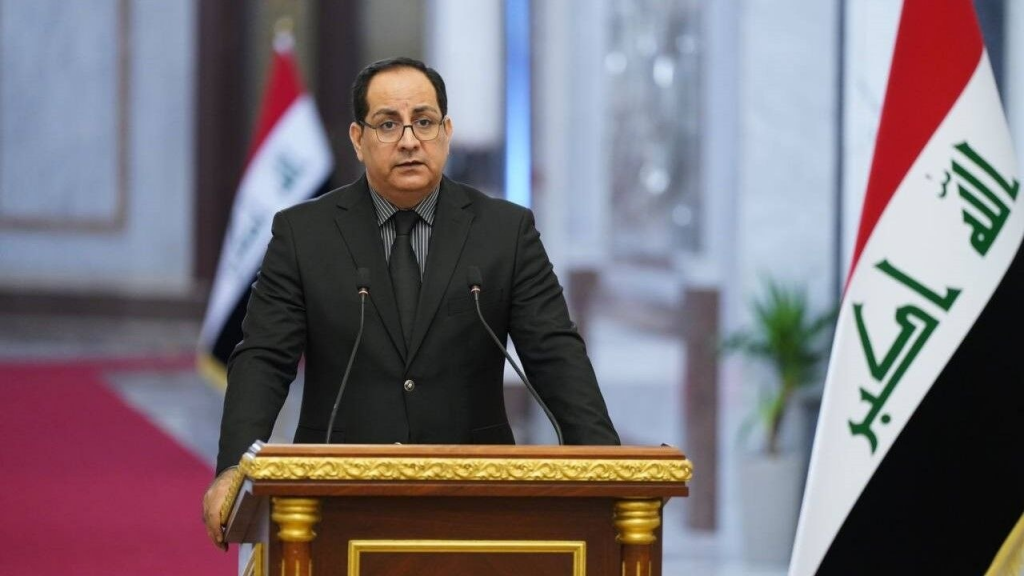
⚡️ Iraq’s Foreign Ministry condemned the recent attacks on Saudi Arabia, announcing the country firmly rejects the use of its land, airspace, and waters to carry out any attacks against neighbouring countries.

⚡️ UAE said it had intercepted 6 drones within 48 hours in a statement published on Tuesday, meaning 3 more had attempted to attack after those which targeted the nuclear power plant on Monday, and officials claimed an investigation into the May 17 attack near the Barakah nuclear power plant found all drones had originated from Iraq.
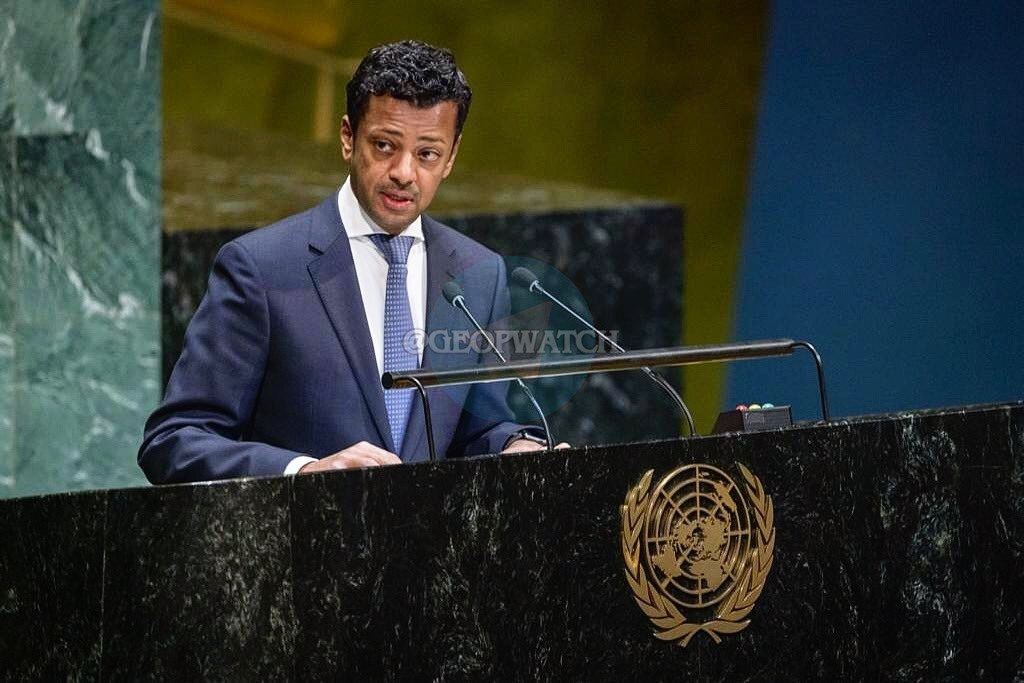
⚡️ Bahrain’s UN envoy Jamal Fares Alrowaiei condemned the attack on the UAE’s Barakah Nuclear Power Plant at a UN Security Council meeting, describing it as a ‘serious and unjustified escalation’ and a ‘violation of the UN Charter.’
🔹 Alrowaiei stressed that Bahrain, the UAE, and their Gulf neighbours have faced repeated attacks throughout the conflict, adding that the escalatory nature of the strikes reflected a deliberate approach aimed at undermining regional stability and confidence in the security of the region.

⚡️ Russia’s representative also condemned the attacks carried out against the nuclear power plant at the UN Security Council meeting, stating the actions undermined regional and global security.
🔹 However, if it wasn’t for the ‘military adventurism of the US and Israel against Iran,’ there wouldn’t be any discussions about emerging threats related to nuclear security in the Middle East.
🔹 The representative also noted that its not the first time peaceful facilities had been targeted, because Israel and the US had previously targeted Iran’s nuclear sites in Fordow, Natanz, and Isfahan, as well as coming close to the Bushehr nuclear power plant, leading to more than 200 Russians being evacuated for safety, and partial closure of the plant with a ‘skeleton crew.’

News surrounding the Strait of Hormuz:
⚡️ US Central Command’s Naval blockade had turned around another commercial vessel on Tuesday morning, and one on Tuesday afternoon, taking the total to 89 redirected and 4 disabled (to ensure total compliance).
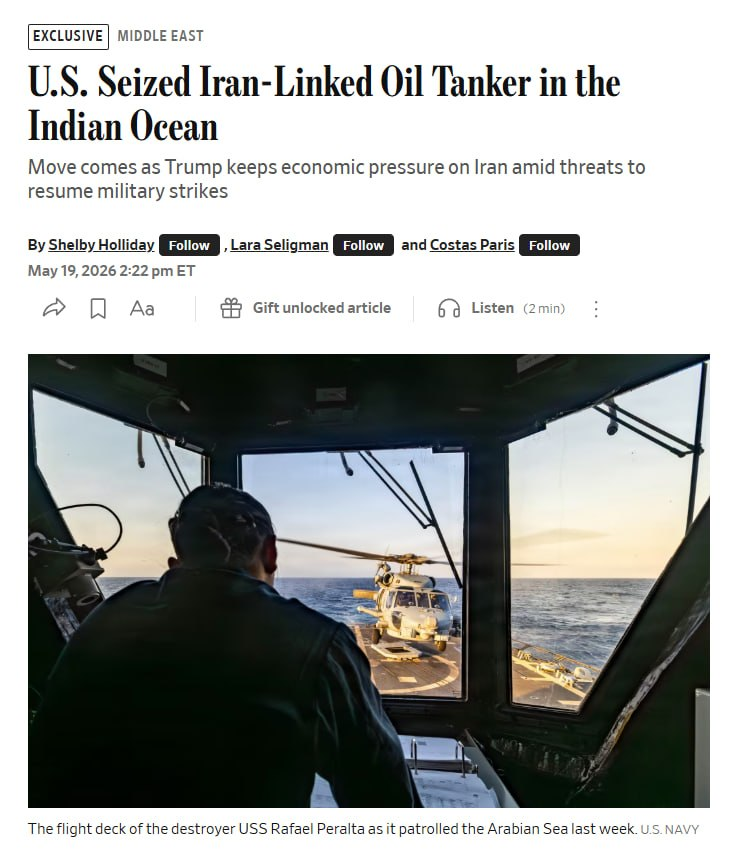
⚡️ US forces reportedly seized an Iranian-linked oil tanker in the Indian Ocean on Monday night, according to a report published by the WSJ on Tuesday, claiming the “Skywave” was previously sanctioned by the US for transporting Iranian oil, and was likely loaded with more than a million barrels of crude oil at Iran’s Kharg Island in February.
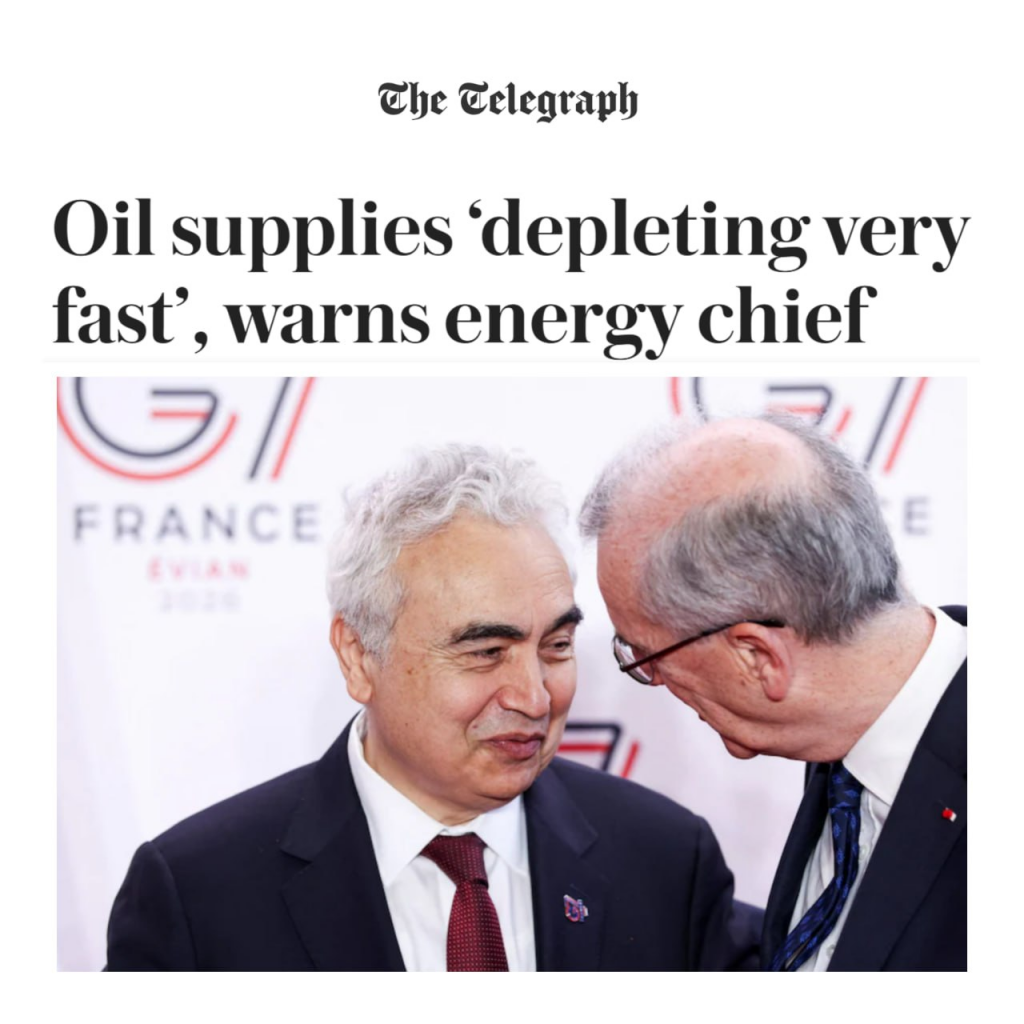
⚡️ Oil reserves are depleting at a very high rate, warned Head of the International Energy Agency Fatih Birol, adding that only a few weeks of reserves remain, and described the current situation as the ‘biggest oil supply disruption in history,’ reported The Telegraph.
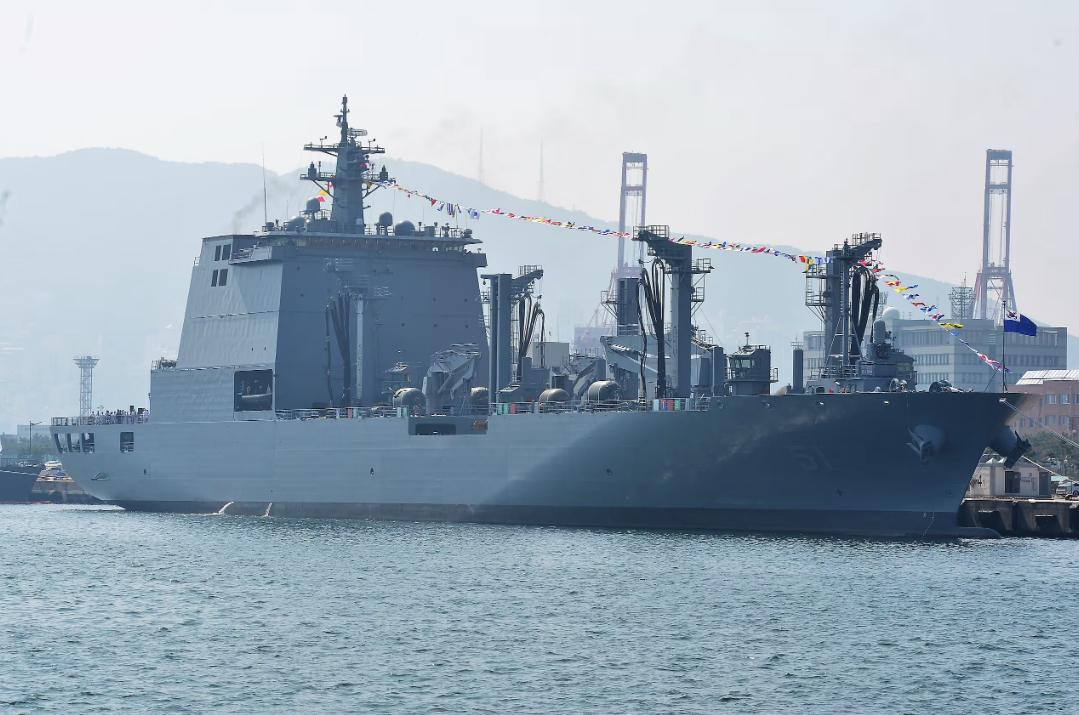
⚡️ South Korea said a vessel operated by a South Korean shipping company was passing through the Strait of Hormuz, possibly becoming the first Korea-managed ship to successfully pass through the waterway since the outbreak of the war.
🔹 Foreign Minister Cho Hyun told lawmakers in Seoul that the tanker, carrying two million barrels of crude oil, began its passage following consultations with Iranian authorities, and was moving cautiously along the Iranian-designated route.
🔹 Cho said the vessel had been stranded near the waterway since late February, before departing waters near Qatar on Tuesday, and was due to enter the Gulf of Oman, adding that there were more than 20 crewmen on board, including less than 10 South Koreans, and officials claimed they didn’t need to pay a transit fee to Iran.
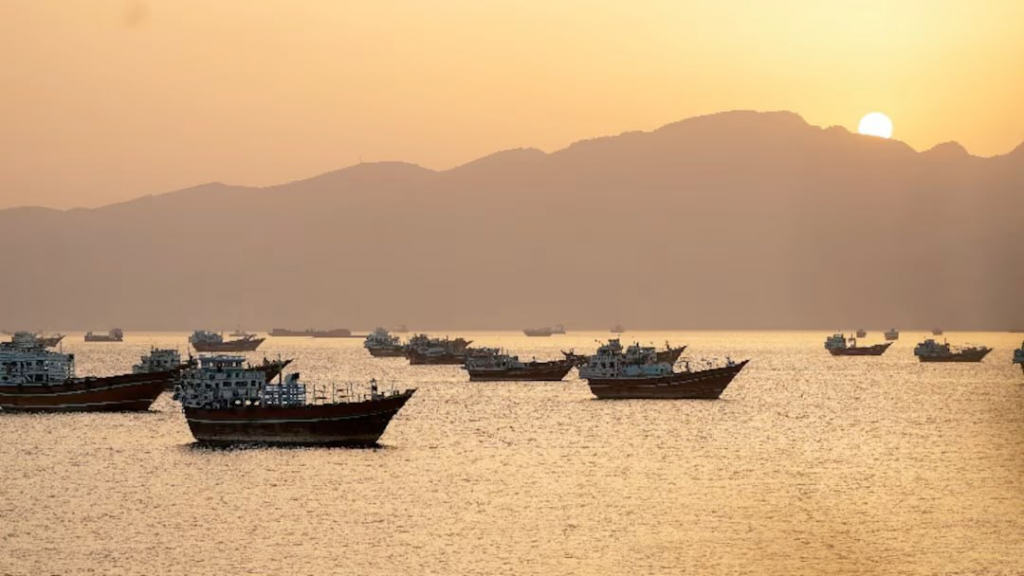
⚡️ Two supertankers exited the Strait of Hormuz, with a third close behind, carrying a total of 6 million barrels of Middle East crude oil, reported Reuters, stating the vessels had waited in the Gulf for more than two months, and were using a transit route designated by Iran.
🔹 Reuters said a South Korean-flagged very large crude carrier was carrying 2 million barrels of Kuwaiti crude loaded on March 4 and is heading to Usan, while two Chinese-flagged tankers also exited, one with two million barrels of Iraqi Basrah crude and another with a combined 2 million barrels of Qatari and Iraqi crude.
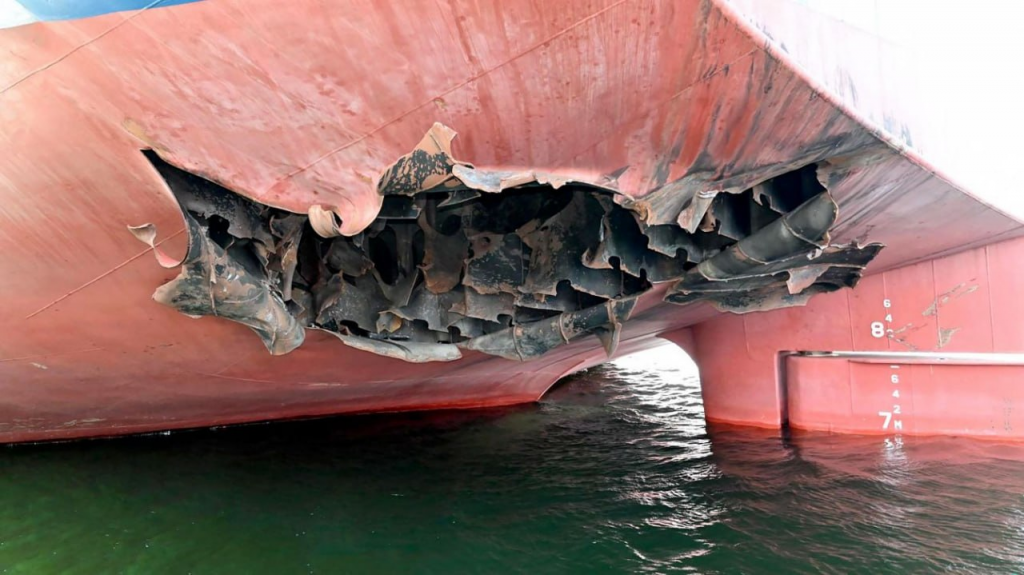
⚡️ South Korea’s Foreign Ministry is pushing ahead with an investigation into an attack on the South Korean-operated cargo vessel HMM Namu in the Strait of Hormuz.
🔹 According to Yonhap, an official inquiry confirmed that two unidentified flying objects struct the commercial ship on May 4, triggering an explosion and a subsequent fire that left a crew member injured.
🔹 Foreign Ministry Spokesperson Park Il stated that Seoul were analysing debris recovered from the scene to determine the exact nature of the weaponry used and to identify the attacker, noting that it was maintaining close and serious discussions over the incident, and may present its findings to Iran as more details emerge.
🔹 Although South Korean officials have already pointed the finger at Iran for the attack, Tehran has firmly denied any involvement.
⚡️ Britain’s HMS Dragon passed through the Suez Canal on Wednesday morning, heading towards the Gulf via the Red Sea, where the French Charles De Gaulle strike group has been anchored for around one week.

What the MSM are saying:
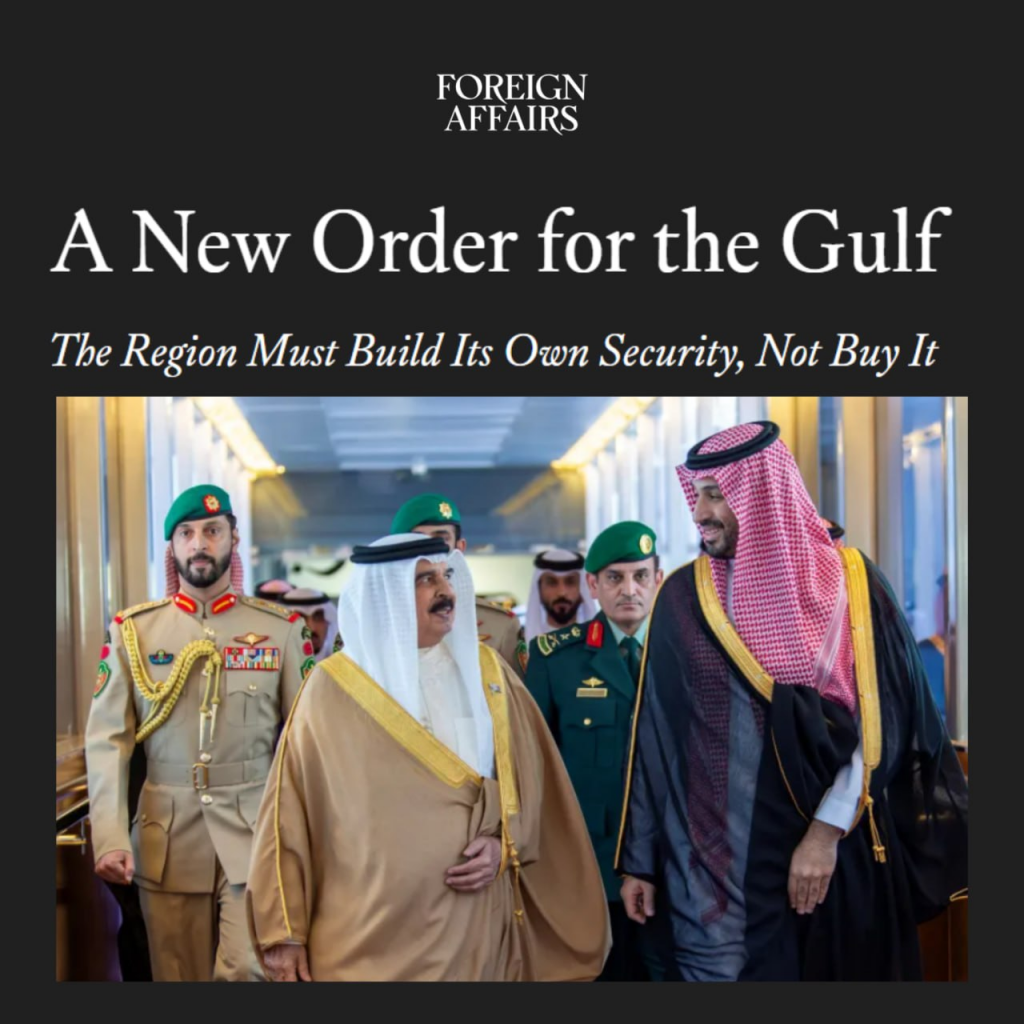
⚡️ Gulf countries believe Washington shouldn’t cease fighting until Iran is dealt with decisively so that the Iranians couldn’t threaten the Strait of Hormuz or support its proxy groups, reported Foreign Affairs, noting that Iran survived an eight-year existential war with Iraq, decades of sanctions, and a campaign of assassinations against senior officials.
🔹 Months after one of the most sustained bombing campaigns, the Iranian regime is standing firm, the report continued, stating that on the other hand, the war had caused the Gulf countries to become targets of Iranian attacks.
🔹 The report concluded stating that Gulf leaders should stop waiting for Washington to act and purpose a phased withdrawal of American troops over five years as the cornerstone of a comprehensive treaty with Iran.
⚡️ Fox News reported that the US and Israeli officials remained prepared for the possibility that the bombing campaign against Iran could resume if President Trump concluded there was no serious deal on the table.
🔹 Gulf Countries were being updated behind the scenes amid concerns they could come under direct Iran attack in the event of renewed fighting.
🔹 Regional sources highly cautious and quiet about what comes next due to serious intelligence developments, while Washington and Jerusalem were avoiding publicly signalling the plans in an effort to preserve strategic surprise.
🔹 Iran still posed a threat to US forces and allies across the Middle East, with Trump’s public comments not necessarily reflecting internal planning discussions, the report concluded.
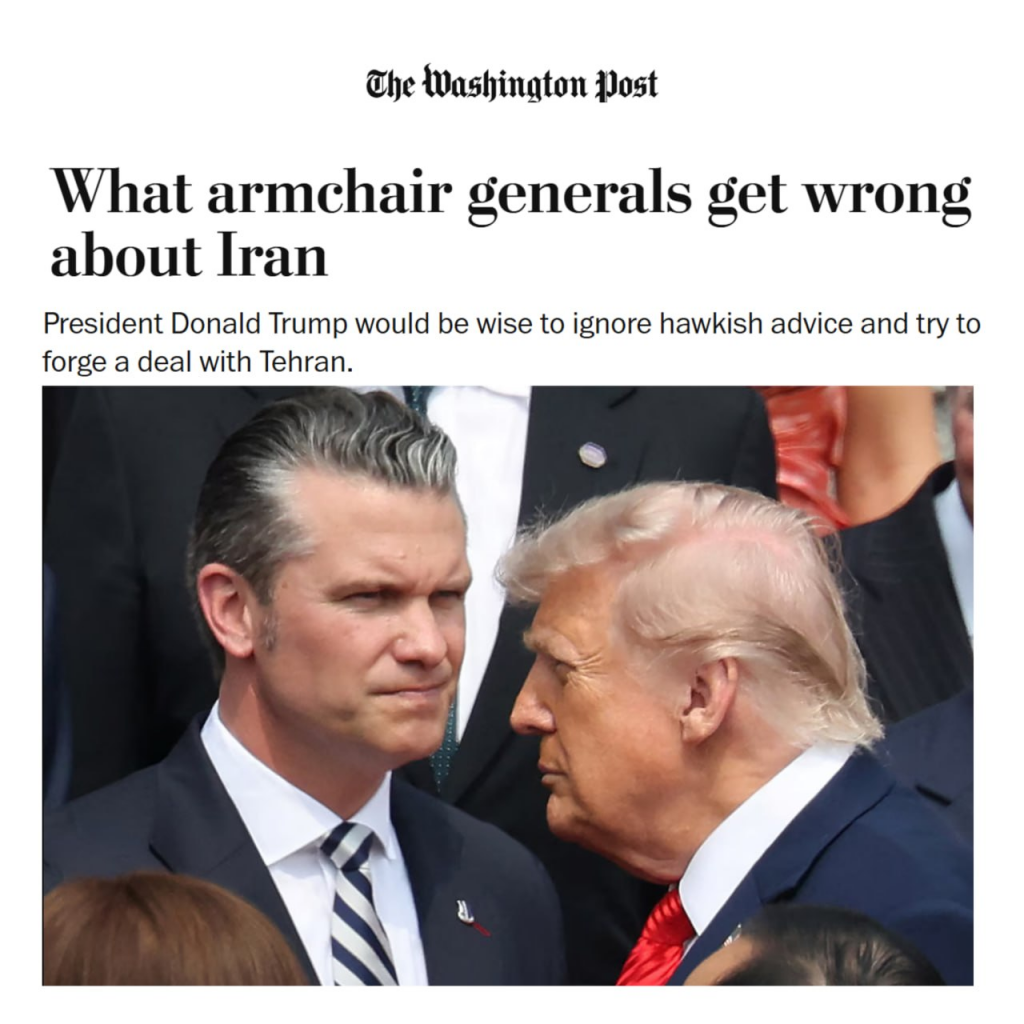
⚡️ President Trump returned from the meeting with Xi Jinping without securing any help to reopen the Strait of Hormuz, and must now find a way to exit the war he had promoted as lasting ‘four to five weeks,’ the Washington Post reported.
🔹 The report also claimed that many desk-bound generals were telling Trump to finish the job by resuming the bombing campaign, but they exaggerate what American air power can do and underestimate what Iran can do in response.
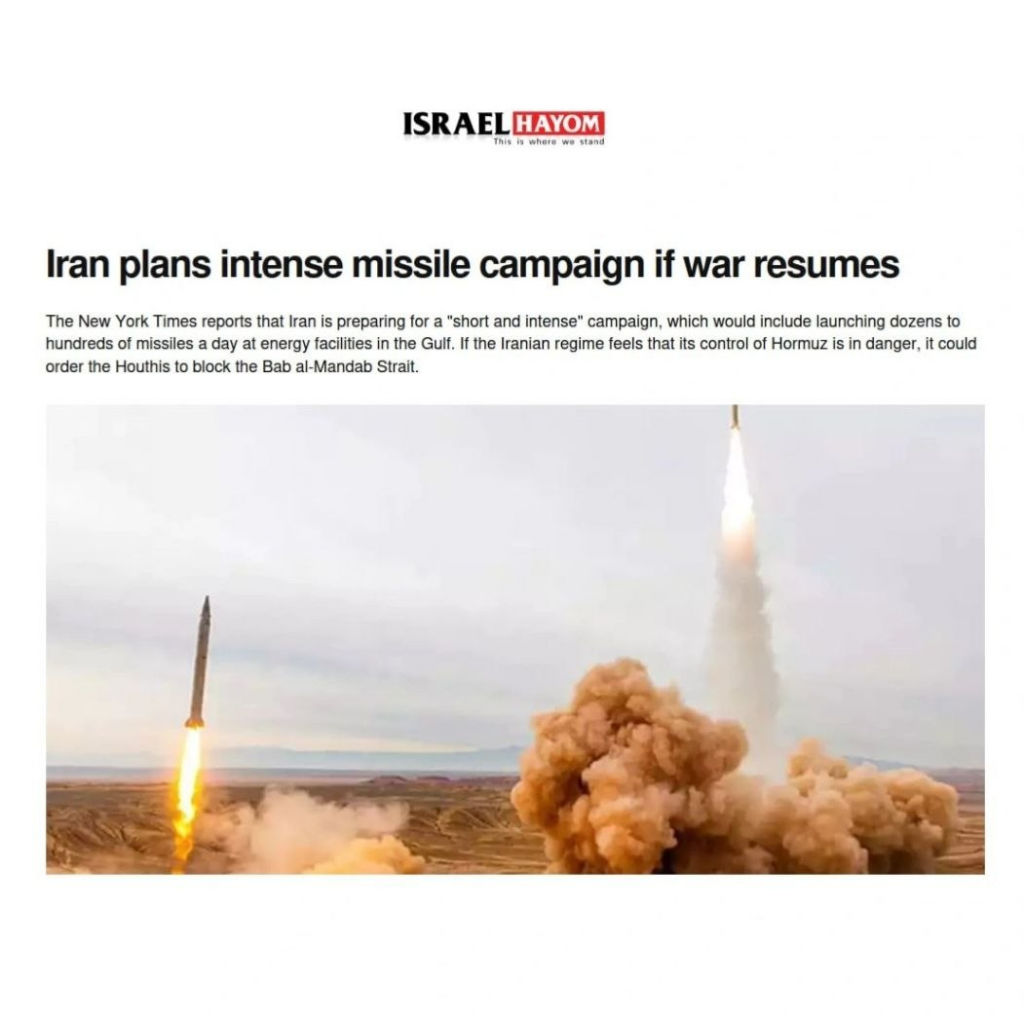
⚡️ Israeli Hayom warned that Iran had prepared a plan to carry out a devastating and intense missile operation if the war resumes that will involve firing dozens of missiles on a daily basis, adding that if Iran felt its control over the Strait of Hormuz was threatened, officials could order the Houthis to block the Bab al-Mandab Strait too.
⚡️ Kan News claimed Israeli officials were refusing to publicly comment on the timing of a possible resumption of the war, but an American security source had said that preparations for renewed operations had been completed, and that a decision from President Trump was expected soon.
🔹 According to the source, Washington and Tel Aviv were fully coordinated, adding that neither side would be surprised if a decision was made to resume the war, while Israeli officials said security alert levels are now at the highest point since the ceasefire amid concerns Iran could launch a preemptive strike.
🔹 Israeli officials believed strikes on Iran could begin within hours and were caught off guard by the announcement of the delay, Kan continued, stating that despite the two sides remaining prepared, discussions were still ongoing both within the Israeli security establishment and the White House, as well as Iran and the White House.
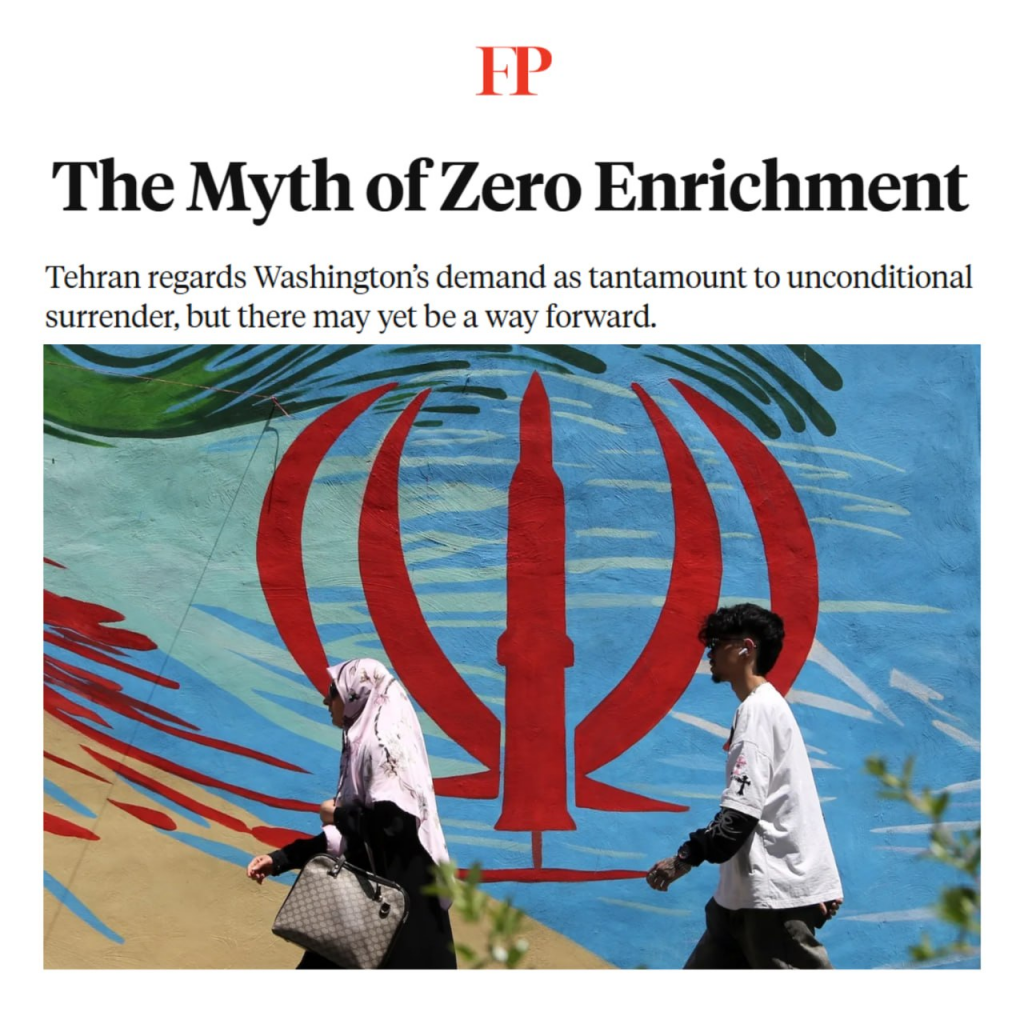
⚡️ Foreign Policy said that zero Iranian enrichment is a myth which the delegations from the US must recognise, noting that ‘Epic Fury’ didn’t change Iran’s nuclear prospects, which Iran considers both a strategic asset as well as a symbol of its national sovereignty, while also asserting that a Fatwa currently prevents Iran from obtaining or designing any nuclear weapon.
🔹 According to the report, the demand for zero enrichment today is just as unrealistic as it was pre-war, so any future agreement should instead focus on strict monitoring of the nuclear program, increasing transparency, and preventing weaponization, rather than completely attempting to dismantle Iran’s enrichment capabilities.
⚡️ Iran have ignored President Trump’s ticking clock and used the ceasefire period to shape a new reality in the Persian Gulf, according to Israeli news channel Haaretz, noting the expansion of land transportation routes alongside imposing heavy tolls on oil tankers in the Strait of Hormuz providing Iran with more breathing space than the West expected.
⚡️ Yediot Ahronot said that major technology companies needed to comply with Iran’s laws and pay usage fees, claiming that fees are now being charged to cable laying companies passing through the strait, and stating that the rights to maintain the cables will now be exclusively granted to Iran.
🔹 Tehran have also threatened to target underwater cables, the report continued, stating an action such as this could disrupt the internet across all continents and lead to a ‘digital disaster.
🔹 Any attack on the cables would affect internet speed, the global banking system, military communications, AI cloud infrastructures, and online streaming services, as researchers warn Iran have small submarines and underwater drones capable of damaging the cables.
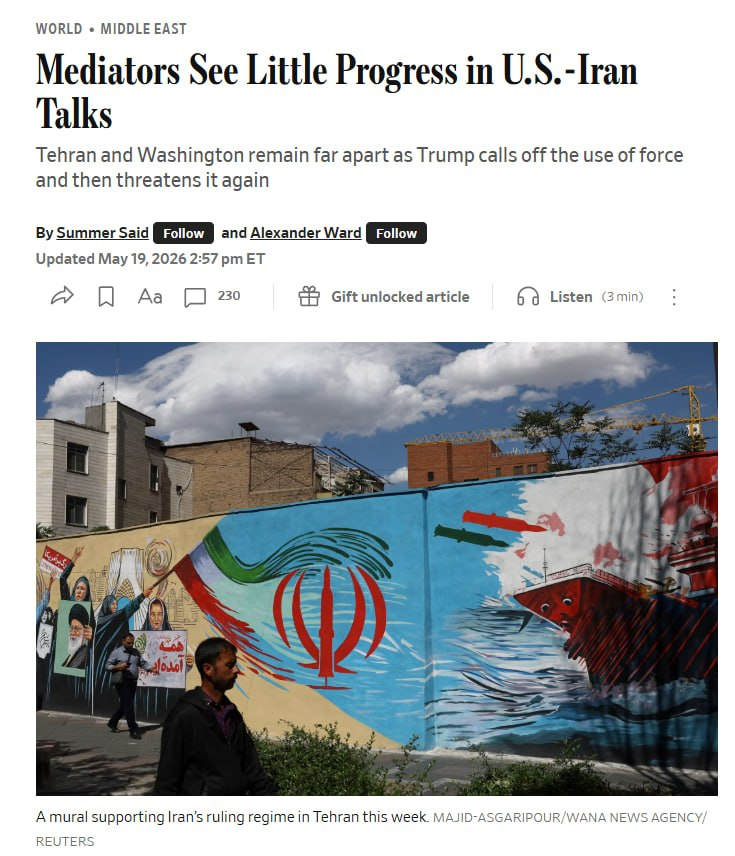
⚡️ Regional mediators and US officials have realised that Iran are not going to change their stance in negotiations, explaining this was why there was little progress, despite President Trump always claiming that ‘big discussions’ are taking place, the WSJ reported.
🔹 The report said that Iran continued to demand an end to hostilities, financial relief, reparations for the war, and a role overseeing the Strait of Hormuz, while remaining at odds over the US’ demands for the closure or long-term suspension of its nuclear program, while the US and Israel have prepared new attacks on Iran which could occur within days or by the weekend, depending on Iran’s responses in the coming days.
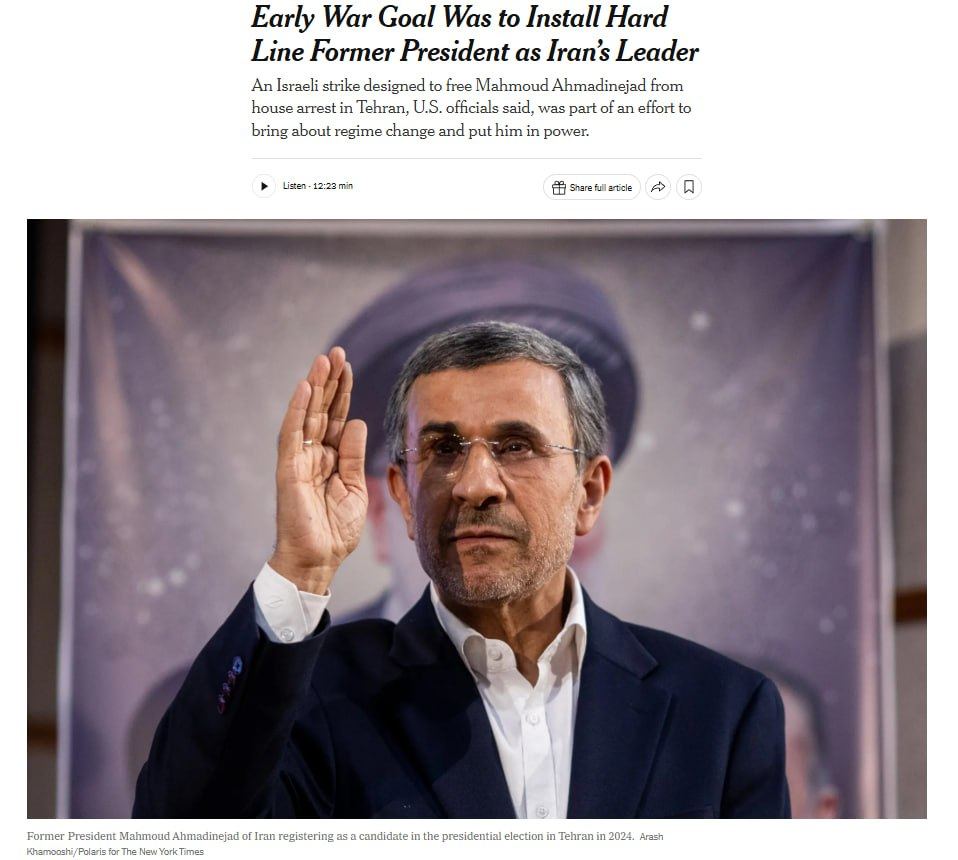
⚡️ Israel and the US had plans prior to the war to install former Iranian President Mahmoud Ahmadinejad as the country’s new leader, NYT reported, stating that Ahmadinejad had been consulted.
🔹 Plans were later scuppered when Ahmadinejad was injured during an Israeli strike on his home in Tehran on the opening day of the war, which officials claimed was intended to free him from house arrest, and although he survived, he allegedly became disillusioned with the regime-change effort afterward and hasn’t been seen publicly since, with his whereabouts unknown.

News from Iran:
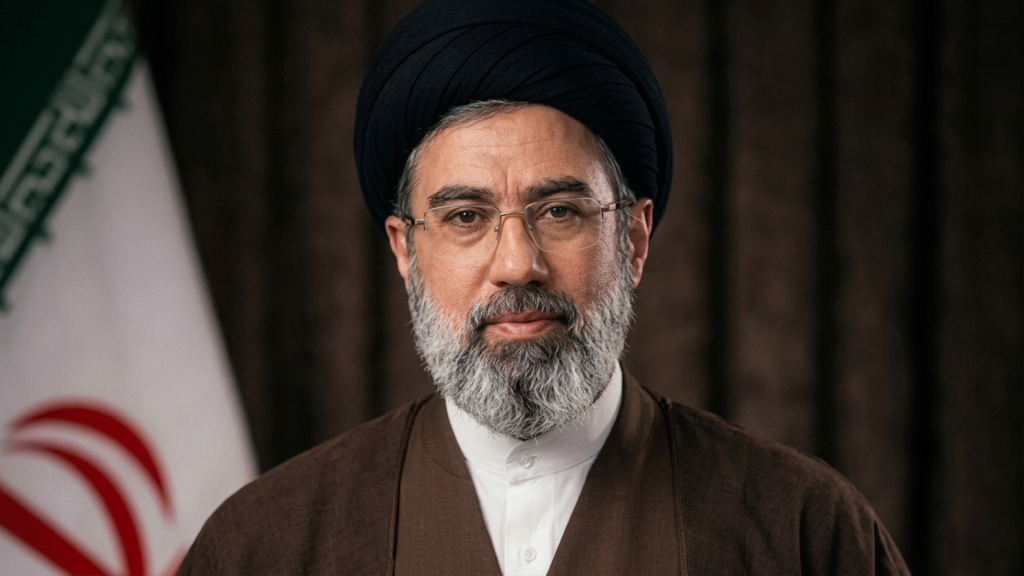
⚡️ Spokesperson for the Public Relations Office of the Ministry of Health in Iran issued a statement regarding what happened to Supreme Leader Mojtaba Khamenei following the surprise airstrike on 28 February.
🔹 According to the spokesperson, Khamenei was taken to Sina hospital on the same day his father had been killed at the office following the relentless bombing by the US and Israel.
🔹 Medics prepared an operating room and necessary measures were taken as they prepared for the worst case scenario: Fortunately, noting out of the ordinary happened to the new Leader of the Revolution,” the statement said.
🔹 “A person who is present at the scene of such an incident will naturally have several wounds on his body,” the statement continued, adding: “These wounds were not wounds that would disfigure his face or cause him to be martyred or have a limp amputated like our martyred Imam,” noting that a few stitches were applied to the injuries on Khamenei’s leg.
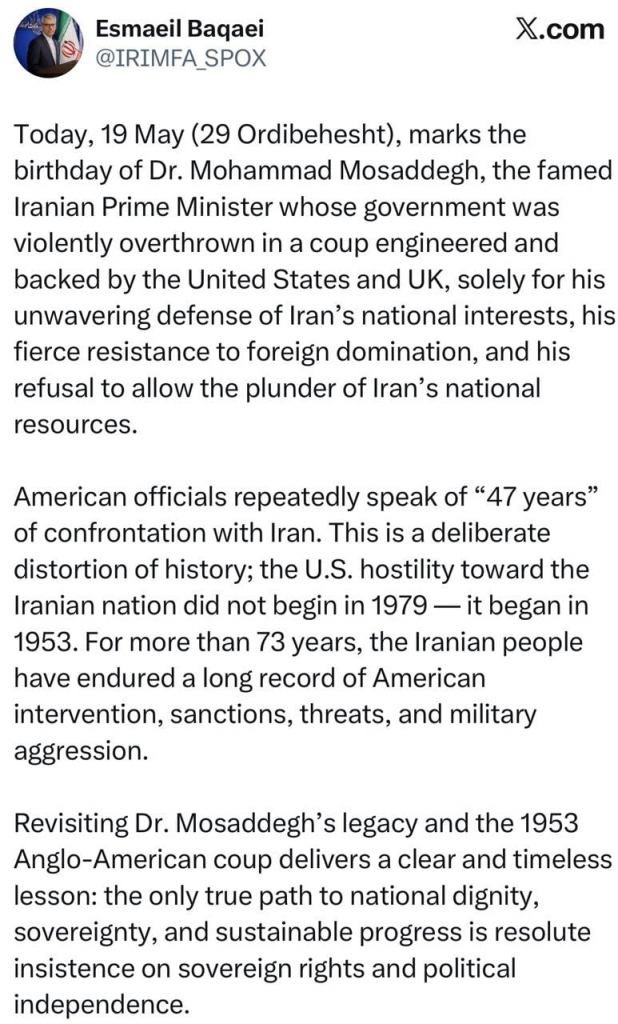
⚡️ Foreign Ministry Spokesman Esmaeil Baghaei wrote on X that America’s misconduct and breach of promises towards Iran spanned 73 years, noting that May 19 marked the day renowned Prime Minister Dr Mohammad Mosaddegh’s government was overthrown in a violent coup, designed and supported by the United States and Britain, simply for defending Iran’s national interests, steadfast resistance against foreign domination, and opposition to the plundering of the national wealth.
🔹 Baghaei said American officials had repeatedly spoken of the 47-year history of confrontation between the US, claiming the narrative was a blatant distortion of history, because America’s hostilities towards the Iranian nation began in 1953, noting that the Iranian people had faced a long list of American interventions, sanctions, threats, and military aggressions.

⚡️ Minister of Health for Iran, Mohammad-Reza Zafarghandi, told the World Health Assembly on Tuesday that he spoke on behalf of a country that had been attacked without reason, not only against military forces, but against civilians, children, and health infrastructure, resulting in a crime where 168 students and teachers were killed in their classrooms, at their desks.
🔹 Referring to the WHO Director-General’s statement that ‘bombing a hospital or school’ is not a ‘calculation error,’ the Minister said: “These are war crimes.”
🔹 Zafarghandi said 376 children under 18 had been killed and more than 33,000 civilians injured, which was clear evidence of indiscriminate attacks on civilian targets, adding that 63 hospitals and 195 health infrastructure centres were damaged in attacks, killing 27 healthcare workers.

⚡️ CENTCOM Commander Admiral Brad Cooper was asked questions about the deadly Minab school strike, as US Congress sought who was responsible: “The United States doesn’t deliberately target civilians, nor are the Iranian people our enemy – the IRGC is the adversary in this case,” he said.
🔹 Cooper continued, saying the ‘complex investigation’ was ongoing: “The school itself is located on an active IRGC cruise missile base – it’s more complex than an average strike,” he claimed, adding: “As soon as we’re complete, I’m fully committed to transparency.”
🔹 The Commander said as military leaders: “We follow the law of armed conflict and our constitutional responsibilities, and that’s what we’ve done.”
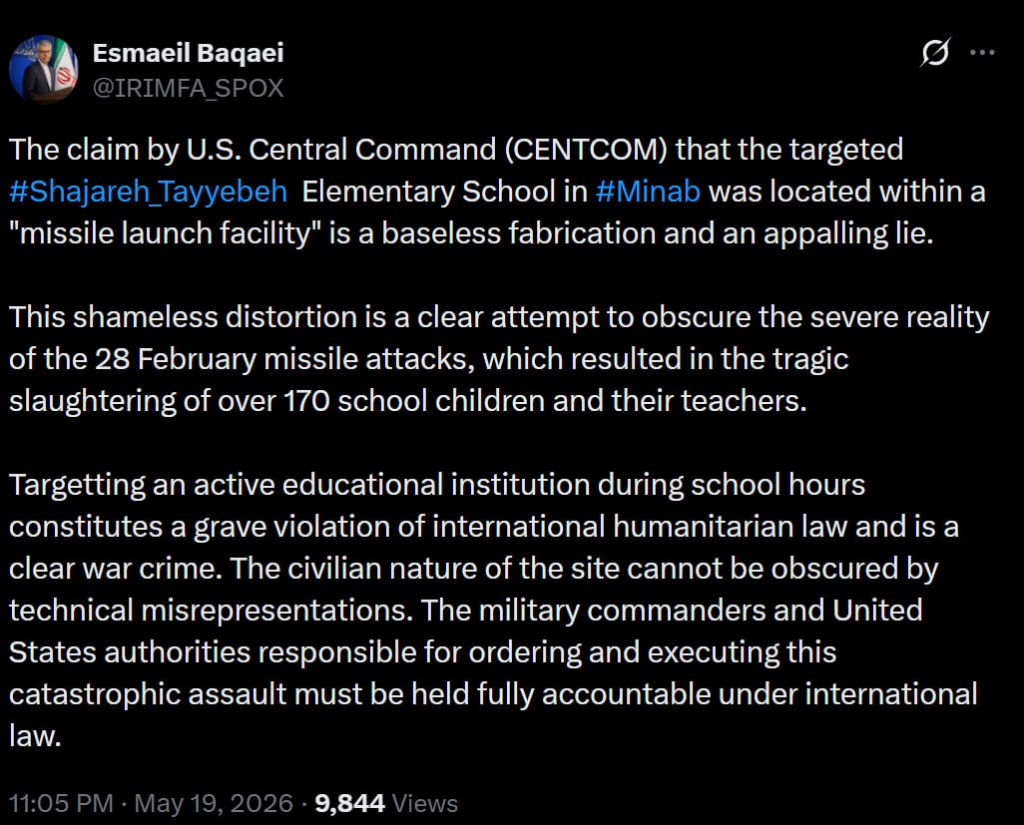
⚡️ Foreign Ministry Spokesperson Esmail Baghaei responded to Admiral Coopers comments in front of Congress, claiming that the Shajareh Tayyebeh Elementary School in Minab was located within a ‘missile launch facility’ was a baseless fabrication and an appalling lie.
🔹 Baghaei said the shameless distortion was a clear attempt to obscure the severe reality of the attacks, which resulted in the ‘tragic slaughtering of over 170 school children and their teachers.’
🔹 “Targeting an active educational institution during school hours constitutes a grave violation of international humanitarian law and is a clear war crime,” he wrote, adding: “The civilian nature of the site cannot be obscured by technical misrepresentations.”
🔹 Baghaei concluded by saying: “The military commanders and United States authorities responsible for ordering and executing this catastrophic assault must be held fully accountable under international law.”
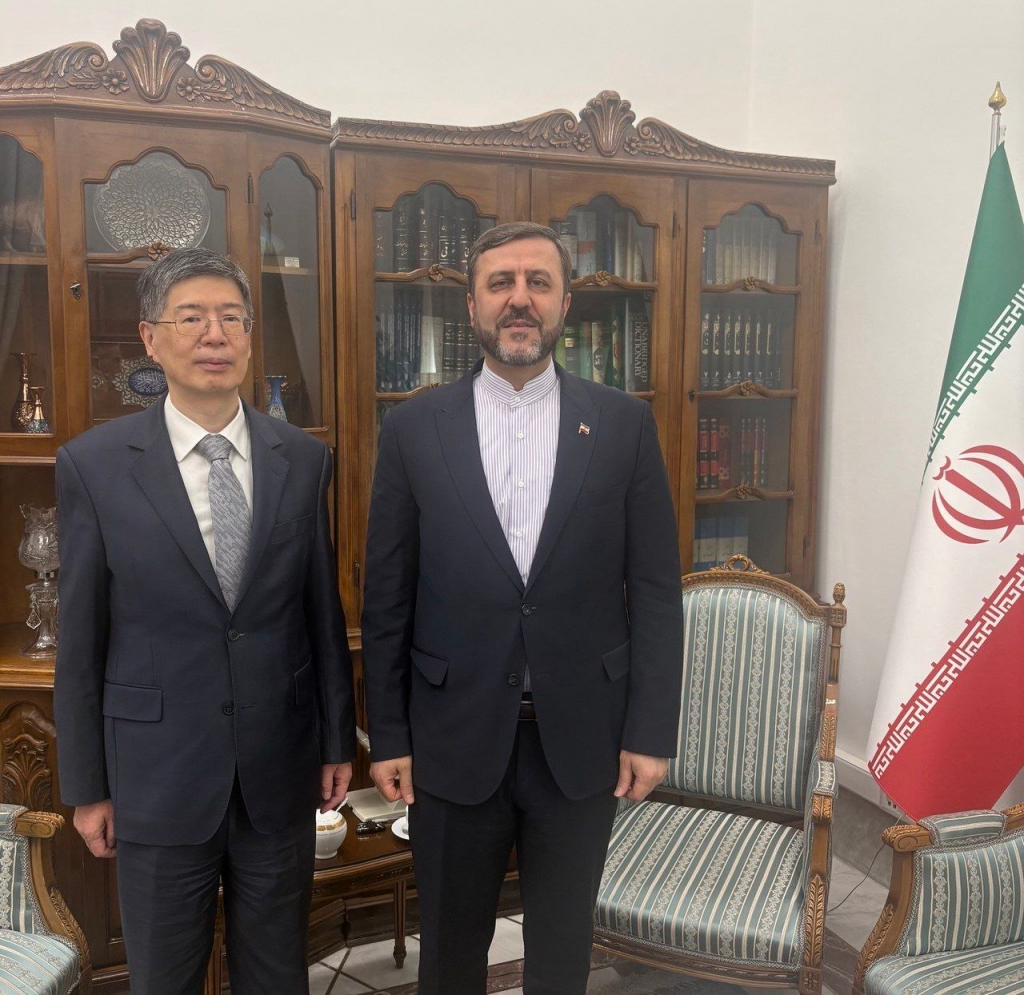
⚡️ Deputy Foreign Minister for Legal and International Affairs Kazem Gharibabadi met with the Chinese Ambassador to Tehran Zhong Pi Wu on Tuesday to discuss important bilateral relations along with the appointment of Iranian Parliament Speaker Mohammad Bagher Ghalibaf as the Special Representative of Iran for China.
🔹 Gharibabadi stating Ghalibaf’s appointment was a sign of Iran’s serious commitment and long-term perspective to maintaining and developing the level and depth of relations with China.
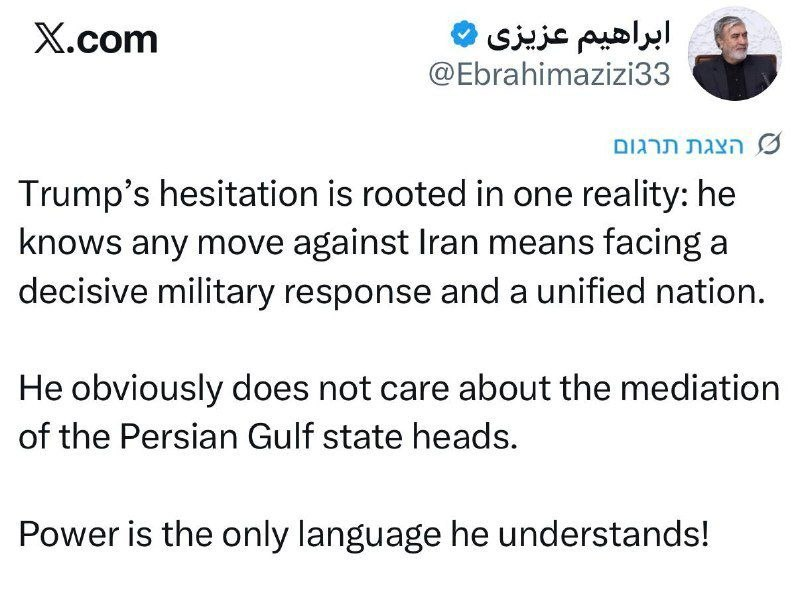
⚡️ Chairman of the National Security Commission of Iran’s Parliament, Ebrahim Azizi, said on X that President Trump’s hesitation for any new adventurous action was borne from fear of a decisive response from the Iranian armed forces, as well as the unity of the Iranian people.
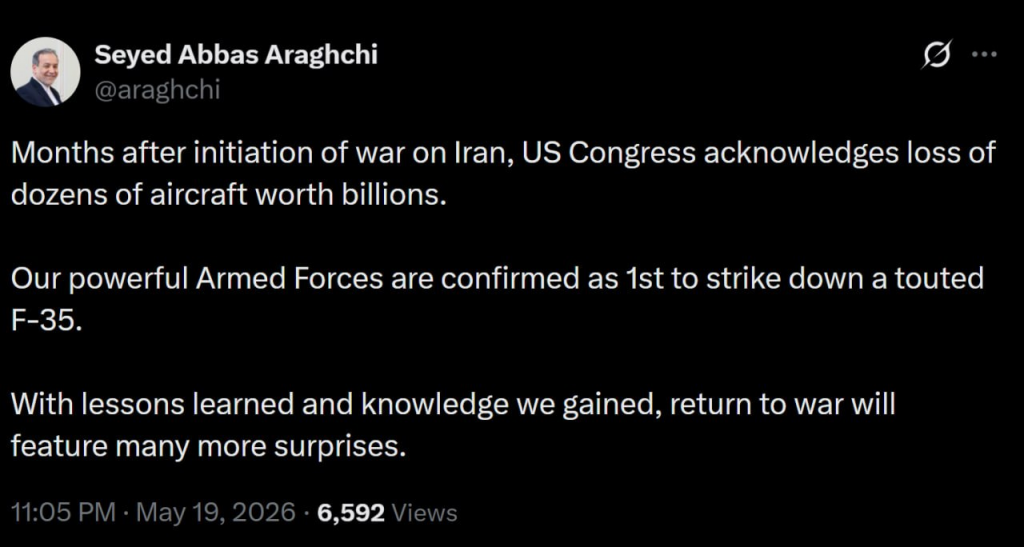
⚡️ Congress finally acknowledged the loss of dozens of aircraft worth billions, Iranian Foreign Minister Abbas Araghchi wrote on X after the Congressional session had concluded: “Our powerful Armed Forces are confirmed as 1st to strike down a touted F-35,” he wrote, adding that there would be many surprises if the war resumed because of lessons learned and knowledge gained.
Other News:
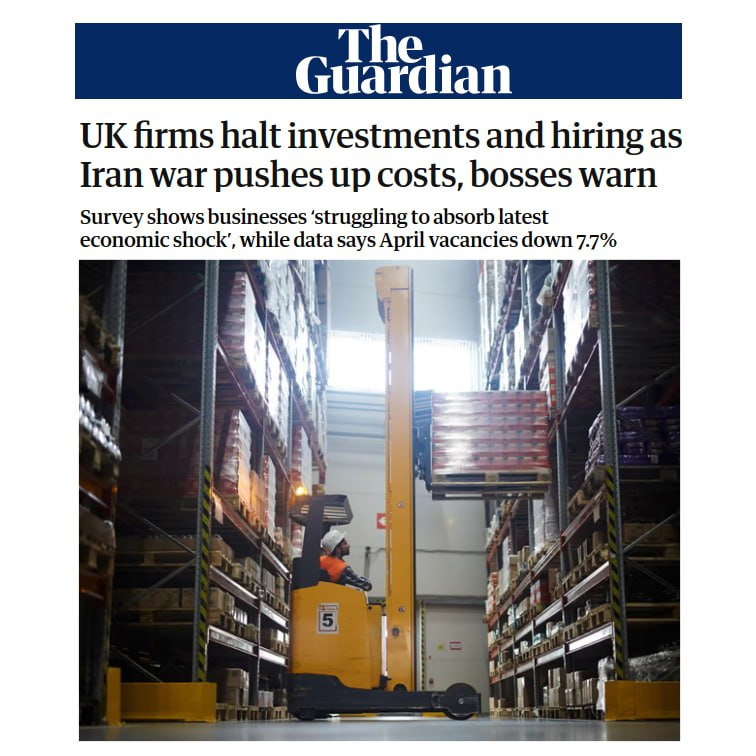
⚡️ British companies are facing issues surrounding investment and recruitment due to the increasing length of the stalemate in the Middle East, causing an uncertain economic emergency wave across the industrial and commercial sectors of the UK, severely darkening the country’s economic growth outlook, The Guardian reported.
🔹 Economic experts believed this contraction trend in the private sector could lead to stagflation in Britain and further weaken the competitiveness of domestic companies in global markets, as leaders call on the government to take immediate supportive measures to reduce pressure on businesses before the crisis leads to widespread layoffs or the closure of production units.
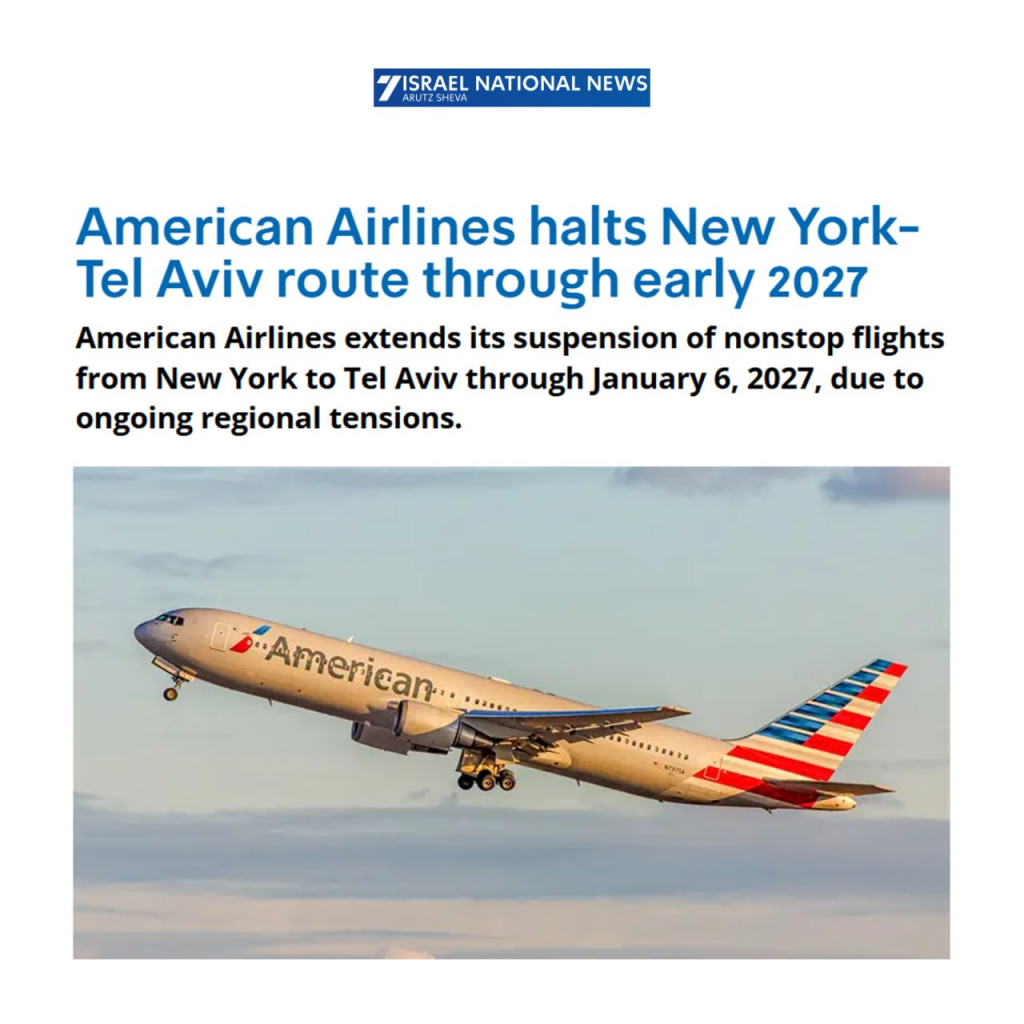
⚡️ American Airlines informed Israel’s Channel 7 News that they would not be resuming flights from New York to Tel Aviv until 2027, while British Airways told the UK press that flight suspensions to the Israeli capital will remain in place until August 1st, 2026.

⚡️ German Chancellor Friedrich Merz told the press on Tuesday that Germany were a country highly dependent on exports, living off open trade routs and low tariffs around the world, which is why the Iranian blockade of the Strait of Hormuz was causing major economical damage.
🔹 Merz said that working together with partners, Germany are ready to restore the freedom of navigation as quickly as possible, so if the necessary conditions are met, Germany will contribute military capabilities, but for that to happen, Iran must return to the negotiating table, stop playing for time, and must no longer take the region and the whole world hostage.
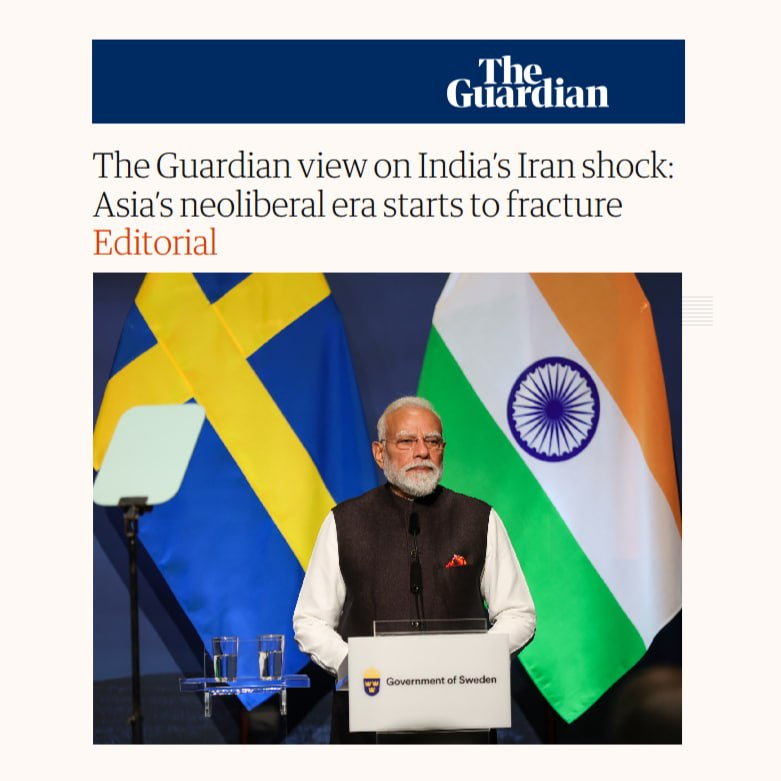
⚡️ Despite India’s recent achievements in economic successes building an empire in the country, The Guardian reported that the country didn’t build enough of a capacity to reduce its energy vulnerability, noting that Prime Minster Narendra Modi’s calls for economic austerity showed how war, energy insecurity and dollar pressures revealed the fragility of the war, and added that the Reserve Bank of India had already burned more than $40 billion of its reserves to prevent the rupee from falling.
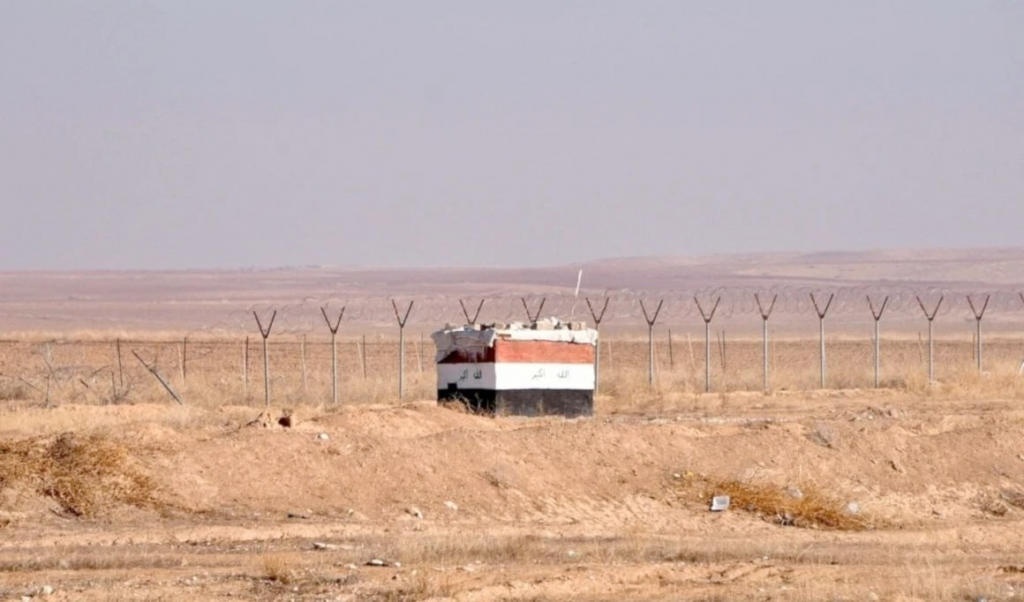
⚡️ Iraqi authorities denied reports of Israeli military camps in the western desert of Najaf and Anbar provinces, and the director of media relations at the Interior Ministry said Iraq hosted no foreign camps, while the security searches found no evidence of any unauthorised military presence.
🔹 The official acknowledged that a 48-hour operation took place during the war on Iran, but said that matter had been closed, however, the denial follows a New York Times report claiming the existence of two Israeli bases in the west of the country.
🔹 An Iraqi MP alleged a US-Israeli camp remained in the area, but the joint operations command said wide searches after March 5, that killed one soldier ands wounded two, found no foreign forces or equipment.
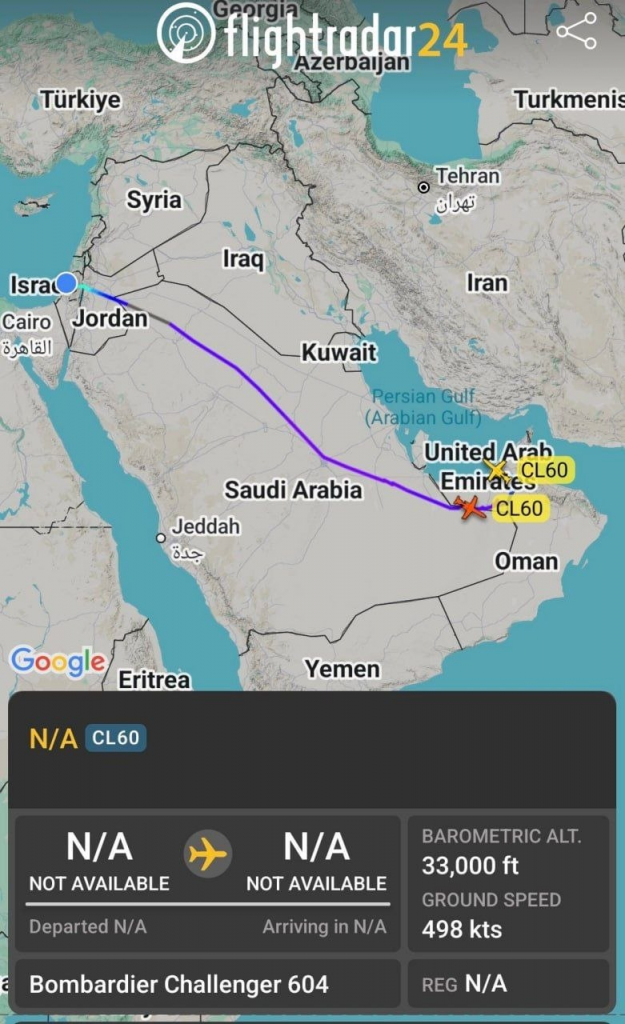
⚡️ Flight trackers through OSINT groups along with Israel’s Kan 11 reported that an Israeli aircraft, M-ABGG, sometimes used for official flights, landed in Abu Dhabi, the UAE, on Tuesday morning.