 AJ
AJ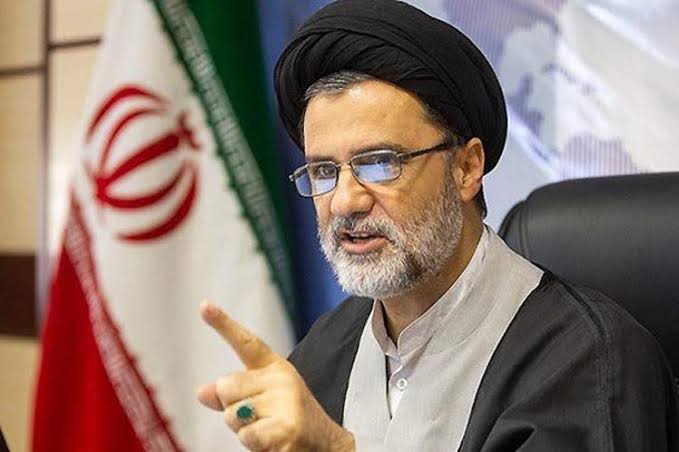
⚡️ Deputy Head of Iran’s National Security and Foreign Policy Commission, Mahmoud Nabavian, was interviewed by Iranian broadcaster SNN TV on Saturday, where the minister said the final agreement being discussed was ‘dangerously vague,’ mainly benefiting the United States.
🔹 The final agreement in the 14 articles is extremely important and its timing must be precisely defined, he said: “Right now it says 60 days, extendable by agreement of the parties, but how many times? Two times? Ten times?” he said, claiming that as long as the timing wasn’t a fixed period, it was to the benefit of America.
🔹 Nabavian said: “Since the withdrawal of US forces around Iran is set for 30 days after the final agreement, if we don’t know when that final agreement will happen, we don’t know really when, or if, those forces will ever leave.”
Reparations:
🔹 According to Nabavian, a mechanism noted for $300 billion for reconstruction is part of the final agreement, but no when knows when the final agreement will be, saying that the termination of US sanctions is also part of the final agreement, along with the nuclear issue, but as to when the final agreement will be presented, no one officially knew.
🔹 Nabavian also warned that there could be US interference with the dispensing of the reparation fund, noting spending would be subject to US approval: “When expenditures are mutually agreed upon my both parties means America must have a say in how it is spent,” he said, stating: “If America says do not spend this money here because it will end up in IRGC hands, what would you do?”
🔹 “We proposed that until the final agreement, three things remain in place: Our current nuclear status, US sanctions, and US forces in the region – the timing of the final agreement is important, because it now says 60 days, extendable,” adding that it doesn’t state how many times it could be extended, which causes damage in trust.
Naval Blockade:
🔹 Nabavian stressed that the memorandum said that immediately after signing, the US would begin lifting its naval blockade and fully end it within 30 days, and that within 30 days after the final agreement, US forces would leave the ‘area surrounding Iran: “But when is this final agreement?” he asked again, adding that no one knew.
🔹 The minister also asked what does ‘surrounding Iran’ mean, whether it was two metres, 100km, 2,000km – without any clear, concrete definitions, the US could claim it had complied while its forces simply repositioned in places like Bahrain, remaining in the region.
Strait of Hormuz:
🔹 According to Nabavian, the earlier version of the draft said that Iran would immediately open the Strait of Hormuz for safe civilian passage, with traffic returning to pre-war levels within 30 days: “Now even the name of Hormuz is removed, and there is no mention of Iranian management or collecting fees,” he said.
🔹 Nabavian said; “They claim arrangements implies our control, but arrangements for what? Just the preliminaries to reopening traffic?” he said, adding that the text spoke broadly of ‘commercial ships’ without specifying whether Iran could exclude Israeli-owned vessels, adding that the US was pushing the language about ‘no limitation’ on passage.
🔹 The Minister stated that in public, the Supreme Leader had clearly said Iran’s exclusive management of the Strait of Hormuz must remain, that even Oman should not interfere, that Iran must collect fees from ships, block all military and civilian vessels linked to the ‘Zionist regime’ and condition US civilian traffic on payment of compensation.
🔹 “Where are these in the text?” Nabavian asked, stating: “Instead, you’ve written a general clause about commercial ships of all countries, which could even include the Zionist regime,” adding: “If you claim this draft respects the Supreme Leader’s red lines, then show in the text where those four conditions on Hormuz have actually been upheld.”
🔹 Nabavian concluded that most of the Supreme Leader’s red lines had not been observed and that neither does any money actually coming in, “nor do you have any autonomy over how it is spent.”
Sanctions:
🔹 Despite sanctions pledged to be lifted under the agreement, Nabavian warned that even if 100% of the sanctions were lifted, 100% of the sanctions would remain, because nowhere in the text did it prevent the US imposing new sanctions on Iran.
🔹 Nabavian recalled the JCPOA signing in July 2015, noting that within a month, new sanctions began targeting Iran, while also noting that lifting UN Security Council resolutions would require the approval of all five permanent members, not just the US, and that must US sanctions were actually based on Congressional legislation which the administration cannot override.
🔹 “Even if these sanctions are lifted, which they won’t be, all of them will immediately be reimposed – no sanctions are going to be lifted,” he said, adding that control of the Strait of Hormuz would be stripped from Iran under the agreement.
Conclusion:
🔹 Nabavian warned that under the draft nuclear agreement, Iran would become a ‘colony of America,’ adding that the text required the fate of enrichment and other nuclear matters to be decided within a ‘satisfactory framework,’ which he alleged meant America’s satisfaction.
🔹 “If we want to produce radiopharmaceuticals for our one million cancer patients, America must first give its satisfaction,” Nabavian said, noting that Iran had committed to diluting all enriched materials on-site under IAEA supervision and ‘under considerations of America.”
🔹 Nabavian read the clause: “The Islamic Republic of Iran reiterates that it will never produce or acquire nuclear weapons,” which he reminded was Iran’s own proposal… “Mr Araghchi, why are you coming on television and presenting this American demand from the mouth of the Islamic Republic of Iran?” he asked.