 AJ
AJ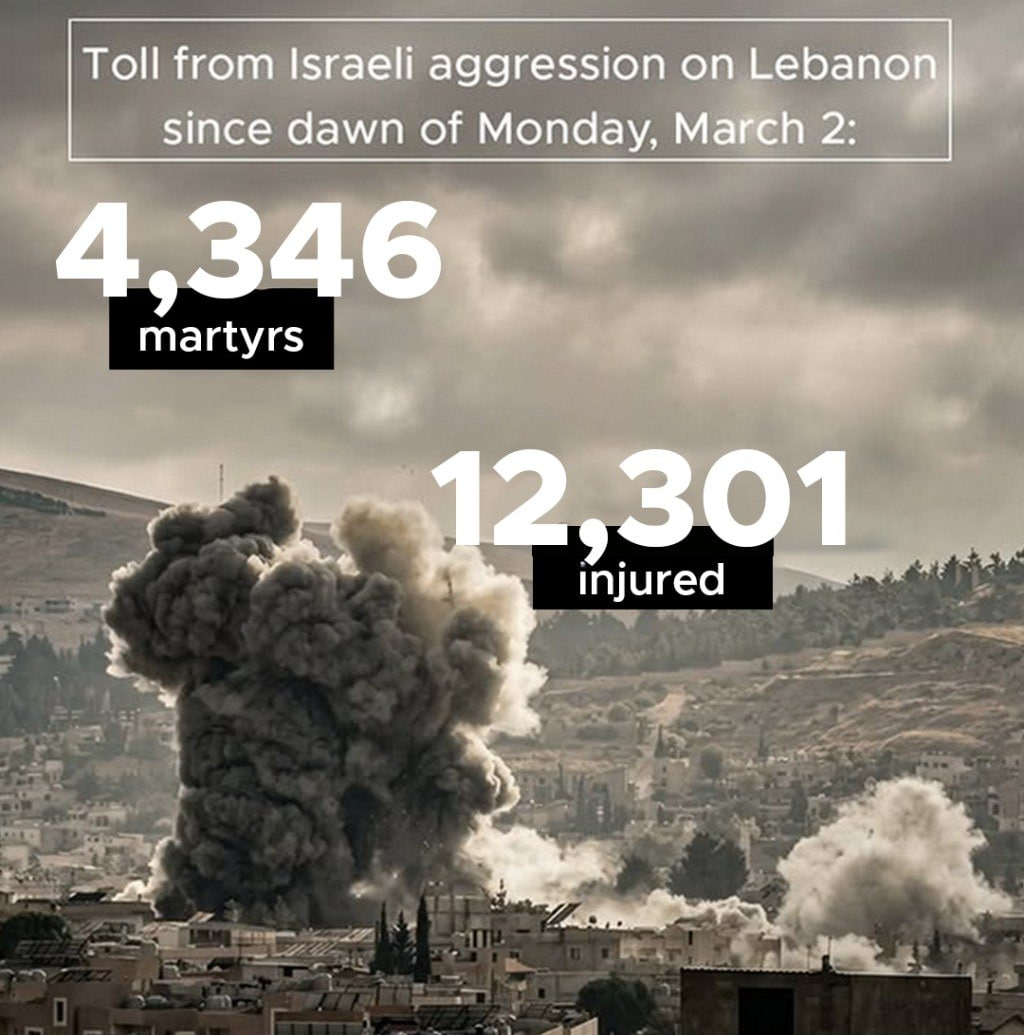
⚡️ Israel’s attacks on Lebanon over the weekend killed eleven people including women and children, taking the total death toll of Lebanese civilians since March 2 to 4,326, while at least 12,301 suffered injuies.
Parliament Speaker Nabih Berri asked visiting US officials on Friday which country would be leading the verification mechanism for the diplomatic settlement between Lebanon and Israel.
US representatives indicated leadership would either be assigned to Switzerland or Italy, but noted that nothing has been finalised yet, while adding that multiple countries have expressed willingness to participate, with Azerbaijan cited as a potential participant.
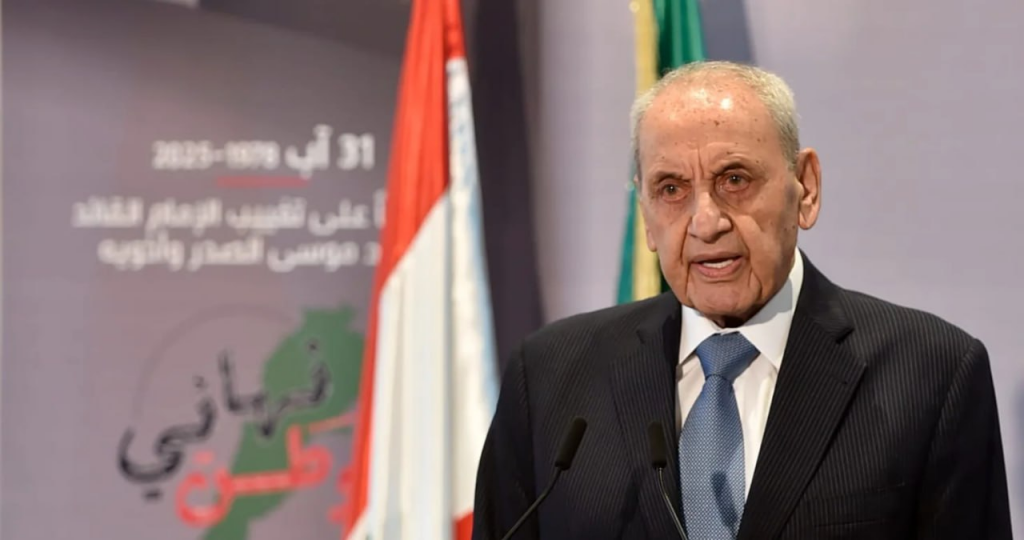
A political source close to the Shiite duo revealed Berri confirmed an Israeli plan to destabilise the region, stating that Prime Minister Benjamin Netanyahu’s expanded attacks, town bulldozing, and refusal to withdraw from the security zone prior to Hezbollah’s disarmament serving as a direct tactical message putting pressure on the US to fulfil its commitments as the sponsor of the agreement.
Berri questioned whether Hezbollah has any footprint in Gaza, the West Bank, or southern Syria, framing wider operations as part of an Israeli plan to partition Arab states, emphasising that the issue of the state monopoly on weapons is an exclusively Lebanese matter that the country is independently striving to address.
United States officials have since regarded clarifications from Israel for the series of military strikes that were conducted over a 48-hour period this weekend, and Israel provided the US administration with justification for the operations, asserting the actions targeted infrastructure and activities linked to Hezbollah.
Washington reportedly accepted the Israeli narrative concerning the recent strikes, and in exchange, the US administration expects Israel to refrain from obstructing diplomatic and political initiatives aimed at addressing the broader regional issues.
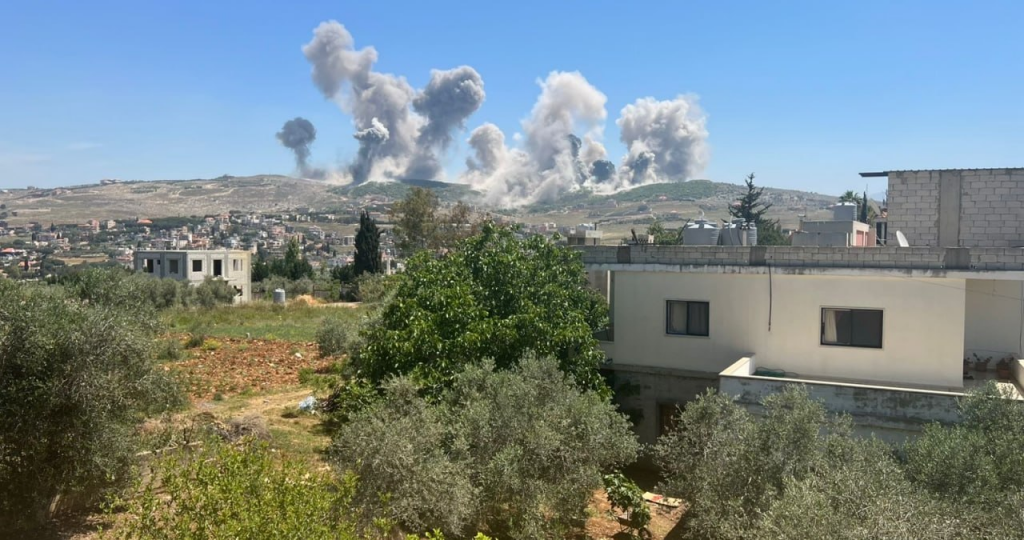
The IDF reports indicated an increased friction between Israeli forces and Hezbollah at the Ali al-Taher Ridge, alongside clashes with operatives alongside the Yellow Line, while military assessments also suggested Hamas were coordinating operations with Hezbollah, supported by Iran, to rebuild the operational axis against Israel.
Hezbollah utilised a fibre-optic drone on Saturday morning to target forces in a ‘grey area’ on the Ali Al-Taher Ridge, resulting in injuries to three personnel from the Yahalam unit, and the IDF is currently conducting operations to locate and destroy Hezbollah infrastructure and personnel within the ridge sector.
The Northern Command is executing a specialised intelligence effort to identify hidden supply routes and drone activity used to replenish Hezbollah forces in underground formations, but the access to the areas is currently obstructed, reportedly forcing operatives to exit the tunnels to search for food supplies.
Israeli military officials said that the personnel who have remained in the underground facilities are facing elimination, while those who surrender are transferred for interrogation, adding that the command had a strategy of patience to counter Hezbollah attempts to monitor and exploit IDF tactical movements in the region.
Lebanese diplomatic officials have intensified efforts through the US mediator to halt demolition and bombardment operations in Southern Lebanon, stating that Israel provided the US with surveillance imagery and intelligence to justify the strikes on Ansar and Deir al-Zahrani, citing the presence of Hezbollah officials, which reportedly led the US to authorise the operations.
Hezbollah operatives Hassan Abbas Harkous, Ali Hanjoul, and Ali Mohammad Trabulsi were killed alongside Badr Unit Commander Ali Mohammad Fakr al-Din at the Hezbollah command centre in Deir Al Zahrani in the Nabatieh district, according to Lebanese reports.
The Israeli Broadcasting Authority accused Hezbollah of escalating tensions against Israel in an effort to undermine ongoing negotiations, however, Israeli newspaper Haaretz said that Israeli soldiers in areas they shouldn’t be, outside the current security zone in Lebanon, should actually expect drone attacks, and the level of response from Israel this weekend was over the top compared to the situation.
According to Kan News, a Lebanese political official from a party opposed to Hezbollah said the group, under Iranian direction, were escalating on the ground to weaken the Lebanese state and derail direct Israel-Lebanese negotiations, stating that Beirut continued to avoid what he described as the core issue – Hezbollah’s failure to disarm.
Meanwhile, Israel’s Channel 12 claimed the Israeli army were preparing for the possibility of returning to several days of fighting in southern Lebanon, while other Israeli reports suggested that Israel were preparing to breach the ceasefire to cease the Ali Al-Taher Ridge, which AJ News have reported on for some weeks.
Israel are awaiting a green light from the US to storm the ridge and occupy the area in complete disregard for its deal with the Lebanese government, while Iran warns that such an attack would draw it into the escalation.
Lebanese officials had suggested that Hezbollah relinquish access to the Ridge to the Lebanese Armed Forces, but Hezbollah responded saying that if they were to leave the ridge, Lebanese civilians would face harm from the current installation of Israeli forces in the area, claiming that that the LAF wouldn’t be able to defend the area.