 AJ
AJ
The US/Israel/Iran recap for May 24 featured a lot of press speculation as to what was contained within the framework of the peace agreement between the US and Iran, but no officials had released any public information, keeping the negotiations under wraps as they continued to discuss the wording of the agreement, while Iran still continued to let ships transit through the Strait of Hormuz with Iranian permission, and all the other news from around the Middle East.

Negotiation News:

Despite reports from Saturday, with many mentioning various outcomes of Iran’s enriched uranium, Reuters spoke with an Iranian official who said no nuclear issues are being dealt with between the two countries, which Iranian channels Tasnim News and Fars News Agency also confirmed as Sunday morning progressed.

“The draft instead refers to ‘ending the war on all fronts including Lebanon,'” reported Tasnim News, stating that the still-unfinalized texts sets a 30-day period to address issues related to the Strait of Hormuz and the naval blockade, while negotiations over nuclear matters would continue within as separate 60-day timeframe.
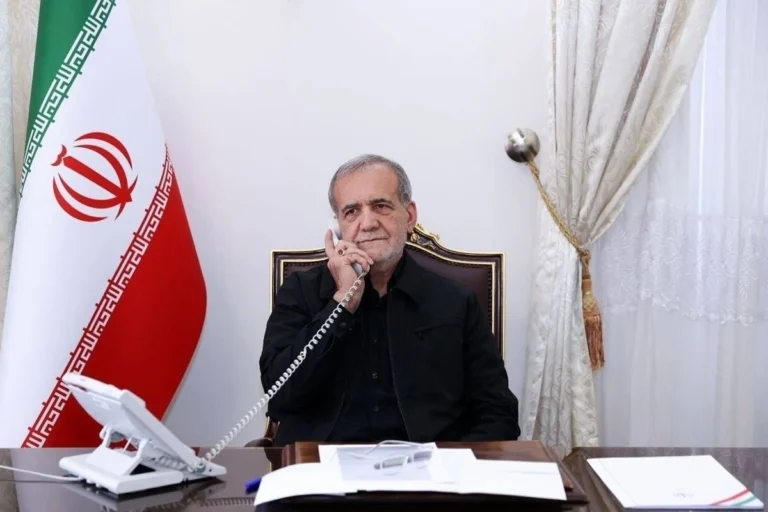
Iranian President Masoud Pezeshkian said that Iran and the negotiating team would never compromise the dignity and pride of the country, in a brief interview on Sunday morning, saying: “We are ready to assure the world that we are not seeking nuclear weapons,” adding: “We are not seeing unrest in the region, the troublemaker in the region is Israel, which pursues the Greater Israel plan and conspires in various ways to keep wars, unrest, and discord alive in the region.
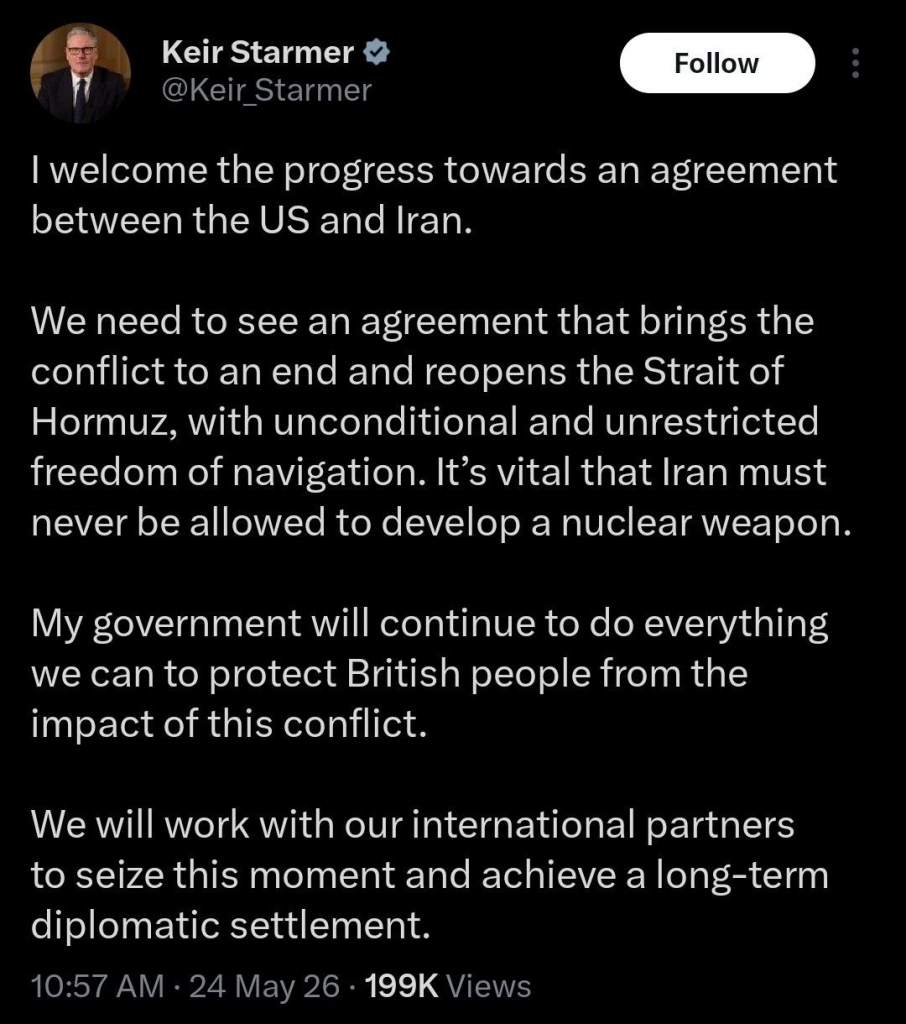
UK Prime Minister Sir Kier Starmer took to X to to welcome the progress in talks between the US and Iran, stating there needed to be an agreement which brought the conflict to an end and reopened the Strait of Hormuz, with unconditional and unrestricted navigation, while it’s also vital Iran never be allowed a nuclear weapon, adding that the government will do everything possible to protect British people from the impact of the conflict.
Egypt’s Foreign Minister Badr Abdel Aati, said on Sunday that the necessity of reaching a stable agreement between Washington was important, calling for an agreement that not only ended the war, but also considered the concerns and interests of all parties involved.
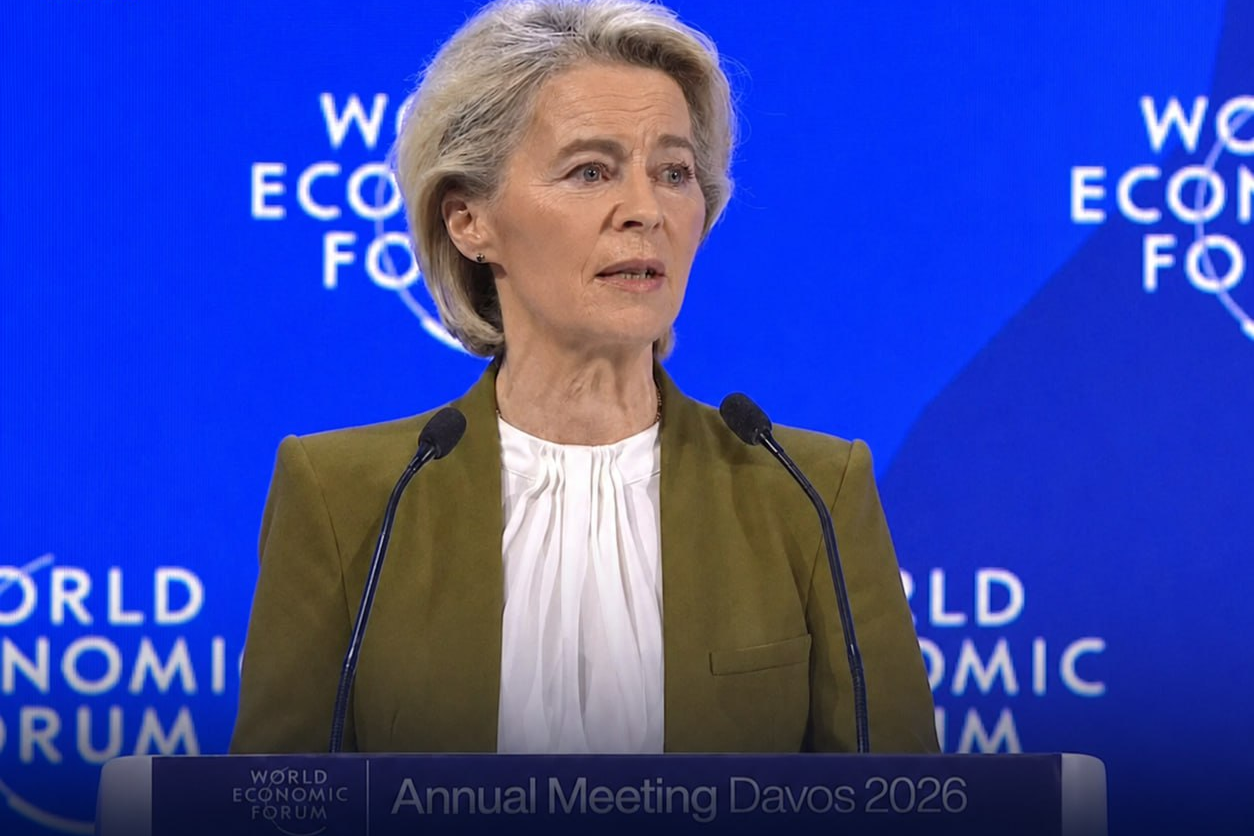
Ursula von der Leyen, the President of the European Union, said on Sunday that she welcomed the progress towards reaching an agreement between the US and Iran, stating: “We need an agreement that genuinely leads to de-escalation, reopens the Strait of Hormuz, and guarantees full freedom of navigation without paying tolls.”
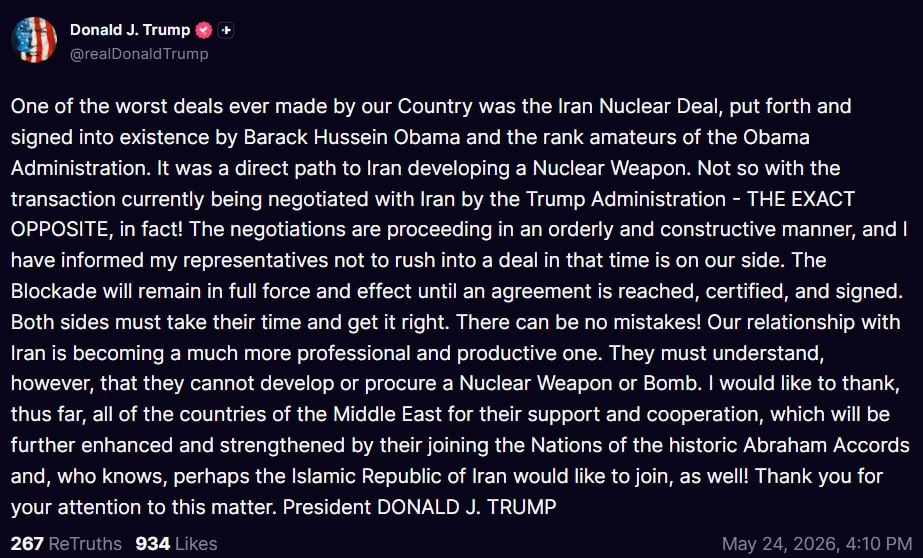
Despite media, reports and even leaders’ comments in relation to the peace deal over the past day, President Trump took to Truth Social on Sunday, saying that one of the worst deals signed was by Barack Obama and the ‘rank amateurs’ of the Obama Administration which gave Iran a direct path to developing a nuclear weapon.
President Trump claimed that the negotiations are prceeding in an orderly and constructive manner, but has informed representatives not to rush into a deal, because time is on their side, while the blockade will remain in full force and effect until an agreement is reached, certified, and signed, adding that both sides must take their time and get it right, because there can’t be any mistakes.
The President stated that the relationship with Iran was becoming more professional and productive, but they must understand they cannot develop or procure a nuclear weapon or bomb, adding thanks to everyone so far, including the countries of the Middle East for support and cooperation, which would be further enhanced and strengthened by their joining the Nations of the historic Abraham Accords, and even Iran would like to join.
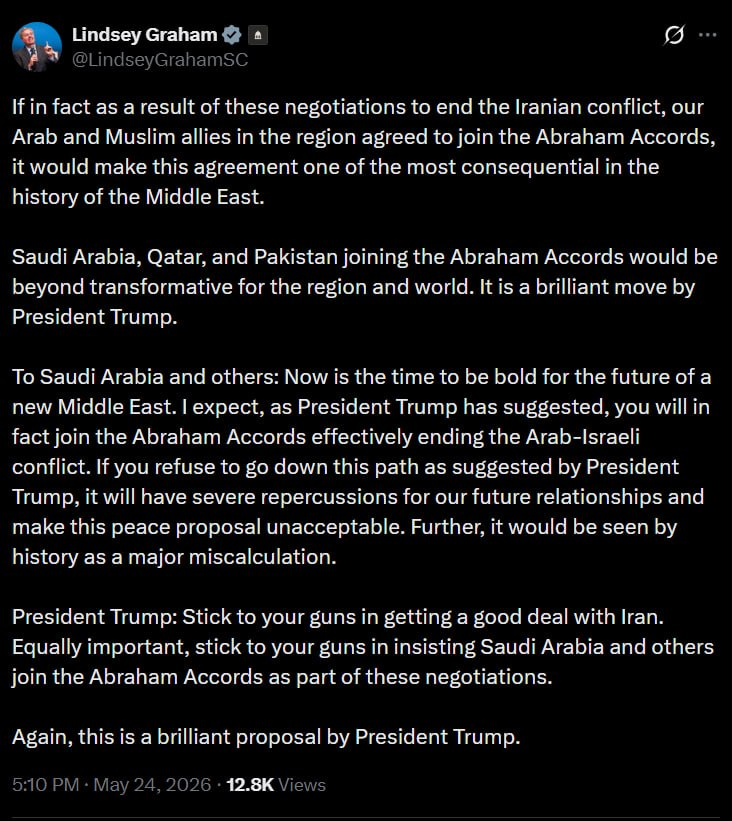
Republican Senator Lindsey Graham immediately wrote that if the negotiations to end the conflict resulted in Arab and Muslim allies agreeing to join the Abraham Accords, it would make the agreement one of the most consequential in the history of the Middle East, stating that Saudi Arabia, Qatar and Pakistan joining the Accords would be beyond transformation and was a brilliant move by Trump.
Commenting to the countries involved, Graham said now is the time to be bold for the future of a new Middle East, expecting that many will join the Accords effectively ending the Arab-Israeli conflict, but if they refused to go down the path suggested by Trump, it would have severe repercussions for future relationships and make the peace proposal unacceptable, while it would also go down in history as a major miscalculation.
Graham urged Trump to stick to his guns to get a good deal with Iran, while also sticking to his guns in insisting the countries to join the Abraham Accords as part of the negotiations, adding once again that it was a brilliant proposal by the US President.
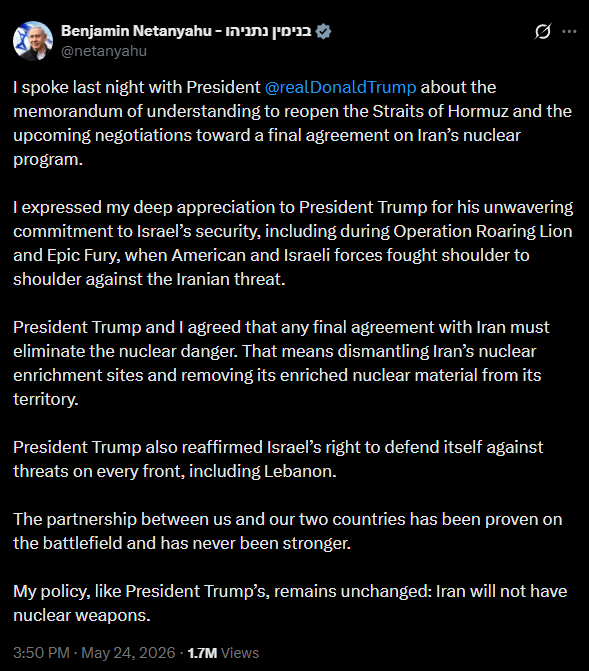
Israeli Prime Minister Benjamin Netanyahu released a statement saying he had spoken with President Trump on Saturday night regarding the MoU to open the Strait of Hormuz and the upcoming negotiations for a final agreement on Iran’s nuclear program, in a call which Netanyahu also expressed deep appreciation for steadfastness commitments towards Israel’s security, including during ‘Roaring Lion’ and ‘Epic Fury’ operations, in which American and Israeli forces fought shoulder to shoulder against an Iranian threat.
Netanyahu’s statement said that both he and President Trump had agreed any final agreement must remove the nuclear threat which meant dismantling Iran’s nuclear enrichment facilities and removing the enriched nuclear material from the territory, while Trump reiterated Israel’s right to defend itself against threats on all fronts, including Lebanon, adding that the partnership between the two countries had been proven on the battlefield and has never been stronger, while Netanyahu’s policy, like Trump’s, remains unchanged – that Iran will not have a nuclear weapon.
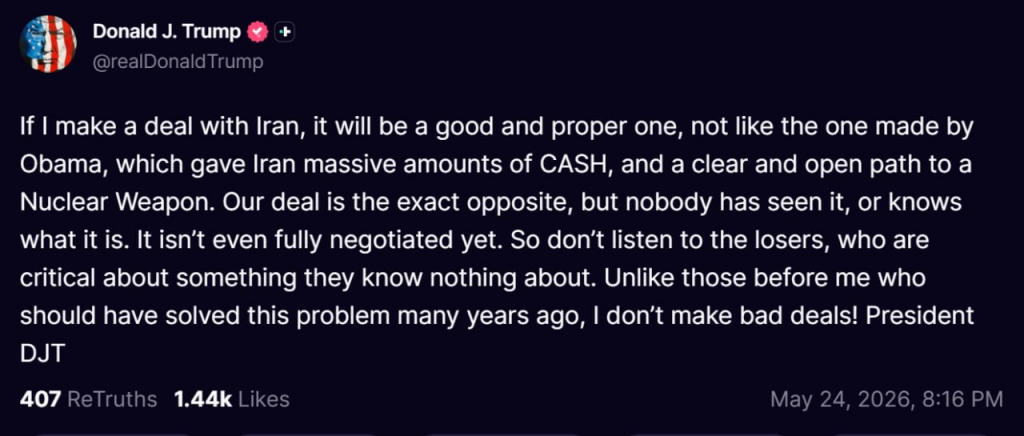
President Trump said on Truth Social that any deal with Iran would be a ‘good and proper one,’ not like the one made by Obama, which ‘gave Iran massive amounts of cash, and a clear and open path to a nuclear weapon.’
Trump claimed the current deal was the exact opposite, but nobody had seen it, or knew what it was, because it wasn’t even fully negotiated yet: “So don’t listen to the losers, who are critical about something they know nothing about,” Trump said, adding: “Unlike those before me who should have solved this problem many years ago, I don’t make bad deals!”
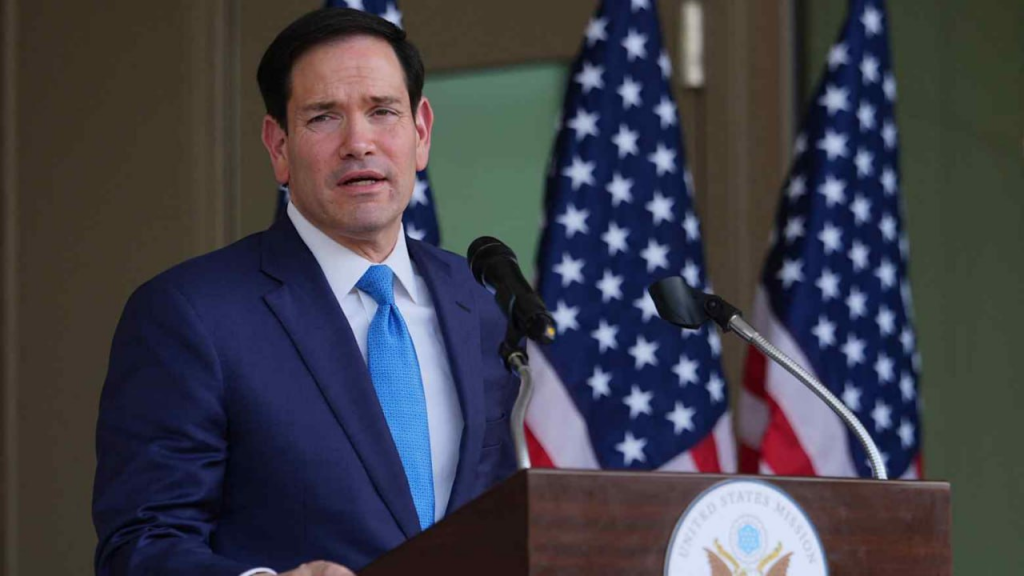
Secretary of State Marco Rubio was speaking during a visit to New Delhi, acknowledging that resolving the technical aspects of a nuclear agreement would take time, saying: “You can’t do a nuclear thing in 72 hours on the back of a napkin,” adding that the emerging agreement had received regional support, but warned that if nuclear negotiations failed to produce results within the 60-day period, President Trump would still retain all military options currently available to him.
On what was Monday morning in New Delhi, Rubio said that work was still in progress despite thinking there would have been news on Sunday night, while he thought there was a ‘pretty solid thing’ on the table in terms of Iran’s ability to open the Strait, enter into a very real, significant time-limited negotiation on the nuclear terms and ‘hopefully we can pull it off.’
Rubio said: “It has a lot of support in the Gulf, has a lot of support globally, almost everyone that we’ve walked through understood it’s not just very reasonable, but it’s the right thing for the world to get done,” adding that the President isn’t in a hurry and wasn’t going to make a bad deal: “I mean, the President is not going to make a bad agreement, so let’s see what happens – we’re going to give diplomacy every chance to succeed before we explore the alternatives.”
What the media claimed (again):
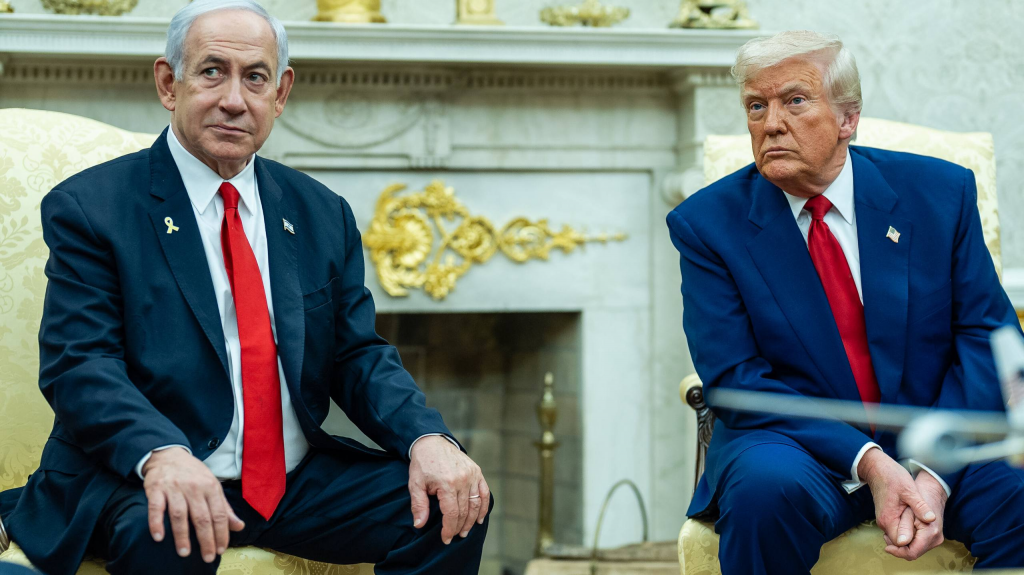
Israeli Prime Minister Benjamin Netanyahu swore is government and ministers to secrecy, informing them not to speak to the media regarding the expected agreement (memorandum of understanding) between the US and Israel, according to Channel 14 Israel.
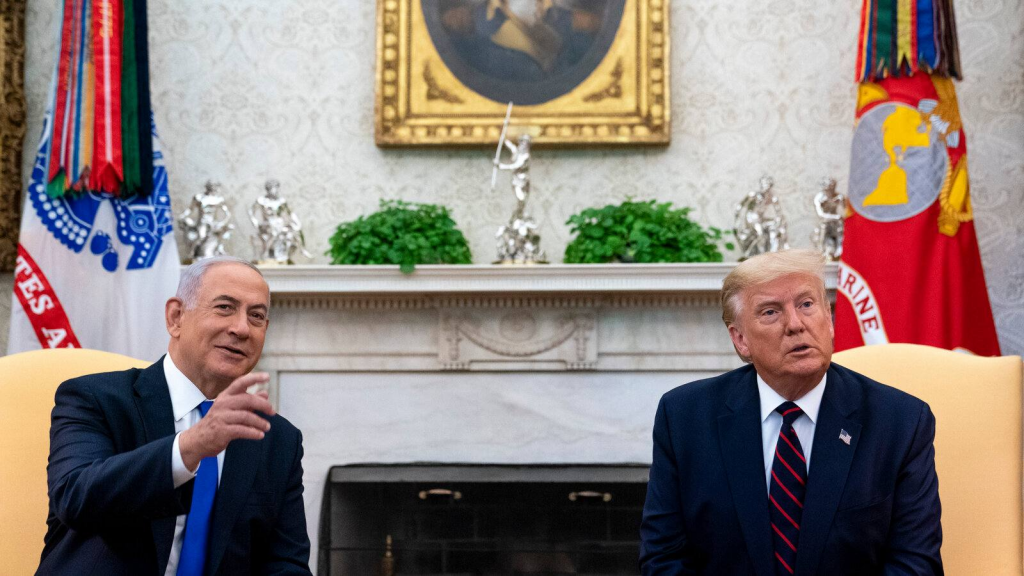
US negotiators were continuously updating the Israeli’s on negotiations of the MoU with Iran, aimed at reopening the Strait of Hormuz and launching talks on unresolved issues for a final agreement, reported Kan News, stating that during a call with President Trump last night, Netanyahu stressed that Israel will preserve freedom of action against threats across all fronts, including Lebanon, and Trump supported that position.
Trump also allegedly reiterated that he would maintain his demand for the dismantling of Iran’s nuclear program, along with the removal of all enriched uranium from Iranian territory, saying that no final deal would be signed without these conditions being met, as Netanyahu expressed appreciation to Trump for his longstanding and exceptional commitment to Israel’s security.
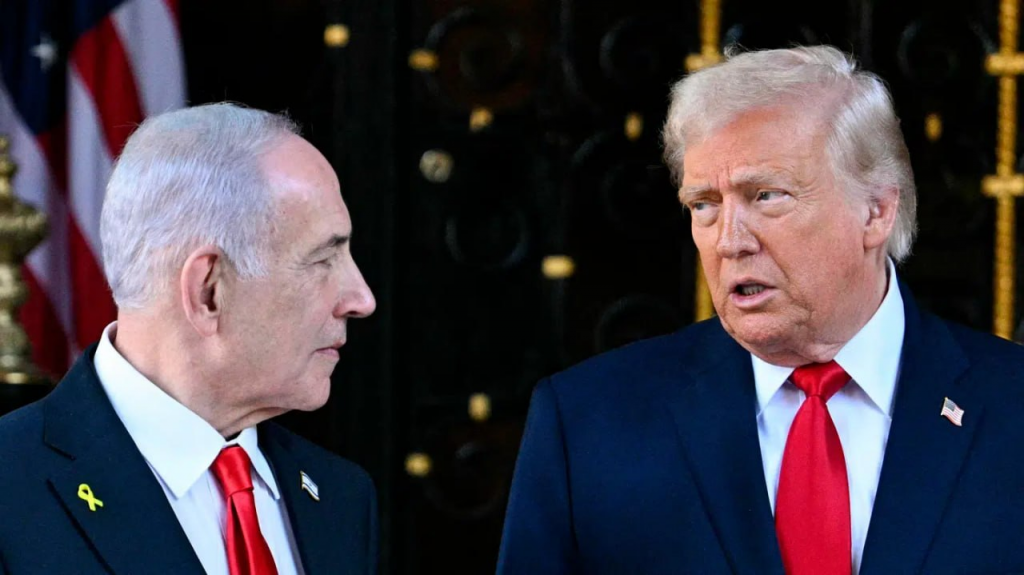
Netanyahu warned Trump that Israel maintained freedom of action against threats in all arenas, including Lebanon, reported the AP, confirming the previous Kan News reports.
Axios claimed to be the first with the details of the MoU between the countries, alleging the terms (which appear to be an Israel wish list) included a 60-day ceasefire extension between both sides; the reopening of the Strait of Hormuz without tolls; the US lifting its blockade on Iranian ports; Iran clearing naval mines deployed in the Strait; Iran committing to negotiations on suspending uranium enrichment and the removal of its stockpile of highly enriched uranium.
The report also claimed that Iran were committed to never pursuing nuclear weapons; US sanctions waivers to allow Iran to freely sell oil; Iran negotiating over the removal of its stockpile of enriched uranium; the US negotiating possible sanctions relief and unfreezing of Iranian assets during the 60-day period; US forces that were mobilised in recent months would stay in the region during the 60-day period and withdraw only if a final deal is reached; and the end of the Israel-Hezbollah war under the framework of the agreement (US official said: “If Hezbollah behaves, Israel will behave.”)
Fox News claimed that the deal, according to regional sources, included US forces to remain near Iran for 30 days to keep military pressure on the table in case the agreement collapses or nuclear disputes aren’t resolved in the future, but Iran would receive oil sanctions waivers alongside the release of billions in frozen assets and funds in the meantime.
According to the sources, the MoU would restore vessel transit through the Strait of Hormuz to pre-war levels within 30 days, though Iranian state media allegedly pushed back on claims of a full return to status quo, stressing Tehran saw itself as maintaining control over the Strait.
Fox said one of the biggest unresolved issues remained Iran’s highly enriched uranium stockpile and the country’s enrichment facilities, with details regarding Tehran’s nuclear commitments expected to be negotiated further in the coming weeks under a broader framework agreement.
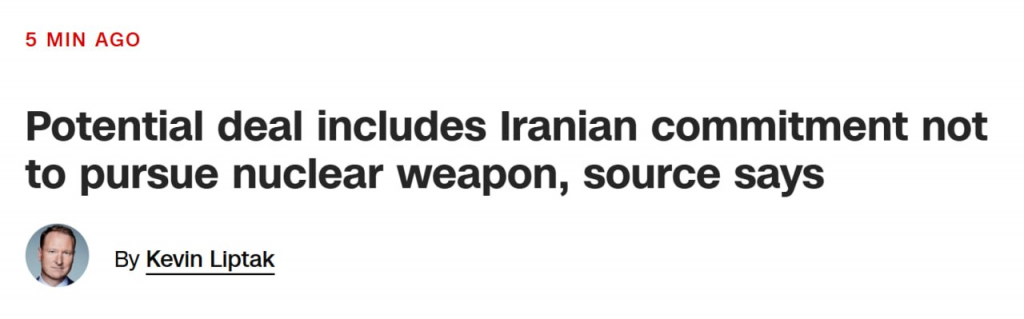
CNN also claimed the potential agreement between the US and Iran included commitments not to pursue a nuclear weapon and to enter negotiations on surrendering its stockpile of highly enriched uranium while suspending any new uranium activities, adding that the details surrounding the removal of the uranium stockpile and the duration of the enrichment pause would be discussed in later talks.
Saudi Arabia’s Al-Hadath reported that the framework was expected to be called the ‘Islamabad Declaration,’ and Pakistan was expected to announce it without the presence of the parties, while claiming the net round of talks between Washington and Tehran could take place as soon as June 5.
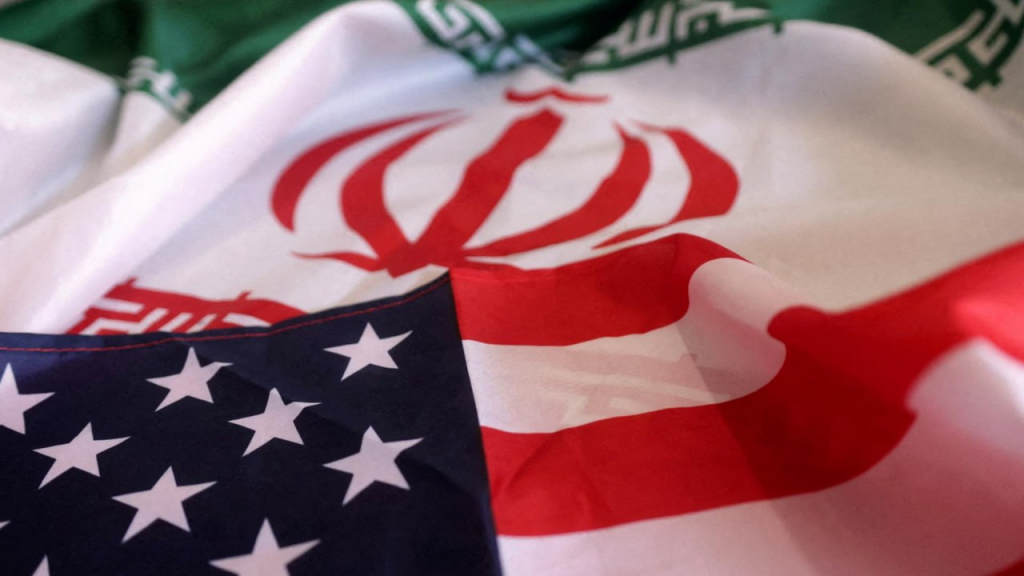
As the day progressed, a senior US official allegedly told Axios that the agreement with Iran wasn’t expected to be signed on Sunday because there were several details which still needed to be finalised, noting that negotiations were continuing over specific wording in the deal, desribing it as ‘some words that are important to us and some words that are important to them.’
The official allegedly added that Iran’s political system moved slowly, and the agreement would likely require several more days to pass through the necessary approval process, but the US believed Mojtaba Khamenei has approved the general framework of an agreement, however, whether it was to become a final deal still remained uncertain.
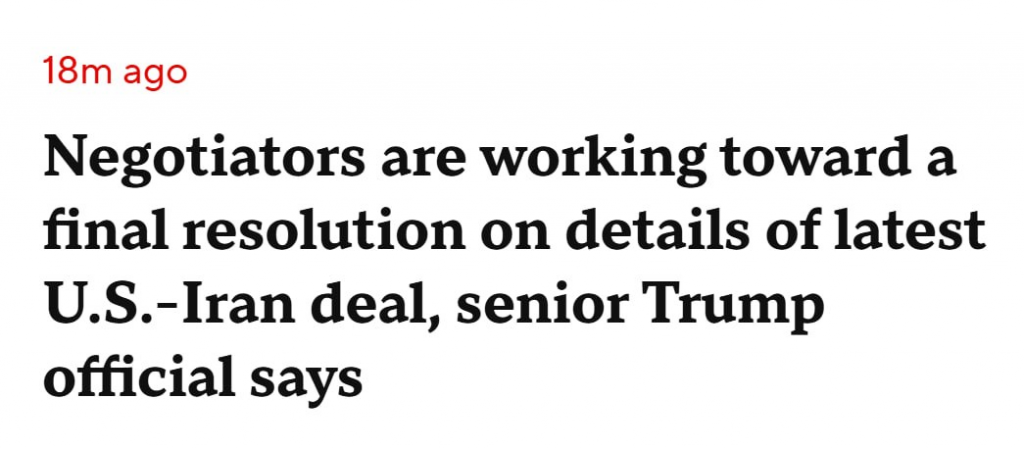
CBS News were told that the Iran had agreed in principle the deal that would involve disposing of its stockpile of highly enriched uranium by a US official, who added that the Trump administration remained optimistic as negotiations continued over the remaining details, adding that Iran appeared more willing to compromise now than it was prior to the war, and the administration was seeking a major commitment from Tehran to abandon uranium enrichment, which the official argued was the key issue, not whether restrictions last 20 or 30 years, but whether enforcement mechanisms were strong enough.
Al Jazeera were told by a well-informed official that Tehran believed Washington were retreating on two key issues, which includes the mechanism for releasing frozen Iranian assets, along with the scope of a ceasefire in Lebanon, because while the draft included a Lebanon ceasefire framework, Israel have been pushing for the language to be altered that would preserve its ability to conduct military operations in Lebanon under the justification of ‘responding to perceived threats,’ something Iran strongly resists.
Tehran informed mediators including Pakistan that it wouldn’t sign any memorandum unless every clause was fully agreed upon and guaranteed, but Pakistan proposed advancing with agreed sections whilst postponing unresolved disputes, however, Iran rejected the idea arguing the contested points are fundamental and non-negotiable, as Al Jazeera added that Iranian officials were increasingly concerned the US were stepping back from earlier understandings previously reached through mediation channels.
CNN’s Scott Jennings was told by a senior administration official that an agreement wasn’t complete, though negotiations were described as roughly ‘95% done,’ with both sides still disputing parts of the wording in the final language.
The proposed framework is said to include two states, with the reopening of the Strait coming first in order to restore global commercial shipping while Iran agrees in principle to surrender enriched uranium, and then transferring the nuclear material before sanctions relief is granted.
According to the official, the US position remains that Iran will not receive sanctions relief or financial benefits in advance, noting the long-term objective remains preventing Iran obtaining nuclear weapons, warning that if Tehran failed to meet its commitments, ‘they get nothing.’
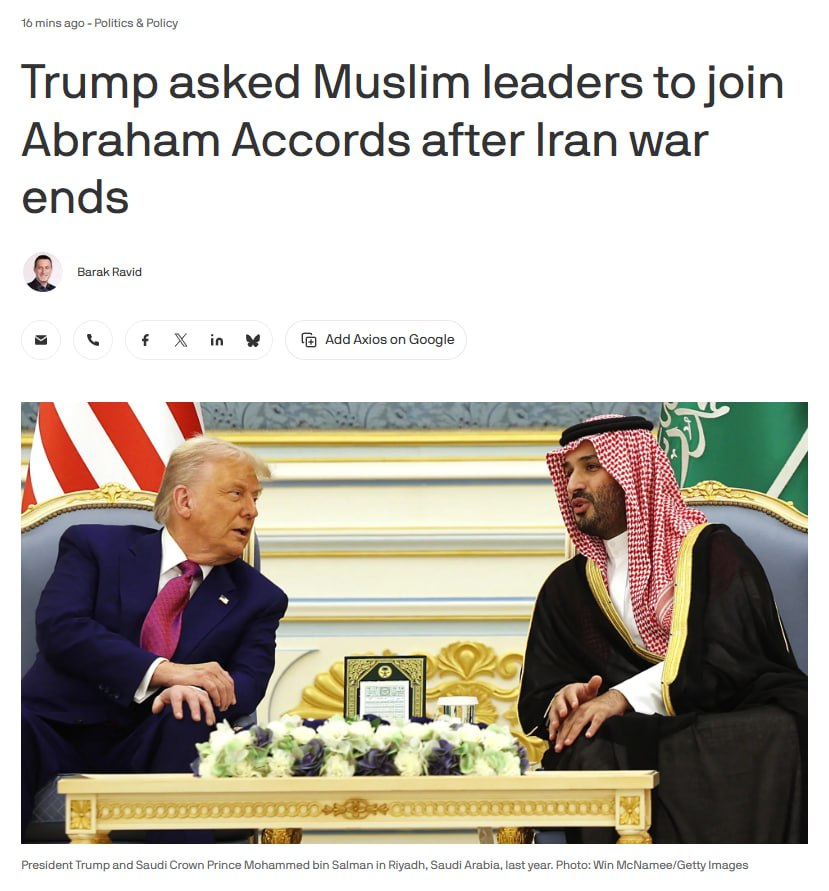
President Trump allegedly told several leaders of Arab and Muslim countries during Saturday’s conference call that if a deal was achieved to end the war, he would want their countries to normalise relations with Israel and join the Abraham Accords, according to Axios.
Trump is particularly focused on securing a future normalisation agreement between Saudi Arabia and Israel, but officials acknowledged that regional tensions and upcoming Israeli elections make any immediate breakthrough difficult.
Fox News were told by a senior US official that no agreement was going to be signed ‘today or tomorrow,’ adding that President Trump was inclined to give the process several more days to reach a final outcome.
According to the official, the approach by the administration is being guided by a ‘No Dust, No Dollars’ policy, meaning Iran wouldn’t receive sanctions relief or financial benefits without fully meeting its obligations.
Understandings have been reached on the enriched uranium stockpile and the reopening of the Strait of Hormuz, but the final wording remained under negotiation, and the US is prepared to resume military strikes if negotiations fail or produce what it considers a ‘bad deal.’
⚡️ Israeli Channel 12 reported that there were two main points of contention, including Israel demanding a guarantee of ‘freedom of military action’ against Lebanon, which Iran refused, while the second was the immediate release of its assets, which Washington refused, insisting on a framework to release them.
⚡️ i24 News Israel said that senior Israeli defence officials were increasingly concerned over the emerging agreement, warning it is ‘very bad’ for Israel and doesn’t properly address Iran’s nuclear program or missile capabilities, stressing that the war wasn’t just about Iran’s nuclear activities, but also because of the missile threats, adding that the current understandings left the issue without any real solution.
According to the source, the situation in Lebanon was also described as ‘impossible,’ with warnings that Israel can’t continue under conditions where the IDF’s freedom of action remained limited, but despite what are being described as significant achievements by the IDF, Air Force and intelligence services during the war, frustration is growing in Israel that those military gains are not going to be translated into any diplomatic leverage.
Israeli Channel 13 reported that PM Netanyahu was said to have told officials in recent discussions that Israel’s ability to influence President Trump at this stage was limited, as Israeli officials increasingly believed that Trump was moving towards an interim agreement with Iran.
Reports suggest that Israel are mainly trying to influence the content of the agreement, particularly in regards to Lebanon, the north, and the the removal of enriched uranium from Iranian territory, as Netanyahu formed a second meeting of the restricted security cabinet within 24 hours following the discussions that had been held.
Officials said that Trump’s decision to pursue an agreement instead of a military campaign was heavily influenced in the last moments by close advisers, particularly Jared Kushner and Steve Witkoff, while Netanyahu’s aid Ron Dermer returned to lead talks with the Americans in recent days, participating in the latest discussions, as contacts between Netanyahu and Trump continued throughout the day, despite growing understanding in Israel that the chances of changing Trump’s position were low.
Israel Hayom claimed that President Trump was disappointed and frustrated for three main reasons, noting the first to be that the war didn’t turn into a tangible and meaningful result at the negotiation table, and instead of entering the talks as a victor along with a defeated Iran, the Iranians are acting as if they’re the ones setting the terms that force the US to surrender.
Trump’s second disappointment is that instead of focusing on other issues, the President is still entangled in the Iran war, as the report claimed Trump wanted to reach Cuba or Greenland, distribute the spoils of economic benefits after the war through the signing of contracts, and prepare himself for the World Cup that was supposed to be ‘his’ cup.
According to report, the third disappointment was that there is no good plan or strategy that comes to mind, because Trump’s Generals can’t guarantee him a quick and decisive achievement, and the President feared instead of a decisive victory, he’d be trapped in a war of attrition and quagmire that deepened the crisis and lowered his popularity further.
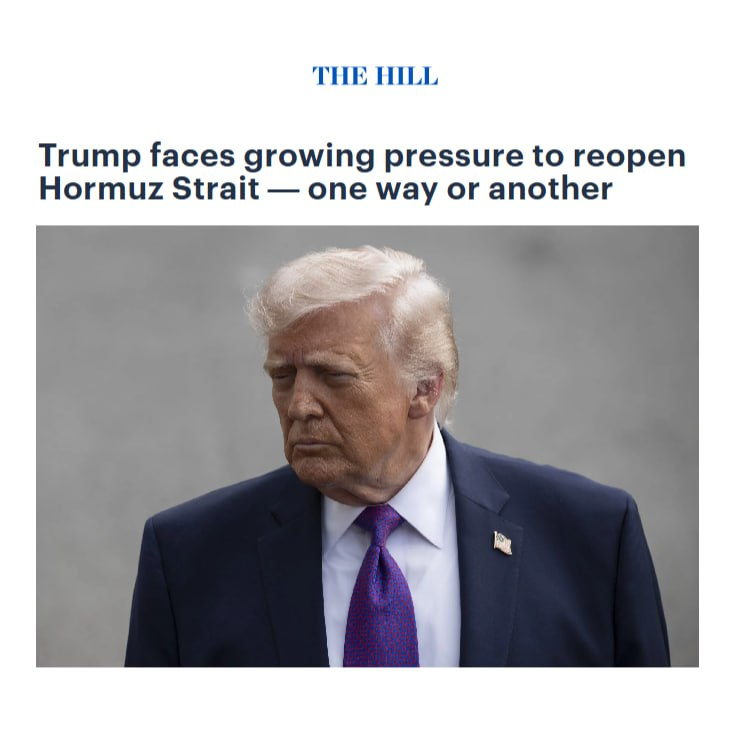
The Hill reported that President Trump was facing increasing pressure on multiple fronts to take action which reopens the Strait of Hormuz, as the Americans are confronted with the highest gas prices in nearly four years, but polls are clearly unfavourable, energy prices rose this week, and the negative reaction of the stock and bond markets in relation to the current situation have also begun.
US obstructions in some clauses of the agreement continued into the night, according to Tasnim News, stating that despite some talks, issues including the release of Iranian assets still continued and were unresolved, adding that there was a possibility the agreement could be cancelled, and Iran has stressed it will not retreat from its red lines in order to uphold the rights of the people.
The Wall Street Journal spoke with a senior Trump administration official, who allegedly repeated the phrase of ‘No Dust, No Dollars,’ adding that the statement was more complicated than widely reported, but could unfold in three steps, starting with a deal being reached and the Strait reopens, which also sees the US Naval blockade being lifted, followed by both sides eventually agreeing to all terms, and finally the Iranian sanctions are lifted gradually upon compliance, which includes the disposal of its enriched uranium stockpiles.
Iran rejected claims that the release of its frozen assets would occur after Tehran began transferring its uranium stockpile, stating that clause was never accepted under the current framework being discussed, insisting that part of its frozen assets must be released immediately and made fully accessible upon the announcement of any agreement.
Tehran also maintained it hadn’t made commitments regarding the technical details of the nuclear issue, therefore they didn’t consider the initial release of funds to be tied to uranium or nuclear material arrangements, adding that the failure to release the assets at the outset would cross one of Tehran’s red lines and would prevent any agreement being reached.
Iran had no optimism towards the United States, and the exchange of messages through the Pakistan mediator was always conducted with scepticism towards the US government, Tasnim News reported, stating that no final agreement had been reached, while challenges remained in some clauses, but even if an initial understanding was reached, it didn’t mean a change of view towards America or a trust in the US government’s fulfilment of commitments.
CBS News claimed an intelligence report believed Iran’s Supreme Leader Mojtaba Khamenei was operating from an undisclosed location with limited outside communications and was primarily reached through a network of couriers, noting that officials said the communication difficulties inside Iran’s leadership structure slowed responses to proposals and negotiations with the Trump administration.
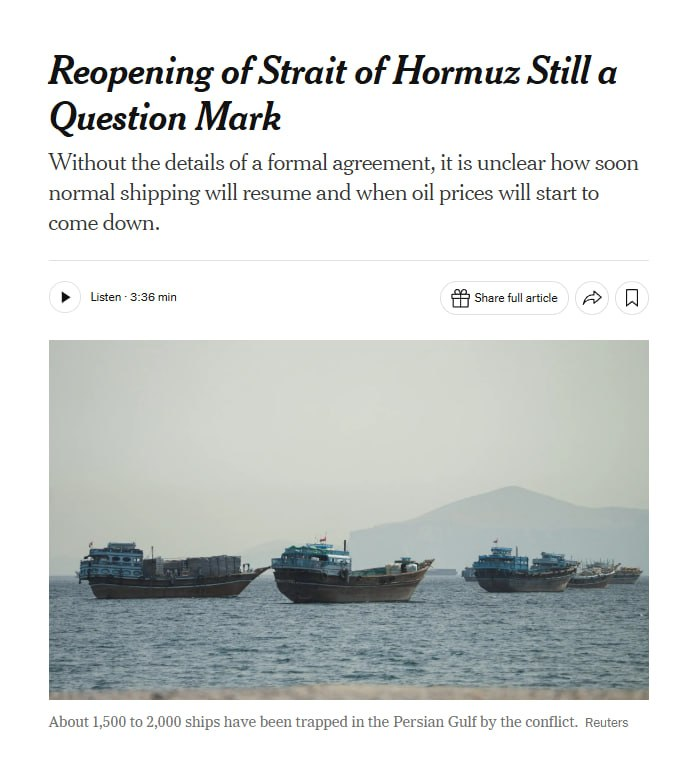
NYT claimed that a US official said an agreement had been reached in principle in reopening the Strait of Hormuz, although issues remained around timing and implementation, noting that Iran would remove naval mines and permit unrestricted commercial access through the Strait, while the US would end its naval blockade of Iranian ports and allow Iran to resume oil exports.
The proposed agreement is intended as an initial framework for future negotiations rather than a final deal, noting that Iran’s missile program and uranium enrichment would be addressed in later talks, adding that nuclear-related talks are expected to take place within 30-60 days after the agreement is reached, but the proposal still required approval from President Trump and Supreme Leader Khamenei, which could took days.
Strait of Hormuz News:
Iran’s IRGC Navy reported that 33 vessels had safely transited the Strait of Hormuz within a 24 hour period, coordinating with the Navy for save transit, taking the total number to 146 in the space of a week, while an IRIB News reporter on the coast of Hormuz revealed 240 ships were currently waiting for Iran’s permission to enter the Strait of Hormuz, while ships from China, India, Pakistan, and some Persian Gulf countries that cooperated with Iran have already passed through the Strait.
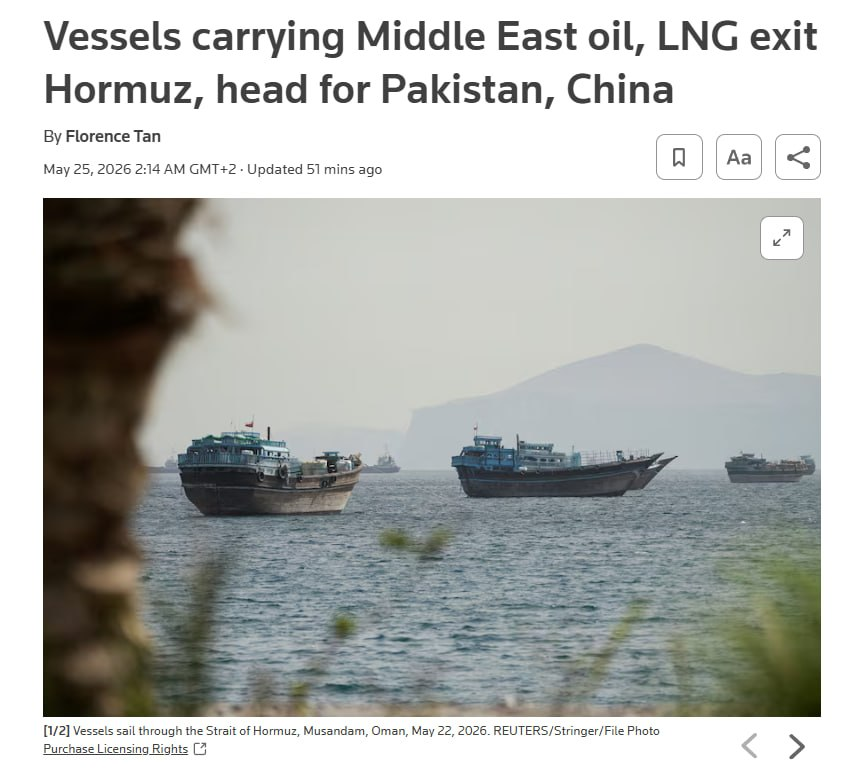
Reuters reported that a liquefied natural gas tanker and a crude oil supertanker resumed transit through the Strait of Hormuz after extended disruptions, with the LNG tanker Fuwairit sailing under the Bahamas flag, currently on route to Pakistan after loading cargo at Ras Laffan around March 28 and is expected to arrive in Pakistan on Tuesday, while the VLCC Eagle Verona, a Singapore-flagged supertanker chartered by Sinopec’s trading arm Unipec, exited the Gulf on Saturday after being stranded for nearly three months, and is carrying almost 2 million barrels of Iraqi Basrah crude oil loaded in February to Ningbo, China, expected to arrive around June 12.
Official Conversations:
Qatari Prime Minster & Foreign Minister Mohammed Abdulrahman Al Thani held a call with Kuwaiti Foreign Minister Jarrah Jaber Al-Ahmad Al-Sabah, discussing mediation efforts by Pakistan between the Washington and Tehran, while also exchanging views on ways to support mediation in a way that helped strengthen security and stability in the region.
News from Iran:
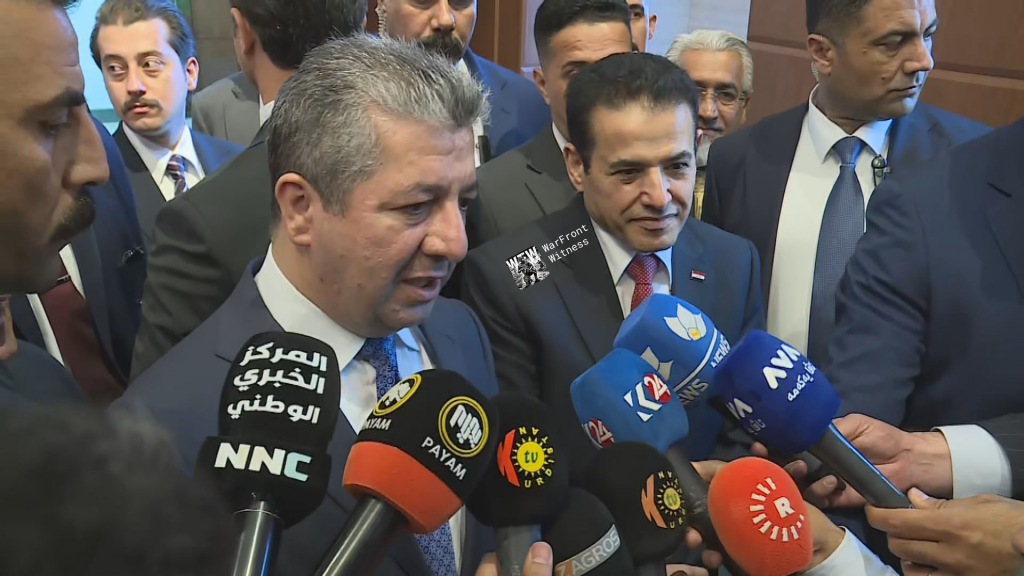
An announcement by Iraqi National Security Advisor Qasim al-Araji, made following a meeting with Kurdistan Prime Minister Masrour Barzani in Baghdad, stated that Iraq and the Kurdistan Region are to send a high-level security delegation to Tehran to convene under the Iraqi-Iranian Supreme Security Committee, established under a 2023 border security agreement.
The delegation are to discuss attacks that struck the Kurdistan Region and Iraq during recent regional hostilities involving Iran, the United States and Israel, including strikes on Iranian Kurdish opposition groups operating in the region, and the 2023 accord includes a pledge by Iraq not to allow armed groups in the Kurdistan Region to use Iraqi territory as a launchpad for cross-border attacks on Iran.

Iranian air defences shot down an Israeli Orbiter reconnaissance drone in the Bandar Abbas area of the Hormozgan Province, reported Mehr News Agency, noting the wreckage had been found by local authorities, who then showed the debris to reporters of a live IRIB News broadcast.
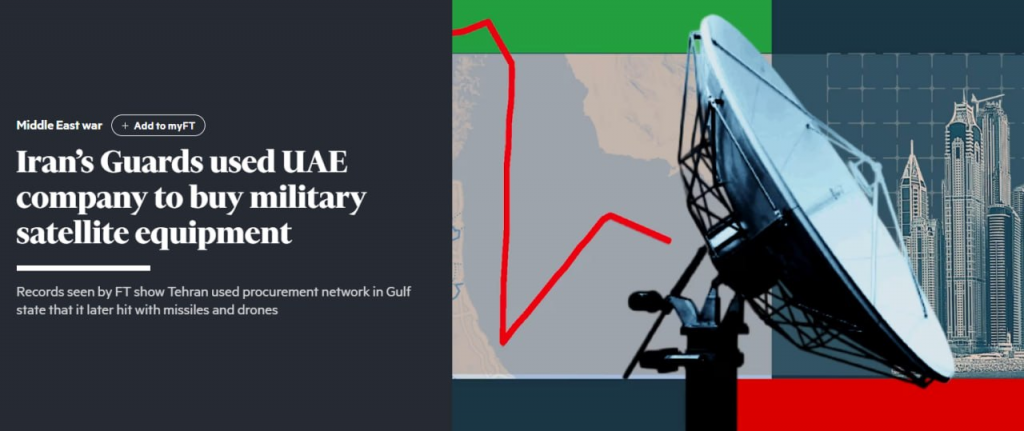
An investigation by the Financial Times found that Iran’s IRGC had used a purchasing network based in the UAE to acquire advanced Chinese satellite communications equipment used in Iran’s drone programs, which were routed through a UAE-based company called Telesun, located in Ras Al Khaimah, and the shipment included nearly 1.8 tons of Chinese-made satellite antenna systems manufactured by StarWin and transported from Shanghai through Dubai’s Jebel Ali Port before reaching Bandar Abbas, Iran.
The report said that the Iranian Rama III vessel was involved in the final delivery leg and broadcast false GPS signals to conceal that it had travelled to Tehran, stating that the shipment was consigned to Ertebatat Faragostar Kish, an Iranian telecommunications company which is allegedly lined through contracts to the Saman Industrial Group, who the US Treasury previously described as a front company supporting the IRGC Aerospace Force’s missile, drone, and electronic warfare programs.
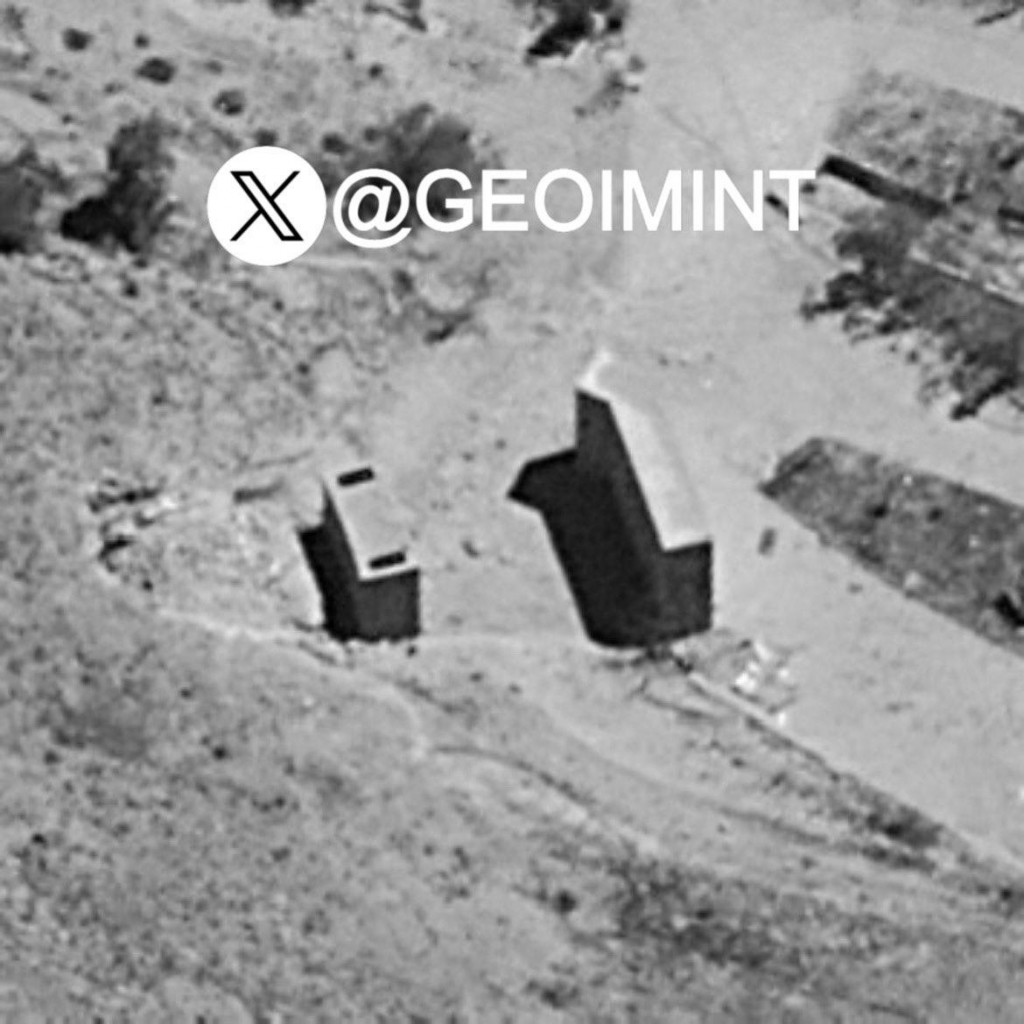
Satellite imagery dated May 24 of the underground missile facility in Larestan, Iran, showed the site’s main entrance had been fully cleared and there was no visible structural damage, while four additional tunnel entrances at the facility had also reopened, and Iran used heavy machinery to remove the debris, restoring access to the underground complex, with no apparent long-term damage visible at the hardened entrances, according to @GEOIMINT.
News from the USA:
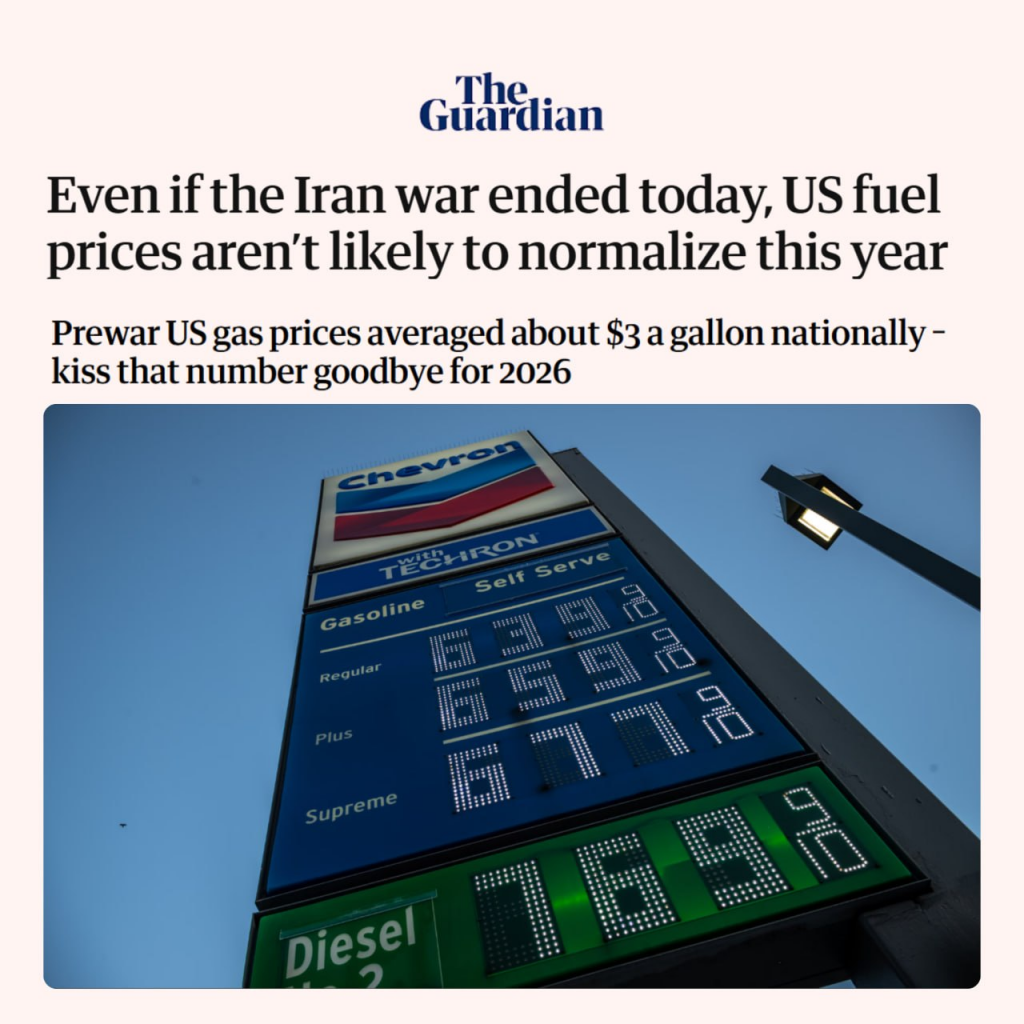
Energy experts said the process of returning prices to the previous levels of $3 in the United States could take several months or even years, due to the damaged energy infrastructure in the Middle East and the untangling supply chain in the Strait of Hormuz being time consuming, reported The Guardian, stating the national average price for gasoline in the US is around $4.55, about $1.50 higher than before the attack in late February.
Other News:
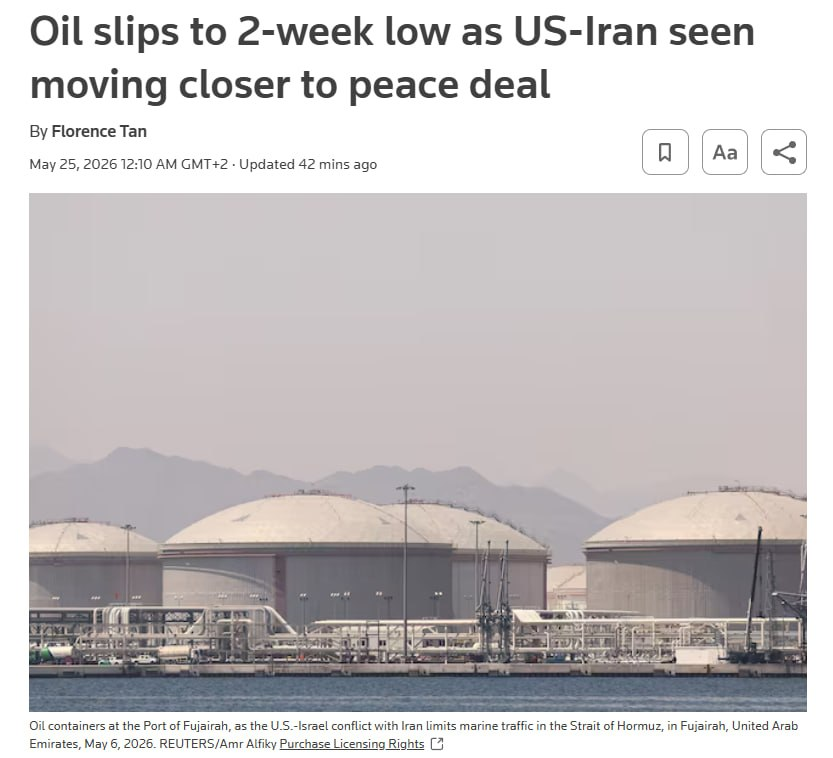
Oil prices fell to their lowest levels in two weeks on Monday amid optimism that an agreement was getting closer, despite ongoing disputes over key issues of the MoU, reported Reuters, stating that Brent crude futures dropped 4.55% to $98.83 per barrel, while US West Texas Intermediate crude fell 4.73% to $92.03 per barrel.
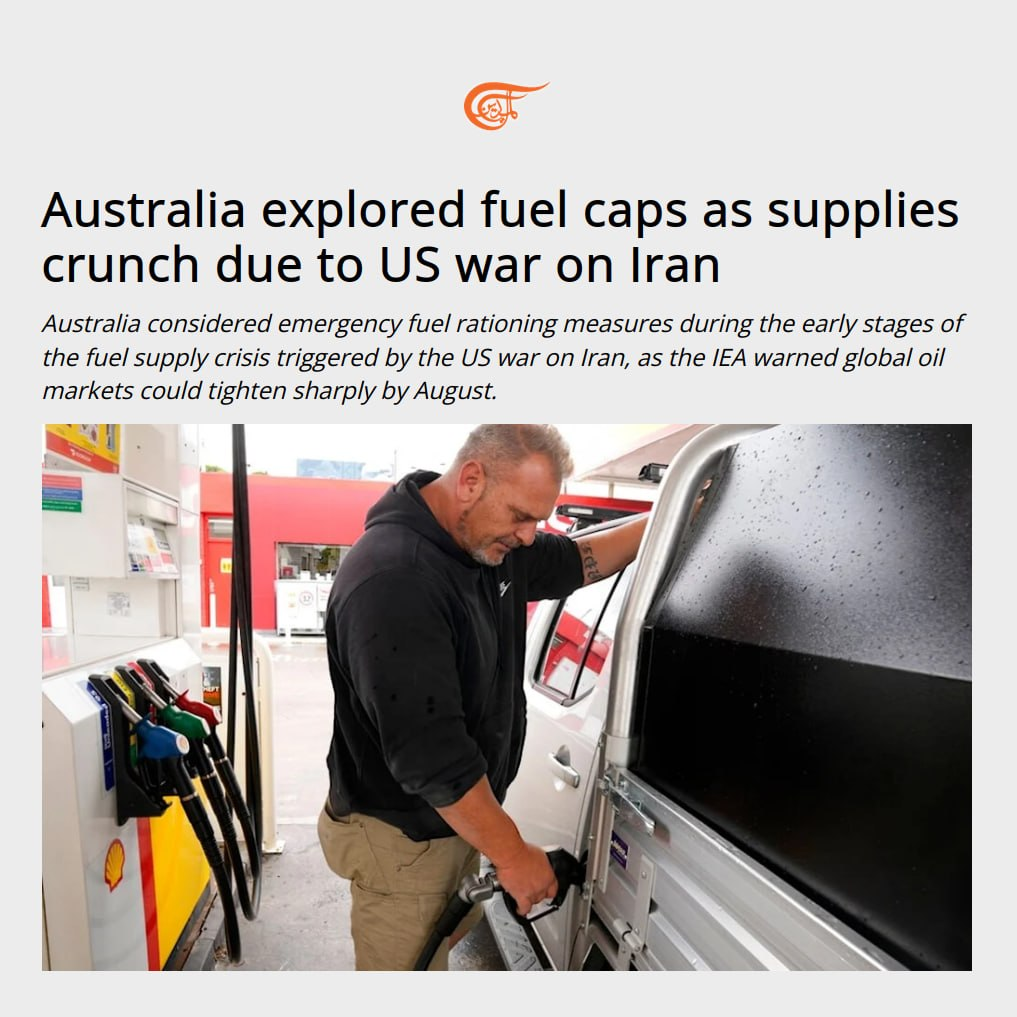
Australia have been forced to consider a fuel rationing plan, according to leaked documents from the Australian Ministry of Energy, which showed that officials in the country had considered various scenarios such as setting a ‘maximum daily gasoline transaction per vehicle.’
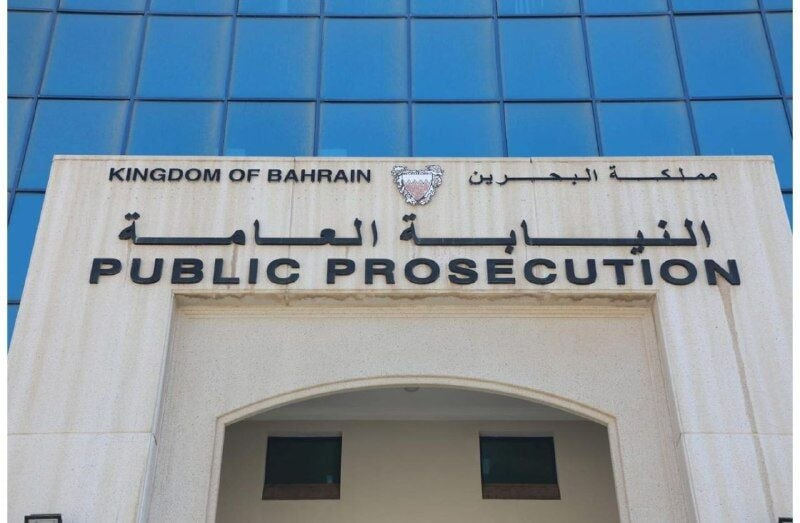
Bahrain’s High Criminal Court convicted 11 individuals in two separate cases, accused of having connections and cooperation with the IRGC, while participating in hostile activities against the country, sentencing 9 individuals to life imprisonment, and two other defendants were sentenced to three years in prison.
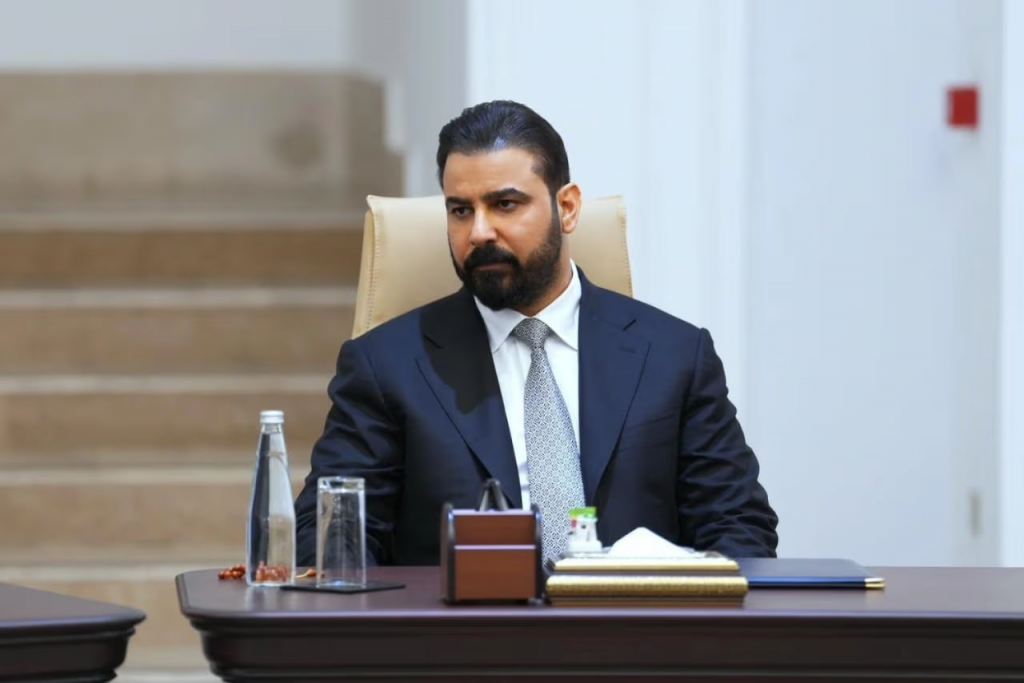
Iraqi Prime Minister Ali al-Zaydi announced the ‘Iraq 2035 Plan’ which is aimed at diversifying revenue sources and protecting the economy from oil dependency, noting that with 90% of state income reliant on crude exports, current disruptions have threatened the budget and salary payments.
Al-Zaydi stressed that salaries and social welfare must not be delayed, while ordering that farmers’ and contractors’ dues be prepared to prevent project and business collapse, adding that the private sector should lead development while the state focuses on oversight, and called for digitisation to stop customs disruption and tax manipulation.
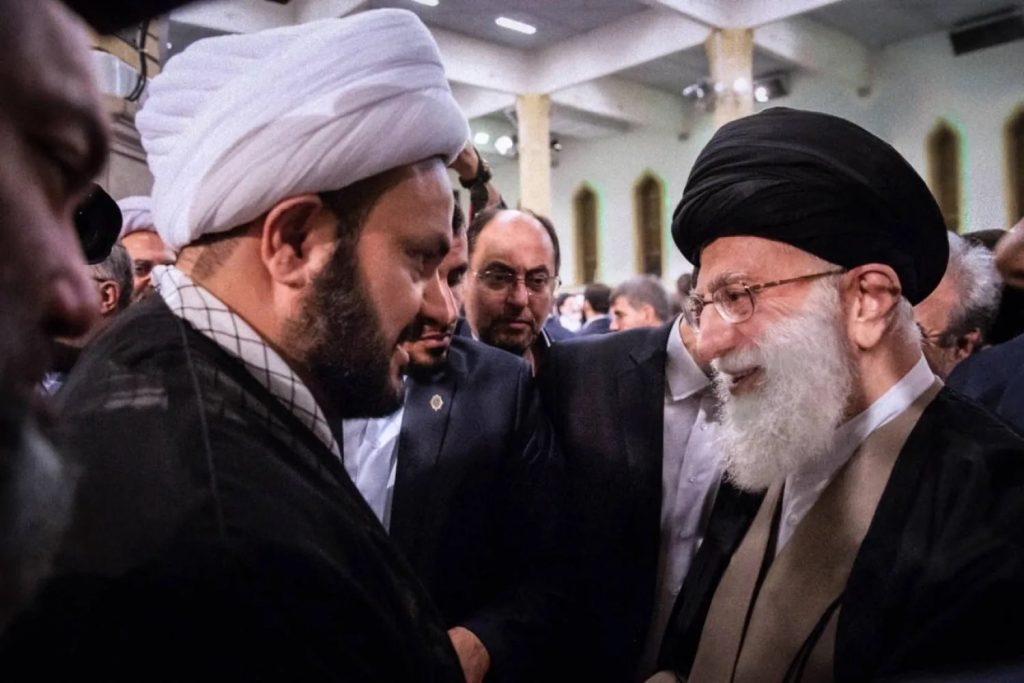
Harakat al-Nujaba, an Iran-aligned Iraqi faction, warned against a US plan to integrate the Popular Mobilisation Forces into official state institutions, with the faction’s deputy chief executive saying the weapons of the resistance are a trust that cannot be compromised, and that disarming would leave society unprotected.
Iraq’s government spokesperson said that state monopoly on weapons isn’t apolitical slogan but a mandatory security strategy, while a senior Shia cleric in Najaf warned against talks of a regional coalition to strike faction leaders and camps inside Iraq, calling on neighbours not to interfere.
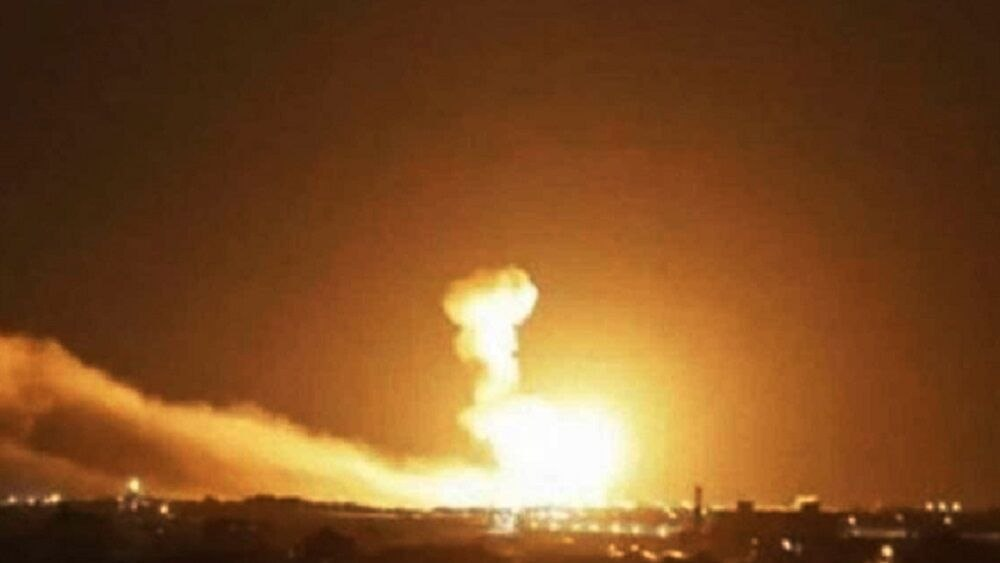
An explosion was reported in the city of Sulaymaniyah in the Kurdistan Region of Iraq, caused by a drone attack, according to IRNA and Iraq News Agency, adding that the Peshmerga forces command centre was the target of the drone attack.
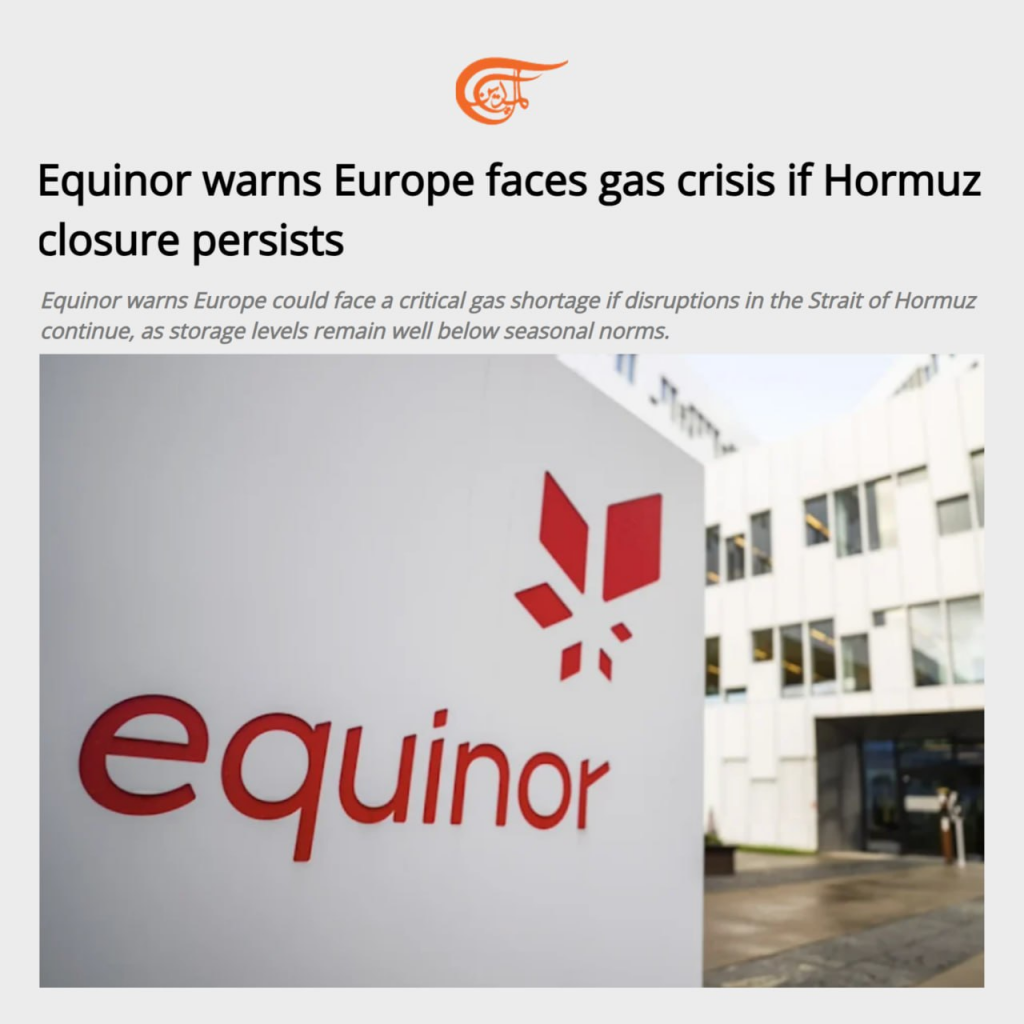
Norwegian energy company Equinor warned that if the disruption in the Strait of Hormuz continued for another one to three months, Europe would face a serious and critical energy supply crisis due to a sharp decline in its gas reserves below the seasonal average level, while according to data from the European Gas Infrastructure Association, Europe’s gas storage facilities are currently just over 35% full, while this figure should normally be around 50% for this time of year.