 AJ
AJ
Review of the US/Israel Iran war ceasefire recap from the eleventh day, which included the ongoing blockade in the Strait of Hormuz by the US and the end of the blockade by Iran, and the subsequent reclosure, while officials exchanged messages via various media platforms, as well as other major reports from day 11 (18 April).
Strait of Hormuz:

President Donald Trump announced that the Strait of Hormuz was open soon after it was confirmed by Iranian Foreign Minister Abbas Araghchi, leading to several ships attempting to pass through the critical waterway and were suddenly turned around back into the Persian Gulf, which was due to Iran’s previous commitment stating 15-17 ships may pass ‘if a ceasefire is adhered to on all fronts.’
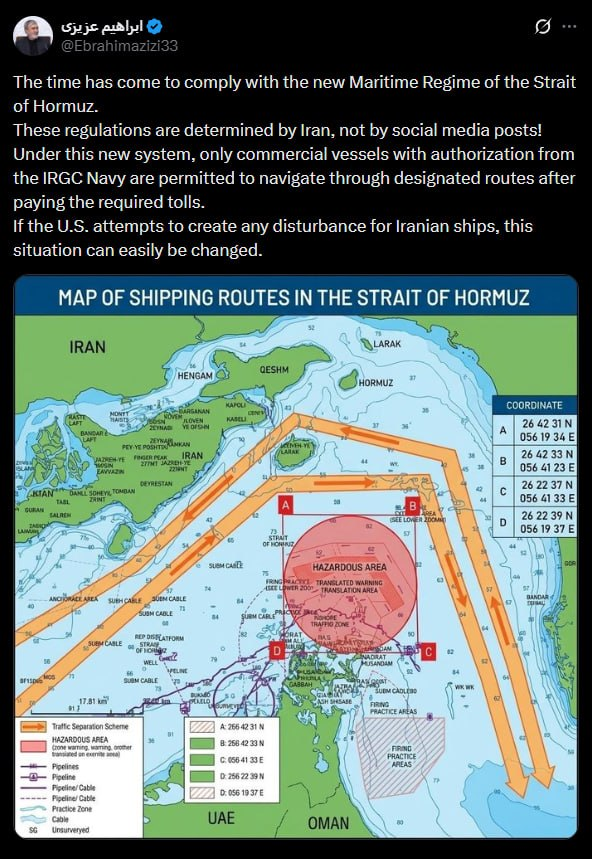
Head of Iran’s National Security Commission Ebrahim Azizi said the time had come to comply with the new Maritime Regime of the Strait of Hormuz, stating these regulations were determined by Iran and not by social media posts, noting that under the new system, only commercial vessels with authorisation from the IRGC Navy are permitted to navigate through designated routes once tolls had been paid, and if the US attempted to create any disturbance for Iranian ships, this situation ‘could easily be changed.’
Iran told Pakistani mediators it would continue to limit the number of ships allowed to cross the Strait of Hormuz and charge for tolls for the remaining period of the ceasefire, according to the WSJ, adding that Tehran was still insisting on a new management system for the Strait after a final deal with the US would allow Tehran to collect tolls.
As the cargo vessel Bhagya Laxmi attempted to sail through the Strait, it was informed by the IRGC to turn back as it didn’t have permission to cross, and the vessel subsequently complied.
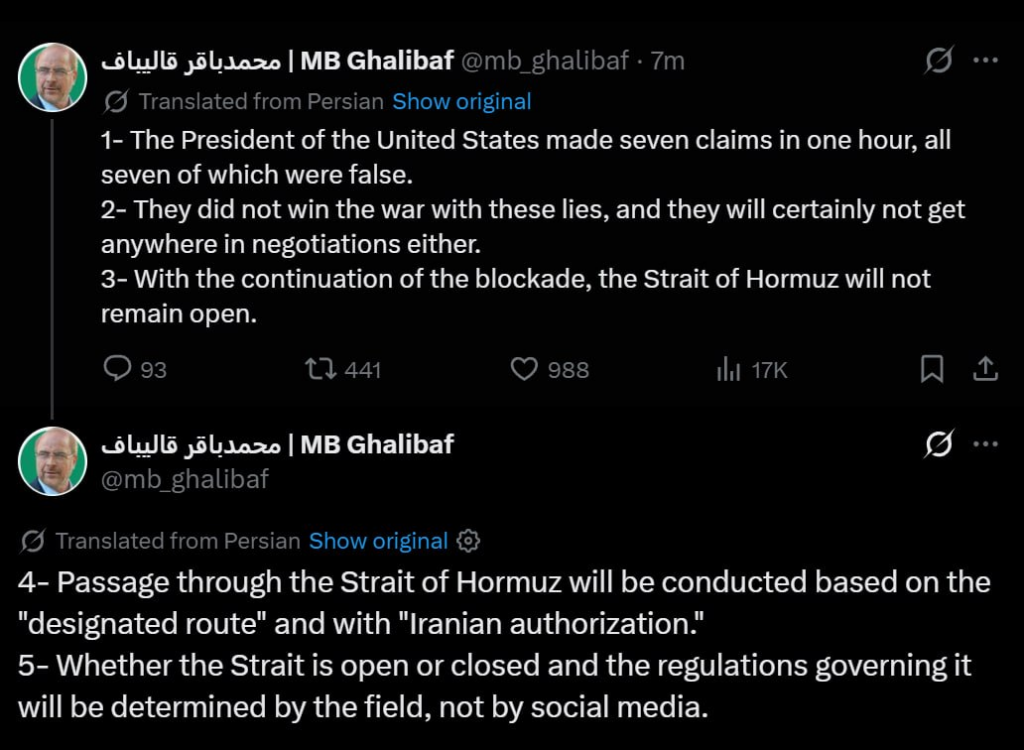
Iranian Parliament Speaker Mohammad Bagher Ghalibaf said on X that President Trump made seven claims in one hour, all of which were false, because the US did not win the war with these lies, and they will certainly not get anywhere in negotiations either: “With the continuation of the blockade, the Strait of Hormuz will not remain open,” he warned, stating the passage would be conducted based on the ‘designated route’ and with ‘Iranian authorisation.’
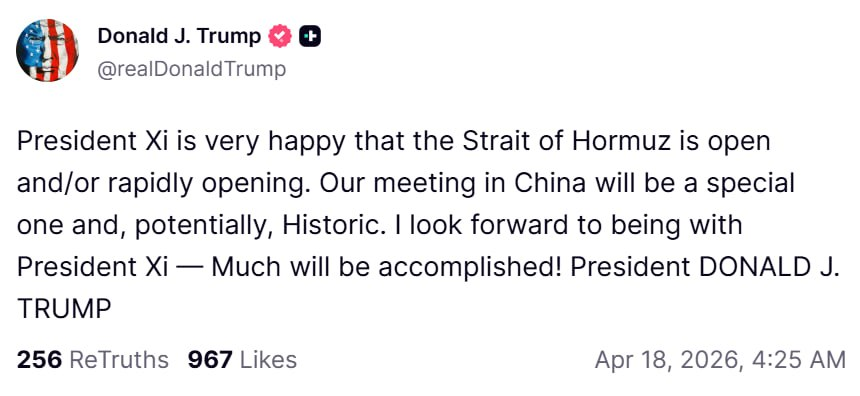
President Trump said soon after on Truth Social: “President Xi is very happy that the Strait of Hormuz is open and/or rapidly opening,” stating that the meeting with China would be a special one as well as ‘potentially historic,’ and Trump looked forward to meeting President Xi where ‘much would be accomplished.’
Four container ships belonging to the French company CMA CGM attempted to cross the Strait of Hormuz on Saturday morning, but were suddenly stopped and turned back, which confirmed the closure was in place.
Iran’s Khatam al-Anbiya Central HQ spokesperson said on Saturday afternoon that the Americans had repeatedly breached their promise like throughout their history, as they continued piracy and maritime robbery under the so-called blockade, stating that for this reason, control of the Strait of Hormuz has returned to its previous state, and this strategic strait is under the strict management of the armed forces.
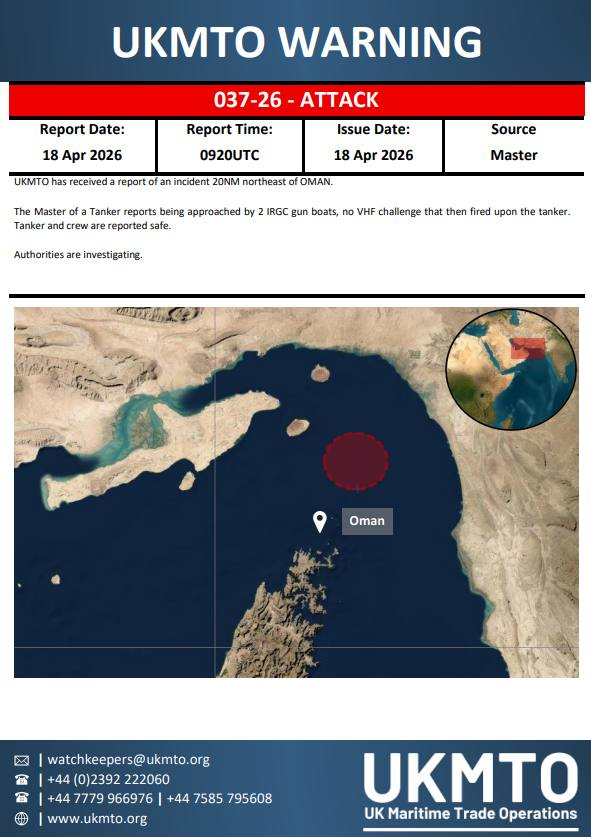
UKMTO reported an incident 20 nautical miles northeast of Oman on Saturday, where a tanker was approached by two IRGC gunboats that opened fire without issuing a VHF warning, but the vessel and its crew were reported safe and authorities were investigating the incident.
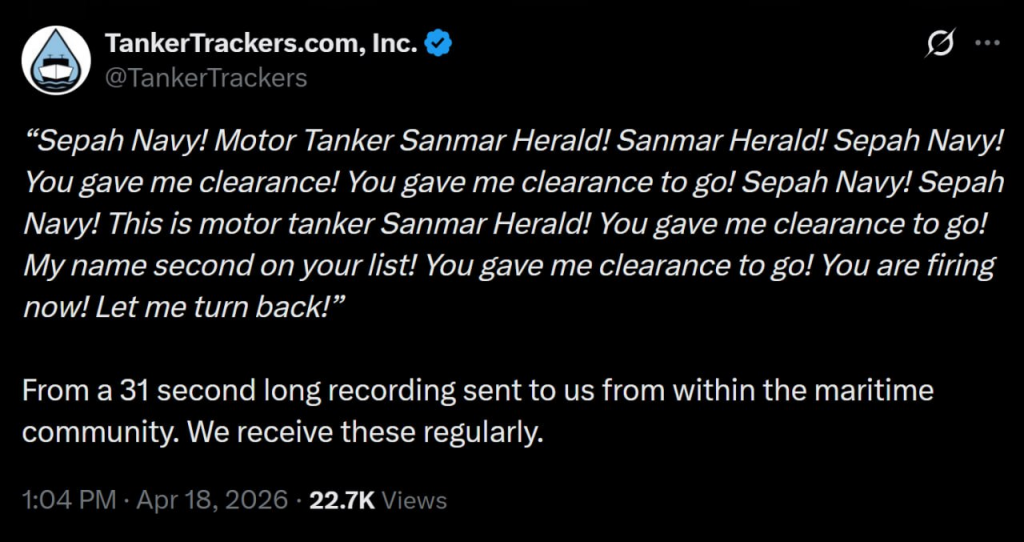
In a later update by the AP, it was reported that two Indian vessels had been forced to turn back into the Persian Gulf from the Strait after Iran’s IRGC Navy opened fire on them, noting that one of the vessels was an Indian-flagged VLCC supertanker carrying 2 million barrels of Iraqi oil, and the WSJ cited two US officials who said the US military was tracking the Iranian attacks on the two non-US vessels.
Al Jazeera reported that a Basra Oil Company source said that one of the Indian oil tankers that was carrying Iraqi crude oil had been stuck in the Strait of Hormuz since March, and although they attempted to exit after receiving permission from Iran, they were shot at and forced to return.
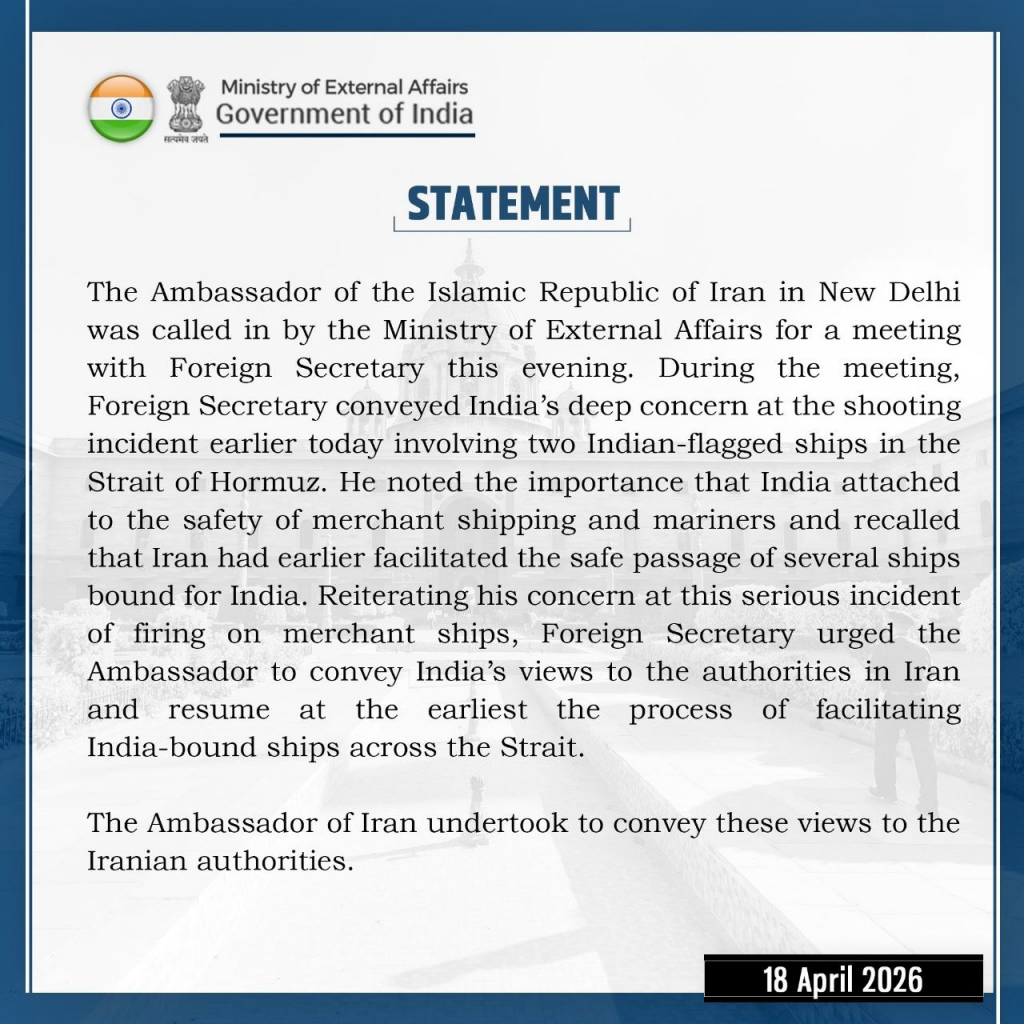
Following the attacks on the Indian vessels in the Strait of Hormuz on Saturday, India’s Foreign ministry summoned the Iranian Ambassador over the incident and the Ministry of External Affairs published an official statement.
India’s Foreign Ministry also confirmed the attack and the summons by India’s Foreign Secretary Vikram Misri of Iran’s Ambassador to India Mohammad Fathali to express serious concern, urging Tehran to ensure safe passage of Indian-bound vessels through the Strait as soon as possible.
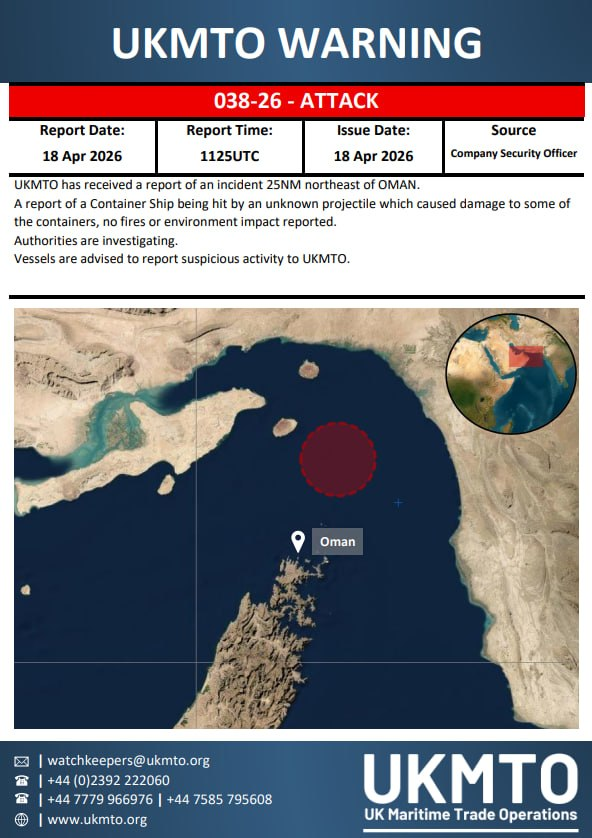
UKMTO reported later that a container ship 25 nautical miles northeast of Oman was hit by an unknown projectile on Saturday, causing ‘damage to some of the containers,’ but no fires or environmental impact had been reported, and Axios later confirmed that at least ‘three ships’ had been turned around after facing attacks.
Other commercial vessels began to receive warnings from the IRGC Navy declaring the Strait of Hormuz closed and instructing ships not to transit the waterway, Al Jazeera reported.
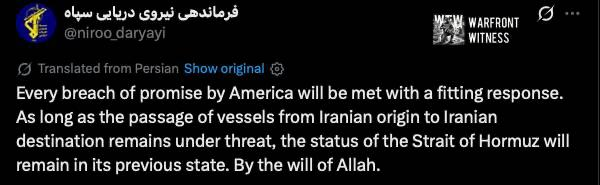
The IRGC Navy took to X to warn the US would be met with a fitting response for each breach of the deal to open the Strait of Hormuz, adding that it would remain closed for as long as vessels coming to and from Iran remain under threat, reported Warfront Witness.
Iran’s First Vice President Mohammad Reza Aref said that the management of the Strait of Hormuz was Iran’s legal right: “Either they will grant us our rights on the negotiating table, or we will seize it on the battlefield,” he added, dismissing President Trump’s remarks as rhetoric, lies and delusions that do not merit a response.
US military officials told the Wall Street Journal they were preparing to board Iran-linked oil tankers and seize commercial ships in international waters, expanding its naval crackdown beyond the Middle East, in a move that will target ‘dark fleet’ vessels carrying Iranian oil or arms, including those already outside the Persian Gulf, and the announcement came as Iran declared the Strait of Hormuz completely closed after allowing several vessels through on Saturday, after which Iran warned no vessel of any type or nationality is permitted to transit the Strait.
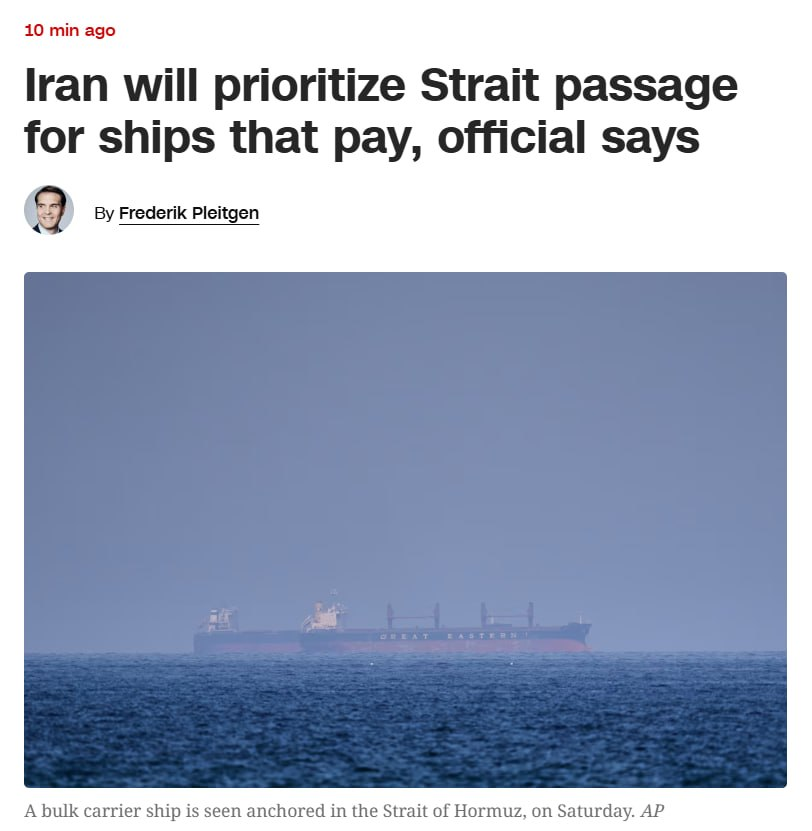
Iran said they would prioritise vessels that pay to cross the Strait, according to a senior Iranian official that informed CNN, stating that vessels who do not pay the fees will have their passage ‘postponed,’ because the limitation on the number of vessels that would be allowed to pass means that Iran has had to decided give priority to those who quickly adapt to the new Strait protocols, paying the costs of security and safety services.
However, the IRGC Navy has announced the Strait of Hormuz will be closed from Saturday evening until such time the US naval blockade on Iranian ports and vessels is lifted, as they said yesterday a number of non-military vessels were permitted through the ‘Lark corridor’ with Iranian coordination, but the US failed to honour its ceasefire commitments: “Any vessel approaching the strait will be considered cooperating with the enemy and will be targeted,” the statement warned.
Vessels reported that the following VHF message was broadcast by Iran warning that the Strait of Hormuz had been closed, reported Reuters: “Attention all ships, regarding the failure of the US government to fulfil its commitment in the negotiation, Iran declares the Strait of Hormuz completely closed again – no vessel of any type or nationality is allowed to pass through the Strait of Hormuz.”
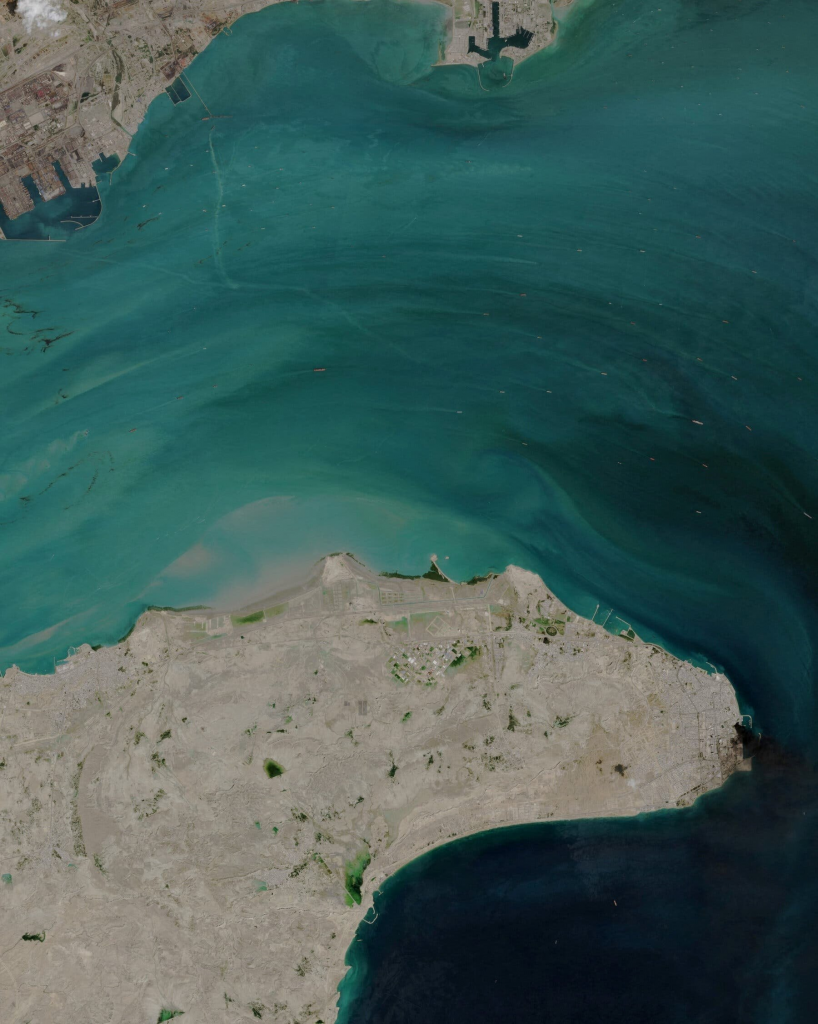
Iran has turned its control over the Strait of Hormuz into a powerful deterrent, regardless of any restrictions on its nuclear program, reported the NYT, stating the waterway, through which 20% of the world’s oil flows, has become a strategic lever that the US-Israeli war has failed to break, while the US estimated that Iran retained around 40% of its pre-war drones and upwards of 60% of its missile launchers – more than enough to hold shipping hostage in the future.
New Round Of Talks:
New rounds of talks were scheduled to take place on Monday in Islamabad, Pakistan, reported CNN who cited Iranian officials, however, Iran cancelled the talks and closed the Strait of Hormuz on Saturday following the US continuing to blockade Iranian vessels transporting cargo away from the Strait.
Following the CNN report, semi-official channel Tasnim News Agency stated that Iran hadn’t yet agreed to the next round of negotiations with the US, noting Tehran cited President Trump’s announcement of a continued blockade on the Strait of Hormuz and ‘excessive demands’ by the US in talks were the main reasons, and Iran informed Washington through the Pakistani mediator that it would not waste time on drawn-out and futile negotiations.
Iran’s Deputy Foreign Minister said on Saturday that Tehran was not ready for a new round of talks with Washington because the USA had not abandoned its hardline stance, and that Iran would not hand over enriched uranium to the United States.
USA News:
President Trump was busy talking to multiple reporters, which included just before boarding Air Force One, saying that talks were going on and would do for the weekend while a lot of good things were also happening in Lebanon, and when asked if there are significant differences, Trump replied that if there were, they would have to be straightened out, but he didn’t think there were too many ‘significant differences,’ adding that when an agreement is signed with Iran, the blockade of Iranian vessels ends.
Trump was also asked by a reporter on Air Force One while in flight whether the ceasefire would be extended or attacks would resume if there was no deal by Wednesday, to which the President responded: “Maybe I won’t extend it, but the blockade is going to remain, so you have a blockade, and unfortunately we’ll have to start dropping bombs again.”
CBS News was told by President Trump that Iran had ‘agreed to everything’ including the removal of enriched uranium from the country, insisting no US troops would be on the ground, but when asked how it would be extracted, Trump said: “We’ll go down and get it with them, and then we’ll take it,” adding that the materials would then be taken to the United States.
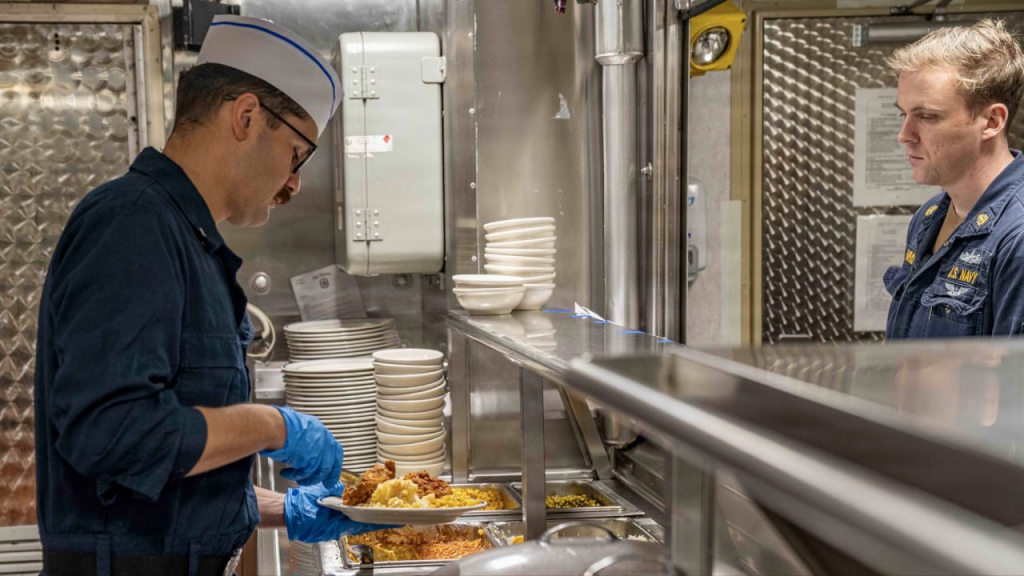
Office of the Chief of Naval Operations for the United States claimed recent reports alleging food shortages and poor quality aboard the deployed ships were false, stating that both USS Abraham Lincoln and USS Tripoli had sufficient food onboard to serve their crews with healthy options, adding that recent restrictions that put a temporary hold on sending mail into theatre because of combat operations had been lifted.
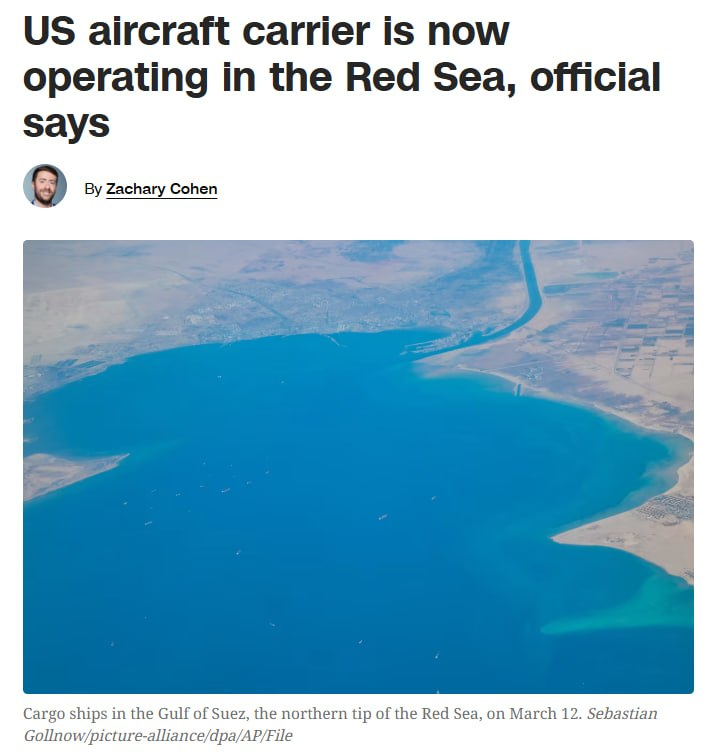
The USS Gerald R Ford aircraft carrier, along with the USS Mahan and USS Winston S Churchill destroyers, moved into the Red Sea after transiting the Suez Canal from the Eastern Mediterranean, reported CNN, stating the deployment was part of US efforts to stay prepared to resume operations against Iran if the ceasefire broke down, according to a US official.
An investigation has been opened following a trader or group placing a roughly $760 million bet on falling oil prices just minutes before it was announced the Strait of Hormuz was opened, because when the announcement hit, prices dropped around 10-12%, generating significant profits, and the precise timing has caught the attention of many, especially as similar well-timed trades had occurred around other recent Iran-related developments.
President Trump convened a security consultation on the Iran crisis just three days before the ceasefire expires, reported Israeli Channel 12, noting that if no breakthrough occurred on Saturday, the chances of the war resuming would rise dramatically, adding that Israeli officials said they were not taking risks and were preparing for a return to fighting in the coming days.
On Truth Social, President Trump explained why it was important that the US offered support to Israel: “Whether people like Israel or not, they have proven to be a Great Ally of the United States of America. They are courageous, bold, loyal, and smart and, unlike others that have shown their true colours in a moment of conflict and stress, Israel fights hard, and knows how to win!”
Iran News:
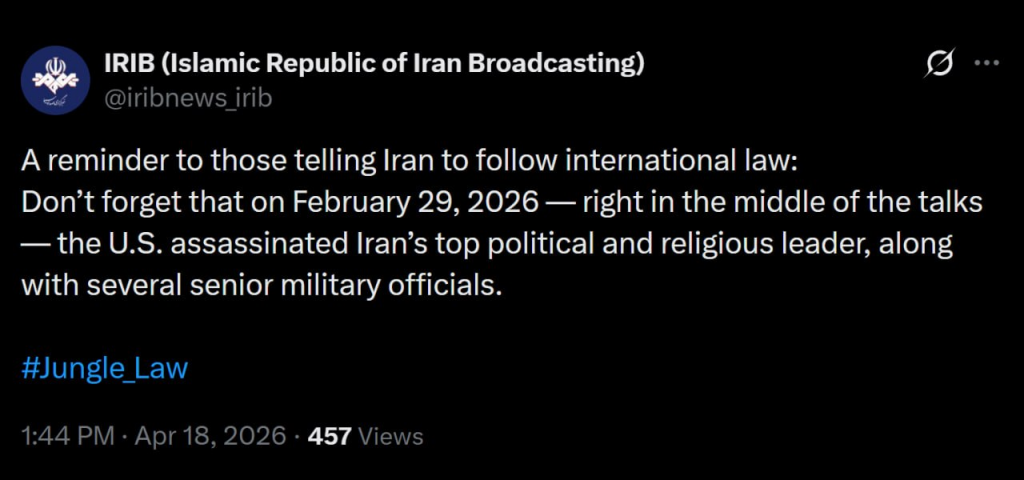
Iran’s state broadcaster IRIB posted a reminder to those telling Iran to follow international law, stating that on February 29, 2026, right in the middle of talks, the US assassinated Iran’s top political and religious leader, along with several senior military officials.
Foreign Ministry Spokesman Esmaeil Baghaei said enriched uranium is as sacred as the country’s soil and would never be transferred anywhere; “The issue of transferring 60% enriched uranium is being raised, but this has not been presented as an option by our side… Various options exist regarding a settlement for the issues that are considered part of our nuclear file,” reported Irib News.
Secretary of the Airlines Companies Association of Iran Maqsoud Asadi-Samani announced that the Mehrabad, Imam (RA), Mashhad, Birjand, Gorgan, and Zahedan airports had been reopened on Saturday, as Iranian airlines also prepare to resume domestic and international flights with Ma’raj Airlines announcing flights to Istanbul would resume on Monday.
Iran’s Supreme National Security Council published a statement saying the negotiations had been postponed until such time as ‘the enemy abandons its ambitions and adjusts its demands in accordance with the realities on the ground.’
Al-Arabiya reported that Iran has proposed to transfer its enriched uranium to Pakistani territory in an appeasement to the US administration and a way to forward a peace agreement.
Mohammad Naqdi, the advisor to the Commander of the IRGC, said that there are still important cards that Iran have not used, stating claims the destruction of Iranian missile launch platforms by the US were not true, but even if this was the case, they could be produced in any blacksmith workshop.
Israeli Kan News attempted to claim that a regional governing source told them that Qatar and Iran reached an understanding in the final days of the war which led to Iran significantly reducing attacks on Qatar, and in return, Al Jazeera took a less militant line against Tehran giving more airtime to Iranian spokespeople, but Qatar has always strongly denied such a deal.
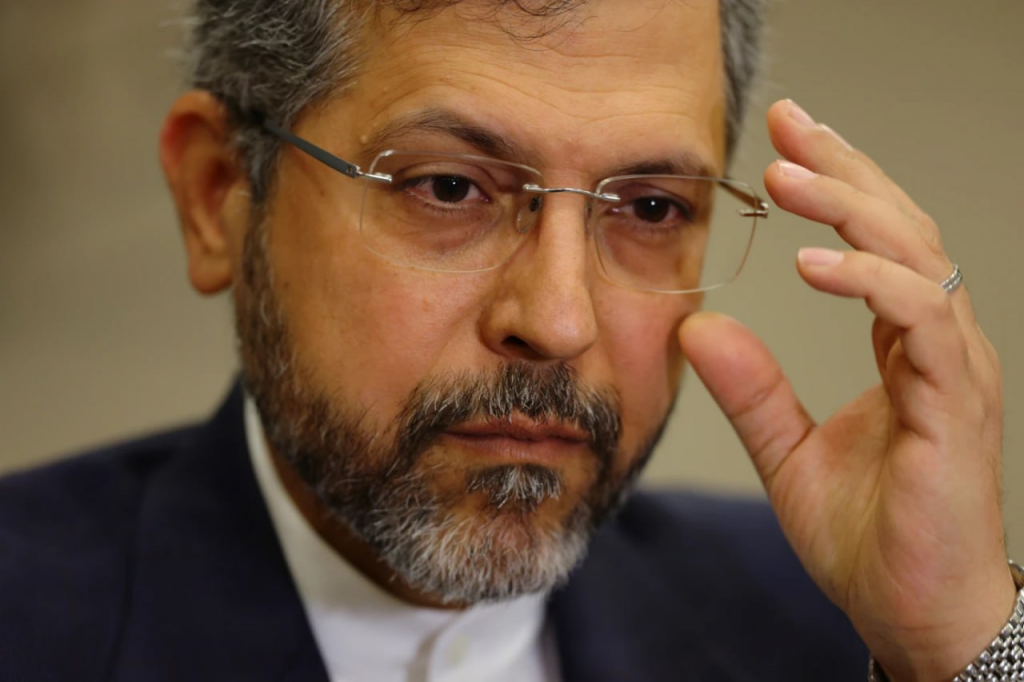
A senior Iranian official told the Associated Press that Iran isn’t ready for a new round of talks with the United States, accusing Washington of refusing to abandon ‘maximalist’ demands, while Iranian Deputy Foreign Minister Saeed Khatibzadeh also rejected President Trump’s claim that Iran would hand over its enriched uranium, stating: “No enriched material is going to be shipped to the United States – this is a non-starters.”
Other News:
Foreign Ministers from Turkey, Pakistan, Saudi Arabia and Egypt met on the sidelines of the Antalya Diplomacy Forum for a behind-closed-doors meeting to discuss regional security tensions.
Iraq resumed southern oil exports after more than a month-long halt caused by the disruptions in the Strait of Hormuz, with one tanker loading on Friday night, reported Reuters, who cited four energy sources.
According to Iraqi sources, an alleged Iranian Shahed-136 struck a site belonging to an Iranian Kurdish opposition group in the Erbil Governorate, but Iran stated that they haven’t launched any attacks on Iraq since the ceasefire, according to Naya News.
Kurdistan Region of Iraq Prime Minister Masrour Barzani strongly condemned ongoing drone attacks against the region over the past several days, stating that despite not being part of the conflict as well as the ceasefire and peace talks, the attacks had killed at least five people and injured many more, allegedly in an effort to undermine the truce, calling on Iraq’s official government to take practical measures to end the attacks, and urging international partners to provide equipment to protect Kurdistan’s civilian and energy infrastructure.
The United States announced sanctions against seven commanders of the Iran-aligned militia groups accused of planning and directing attacks against US personnel, facilities and interests in Iraq, with targeted figures linked to groups including Kata’ib Hezbollah, Kata’ib Sayyid Al-Shuhada, Harakat Al-Nujaba, and Asa’ib Ahl Al-Haqq, which Washington said threatened American lives and undermined Iraq’s sovereignty.
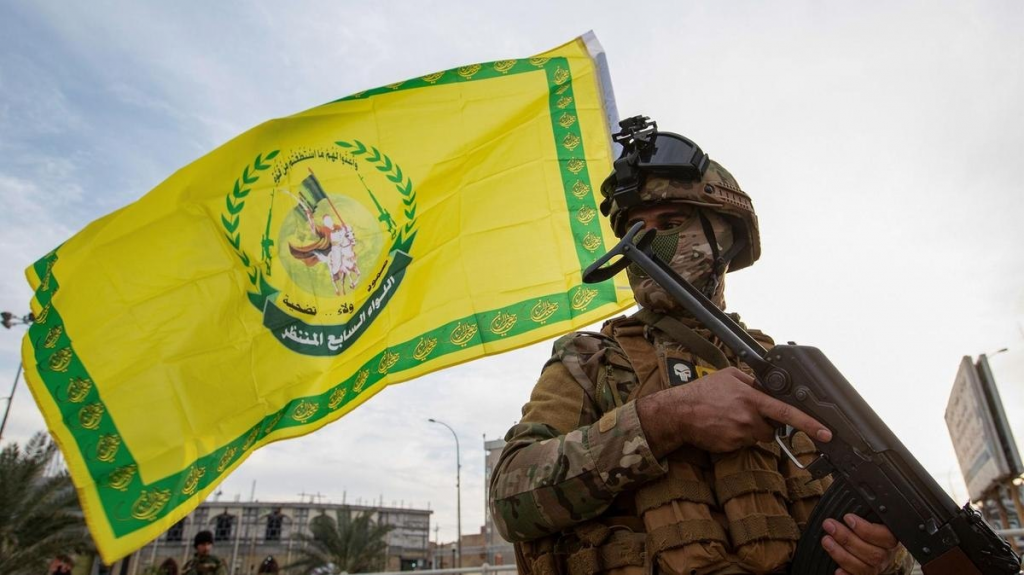
Iraq’s Kata’ib Hezbollah dismissed a US reward of up to $10 million for information on its leader Abu Hussein al-Hamidawi, as the group said the offer exposed Washington’s failure and weakness, and that its commander is not afraid of ‘martyrdom,’ adding that ‘we are students of a school that knows no defeat and accepts no surrender.’
50 days of war in Iran have resulted in the loss of $50 billion worth of oil, as assessments indicated that during this period, $50 billion worth of crude oil and related fuels have either been lost or remain untransferred, but this figure is not only a direct loss for oil exporters, because it has also contributed to a broader energy supply crisis and rising prices in global markets.
Jordan’s Foreign Minister said the region cannot remain hostage to Netanyahu’s agenda, and it was necessary to reach a permanent ceasefire, discuss all regional issues, as well as stop interfering in the affairs of other countries and violating their sovereignty.
Yemen’s Houthi Defence Minister Mohammed Nasser al-Atifi announced that the armed forces are at the highest level of readiness to confront any threat, saying the recent round of fighting demonstrated the unity of fronts and proved the effectiveness of the resistance axis’ military operations, reported Tasnim News Agency.
Hezbollah Secretary-General Naim Qassem said the temporary ceasefire would not have been achieved without the resistance’s legendary performance, and that Iran closed the Strait of Hormuz in response of US violations which eventually forced Israel to stop its actions, but criticised a US State Department ceasefire statement issued after the truce took effect, calling it an insult to Lebanon and noting the Lebanese government had not met or approved it.
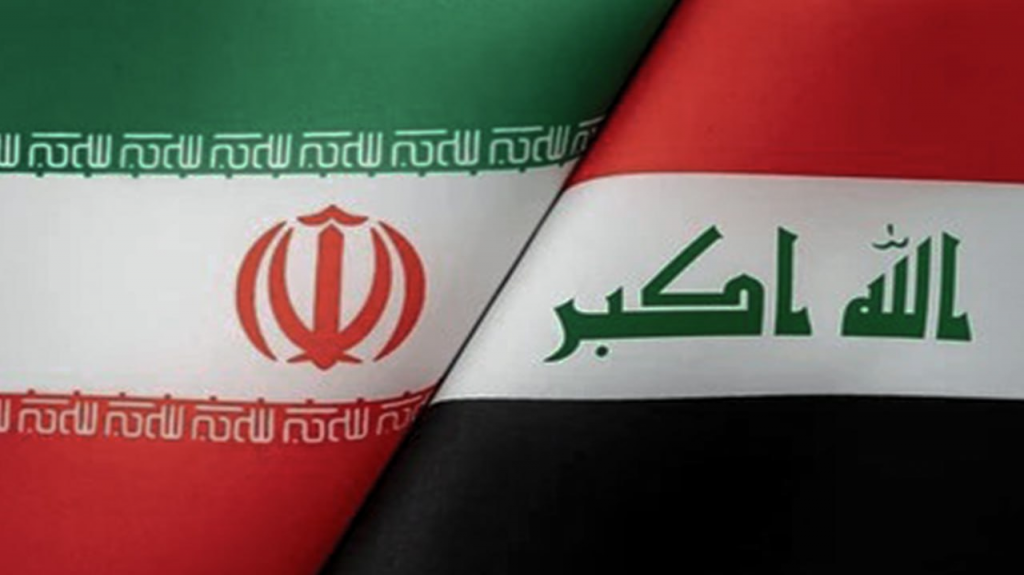
Iran’s Quds Force commander Esmail Qaani arrived in Baghdad on Saturday evening for an unannounced visit, meeting armed faction leaders and figures from the Shiite Coordination Framework as negotiations over Iraq’s next Prime Minister remained unresolved, reported Kurdistan24 and Shafaq News, stating that talks also addressed the future of armed groups, including proposals to integrate them into state security institutions and separate political actors from their armed wings.