 AJ
AJ
Recap from the fifth day of the ceasefire, including the aftermath after the talks ended in Pakistan without a deal such as Trump threatening to impose a naval blockade in Hormuz, along with other major news from day five.
Iran-US Ceasefire:

Following the talks in Islamabad, Pakistan, both delegations seem to have taken time to rest and relay back to their respective country before leaving, with the full US delegation leaving first, according to CBS, while CNN later reported that the Iranian negotiating team had left, escorted from airspace by jets, as Pakistan officials said they hoped within 10 days during the truce period, there would be a new return to discussions with a different level of representation from the US delegation.
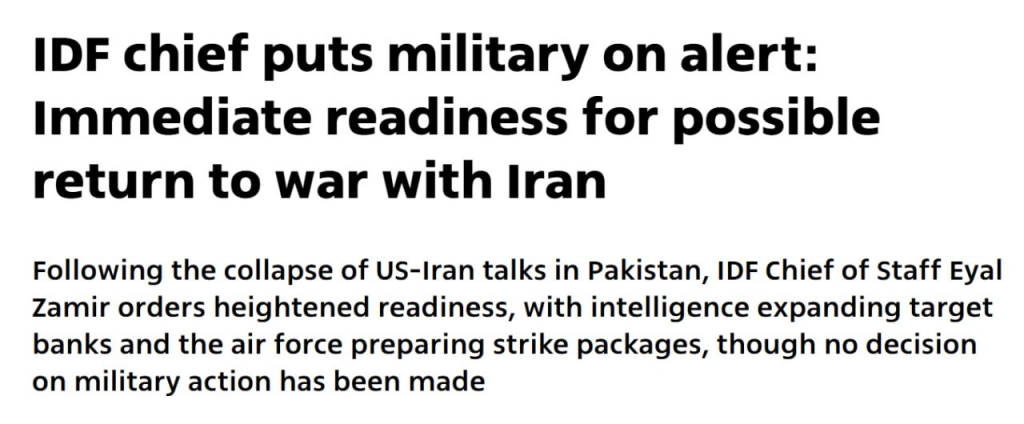
IDF Chief of Staff Eyal Zamir placed the military on immediate high alert following the collapse of negotiations in Pakistan, citing the possibility of a return to war, reported Ynet, stating the IDF was increasing readiness, with intelligence units expanding target lists and the air force preparing strike plans, although no final decision on military action had been made, although Channel 14 Israel later reported that Israel would not return to fighting Iran alone.
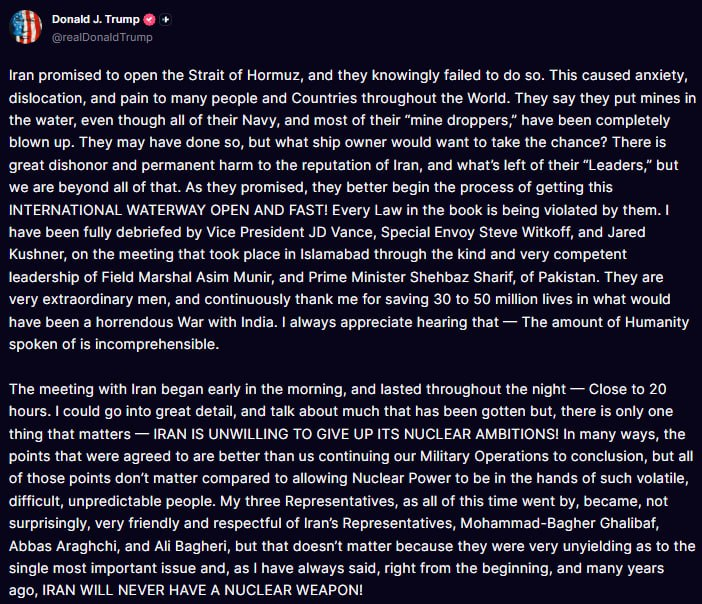
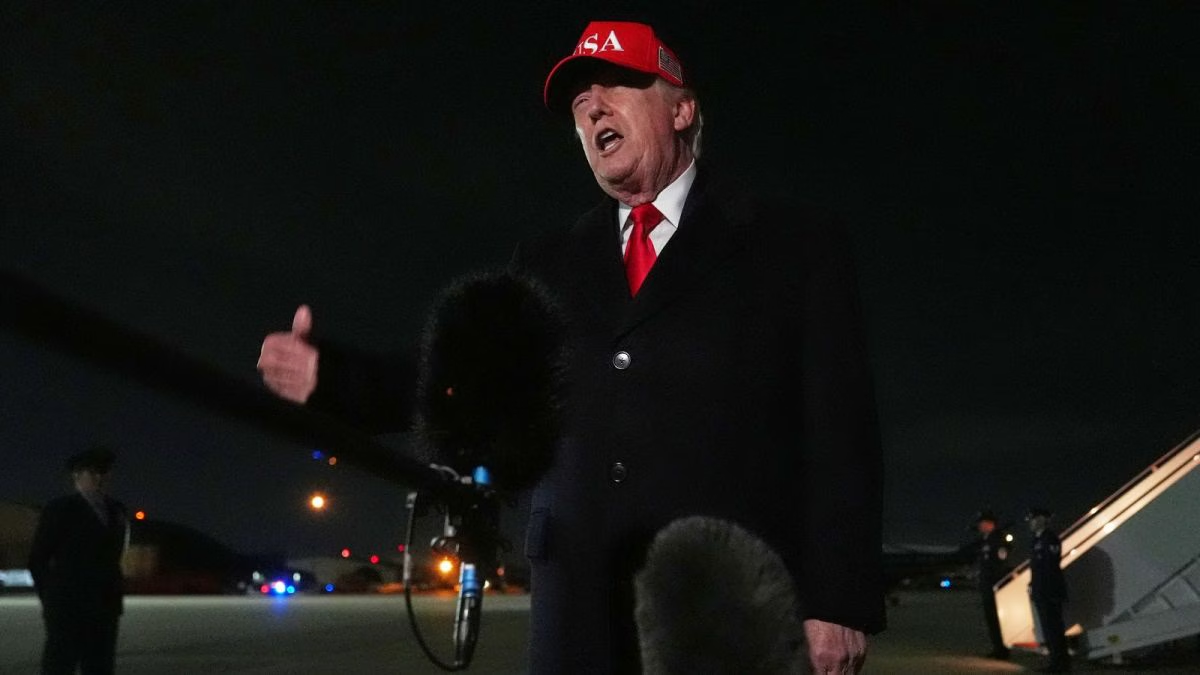
President Donald Trump took to Truth Social saying that the US forces were going to reopen the Strait of Hormuz as Iran had failed to do so, as well as clear any mines if they had been laid by Iran, while still stating Iran was unwilling to give up its nuclear ambitions.
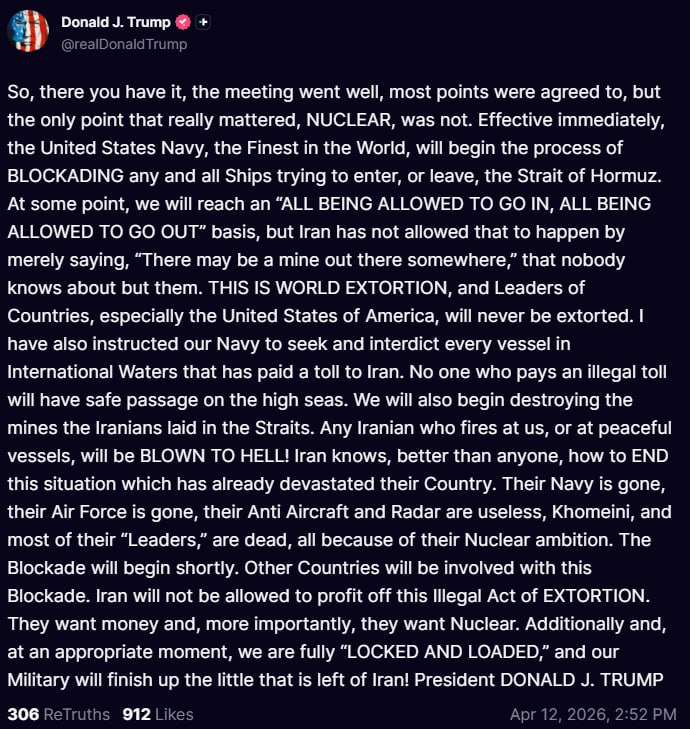
Trump posted another Truth Social shortly after, saying that most points had been agreed with Iran, but the only sticking point was the nuclear issue, which now warrants the US to blockade the Persian Gulf for all ships heading to and from Iranian ports, according to Trump, noting that the US were fully ‘locked and loaded’ in a caution to Iran regards breaking the ceasefire.
Iranian Parliament Speaker Mohammed Bagher Ghalibaf said: “Before the negotiations, I emphasized that we have the necessary good faith and will, but due to the experiences of two previous wars, we have no trust in the opposite side,” adding that colleagues of the Iranian delegation “Minaab168” raised forward-looking initiatives, but the opposing side ultimately failed to gain the trust of the Iranian delegation in this round of negotiations: “America has understood our logic and principles, and now it’s time for it to decide where it can earn our trust or not.”
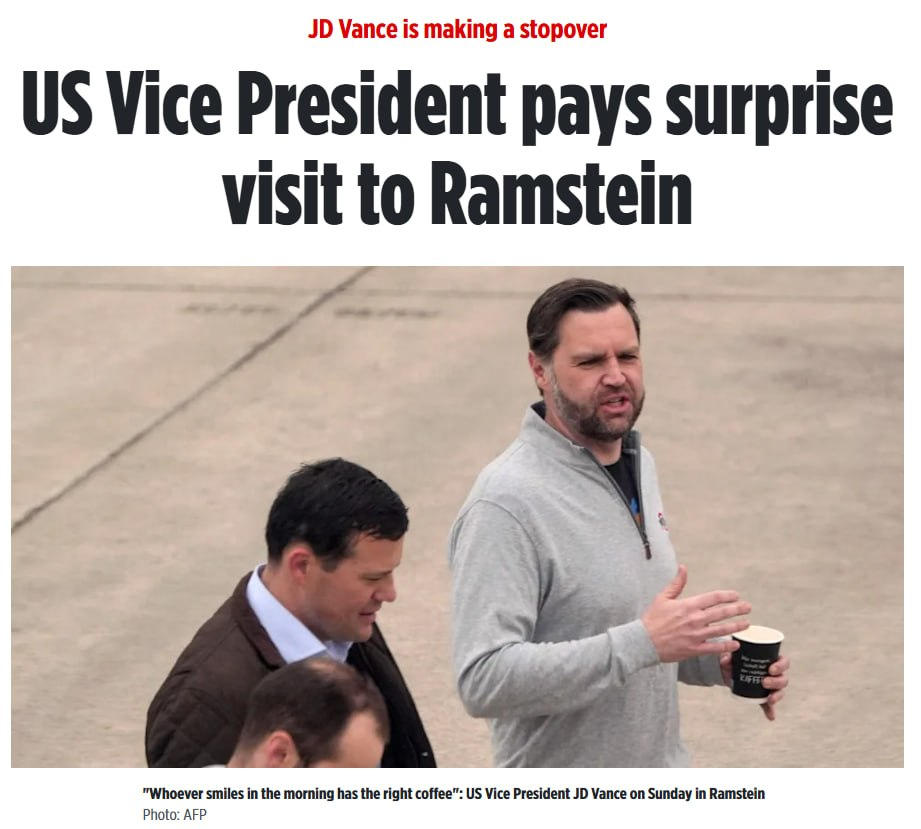
Vice President JD Vance spent some of the afternoon at Germany’s Ramstein Air Base while returning to the US after being unable to force a deal with Iran during talks which lasted 19 hours, according to BILD.
An Adviser to Iran’s Supreme Leader, Ali Akbar Velayati, said that the ‘keys to the Strait of Hormuz is in our hands,” while Iranian First Vice President Mohammad Reza Aref added: “We will defend the rights of our people, from control of the Strait of Hormuz to obtaining war reparations.”
Footage and radio broadcasts published by Iranian state broadcaster IRIB and shared by Warfront Witness appeared to verify Iran’s claims of forcing back two US ships in the Persian Gulf on Friday, as scenes showed the IRGC Navy confronting the Arleigh Burke-class destroyers USS Frank E Peterson Jr (DDG121) and USS Michael Murphy (DDG 112) in the Oman Sea near Fujairah port. In the published transmissions, the IRGC said: “US Navy Warship 121, this is Sepah Navy Station. You must alter course and go back to the Indian Ocean immediately. If you don’t obey my order, you will be targeted.” USS Frank E Peterson responded: “This is Coalition Warship 121. Engage in transit passage in accordance with international law. No challenge is intended to you.” The IRGC replied: “This is Sepah Navy. Last warning. Last warning. Last warning.”
Israeli Channel 14 stated Israel were expressing their satisfaction with the United States’ decision to halt the negotiations with Iran, after Vice President Vance announced the delegation would leave due to a lack of readiness to compromise on fundamental demands, adding that political officials confirmed this step demonstrated Trump’s determination to remove the enriched uranium from Iranian territory and to separate the Lebanese arena from the direct war with Iran.
President Trump stated that more naval ships were being deployed to the Strait of Hormuz to assist with the blockade and mine clearing, stating that other countries, including the UK, would be sending ships to assist with mine clearance operations.
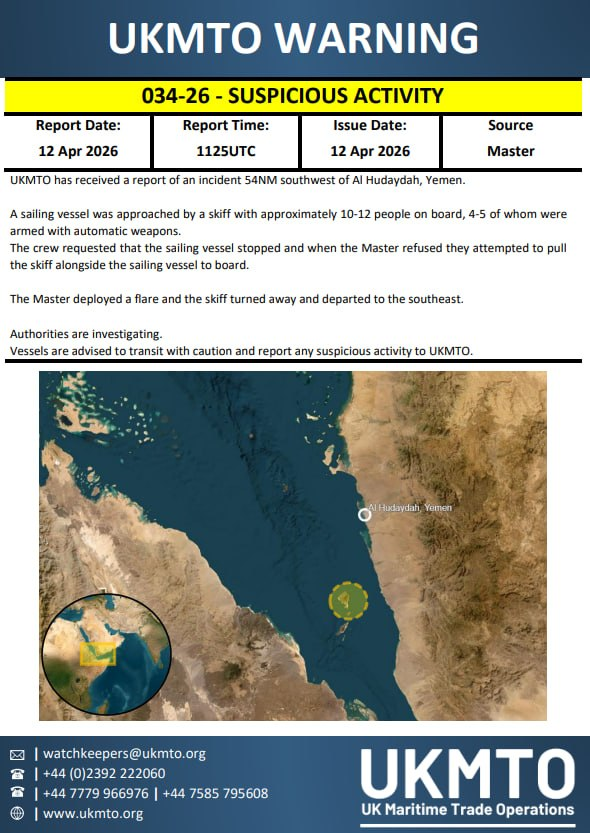
UKMTO reported that a vessel 54 nautical miles southwest of Al Hudaydah, Yemen, in the area of the Bab el-Mandeb Strait, was approached by a skiff carrying 10-12 individuals, 4-5 of whom were armed with automatic weapons, however, as the group attempted to stop and board the ship, the crew fired a flare, prompting the attackers to withdraw and leave the area.
Reuters was told by a senior US official that Iran rejected key US demands, including ending uranium enrichment, dismantling major nuclear facilities, cutting support for regional proxy groups, and reopening the Strait of Hormuz.
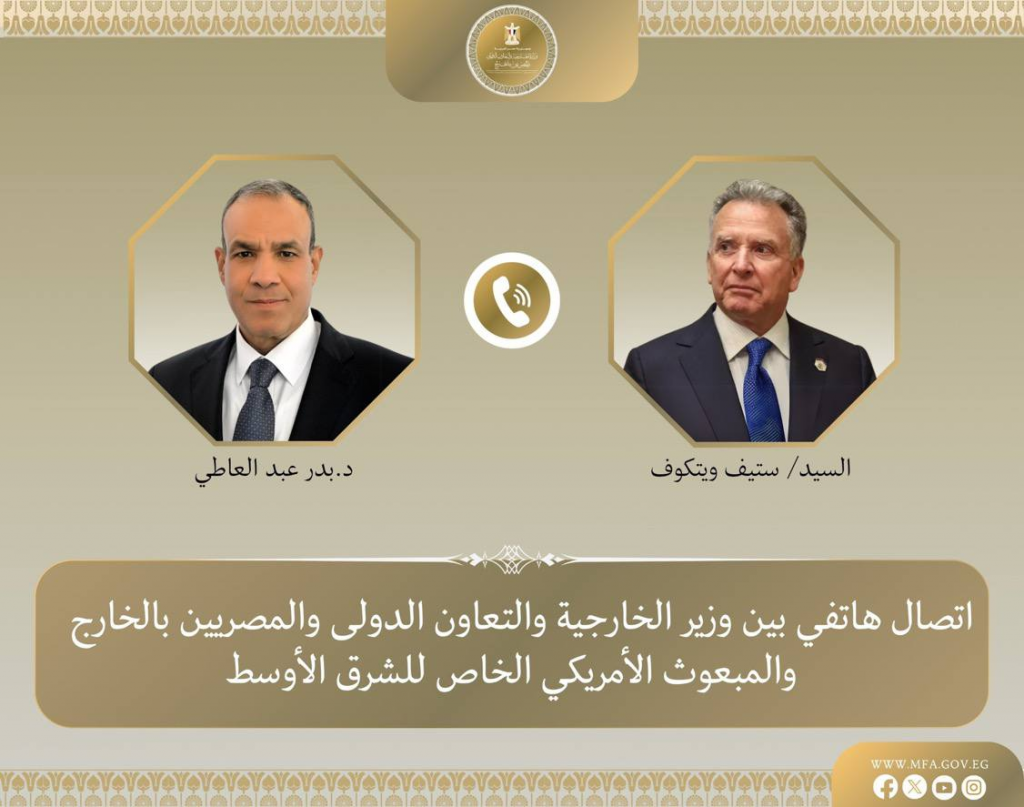
Egypt’s Foreign Minister Badr Abdelatty held a phone call with US Special Envoy Steve Witkoff to discuss regional developments following the talks in Islamabad, and Witkoff briefed Egypt on the US position during negotiations, while Abdelatty emphasised the importance of peaceful solutions to maintain regional stability.
Trump told Fox News that the US were going to be blocking the Strait of Hormuz, it will take a while to set up, but it will be effective soon, because the US were not going to let Iran make money by selling oil to people, so it was going to be all or nothing, adding that the Iranians came into the talks like they had the cards, which they don’t, stating that NATO will help, as well as the UK, and a couple of other countries are sending minesweepers.
Israeli officials estimated that the mere fact the round of talks came to an end after 21 hours without a breakthrough, and with a particularly harsh tone, indicated the depth of the gaps between the two sides, reported Maariv, noting the real obstacle is no longer the nuclear issue alone, but also the Strait of Hormuz, however, officials still believe its too early to say whether negotiations have definitively collapsed, as there may be another round during the fragile two week ceasefire, while decisions in the White House can be made quickly within hours rather than within days.
Oman’s Foreign Minister Badr Albusaidi said on X that when he met VP Vance just hours before the war began, he had formed an impression that both JD Vance and the President had a strong preference to avoid the entanglements of war, so he urged the ceasefire be extended and the talks to continue, adding that success may require everyone to make painful concessions, but this is nothing compared to the pain of failure and war.
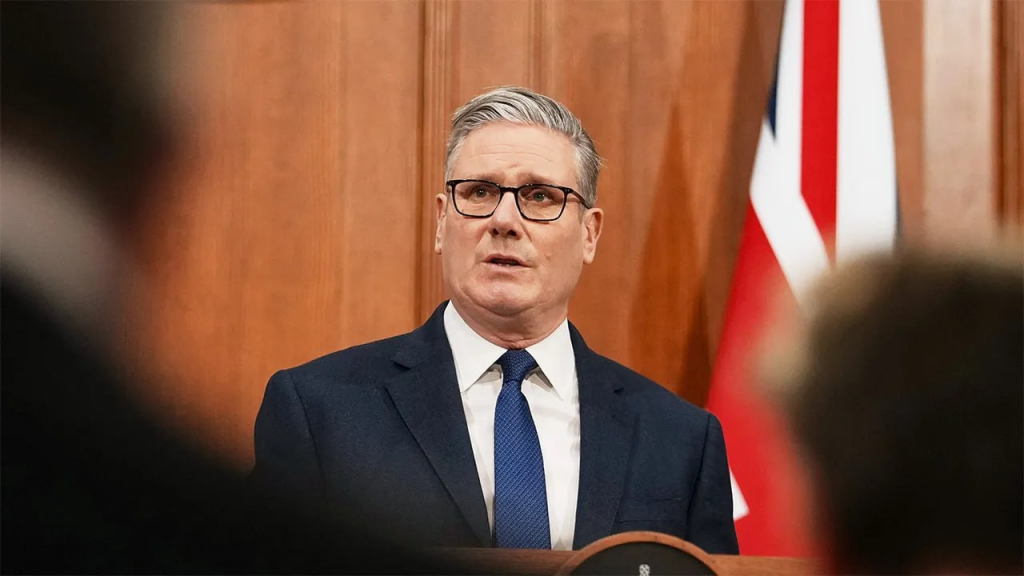
British Prime Minister Sir Keir Starmer urged Iran and the United States to find a way through after talks in Pakistan ended without a deal. Downing Street said Starmer, in a conversation with the Sultan of Oman, stressed the continuation of the ceasefire is vital and that all parties must avoid further escalation, while Health Secretary Wes Streeting called the failed talks ‘disappointing’ and defended Britain’s decision not to join the conflict.
Iranian Parliament Speaker Ghalibaf said on Sunday evening that if the United States wanted to find a way out, the only path is to earn the trust of the Iranian people, because Trump is indebted to the Iranian nation and still had much to do to make amends, however, if Trump chooses war, Iran will fight, if Trump comes with logic, Iran will respond with logic, but Iran will not submit to any threats, and if they test Iran’s will again, ‘we will give them a greater lesson.’
Spokesperson for the National Security and Foreign Policy Committee of the Iranian Shura Council said that Trump’s talk regarding the initiation of a naval blockade in the Strait of Hormuz would be considered a military action and responded to, noting that Trump’s efforts would complicate the current situation in which he is floundering while further disrupting stock markets, adding: “We may reveal our other cards that we haven’t used yet in this game.”
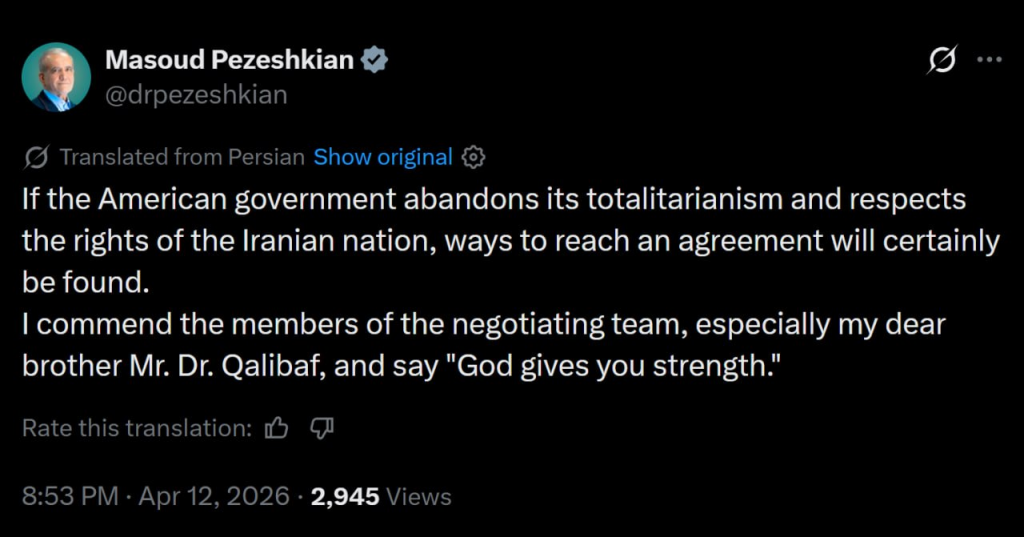
Iranian President Masoud Pezeshkian said that if the American government abandoned its totalitarianism and respected the rights of the Iranian people, then ways to reach an agreement could certainly be found.
Regional countries are racing to bring the US and Iran back to the negotiating table after marathon peace talks in Islamabad ended without a deal, reported the WSJ: “Despite defiant statements from the US and Iran, the door remains open for further diplomacy and a second round of talks could be held within days. Regional countries are also in consultation with the US to secure an extension of the two-week ceasefire.”
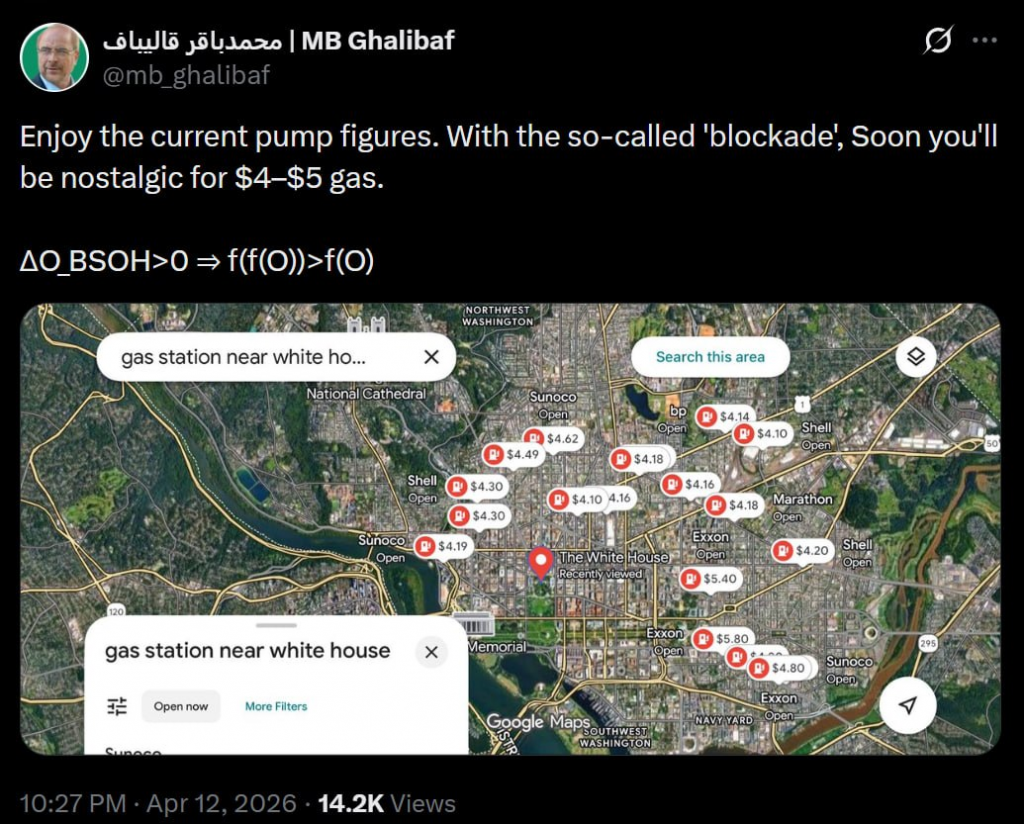
Iranian Parliament Speaker Ghalibaf posted a cheeky X: “Enjoy the current pump figures – with the so-called ‘blockade,’ soon you’ll be nostalgic for $4-$5 gas.”
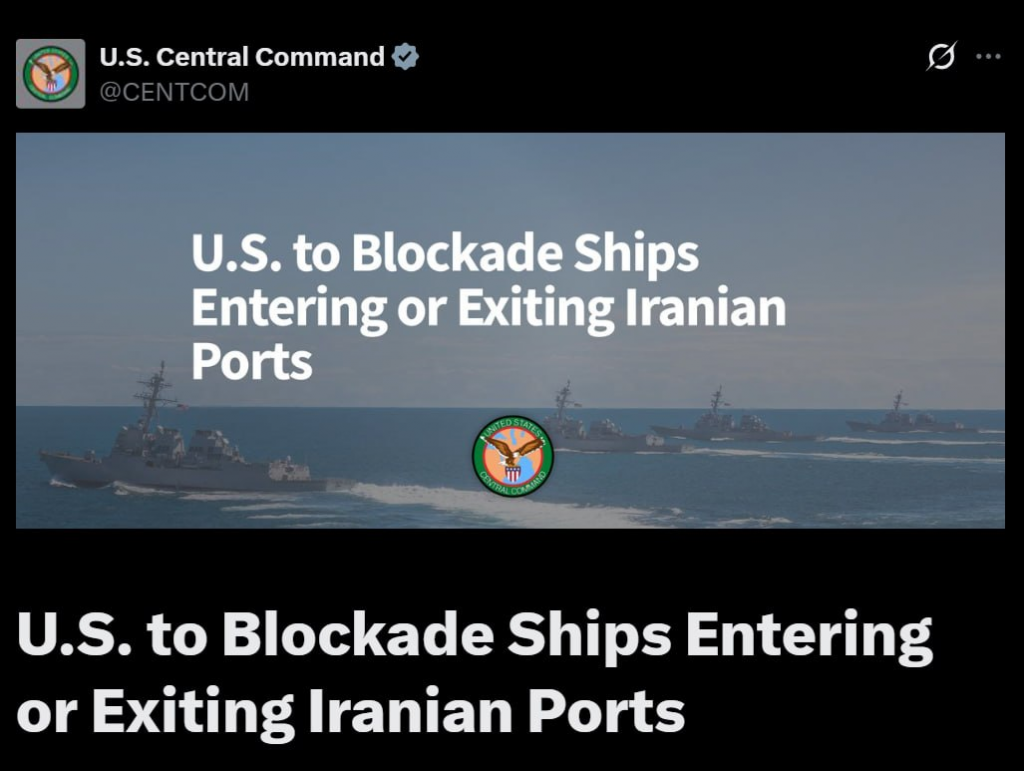
US Central Command announced that the United States will begin a naval blockade of all ships entering or leaving the Iranian ports on April 13 at 10am Eastern Time: “The blockade will be enforced impartially against vessels of all nations entering or departing Iranian ports and coastal areas, including all Iranian ports on the Arabian Gulf and Gulf of Oman. CENTCOM forces will not impede freedom of navigation for vessels transiting the Strait of Hormuz to and from non-Iranian ports.”
Just as Sunday came to an end in the Middle East, JD Vance had touched down in Washington following the unsuccessful talks with Iran in Islamabad, Pakistan, and the unscheduled visit to Germany’s Ramstein base.
Lebanon:
Lebanese Prime Minister Nawaf Salam postponed a visit to the US after internal advice warned of a potential trap involving an alleged secret meeting with an Israeli envoy, which stated he may face pressure to meet Israeli representatives, risking a domestic backlash, reported MTV, however, the visit has not been cancelled fully, and Lebanese officials confirmed that Lebanon had separated its issue from Iran’s in preliminary talks with the US and Israel, insisting on a ceasefire before negotiations.
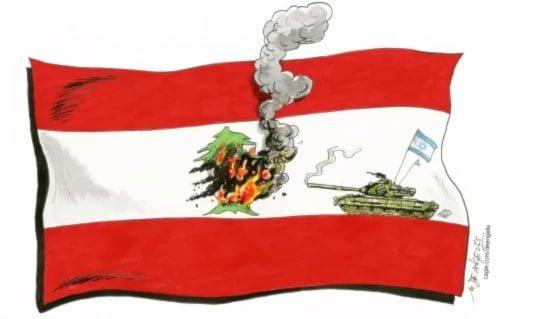
A Sunday analysis piece by Al-Akhbar argued the United States couldn’t serve as a neutral mediator in the Lebanon-Israel conflict because it is a direct party to the war militarily, politically, and finally supporting Israel, noting historical examples including Camp David (1978), Oslo (1993) and the 2024 ceasefire mechanism show US-led mediation has produced fragile, unbalanced arrangements that favoured Israel, adding that accepting a biased mediator does not end the war but transfers it to an uneven negotiating table, weakening the weaker party, which in this case is Lebanon.
Israeli PM Netanyahu, Defence Minister Israel Katz, and IDF Chief of Staff Eyal Zamir visited southern Lebanon on Sunday to conduct a situational assessment, reported Kan News. Netanyahu said to the camera: “There is a wonderful spirit here, the ability to fight, and they are fighting well, and the war is ongoing, including within the security line in Lebanon, which I visited an hour ago,” adding that Israel had mitigated the threat of incursion from Lebanon through this ‘security zone.’
Hezbollah claimed a series of attacks on Sunday in response to alleged Israeli ceasefire violations, with targets including a gathering of Israeli soldiers in Yaron with drones at 07:10, two barrages on Israeli vehicles and troops in Khiam at 05:15 and 05:30, a command vehicle in Taybeh with a drone at 09:45, the Kiryat Shmona barracks with drones at 11:10, an Israeli military gathering at Tel Hamams south of Khiam with rockets at 13:00, the battalion command headquarters in Beit Hillel with rockets at 13:30, and multiple gatherings near Shmaran hill in Bint Jbeil with rocket barrages at 07:30 and 09:30.
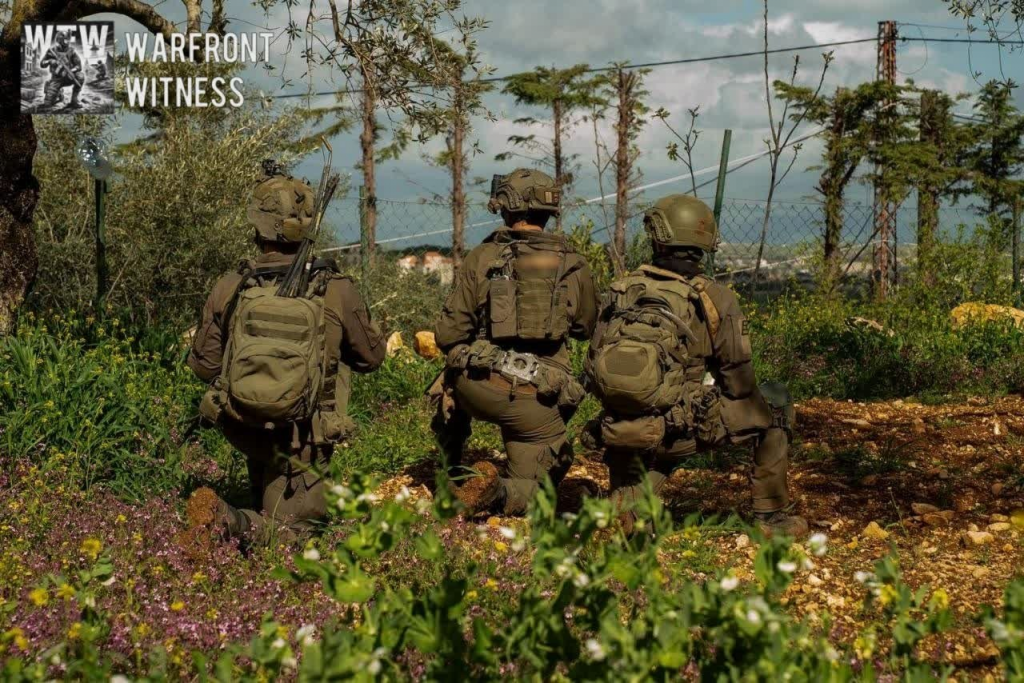
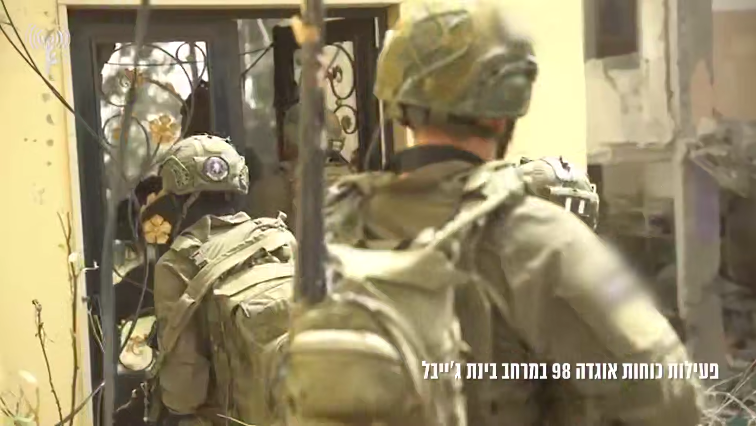
Israel’s military said it raided the Bint Jbeil Governmental Hospital in southern Lebanon where they claimed Hezbollah fighters had been holed up, allegedly killing 20 Hezbollah fighters and seizing their weapons, noting that the troops were first allegedly identified as Hezbollah during activity at the hospital last week. After the Hezbollah fighters carried out surveillance and opened fire, IDF soldiers killed them and raided the medical centre, finding an alleged weapons cache, and the IDF claimed Hezbollah systematically used the hospital for military purposes in severe violation of international law, despite prior warnings, reported Warfront Witness.
According to the Lebanese National News Agency, fierce clashes were reported between the Israeli military and Hezbollah in the southern town of Bint Jbeil earlier on Sunday as the IDF encircled the town in recent days to clear out alleged Hezbollah members, but troops were still trying to infiltrate and take control of the remaining neighbourhoods, while shelling the outskirts and entrances with heavy artillery.
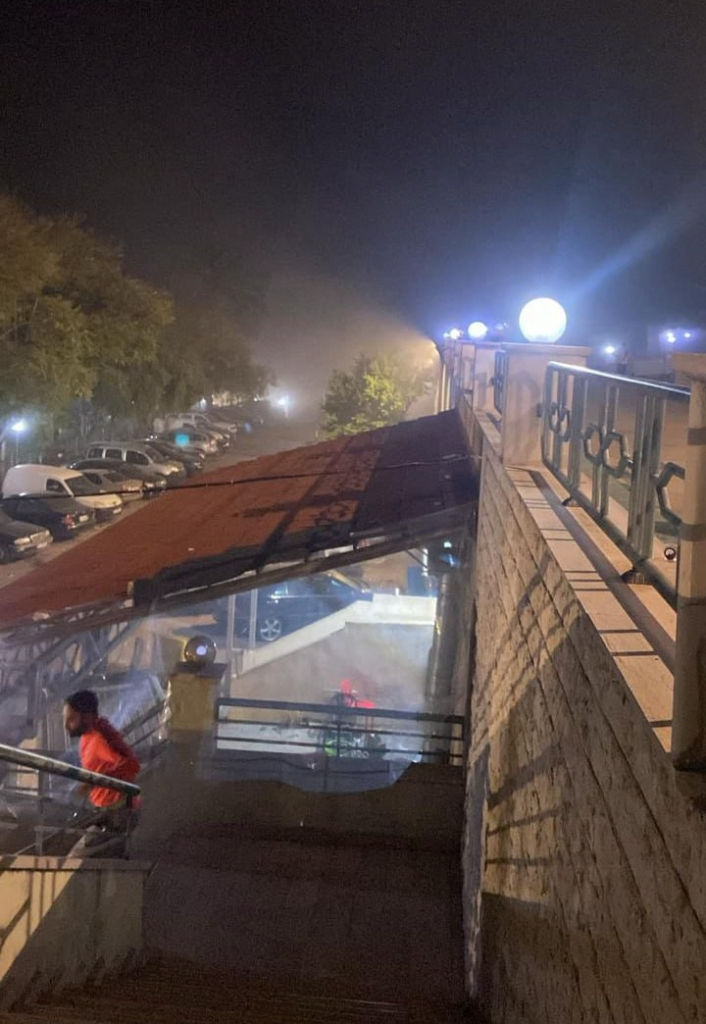
An Israeli airstrike struck near Sheikh Ragheb Harb Hospital in Toul, southern Lebanon.
Destruction in Srifa, southern Lebanon, following Israeli airstrikes.
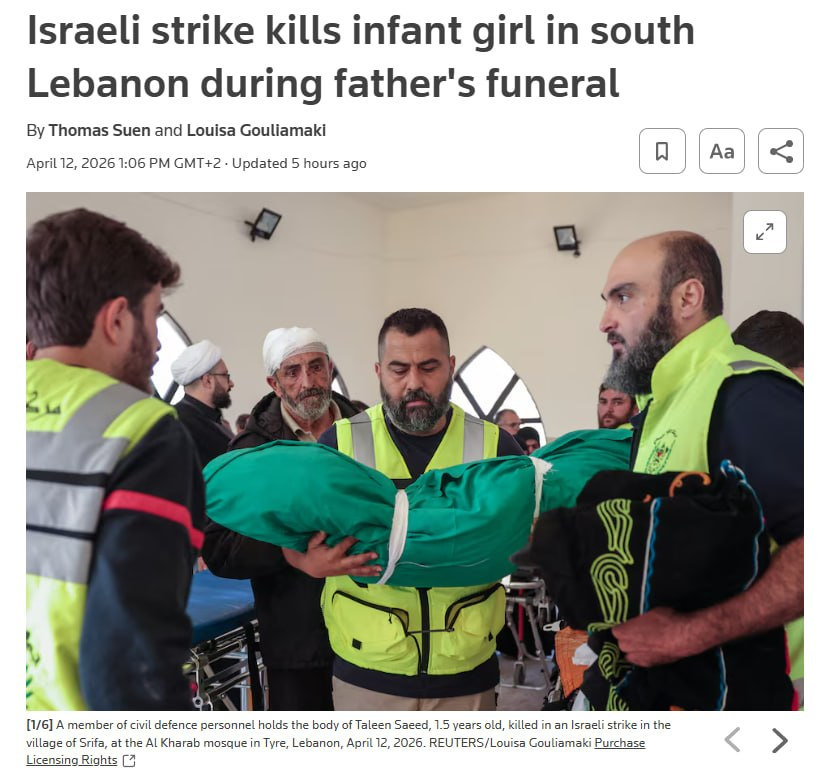
An Israeli strike in southern Lebanon killed a 1-and-a-half year old girl along with several of her relatives as they gathered for her father’s funeral in Srifa, in an attack which occurred on the first day of the US-Iran ceasefire that many had hoped would include Lebanon, Reuters reported.
Other News:
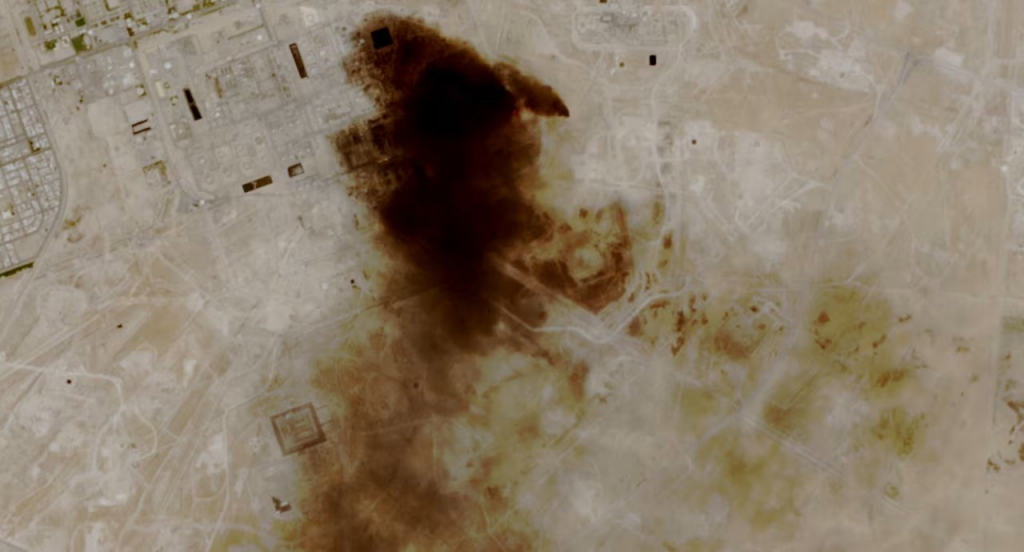
Saudi Arabia’s East-West Red Sea pipeline has been restored to almost full capacity after attacks last week caused the loss of approximately 700,000 barrels per day, but the 1,200km pipeline that bypasses the Strait of Hormuz had returned to around 7 million barrels of oil per day, with Manifa field producing 300,000 barrels per day, as work continued to restore full production at the Khurais field.
Turkey’s President Recep Tayyip Erdogan threatened Turkey could carry out military intervention in Israel, saying: “Just as we entered Karabakh, just as we entered Libya, we can do the same to Israel. There is no reason why we shouldn’t.”
Head of the Iranian Parliament’s National Security and Foreign Policy Committee Ebrahim Azizi said in remarks to Iranian television that Trump’s behaviour is typical of a defeated president, stating that the Americans attempted to show force, trying through what he described as a deceptive operation to carry out movements in the Strait of Hormuz, but ultimately failed again and were unable to influence the course of the negotiations, adding that Iran remains committed to the balance of the ceasefire, but expressed doubts that the Israelis and Americans would uphold it in light of the setbacks they had faced, warning that he hoped they didn’t miscalculate again.

Chairman of the Knesset’s National Security Committee Zvika Fogel left a short message on X, saying: “Donald, if you have to shoot, shoot. Don’t quack.”
Iraq’s political scene has shifted to a new crisis over the premiership after the election of President Nizar Amidi, as the Coordination Framework is deeply divided, with growing momentum to exclude its current nominee Nouri al-Maliki. Amidi’s State of Law bloc boycotted the presidential vote alongside the Kurdistan Democratic Party and the constitution allows 15 days to name a Prime Minister. Some factions are pushing for a second term for the incumbent Mohammed Shia al-Sudani, and as Maliki’s chances are weakening, a new candidate may be chosen by majority even if he boycotts, reported Al-Araby Al-Jadeed.
Saudi Arabia announced the deployment of around 13,000 Pakistani troops and 10 to 18 Pakistani Air Force fighter jets to King Abdul-Aziz Air Base in the Eastern Sector under their joint strategic defence agreement, and a Pakistani government official also confirmed the move, stating it was part of their defence pact under which an attack on one country would be treated as an attack on the other.
The CIA used Israeli Pegasus spyware in a deception operation inside Iran during an attempt to rescue the downed American Pilot, reported The Times, stating the Pilot’s F-15E was shot down by an Iranian shoulder-fired missile, and as part of the effort, the CIA allegedly used Israeli-made software to send fake messages to Iranian leadership and IRGC operatives claiming the missing officer had already been located.
New reports indicate that while the US severely degraded Iran’s conventional navy, Tehran still retains effective control over the Strait of Hormuz through a separate force, reported the WSJ, noting that the naval arm of the IRGC remained largely intact and continued to dominate the strategic waterway using small, fast attack boats, drones and sea mines, using a force that specialises in asymmetric warfare, allowing Iran to harass and restrict commercial shipping despite heavy military losses.
An American Boeing KC-135R Stratotanker which had been damaged during Iran’s attack on US bases in the Middle East had arrived in the United Kingdom for repairs, and clearly showed the visible fragmentation damage on virtually all of its parts, reported Tasnim News Agency.
One of the world’s top traders reportedly suffered hundreds of millions of dollars in setbacks after betting incorrectly on market movements, reported the WSJ, stating a team led by a senior trader at Vitoil made large derivatives bets that assumed tensions would ease and prices would move in a certain direction, but instead, the war escalated and the closure of the Strait of Hormuz caused markets to swing sharply the opposite way, noting that the losses ran into several hundred million dollars, though part of the losses have since been recovered and the firm remains profitable overall.
The fifth meeting of the US-Iraq Joint Higher Coordination Committee was held to prevent attacks on American diplomatic facilities and personnel, as the US embassy expressed appreciation for the Iraqi government’s commitment to investigate and hold accountable those behind an ambush on US diplomats near Baghdad airport on April 8th, which occurred during an attempt to transfer American journalist Shelly Kittleson, who had been held by Kata’ib Hezbollah, and three drones targeted the base and the military runway, causing shrapnel damage, reported 964 Media.
Saudi Foreign Ministry has summoned the Ambassador of the Republic of Iraq to the Kingdom in light of the continued attacks and blatant threats that have targeted the Kingdom and its Gulf neighbours through drones launched from Iraqi territory, reported Fars News Agency.