 AJ
AJ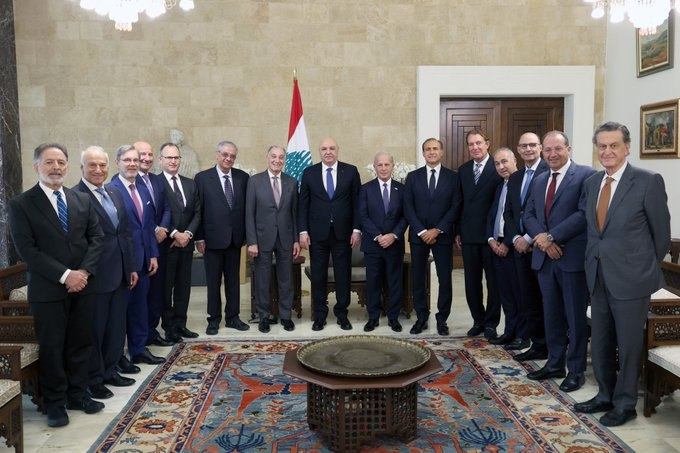
⚡️ The latest news from Lebanon on Tuesday August 19 includes requests for extensions to UNIFIL forces or the implementation of MCG4L services in southern Lebanon following the expiry of the UNIFIL project this year, along with instability with the International Stabilisation Force selection.
UNIFIL
President Joseph Aoun said on Monday that Israel rejected the presence of UNIFIL forces and had been exerting pressure on Lebanon for nearly a year, while Lebanon were calling for them to remain.
Aoun said: “The main idea is to achieve a breakthrough that ensures the continued international presence in the South, either by extending UNIFIL’s mandate or through other international forces operating alongside it.”
MP Melhem Khalaf, leading a parliamentary delegation, had called for an extension to the UNIFIL mandate earlier in the day.
Khalaf said: “Maintaining UNIFIL’s presence is crucial to prevent any security vacuum in southern Lebanon, considering its role in verifying the Israeli withdrawal, preserving security and stability, and supporting the army in upholding state sovereignty.”
The minister added: “If extending UNIFIL’s mandate is not possible, a UN force should be maintained in southern Lebanon in any feasible format.”
Prime Minister Nawaf Salam received a parliamentary delegation led by MP Melhem Khalaf to accept a petition signed by 86 members of Parliament supporting the extension of the United Nations Interim Force in Lebanon, according to Al Jadeed.
Salam reaffirmed the official government position that a UN presence in the south is essential for monitoring, reporting, coordination, and liaison, noting the UN Secretary-General expressed understanding for a successor Force to UNIFIL.
The legislative petition represented over two-thirds of the Lebanese Parliament and signalled a national decision to maintain an international military presence on Lebanese soil to preserve stability.
Khalaf stated that the mandate must preserve the observation and communication functions established in 1978 despite potential shifts in the nature of the force.
NEW PHASE
A diplomatic source allegedly told Nidaa al-Watan that the confrontation between Israel and Hezbollah had entered a new phase marked by increasingly complex security messages.
The source said recent Israeli strikes that killed senior Hezbollah officials were intended to send a direct and difficult message to the Iran-backed group, adding that the latest developments indicated a shift in the nature of the confrontation between both sides.
MCG4L MEETING
Army Commander General Rodolphe Haykal convened with US General Joseph Clearfield, lead of the MCG4L coordination group, to evaluate southern Lebanon security measures dictated by the June 2026 US-mediated Framework Agreement with Israel, according to the Lebanese Army’s official statement.
Lebanese Armed Forces command highlighted operational constraints resulting from Israeli military operations, bulldozing activities, and infrastructure damage that obstruct military missions and delay civilian returns to the region.
The representatives stressed the necessity of consistent support tot he army while it assumed regional security responsibilities during the current phased implementation.
President Aoun affirmed Lebanon is committed to the full implementation of the framework and maintained reliance on the United States for its execution, characterising the US role as serious and supportive, during an address to the Task Force for Lebanon delegation.
Service-providing ministries have commenced operations in towns where the army has deployed to provide essential infrastructure to residents, and the President said the use of military force and destruction would not allow Israel to realise its strategic goals.
Diplomatic engagement with Iran was defined as requiring a ‘state-to-state’ basis built on mutual respect and non-interference on internal affairs, adding that the administration was working toward passing anti-corruption laws, establishing e-government systems, and judicial activation to complete structural reforms.
ISF FORCE REMAINS UNCONFIRMED
Vetoes by Israel and Hezbollah have delayed any final composition for an international security force in southern Lebanon, according to diplomatic sources.
Israel have blocked the participation of French and Spanish military units, while Hezbollah have formally rejected any British contingent, declaring they would treat UK troops as an occupying force, leaving Italy and Switzerland as the favourites to take the lead.
Hezbollah communication channels delivered warnings to British intelligence circles regarding their possible involvement with the Lebanese Armed Forces’ observation tower network on the Syrian border and in Rmeish.
Israeli officials stated a preference for British participation, citing trust in UK policy and their perceived capability to manage Hezbollah’s disarmament and prevent weapons proliferation.
Hezbollah leadership specifically excluded Azerbaijani personnel from potential deployment, threatening to target them as hostile actors if they entered the southern region.
The group had cited Azerbaijan’s strategic alliance with Israel and the alleged presence of Israeli military installations in Azerbaijani territory near the Iranian border as the primary reasons for the rejection.