 AJ
AJ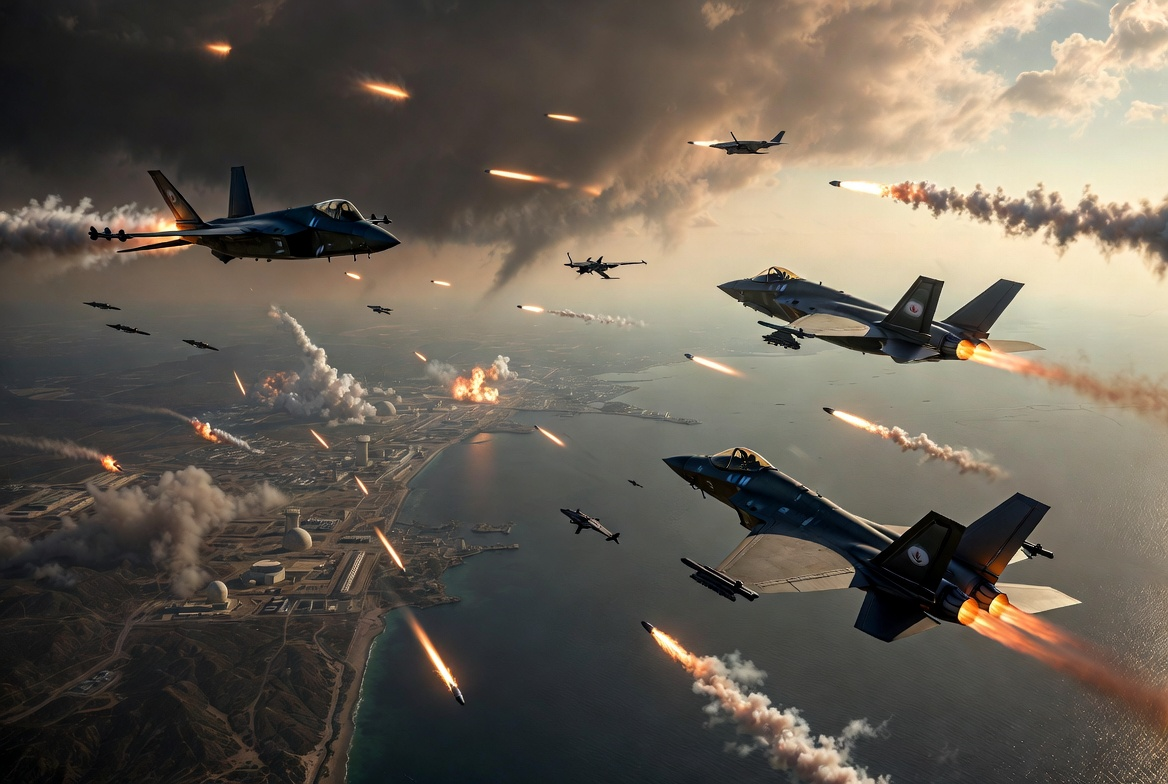
⚡️ Quick summary of the Middle East recap for June 9, includes a US Apache helicopter crashing in the Strait of Hormuz under suspicious circumstances, later reported to be a drone that had landed inside the cockpit between the pilots by President Trump, who vowed to respond to the downed helicopter, despite no harm to the service crew.
🔹 Retaliation occurred in the evening as the US launched strikes at five coastal areas of Iran, first targeting water infrastructure, before targeting air defence and radar systems that had been rebuilt since the beginning of the ceasefire, according to Trump, but this led to Iran firing missiles at Kuwait, Bahrain and Jordan, while waves of drones attacked the Erbil area in the Kurdistan Region of Iraq.
🔹 Find out the info, the fallout, and the responses following the attacks, in today’s recap.

The Build Up:
⚡️ Following the downing of an US Navy Apache helicopter near the Strait of Hormuz, reported by the New York Times on Tuesday morning, both crew members were rescued safely and investigations began into the cause.
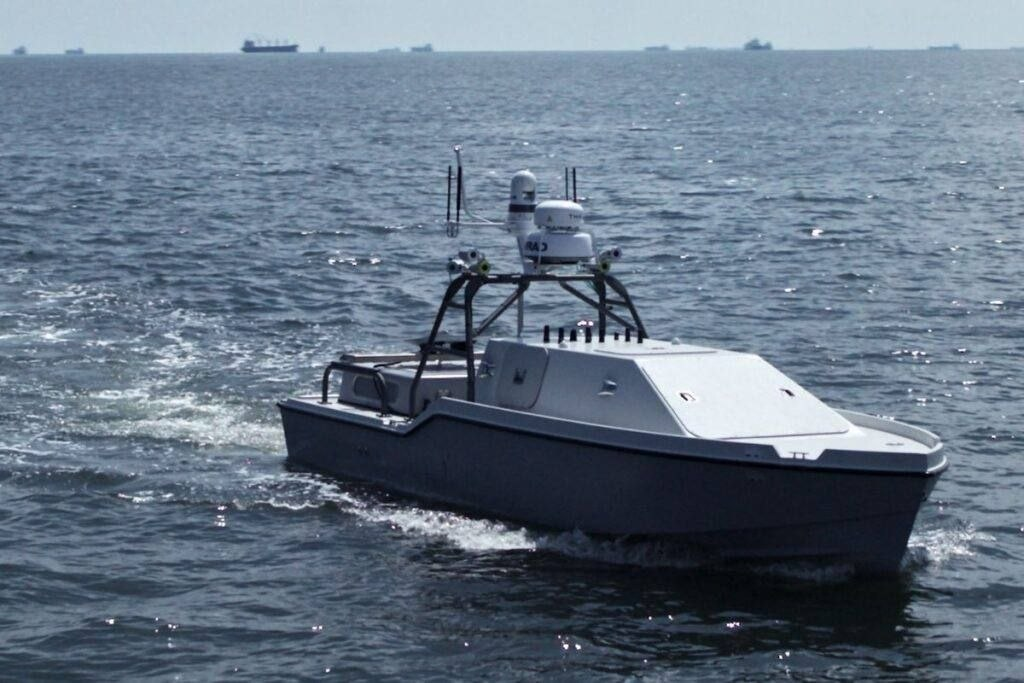
🔹 US Central Command’s spokesperson confirmed to Israeli Army Radio that the vessel which rescued the Apache helicopter crew off the coast of Oman last night was an unmanned Navy vessel, which the task force had begun deploying in the area late in March 2026.
🔹 President Trump later confirmed the crash of the country’s helicopter in the Strait, saying that two occupants of the helicopter were alive, and the case would be investigated before any further information would be revealed, prior to getting on board Air Force One following the NBA game late on Friday night.
🔹 Reuters revealed some further information on Tuesday afternoon, noting that a US Navy unmanned surface vessel (USV) operated by Task Force 59 helped recue two crew members following a US Army AH-64 Apache attack helicopter crashing into the waters off the coast of Oman while conducting a patrol mission in the Strait of Hormuz, adding that both crew members were recovered with two hours of the crash and reported to be in a stable condition.
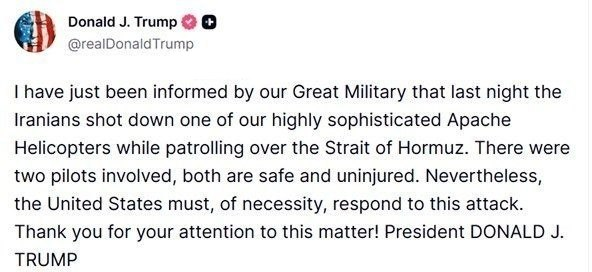
🔹 President Trump took to Truth Social following a meeting with the army in relation to the helicopter, claiming the Iranians had shot the helicopter down while patrolling over the Strait of Hormuz, noting both pilots were safe, but the United States ‘must respond’ to the attack, however, Trump told the WSJ that it ‘wasn’t a big deal,’ stressing that the ‘pilot is fine,’ and US officials later told WSJ that an Iranian Shahed drone had collided with the helicopter which warranted a response regardless of whether it was intentional.
🔹 The President later told ABC that it’s very important to respond, a helicopter was shot down, and the US were currently responding to what Iran did to the helicopter, which Trump believed should be very strong, very powerful, and that’s what the attack was.
🔹 US House Speaker Mike Johnson said he was notified as the leader of the House before the US attacks began that the strike taken place was proportional and limited, targeting radar, missile, as well as command and control sites, which is defensive in nature, due to Iran striking US assets, which couldn’t be allowed, so business would be taken care of: “I was at the White House today, I think it was a couple of hours in the Situation Room this morning, with the Vice President, Secretary of State, Secretary of War, the CIA Director, and others, all present with the President, discussing a number of Iranian matters.”
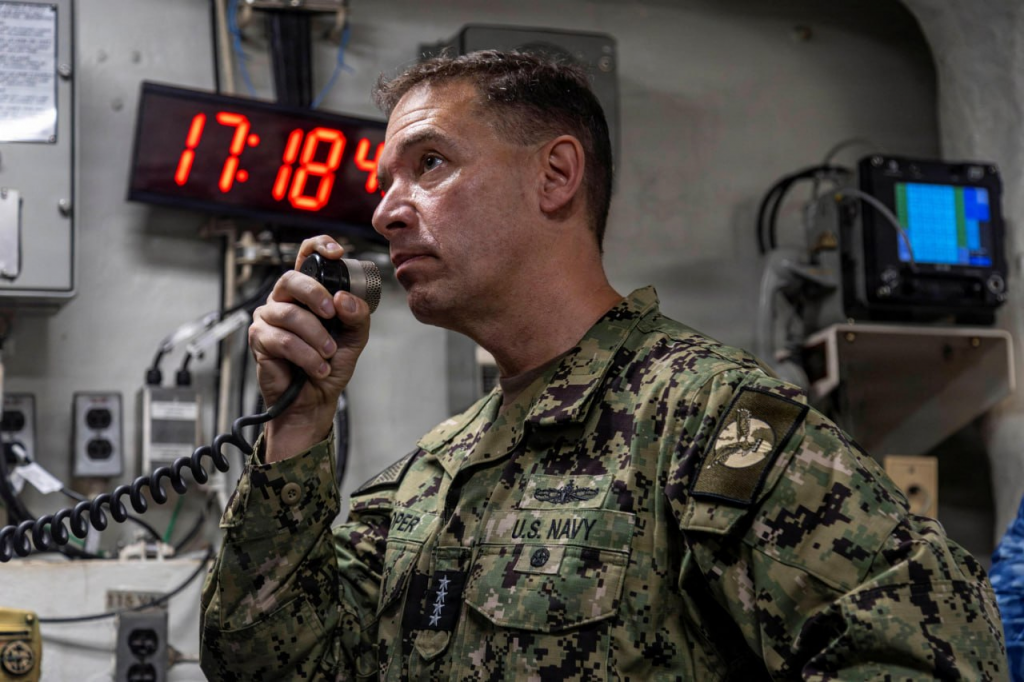
🔹 NBC reported that Admiral Brad Cooper, Commander of CENTCOM, briefed senators responsible for Pentagon funding in a closed-door session, receiving bipartisan praise for what lawmakers said was a thorough and detailed assessment, after which several senators said they believed Iran intentionally targeted the helicopter with a drone and expected a US response in the near future: “I believe in responding in a strong manner, and I always have throughout my life,” he said.
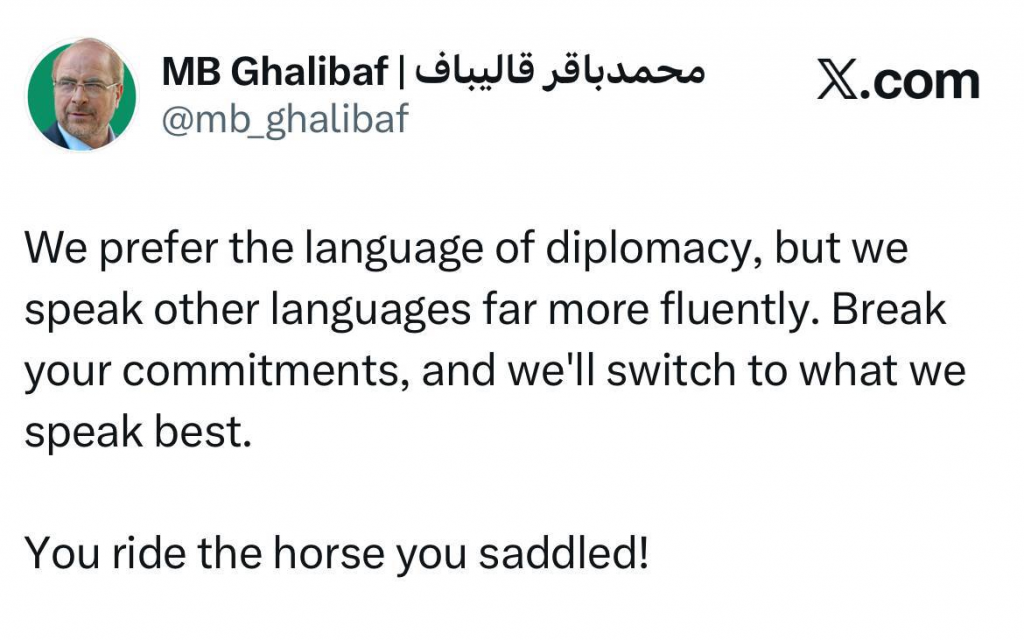
🔹 Iranian Parliament Speaker Mohammad Bagher Ghalibaf responded to president Trump on X saying that Iran preferred the language of diplomacy but also spoke other languages fluently, adding that if commitments were broken, Iran would resort to the language it knows best.
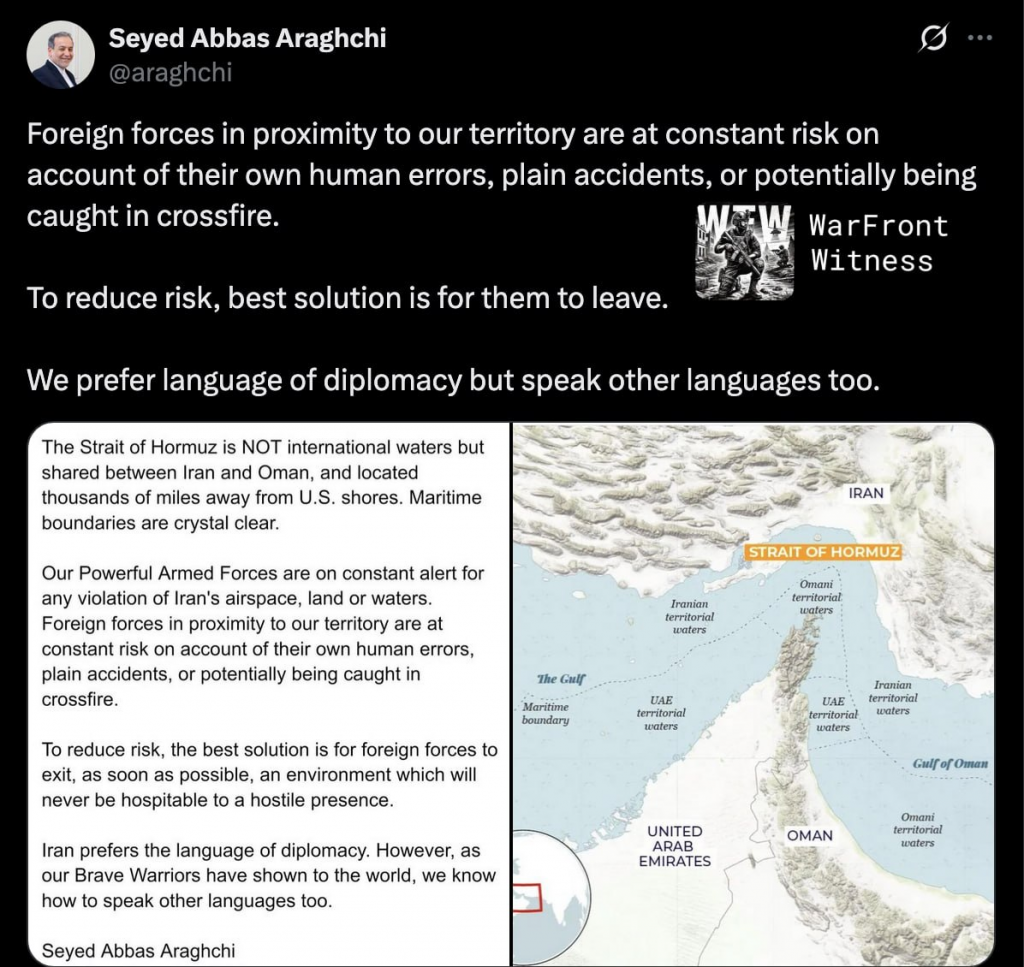
🔹 Parliament Speaker Mohammad Bagher Ghalibaf also had a say on X, replying by saying the Strait of Hormuz is not international waters, but is shared between Iran and Oman: “Foreign forces in proximity to our territory are at constant risk on account of their own human errors, plain accidents, or potentially being caught in crossfire,” he wrote.
🔹 An Iranian official told Al Jazeera the helicopter that went down near the Strait was not operating over international waters, and warned Iran would respond ‘forcefully and immediately’ to any ‘aggression’ against the country.
🔹 Walla and Israel Hayom reported that Israel were staying out of the current US strikes and didn’t expect any missiles to be launched at the country during any Iranian response to the US attacks.
🔹 Just after 9pm local time in Iraq, reports began to surface of warplane activity above Baghdad, followed by reports soon after of aerial activity over the Kurdistan Region of Iraq, along with at least two blasts heard within the vicinity of Erbil city in the region, and local media confirmed four drones attacked the bases of the Democratic Party of Iranian Kurdistan (KDPI), which most likely targeted the Azadi camp.
US Strikes:
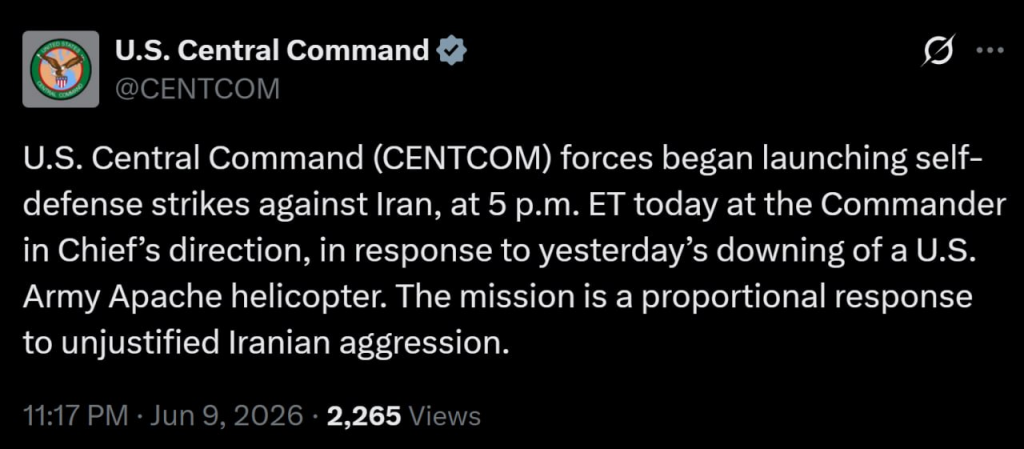
⚡️ Simultaneously with the sounds of explosions heard in Sirik and Qeshm, US Central Command stated that an operation launching self-defence strikes began at 5pm ET at the direction of the Commander in Chief, which was in response to the shooting down of the helicopter, claiming the mission is a proportionate response to unjustified Iranian aggression.
🔹 President Trump claimed in an interview with ABC that the USA were responding to the alleged attack by Iran on the helicopter, and were carrying out ‘proportionate’ strikes on Iran.
🔹 Iranian News Channel IRIB reported that at least six explosions were heard in Qeshm caused by projectiles within just a few minutes, which were allegedly launched by fighter jets, and while IRIB News confirmed no commercial port had been targeted, the US media were beginning to explain that air defences and radar systems were being struck.
🔹 Multiple explosions were reported in Sirik and Bandar Kuestak, which caused the destruction of two water tanks, and efforts were being made to provide people access to drinking water, IRIB reported.
🔹 Mehr News were later told by the CEO of Hormozgan Water and Waste Company, Hamzeh Pour, that the US attacked critical water distribution infrastructure in the county, with two water tanks in the Bomani district completely destroyed, including a 500 cubic metre and a 2,00 cubic metre tank, which played key roles in supplying fresh drinking water to the Bomani district and the city of Kuestak.
🔹 Soon after, Axios quoted a senior US official, who claimed the second wave of attacks against Iran targeted air defence systems and radar systems, while Fox News also claimed a US official said the attacks against Iran continued, confirming that targets included air defences and radar facilities.
🔹 Projectiles also hit the areas of Jask, with several explosions reported around 2:35am local time, with further explosions in Qeshm around an hour later, and unconfirmed reports of explosions heard in Ahvaz an hour after that by locals and reported to Mehr News.
🔹 IRGC’s public relations office claimed an MQ-9 drone was intercepted and destroyed as it approached from the Persian Gulf and was hit by air defence forces in Jam County, in Bushehr Province, Mehr News reported, which would have occurred around the same location where the reported interception was captured on video an hour prior to the statement being published.
🔹 CNN wrote that the strikes were intended as a warning shot and not expected to hinder negotiations to end the war, noting the strikes targeted military sites around the Strait, claiming to include naval bases and coastal missile batteries, and additional strikes were expected, while Politico cited a US official saying that President Trump believed a deal with Iran ‘was still close’ despite the attacks.
🔹 NYT said that US airstrikes targeted military and naval bases, radar facilities and artillery batteries in five locations on the southern shores of Iran, which included Naval bases in Sirik and Jask; Air defence sites in Bandar Abbas; And Missile batteries in Qeshm.
🔹 The Wall Street Journal said President Trump initially viewed the incident with the helicopter as ‘not a big deal,’ but later approved military action after receiving updated briefings from Secretary of War Pete Hegseth and Chairman of the Joint Chiefs of Staff General Dan Caine.
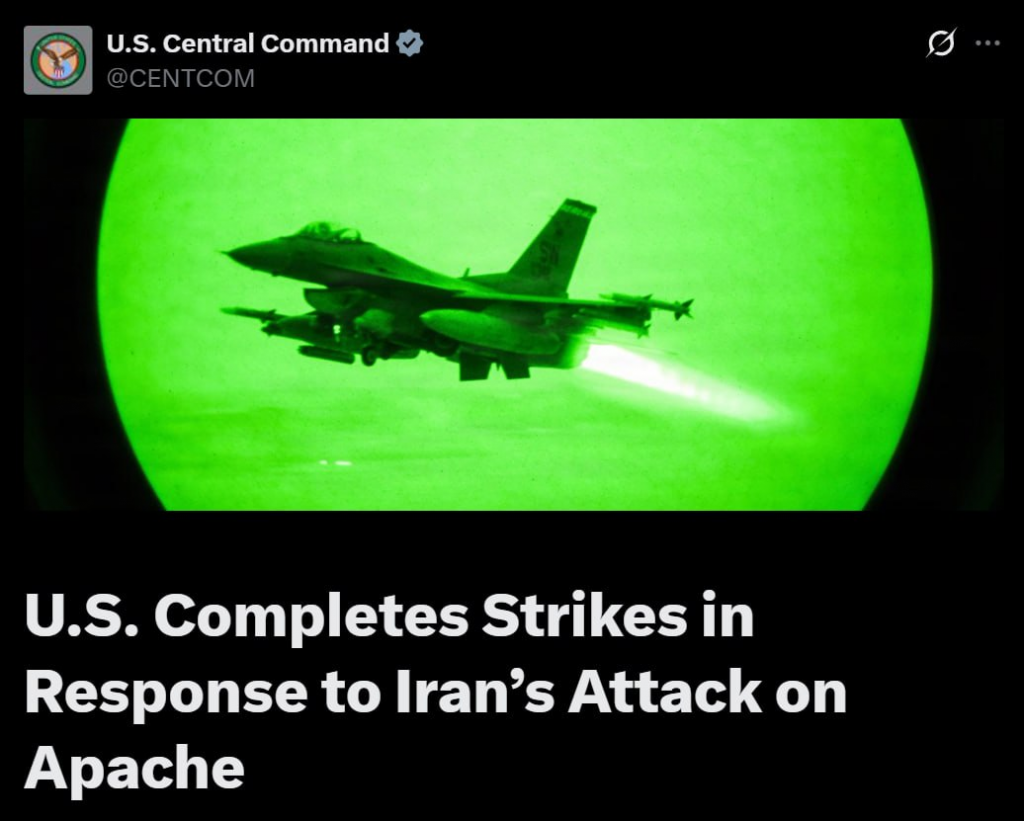
🔹 US Central Command published a statement upon completion of the strikes, claiming the attacks were defensive against Iran in response to the downing of the helicopter the previous day, stating they used precision munitions fired from US Air Force and Navy fighter jets, that targets included Iran’s air defences, ground control stations, and surveillance radar sites near the Strait of Hormuz, adding that it was a proportionate response to attacks against US forces and vessels navigating the regional waters.
🔹 House Speaker Mike Johnson said he was notified as the leader of the House before the US attacks began that the strike taken place was proportional and limited, targeting radar, missile, as well as command and control sites, which is defensive in nature, due to Iran striking US assets, which couldn’t be allowed, so business would be taken care of: “I was at the White House today, I think it was a couple of hours in the Situation Room this morning, with the Vice President, Secretary of State, Secretary of War, the CIA Director, and others, all present with the President, discussing a number of Iranian matters.”
Iran responds to strikes:
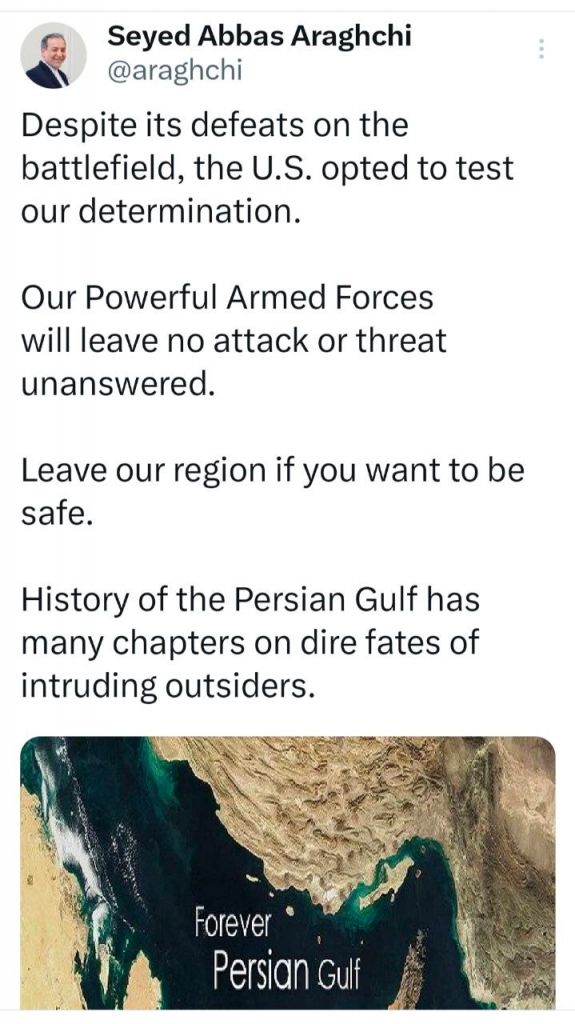
🔹 Iranian Foreign Minister Abbas Araghchi said on X that despite defeat on the battlefield, the US continued to test the Iranian resolve, and the armed forces wouldn’t leave any attack or threat unanswered, warning that safety meant leaving the region, because the history of the Persian Gulf has many stories about the grim fate of invading foreigners.
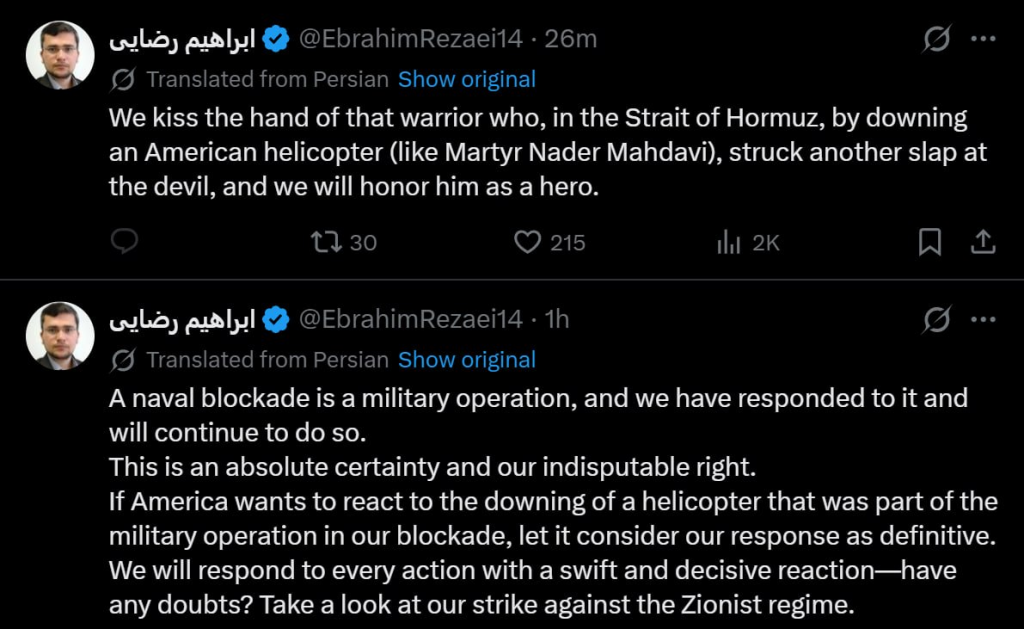
🔹 Ministry of Foreign Affairs Spokesperson Esmaeil Baghaei also responded to President Trump, stating the naval blockade was a war operation which Iran had responded to and would continue to respond, because it was Iran’s ‘definite and indisputable right,’ adding that if the US wanted to react to the downing of a helicopter that was part of the war operation in the blockade, Iran should assume the response is definite, and will respond to any action with a quick and decisive response.
🔹 Tasnim News reported that Iran, as it warned a few hours ago: “Will give a definitive response to the US aggression, which is being carried out under the pretext of the helicopter crash.”
🔹 IRGC issued a statement that claimed the attacks at several points of Jask, Sirik, and Qeshm, were under false pretexts, causing damage to a telecommunications tower in Sirik, while confirming the destruction of the two water tanks, warning that in response, the IRGC fighters launched a drone attack on the US Fifth Fleet in Bahrain at 2:30am local time, adding that clashes continued.
🔹 Waves of drones were reported to have been launched towards Erbil in the Kurdistan Region, along with drones in the direction of Bahrain and Kuwait, and despite initial unconfirmed reports the first wave was shot down by aircraft or air defences before reaching the Gulf states, sirens soon began to sound in Bahrain, and explosions were reported at the US Fifth Fleet Headquarters in Manama, along with footage from a skyline video which showed the moment of an explosion in the port.
🔹 Missiles began to be launched along with the drones, although tracking initially appeared to show the missiles had failed, mainly due to the unexpected direction the missiles took, heading towards the Al-Azraq base in Jordan, which Fars News Agency reported was targeted, after being informed by the IRGC.
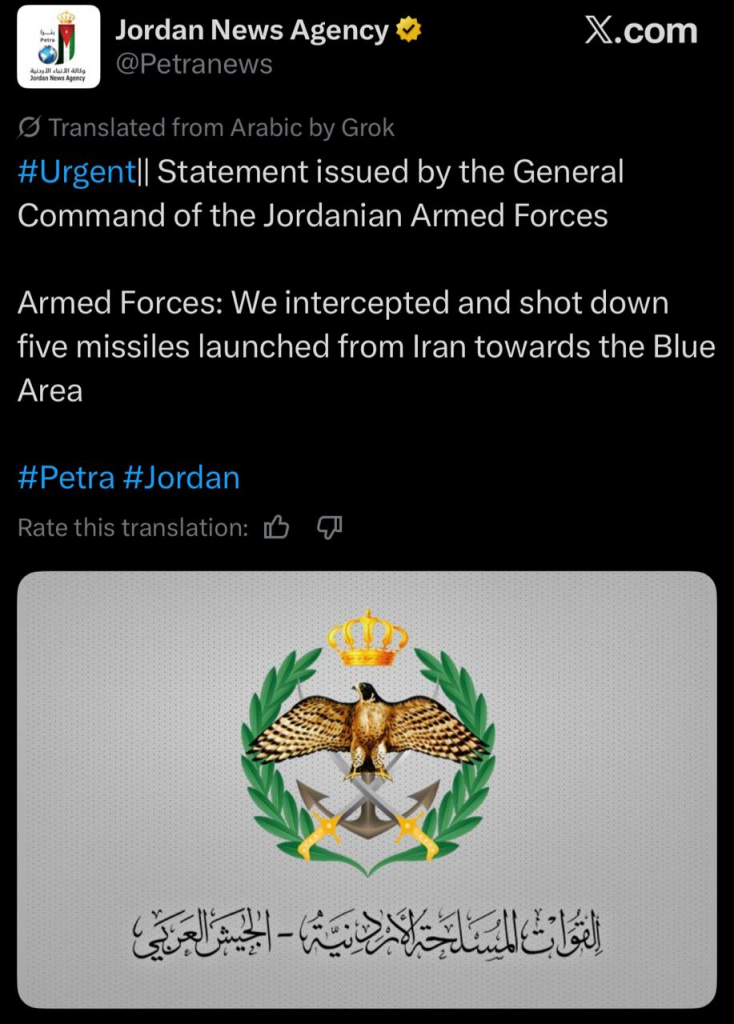
🔹 Fars added that four key sites were destroyed, including F-35 hangars and a command and control centre used by the US forces, however, Jordan’s Armed Forces claimed to have intercepted and shot down five missiles with no damage or casualties reported.
🔹 Kuwait Army took to X announcing that air defence systems were intercepting hostile targets in accordance with approved operational procedures, urging citizens to adhere to guidelines and obtain information from authorised official sources.
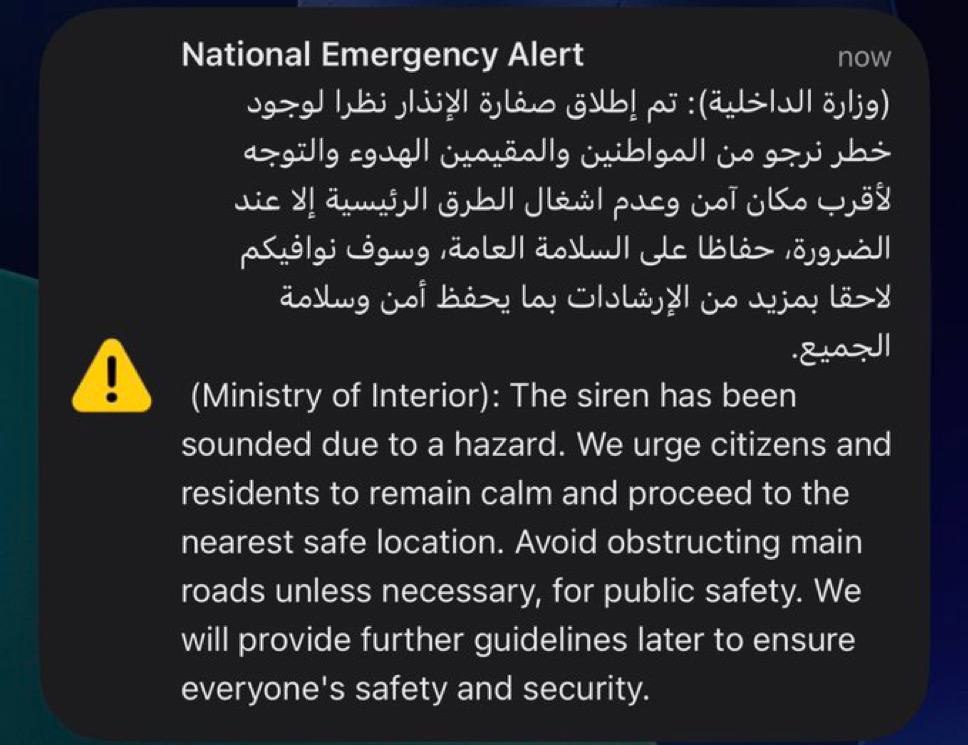
🔹 Multiple alerts began to sound again in Bahrain as Axios reported at least four Iranian ballistic missiles were launched towards Bahrain, Jordan and Kuwait, with explosions reported in Bahrain, and an all clear being reported around twenty minutes later.
🔹 During the attacks on Bahrain, images and footage appeared online that showed several smoke clouds above the country, along with CCTV footage that shows an explosion occurring towards the coastal area, reportedly the United States’ Fifth Fleet Naval Headquarters, alleged the IRGC.
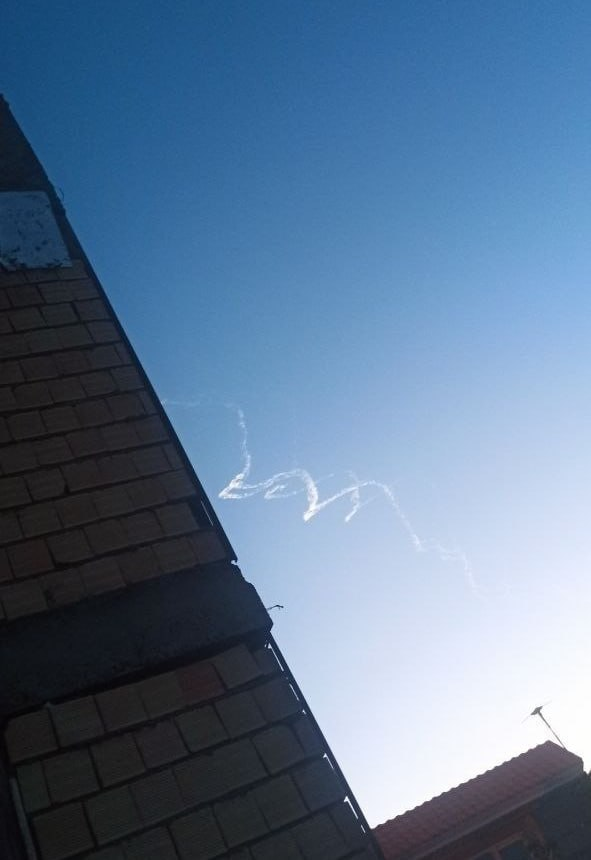
🔹 Images were published by intel groups on Telegram showing what appeared to be missile launches in the direction of Jordan from Khomeini, Iran’s Markazi Province, while, Fars News reported the IRGC targeted the US Muwaffaq Salti Ari Base in Jordan with ballistic missiles, which took more than 30 minutes to arrive, according to a later MES report, while reports suggested the attacks could be seen from northern Israel.
What Happened Next?
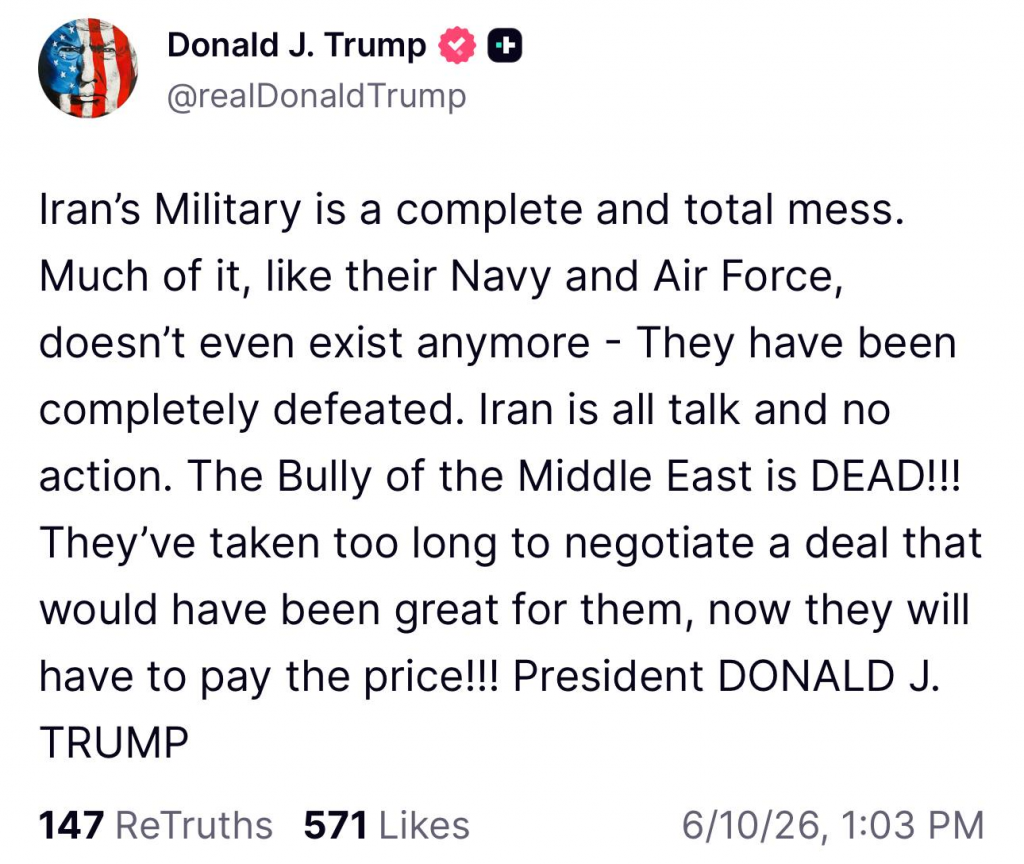
⚡️ President Trump wrote that Iran’s Military, Navy and Airforce was in a total exist and doesn’t exist anymore, claiming Iran had been completely defeated, mocking Iran as ‘all talk and no action, the bully of the Middle East is dead,’ and added that Iran had taken too long to negotiate a deal that would have been great for them: “Now they will have to pay the price,” he said.
🔹 Qatari negotiators travelled to Tehran in coordination with the US on Wednesday morning to meet with Iranian officials in an effort to bridge the remaining gaps in the negotiation process, Fox News reported, while President Trump told Fox that is is close to ordering new strikes against Iranian energy infrastructure and buildings.
🔹 Iranian President Masoud Pezeshkian issued a televised statement, saying that the ‘enemy’ must only dream that Iran would yield to aggression, because the state of ‘neither war nor peace’ is not good for the country and ‘we must eliminate this situation.’
🔹 Pezeshkian said: “It is impossible to force a nation into surrender through airpower and bombing,” stating they have not been able to ‘force tiny Gaza to surrender for 3 years,’ while adding: “They will not be able to force Iran either, and we will definitely not surrender.”
🔹 “With this war and conflicts, managing the country is not an easy task,” Pezeshkian stated, noting that Iran was currently under sanctions, the path (in Hormuz) was blocked, and faced a tough test ahead: “We must manage the country with deficits and imbalances,” he warned, adding: “Martyrdom is a great honour, but it is absolutely unacceptable that the enemy can so easily assassinate our commanders.”
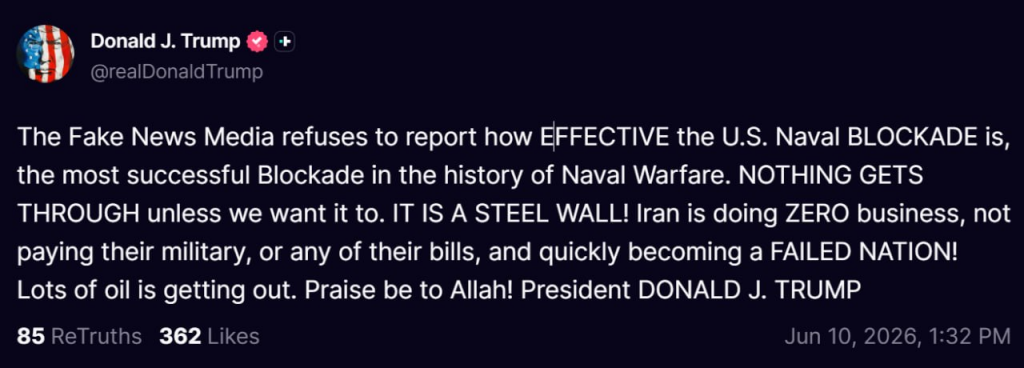
🔹 President Trump said the Fake News media refuse to report how effective the blockade is, ‘the most successful blockade in the history of Naval Warfare,’ however, fails to note that Iran are currently making around $2 million for some vessels that pass through the blockade, others are carrying Iranian oil after being transferred sea-to-sea, while further vessels were ‘broken out’ of the Gulf by US Forces who performed several ‘love taps’ with Iran over four days.
🔹 Military sources told Fars News that Iran targeted the US F-35 fighter jets at the Muwaffaq Salti Airbase in Jordan using long-range Kheibar Shekan solid-fuel ballistic missiles, claiming in total that at least 21 attacks were carried out on US bases in the region.
NYT were told by a US official that the IRGC’s claims of 21 attacks on US military sites in the Middle East were ‘simply untrue.’
🔹 An official later told NYT that Iran launched multiple missiles and drones at American missile bases across the Middle East on Wednesday, almost all of which were intercepted, according to the initial US assessments, with no casualties reported, and no damage to US bases confirmed.
🔹 Reuters were told by a US official there were no reports of harm to US personnel or known damage to US locations following Iran’s missile and drone launches, stating that nearly all missiles and drones were intercepted, although assessments were ongoing.
🔹 Multiple sources reported that it was a strange night in terms of published information, siren notifications and alerts, with some saying no alerts were issued throughout the Gulf region all night despite Iran’s claims of attacking the US bases in the region, and despite the CCTV attack and reports of drone interceptions, there was hardly any proof the attacks had taken place.
🔹 Other sources such as Middle East Spectator reported the reason the alerts in the Gulf took so long was because Jordan had been the target, so the initial four missiles from Khome
Trump Update in Fox Interview:
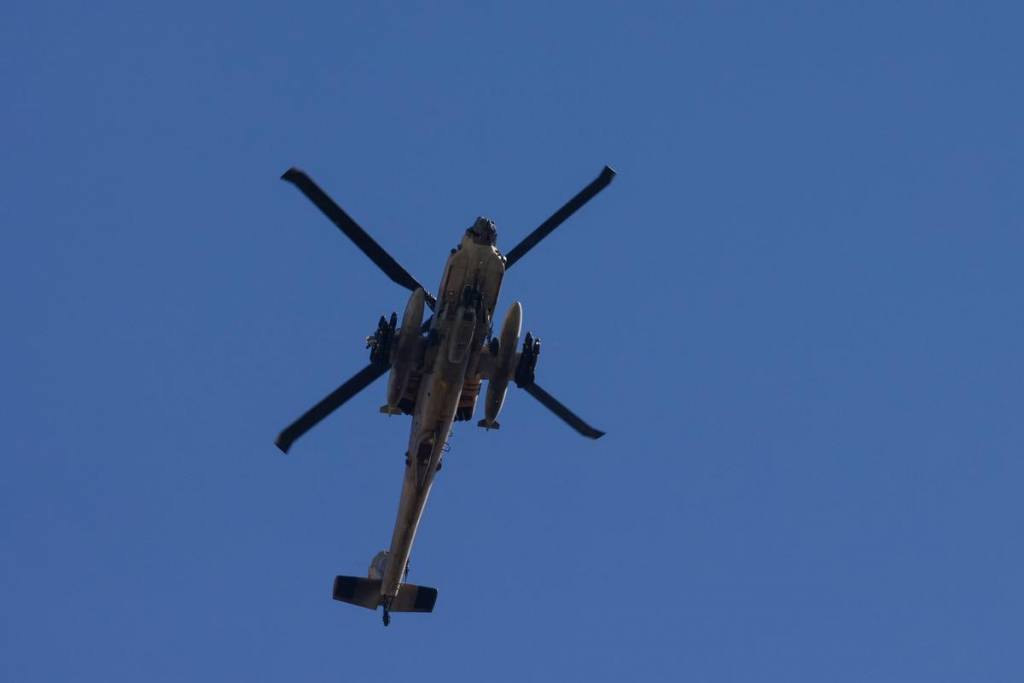
⚡️ During an interview with Fox News, President Trump said the US helicopter that went down was ‘struck by a drone that became lodged between the two pilots,’ claiming that despite catching fire and generating intense heat, did not detonate, prompting the pilots to make an emergency landing in the sea before the drone could ‘detonate at any moment: “The crew was rescued about two hours later by a US Navy unmanned vessel,” he added, describing the pilots’ survival as ‘a miracle.’
🔹 Trump told Fox ‘I may keep going’ wne asked about a possible response to the Iranian missile fire that targeted US forces in Kuwait, Bahrain, and Jordan overnight: “They had a chance to sign a deal and survive,” the President said.
🔹 Fox were also told that Iran attempted to rebuild its radar and air-defence systems during the ceasefire but had restored only ‘just a few’ percentages of its defensive capabilities, adding that US strikes later destroyed much of the restored infrastructure, saying they ‘took out about 55% of what was rebuilt.”
ABC Interview:
⚡️ Trump told ABC that the situation in Iran was ‘pretty simple,’ claiming: “It’s the one with the power – we have all the power,” adding: “If people are stupid, we’ll end up in something where we have to wipe out an entire infrastructure of a nation.”
🔹 ABC News were also told that Sunday’s Israeli counterattack on Iran was ‘unnecessary,’ but that Trump understood why Netanyahu did it: “I don’t want to do anything that’s going to hurt the deal, but I told Netanyahu, ‘You have to use your own judgement, just go out and use your judgement, but I don’t want the deal to be hurt,” adding that Israeli wanted retribution: “When you get attacked, there really has to be retribution.”
NYT Scoop On Negotiations:
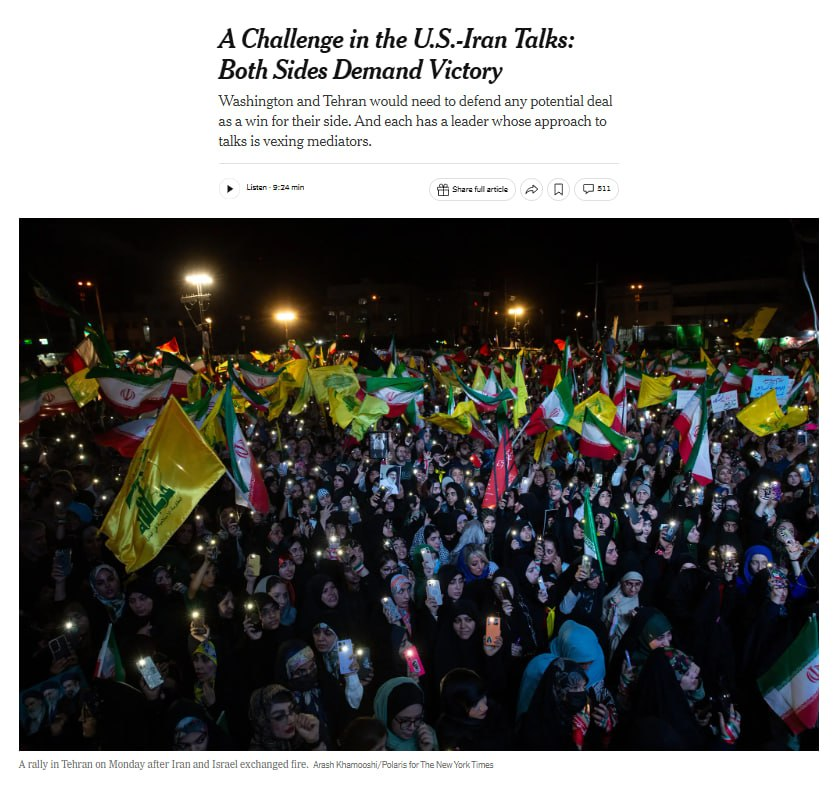
⚡️ Broad outlines of a preliminary agreement between the US and Iran were largely understood, according to the NYT, but stated disagreements over how to present the deal politically (including the wording) have delayed the progress.
🔹 The report said that according to mediators, both sides wanted an agreement, but needed terms they could portray as favourable to domestic hardliners, claiming key provisions included restoring shipping through the Strait of Hormuz, easing restrictions on Iranian vessels, future negotiations on Iran’s highly enriched uranium stockpile, and the release of some frozen Iranian assets.
🔹 According to the Times, President Trump repeatedly altered negotiating positions previously discussed by his envoys, including extending a proposed uranium enrichment suspension from 10 years to 20 years, and later adding new conditions related to Iran’s nuclear program and frozen assets.
🔹 Mediators say both sides remain under pressure to reach at least a preliminary agreement, as ongoing uncertainty continues to affect regional stability and global energy markets.
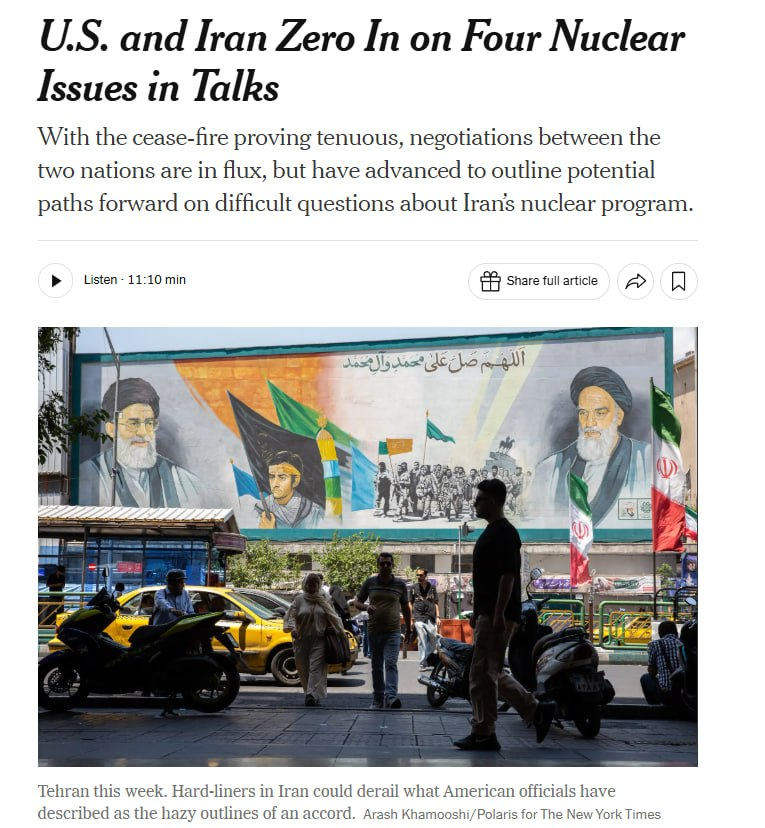
🔹 In a second report, NYT claimed US and Iranian negotiators had made progress towards a potential nuclear agreement centred on four main elements: a long-term suspension of uranium enrichment; dilution of Iran’s uranium stockpile under international supervision; dismantling or closure of key nuclear facilities; and expanded inspection powers for international monitors.
🔹 Discussions allegedly focused on a possible 15-year halt to enrichment, downblending the current reserves, closing major sites at Natanz, Fordow, and Isfahan, while allowing broader inspection access, including potential surprise inspections.
🔹 However, a major unresolved issue remained the timing and conditions of releasing roughly $25 billion in frozen assets, the Times stated.