 AJ
AJ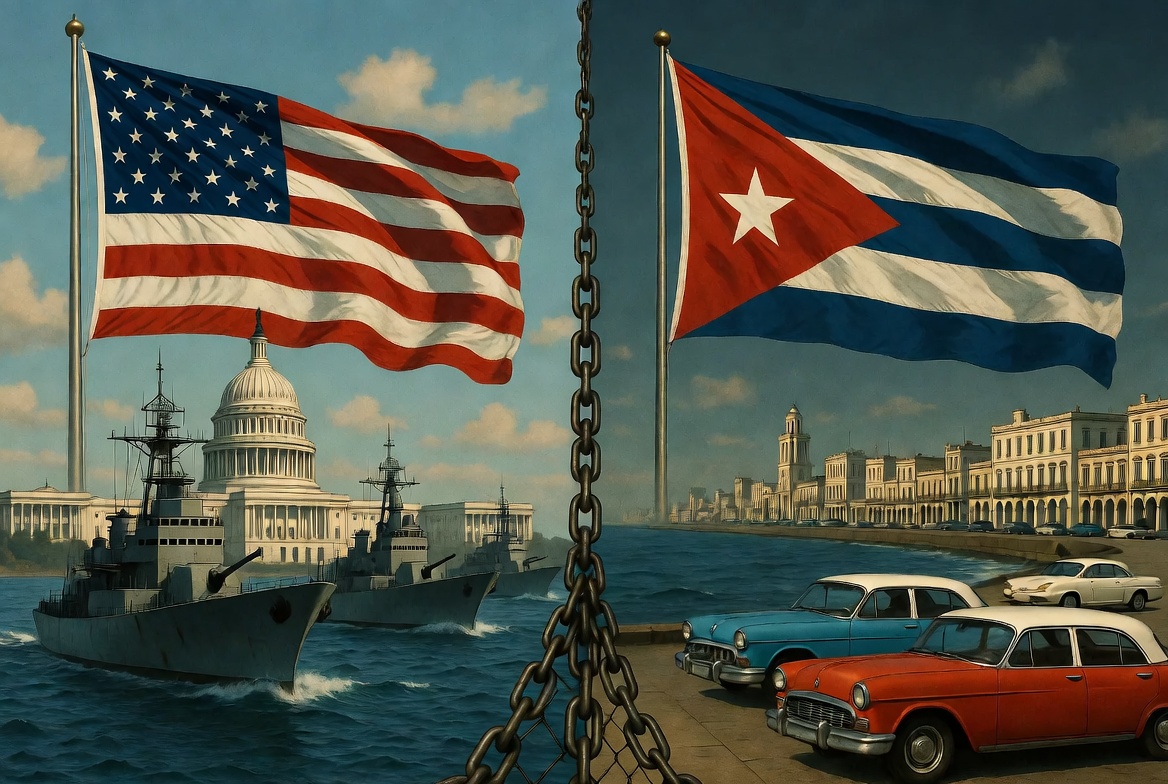
President Donald Trump has been threatening Cuba since before Venezuela, saying the United States could capture it at any time, and speaking at a forum of Palm Beach owners, Trump escalated the situation on May 1 by stating that the US may send a naval fleet towards Cuba once they leave Iran, and that the US would take control of Cuba ‘almost immediately.’
The Trump administration has been considering ‘kinetic force’ (military options) as part of efforts to pressure or remove Cuba’s government amid heightened tensions, economic blockade measures, and regime-change discussions, reported Politico, and was given the green light by the US Senate after Republicans rejected a bill that would have forced Trump to seek congressional approval before launching another war.
Republicans argued that the US was not engaged in ‘hostilities’ with Cuba, dismissing the measure as unnecessary, while Democrats countered that the ongoing US energy blockade itself amounted to ‘hostilities’ under the War Powers Act.
Sources familiar with the administration’s thinking emphasised that the current focus still remained diplomatic and economic persuasion rather than immediate military action, despite the Cuban diaspora in the US favouring a quick military operation or more forceful measures to change the regime.
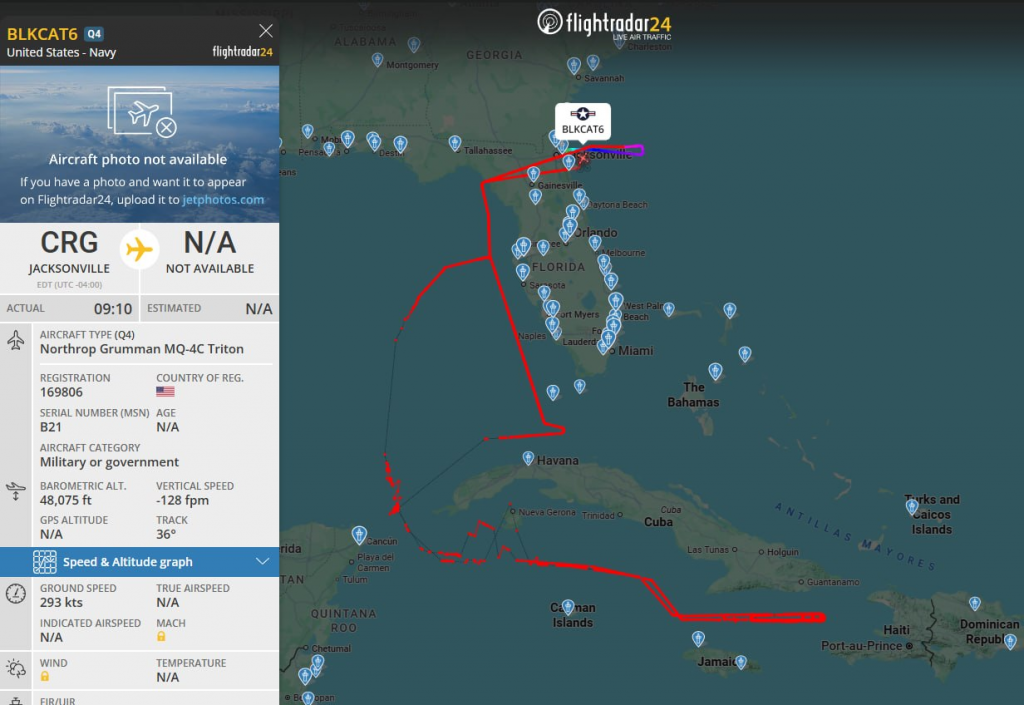
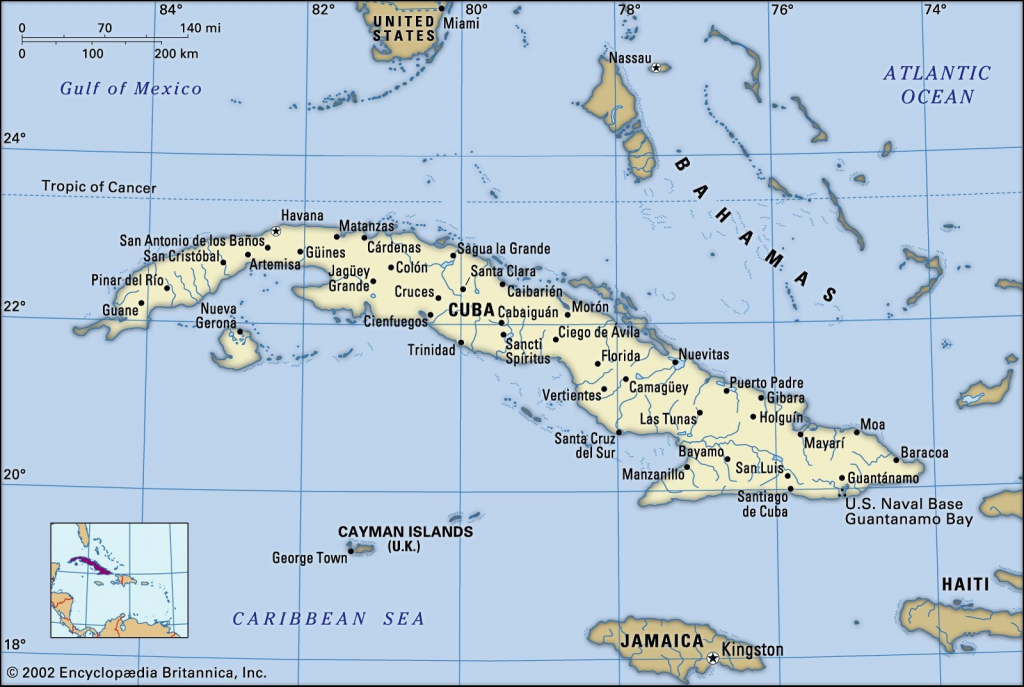
The United States have been keeping constant surveillance on Cuba using a US-Navy MQ-4C drone that has patrolled the borders, while a Boeing P-8A Poseidon maritime and reconnaissance aircraft had been operating in the airspace around Cuba.
‘US would take over Cuba immediately:’
US President Trump assessed that the US would take over immediately should they invade the Caribbean island nation: “We have an architect who’s really talented, he’s done a lot of work for him, he’s got a flair, a beautiful Hispanic flair in particular, and he originally comes from a place called Cuba, which we will be taking over almost immediately,” he said.
Trump continued: “No, Cuba’s got problems, we’ll finish one first, I like to finish a job – on the way back from Iran, we’ll have one of our big, maybe the USS Abraham Lincoln aircraft carrier, the biggest in the world – we’ll have that come in, stop about 100 yards offshore, and they’ll say, ‘thank you very much, we give up.'”
No Surrender:
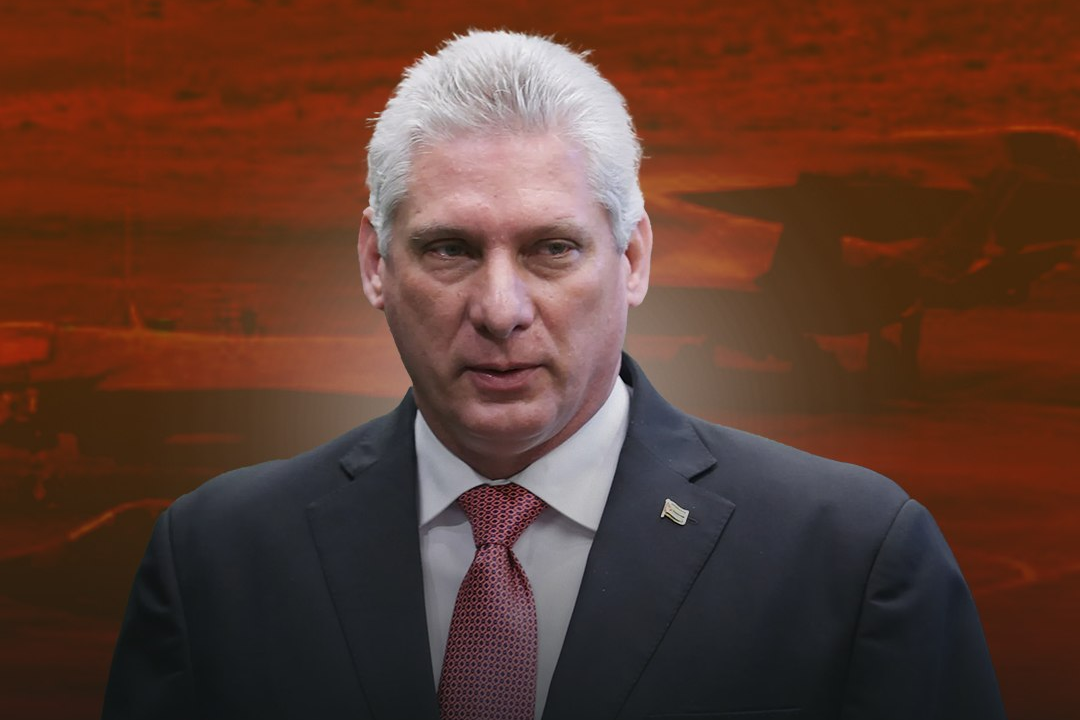
President Miguel Diaz-Canel warned that US President Trump was escalating threats of military aggression against Cuba to a ‘dangerous and unprecedented level,’ condemning Washington’s latest actions against Havana, stressing that Cuba would not surrender under pressure, while asserting that any aggressor would face a people determined to defend their sovereignty and independence.
Diaz-Canel also called on the international community to decide whether it will allow a ‘serious criminal act’ aimed at serving the interests of a small, wealthy, and influential elite in the United States, as well as criticising Trump’s recent executive order expanding sanctions as attempts to impose a political model on Cuba through economic coercion.
Reaffirming Havana’s position, Diaz-Canel stressed Cuba’s continued support for the Palestinian cause, as well as for Iran, Lebanon, and Venezuela, amid Washington’s expanding aggression.
Executive Order imposing sanctions on Cuba:
President Trump issued an executive order imposing sanctions on Cuba, targeting those responsible for repression and threats to US national security, which blocked property and interests of foreign persons operating in Cuba’s energy, defence, metals, mining, financial or security sectors, as well as those involved in human rights abuses or corruption.
Trump’s order also suspends entry into the United States of designated individuals and authorises the Treasury to sanction foreign financial institutions that conduct significant transactions for or on behalf of blocked persons.
Major victory against US oil blockade:
Cuba can now refine its own oil thanks to a breakthrough of the Hermanos Diaz oil refinery in the city of Santiago de Cuba using thermoconversion technology developed by the Oil Research Center and presented to the National Innovation Council by President Miguel Diaz-Canel.
Havana has 20 billion barrels of oil reserves, which is enough to power the whole country for decades, but despite this, the country remained unable to refine it, however, thanks to the development of their own sovereign technology that allows them to refine their own domestic crude oil reserves means that they don’t have to rely on buying it from countries such as Venezuela, Mexico, and Russia, as the island becomes energy independent.
China’s Ministry of Foreign Affairs last week called on the United States to immediately end the blockade, sanctions and all other forms of coercion and pressure it was imposing on Cuba, warning that China strongly supported Cuba in safeguarding its sovereignty and security, and added that the United States would not succeed in concealing its blatant violation of Cuba’s rights by distorting Sino-Cuban cooperation.
International Workers’ Day:
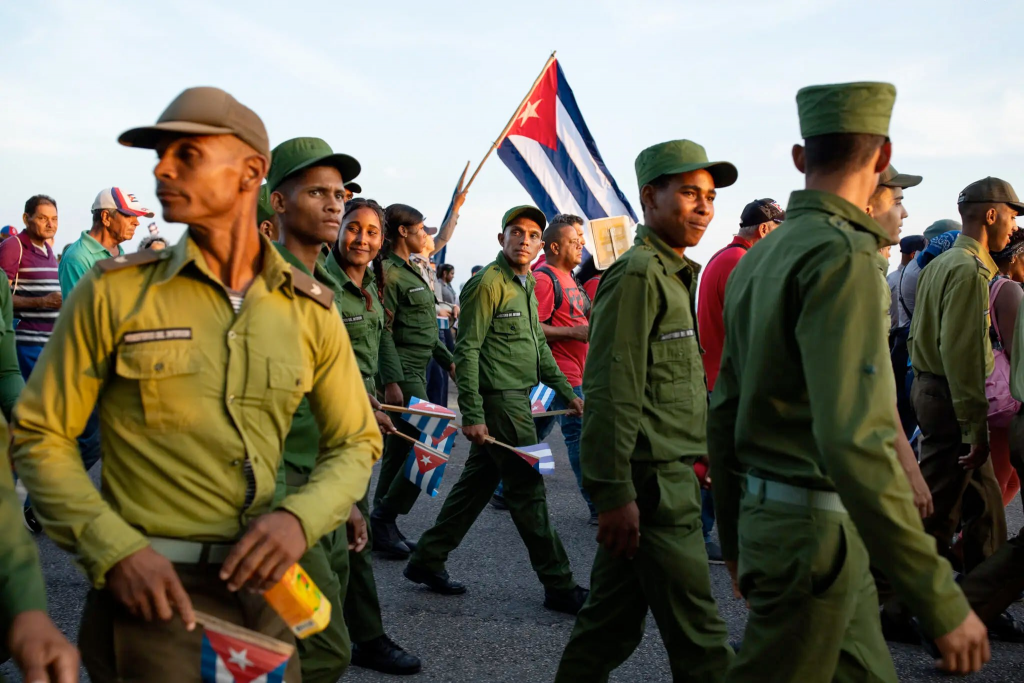
Celebrations were held outside the US Embassy in Havana led by President Miguel Diaz-Canal, striking a defiant tone against the Trump administration’s oil blockade and pressure for economic pressure.
Thousands of government workers and Communist Party supporters gathered, with the government claiming more than half a million attendees, while the government has also gathered more than 6 million signatures on a petition rejecting US intervention.
Reports suggest that secret negotiations between the two governments have continued, with the US demanding economic reforms and for Diaz-Canel to stand down, which Cuba have publicly rejected.
Humanitarian Crisis:
The United Nations Deputy Spokesperson warned of a worsening humanitarian crisis in Cuba along with a worsening energy crisis, leading to the disruption of vital services across the country.
Healthcare services, waste collection, water delivery to remote areas, food distribution, and other essential services in Cuba have been severely disrupted.
Watching communications:
Chinese hackers gained entry into the systems of Cuba’s Embassy in Washington to spy on communications, according Bloomberg, stating that cyber security firm Gambit Security reported the campaign began back in January and compromised the emails of 68 Cuban officials.
Hackers were able to download the entire inboxes of diplomatic and intelligence personnel exploiting two five-year-old vulnerabilities in outdated Microsoft Exchange email servers.