 AJ
AJ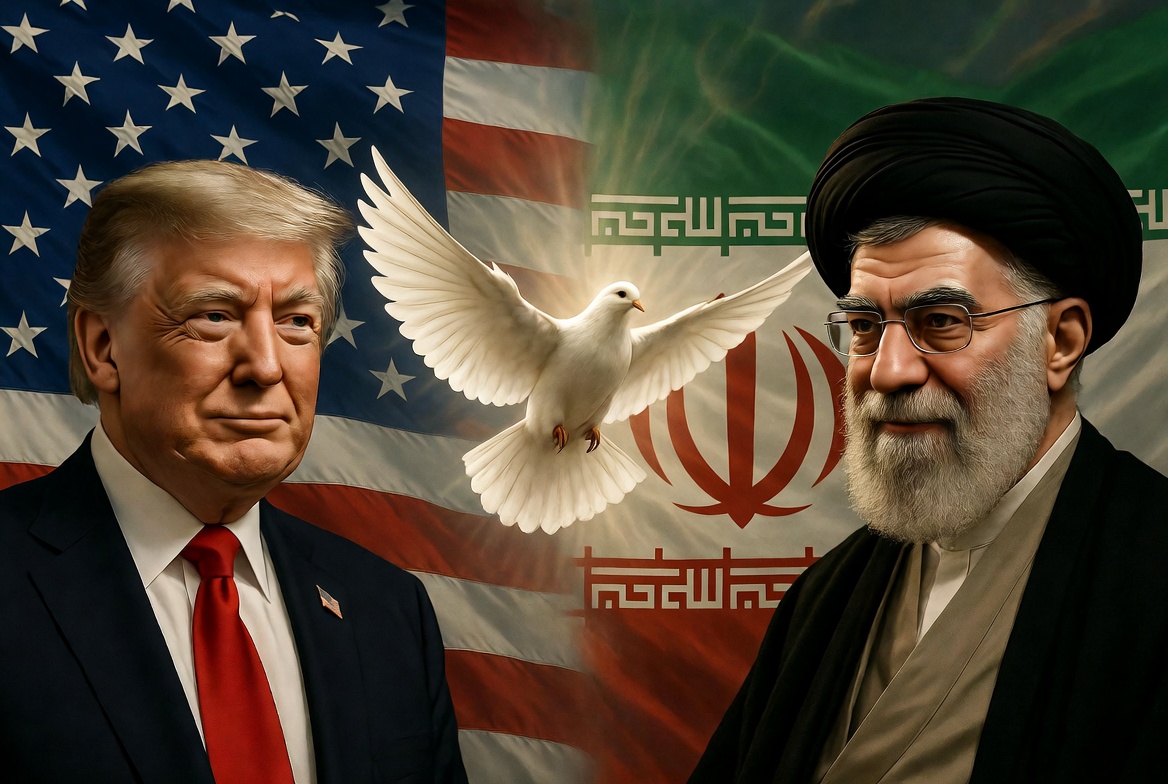
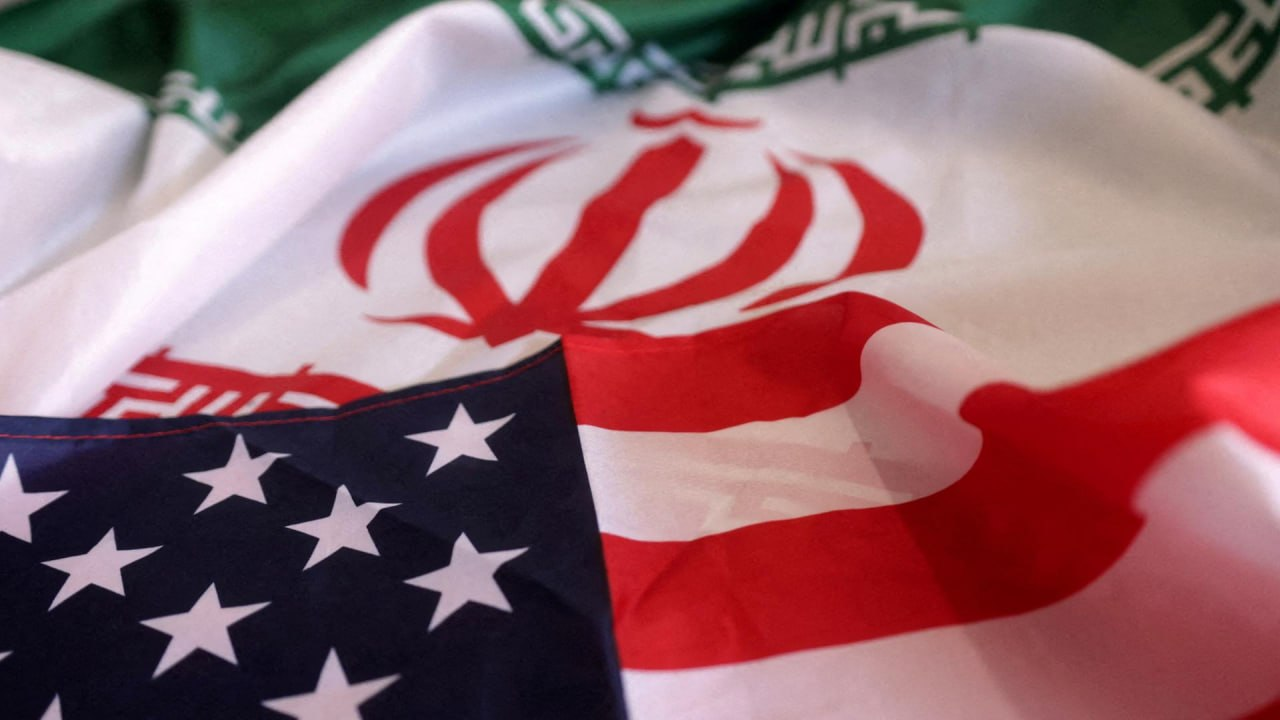
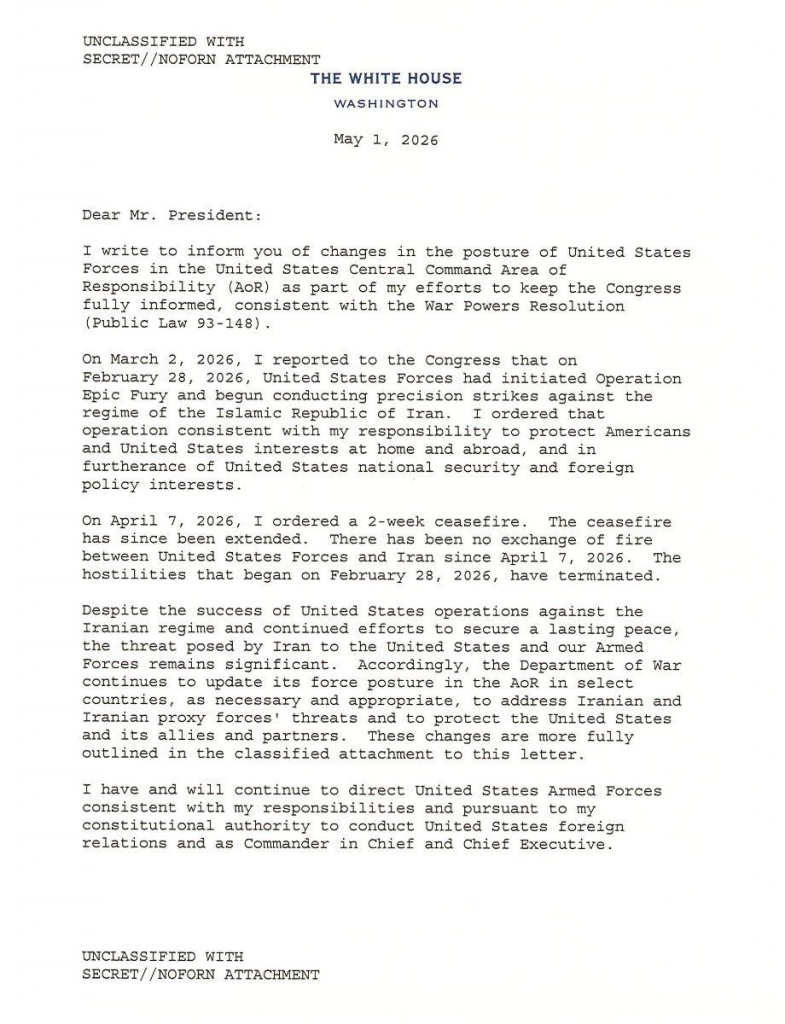
President Donald Trump wrote a letter to Congress stating the war was effectively over the day the ceasefire began, but reserved the right to begin new military action which would reset the clock, while Iran remained sceptical and on high alert following the announcement as they claimed market manipulation and mistrust ahead of the weekend, citing previous attacks while negotiating, along with all the other news as the consequences are felt around the world.
The War Is Over!

US were approaching a deadline in which Congress must give approval of a war, or military action had to be stopped, but President Donald Trump’s legal team found a loophole in the wording, allowing Trump to call a halt to the conflict now, and then begin a new Military Operation in the future, which would reset the 60-day clock for Congressional approval, however Israeli N12 said that the very fact the war stopped on April 7 allowed Trump to effectively bypass the 60-day deadline and didn’t need any approval to continue fighting for another 60 days, if necessary.
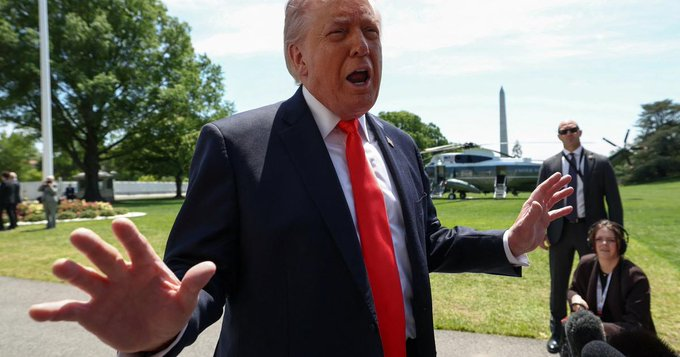
Asked by reporters on the White House lawn on Friday afternoon why he wasn’t considering asking for Congressional approval to extend the war, Trump replied that it had never been sought before, noting that there’d been numerous, many times, and nobody’s ever gotten it before: “They consider it totally unconstitutional, but we’re always in touch with Congress,’ he added.
NBC confirmed that President Trump sent letters to Congress arguing that he didn’t need authorisation for military operations in Iran because a ceasefire had terminated hostilities, claiming the 60-day threshold under the War Powers Resolution was reached this week, but Trump said there had been no exchange of fire since April 7 and the ceasefire had been extended: “The hostilities that began on 28 February 2026 have terminated,” Trump wrote.
Tasnim News said that a TRT Turkey reporter first announced that despite the presence of US armed forces in the region, the White House had informed Congress that it considered the war with Iran ‘ended’, followed by Politico reporting that Trump told Congress the war with Iran had ended with the expiration of the legal deadline, then a WSJ reporter who said that if the war resumed, the 60-day Congressional approval period for the War Powers Act would be reset.
Fars News issued a report that stated President Trump had informed the lawmakers on Friday that the war had ended in a move to quell controversies and political conflicts over the need to approve the war against Iran in the US legislative body after a 60-day ceasefire deadline has passed, noting that the law has never been fully observed in the United States because lawyers of various administrations had interpreted it differently to conduct wars, adding that Trump’s main argument in a letter obtained by Politico is that the establishment of a ceasefire with Tehran effectively stopped the legal deadline timer.
Al Jazeera stated that Iran hadn’t presented an agreement yet like the one that President Trump insisted in obtaining, so the US wouldn’t withdraw or leave early, because the goal is to complete the mission in Iran correctly and definitively, claiming that huge quantities of oil on board around 400 tankers were currently stuck in the Strait of Hormuz, and the release of the oil reserves held in the Strait would lead to an unprecedented drop in fuel prices.
Negotiations news:
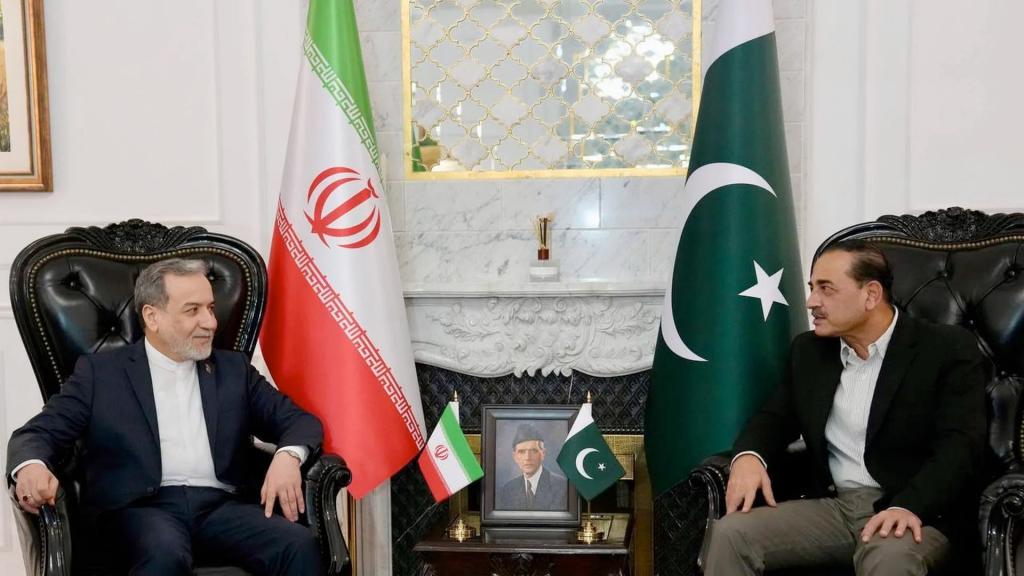
Proposals from Iran on their latest negotiating position were handed to Pakistan as a mediator on Thursday evening and passed onto the United States ready for when they awoke on Friday morning, Al Mayadeen and CNN reported, and the White House confirmed they had received Iran’s new proposal on Friday, but would not disclose the details of private diplomatic talks.
US President Trump told reporters on the White House lawn later on Friday that the US had great respect for Pakistan and tremendous respect for the Prime Minister and Field Marshal, who were working with the US and continued to work with the US, doing everything in terms of negotiating ‘telephonically,’ while Iran had made strides, but he wasn’t sure Iran would ever get there.
Axios reported that the new response was delivered on Thursday, quoting a regional source, but said that it remained unclear whether the gaps had narrowed, despite the Iranian response signalling that diplomatic efforts continue, adding that over the weekend, Iran gave the US a proposal to reopen the Strait of Hormuz and end the war, with nuclear talks to be discussed at a later stage, however, White House envoy Steve Witkoff then sent amendments focusing on returning the nuclear issue to the agreement, including a demand that Iran commit to no activity at bombed nuclear facilities and not touch its enriched uranium stockpile while negotiations continued.
Iran’s new proposal to the United States softened its previous conditions for resuming talks, reported the Wall Street Journal, claiming that Iran offered to discuss the reopening of the Strait of Hormuz at the same time as US guarantees to end attacks and unwind the blockade, noting previous demands by Iran for an upfront end to the blockade as a precondition, while the new proposal allegedly calls for discussing nuclear issues in exchange for sanctions relief, and Iran has indicated it would be ready for talks in Pakistan as early next week if Washington is open to the proposal.
News from the United States:
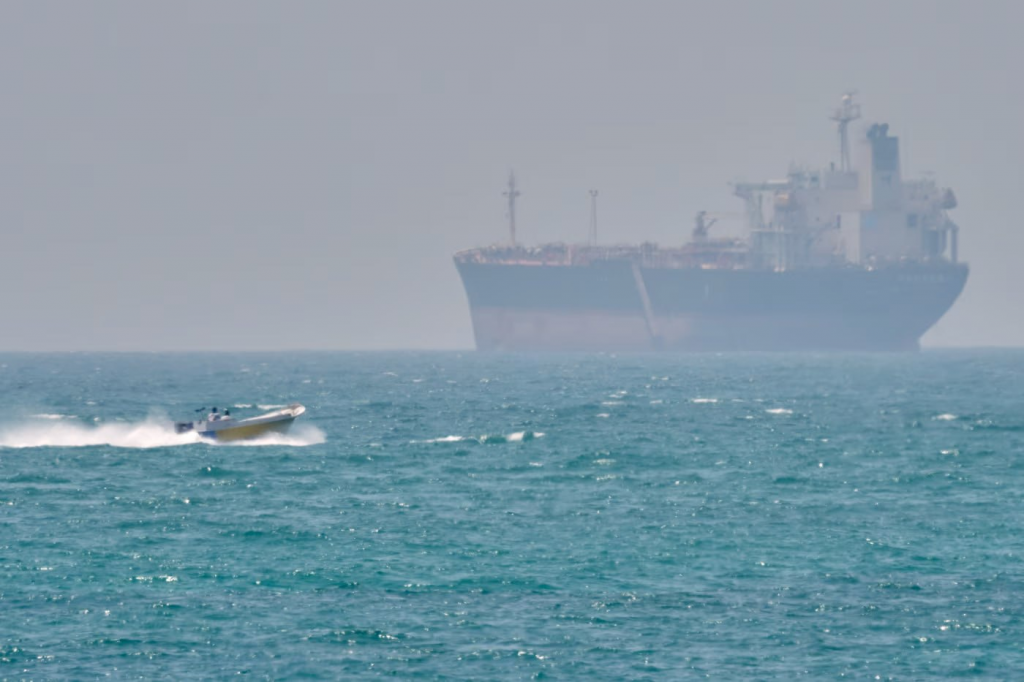
The US naval blockade of Iranian ports shut down Iran’s network of shadow tankers, revealing a hole in Tehran’s strategy of guerrilla warfare and controlling the Strait of Hormuz, reported the WSJ, claiming that Iran thought it’d gained the upper hand by shutting down commercial traffic in the Strait until the US responded by blockading all Iranian shipments, as warships chased tankers to the Indian Ocean.
According to the WSJ, only 40% of Iran’s trade can be redirected away from blockaded ports, but the crisis has split Iran’s political system between moderates who favour a deal with Trump and hard-liners who want to restart a shooting war to send oil prices higher, claiming that Iranian Supreme Leader Mojtaba Khamenei threatened that ‘foreigners who commit evil belong in the depths of the water,’ and adding that the rial has more than halved in value, while the economy faced a possible collapse.
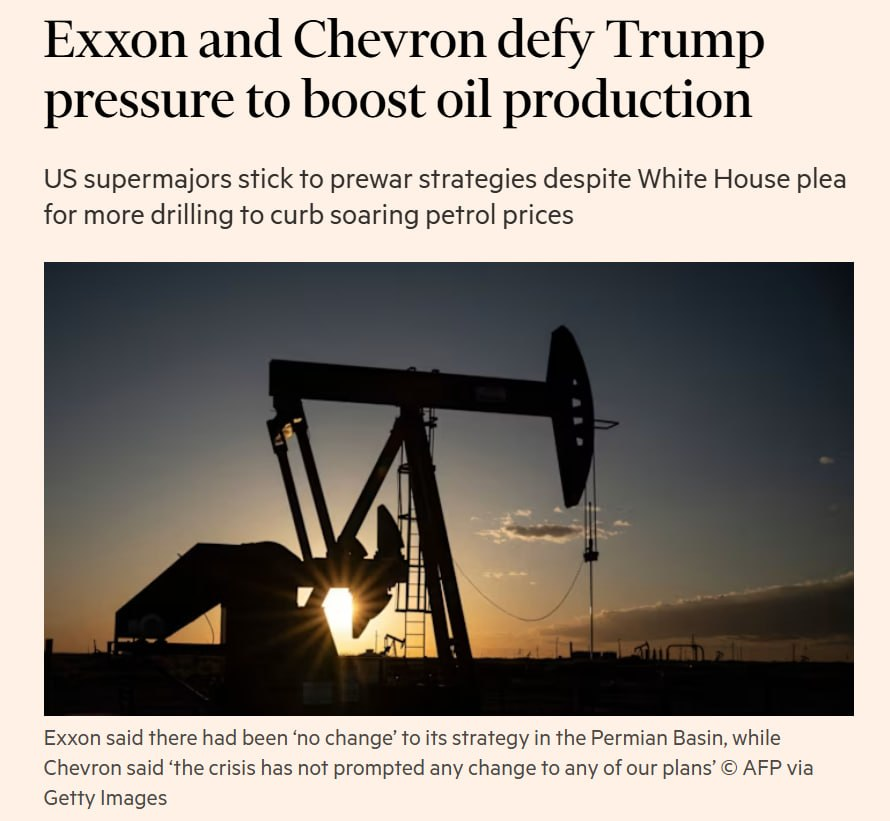
ExxonMobil and Chevron are resisting pressure from President Trump to increase oil output despite the global energy crisis triggered by the Iran war, according to the Financial Times, claiming that executives from both companies said they are sticking to existing strategies in key regions like the Permian Basin, emphasizing long-term profitability and cash-flow over rapid production increases, arguing the disruption may be temporary and that output cannot be scaled up quickly, but the crisis has driven oil prices to around $126 per barrel and pushed US gasoline above $4 per gallon, despite government efforts such as releasing reserves and urging more drilling.
Shippers of all nationalities currently stranded in the Strait of Hormuz have been warned by the US Office of Foreign Assets Control about paying ‘toll’ fees to Iran for safe passage, because payments carried sanction risks regardless of the method used, noting that payment options demanded by Iran currently include flat currency, digital assets, offsets, in-kind payments or charitable donations to Iranian entities.
US persons are generally prohibited from transactions with the Government of Iran or the IRGC, but non-US persons risk secondary sanctions, including for engaging with Iranian digital asset exchanges, and OFAC urged maritime service providers to conduct enhanced diligence and coordinate with US naval authorities.
OFAC also imposed a new round of Iran-related sanctions, designating another six individuals and more than 20 entities linked to the IRGC and Iran’s shadow banking network, including the Radin Exchange, Opal Exchange and the Arz-Iran Exchange, which OFAC said had facilitated fund transfers for sanctioned Iranian institutions.
Among the designated individuals are Nasser Ghasemi Rad, Pedram Pirouzan, Hossein Mohammad Rezaei and Ehsan Tahayyori, all of whom have ties to Iranian exchange networks, while the sanctions also target a network of alleged front companies in Hong Kong, China, and the UAE, as well as the oil products tanker New Fusion and the Chinese Qindao Haiye Oil Terminal Company Ltd.
The United States Navy are now back to two aircraft carriers in operation in the Middle East after the departure of the USS Gerald R Ford from the region, confirmed by Al Arabiya, who noted that the Ford has departed back to the USA for repairs after ten months on deployment.
American Automobile Association have confirmed that gas prices increased by just over 47% since the start of President Trump’s special military operation with Iran, and it could take some months for the market to return to normal, once and only when the Strait of Hormuz has been reopened.
CNN and Tasnim News reported that Iran’s attacks on US military facilities in the region resulted in damage to important radar systems, communications, and aircraft, with some left unusable, as they claim that damage assessments ranged from ‘repairable’ to ‘completely destroyed.’
US Central Command published a post stating that the US Forces continue to patrol international waters and enforce the ongoing blockade against Iran, adding that they had turned around or returned to port 45 commercial vessels since the blockade began.
The Pentagon estimated the US blockade in the Gulf of Oman had denied Iran almost $5 billion in revenue, with 31 tankers carrying 53 million barrels of Iranian oil stuck in the Gulf and two ships have been seized by the US, reported Axios, adding that analysts said Iran was several weeks away from running out of oil storage which would force a shutdown of wells, and acting Pentagon Press Secretary Joel Valdez said the blockade is ‘operational and in full force, delivering the decisive impact we intended.’
News from the Iranians:
Supreme Leader Mojtaba Khamenei released his second statement in two days on National Workers day in Iran, commemorating the teachers and workers who helped to build the country: “We know that a worker, through commitment and good conduct, sometimes attains a position worthy of receiving a thankful and appreciative kiss on their capable and skilful hand, just like the affectionate hand of a teacher and mentor,” adding that this is something that is ensured first by the nurturing of one’s first mentors, namely their parents, and then through their understanding of their teacher’s presence.
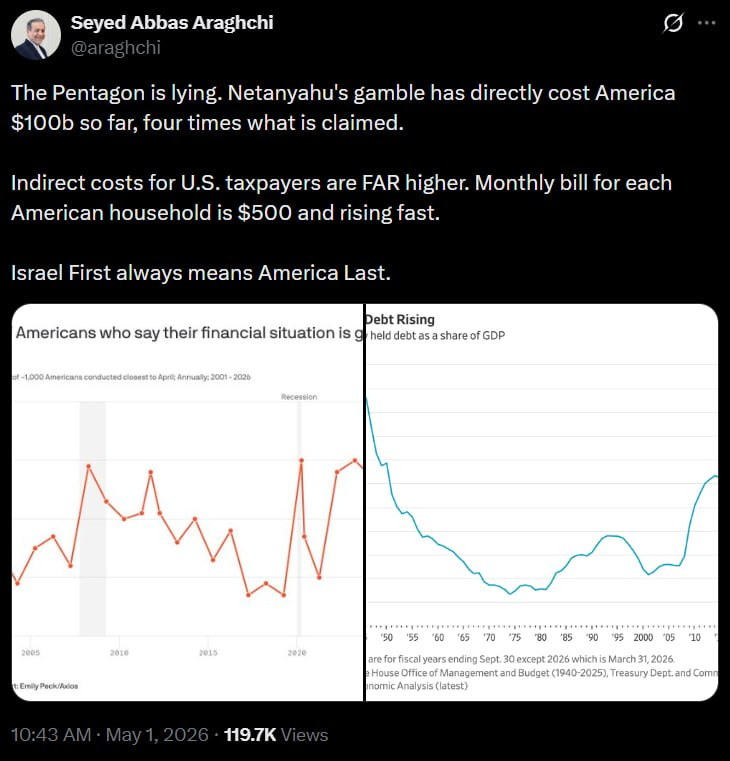
FM Araghchi claimed in an X post that the Pentagon was lying about funds spent during the war, claiming that ‘Israel First always means America Last.”
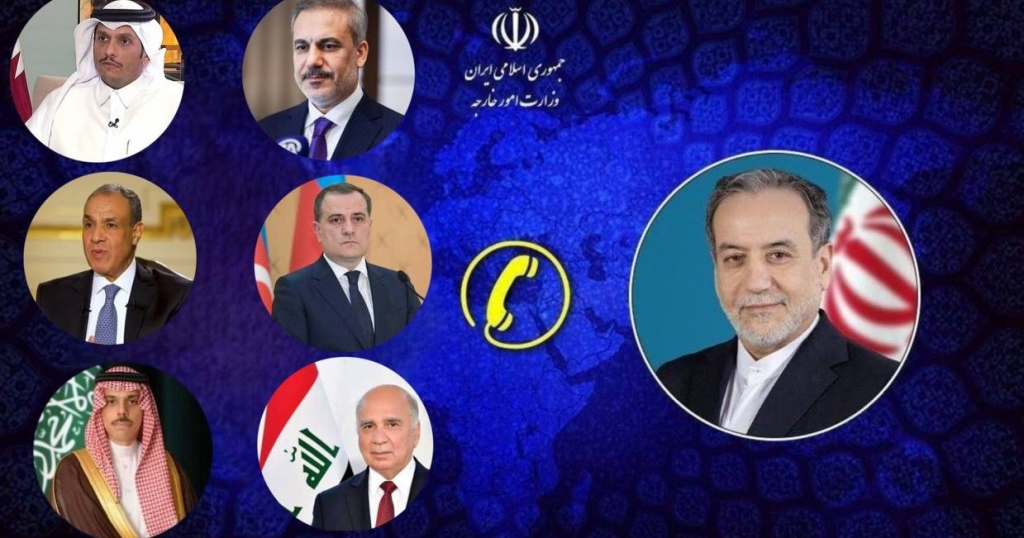
Araghchi held phone conversations with regional Foreign Ministers on Friday morning, including Turkey, Egypt, Qatar, Saudi Arabia, Iraq and Azerbaijan Republic, informing them of the latest positions and initiatives of Iran regarding the end of the war, along with the aggression of the United States and the ‘Zionist regime,’ Tasnim News and Irib News reported, adding that Iran was open to diplomacy talks if the US shifted its approach and rhetoric, while emphasizing that the country’s armed forces remain fully prepared to defend it.
During the conversation with Iraqi counterpart Fouad Hussein, the pair discussed details of the Islamabad talks with the American side and the number of points of agreement or disagreement between the two sides, while Araghchi confirmed Iran’s desire to reach positive results and reviewed the steps proposed to advance the solution process, and Hussein confirmed Iraq’s support for negotiation efforts, stressing the importance of reaching a final solution that contributes to ending the war, Al Mayadeen reported.
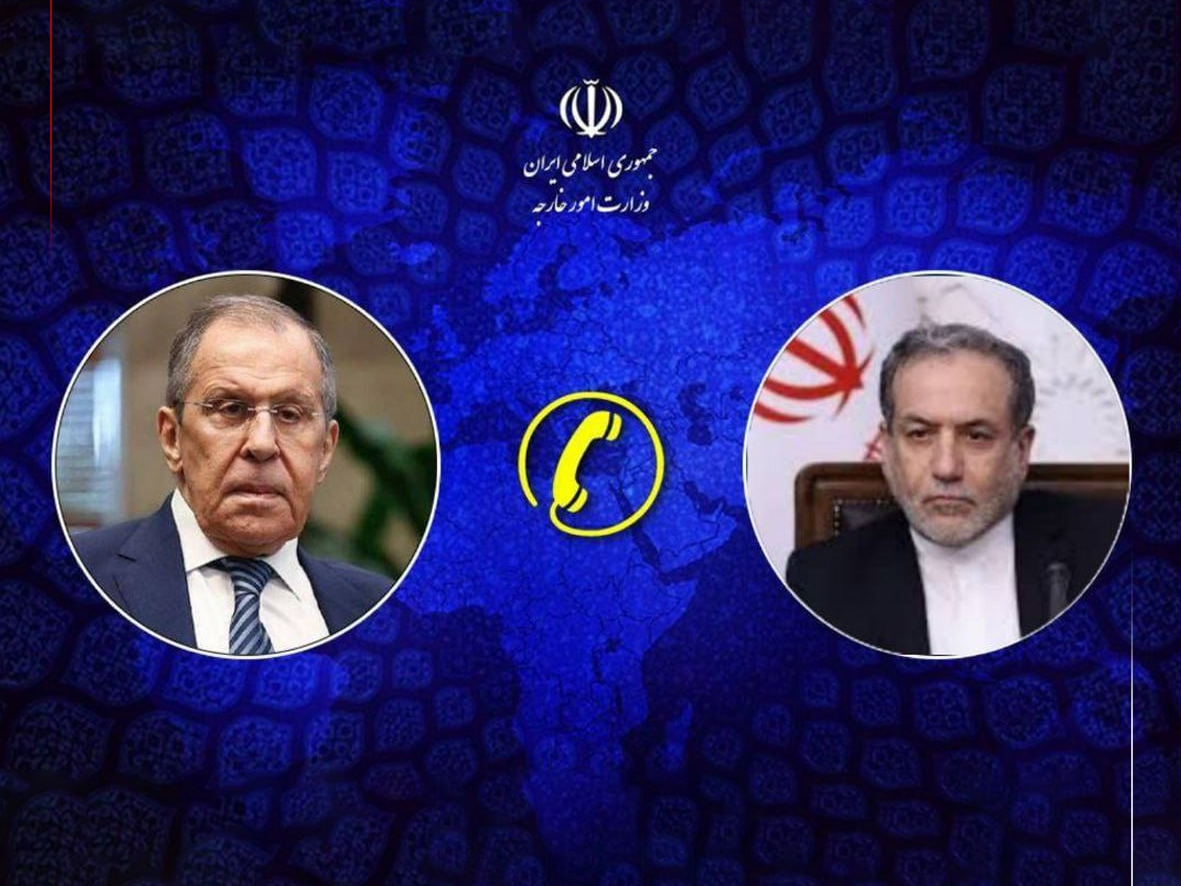
FM Araghchi later held a conversation with Russian Foreign Minister Sergey Lavrov, discussing and exchanging views on the latest positions and initiatives of Iran regarding the end of the war and the aggression of the US and Israel coalition.
During the evening, Araghchi had a call with EU Foreign Policy Chief Kaja Kallas, informing her of Iran’s initiatives to end the war, while the EU Chief expressed concerns about the security and economic consequences of continued tensions in the region, emphasizing the EU’s principle stance in supporting diplomacy to establishing lasting peace and security in the region, Tasnim News reported.
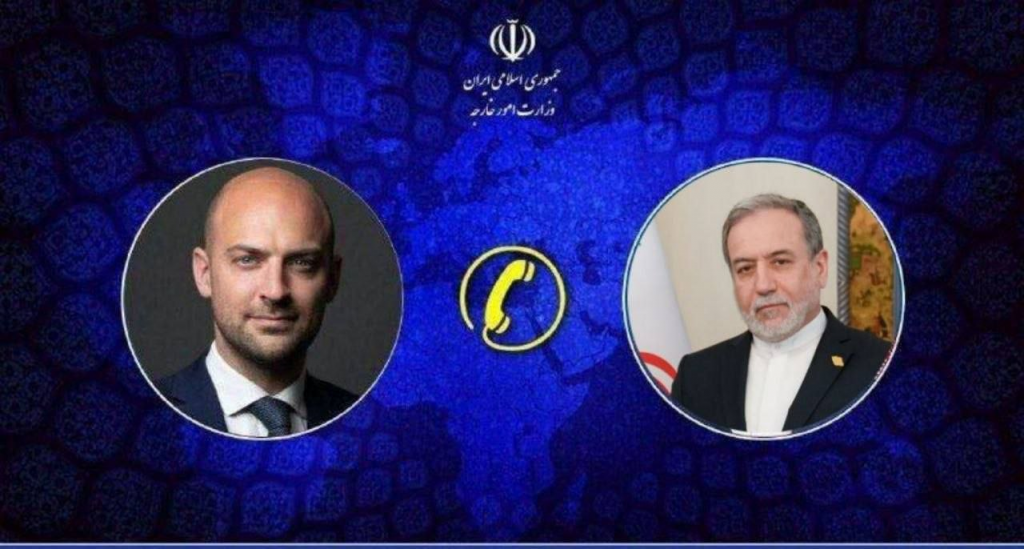
Araghchi also spoke with French Foreign Minister Jean-Noël Barrot, discussing the latest regional developments and initiatives related to diplomacy with the aim of ending the war in the region, Middle East Observer reported.
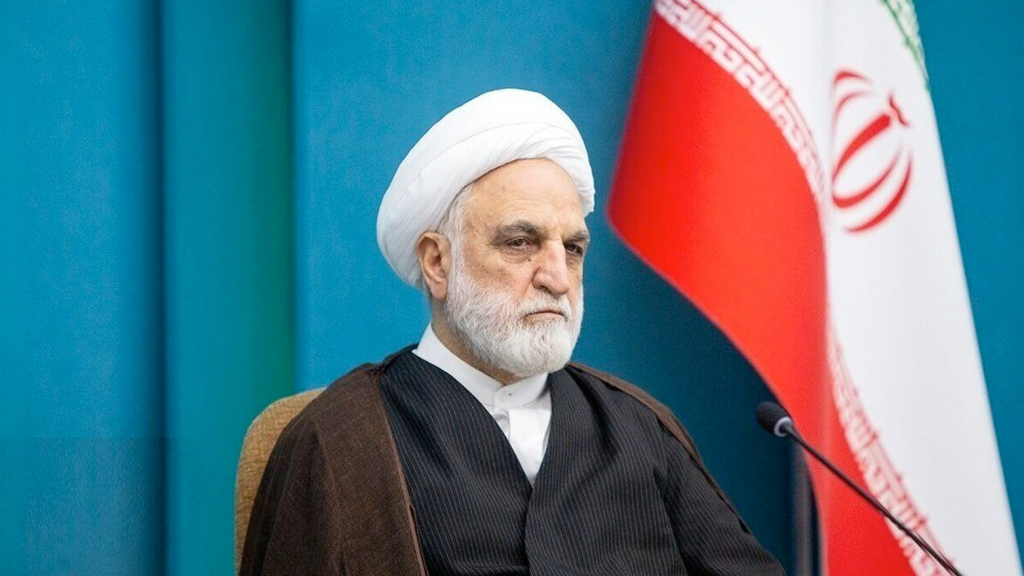
Head of Iran’s Judiciary Gholam-Hossein Mohseni-Eje’i said the country welcomed negotiations but wouldn’t accept imposition: “This is a matter on which the officials of the system have consensus and agreement, he said, adding: “We announce loudly that we welcome negotiation but we do not accept imposition.”
Representative to the United Nations Amir-Saeid Iravani said on Friday that the countries who participated in the aggression against Iran, or allowed the use of their bases, airspace, territorial waters, or territories to launch an attack on Iran, are responsible and should be held accountable, Naya reported.
Spokesperson for the Ministry of Foreign Affairs Esmaeil Baghaei said that the massacre of Minab students and teachers was a brutal war crime, before referring to a question from a US Congress member during a hearing of the US Secretary of War Pete Hegseth, which asked about the cost of the missiles fired at the Shajareh Taybeh school in Minab on February 28, 2026, stating that the question should have been how much of the American taxpayers’ money has the US Secretary of War spent on killing innocent students and teachers in the school, adding that its completely clear the school crime cannot be described as an unfortunate accident, because the attack on Minab school was a premeditated brutal war crime, and the commanders and perpetrators of the war crime should and must be held accountable.
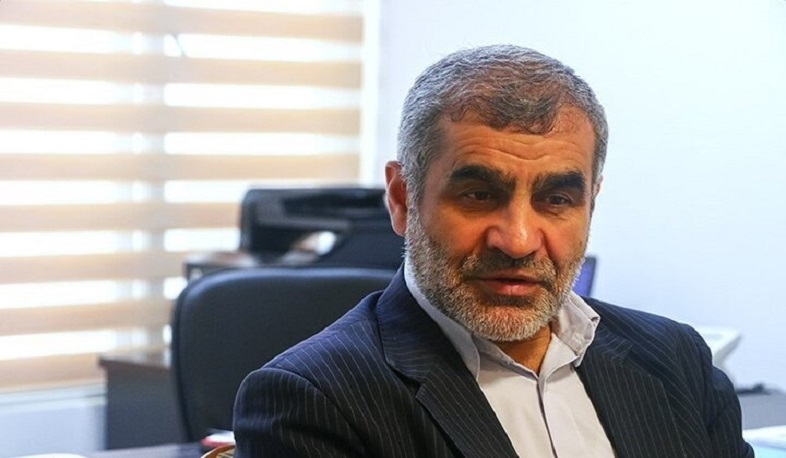
Deputy Speaker of the Parliament Ali Nikzad said that the unparalleled management of the leadership in defence, military, and nuclear affairs has preserved the country’s independence, unity, and national dignity, while his order is that the Strait of Hormuz should not return to its previous state, reported Tasnim News, claiming that the Strait of Hormuz is not an international waterway but Iran’s natural right and Iran’s atomic bomb, so they stand firmly and resolutely on this rightful position, adding that officials have the duty to neutralise the pressure of sanctions by relying on the leadership’s measures.
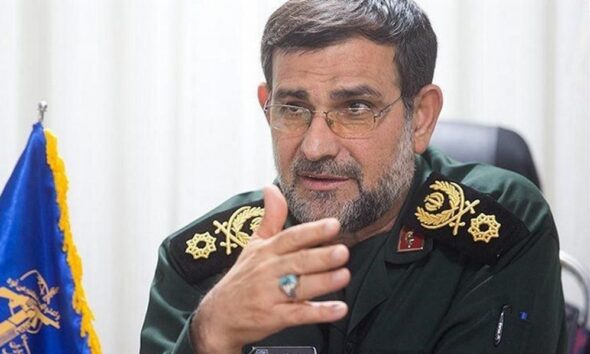
Commander of the Naval Force of the IRGC Ali Reza Tangsiri released a statement on Friday saying: “The new equations and rules of managing the Gulf have been prepared in line with the historic directive of the Leader of the Islamic Revolution, and they will be implemented,” adding that the IRGC Naval Force controls nearly 2,000km of Iran’s coastline in the Persian Gulf and the Strait of Hormuz, which it will make a source of livelihood and pride for the Iranian people, and a source of security and prosperity for the region.
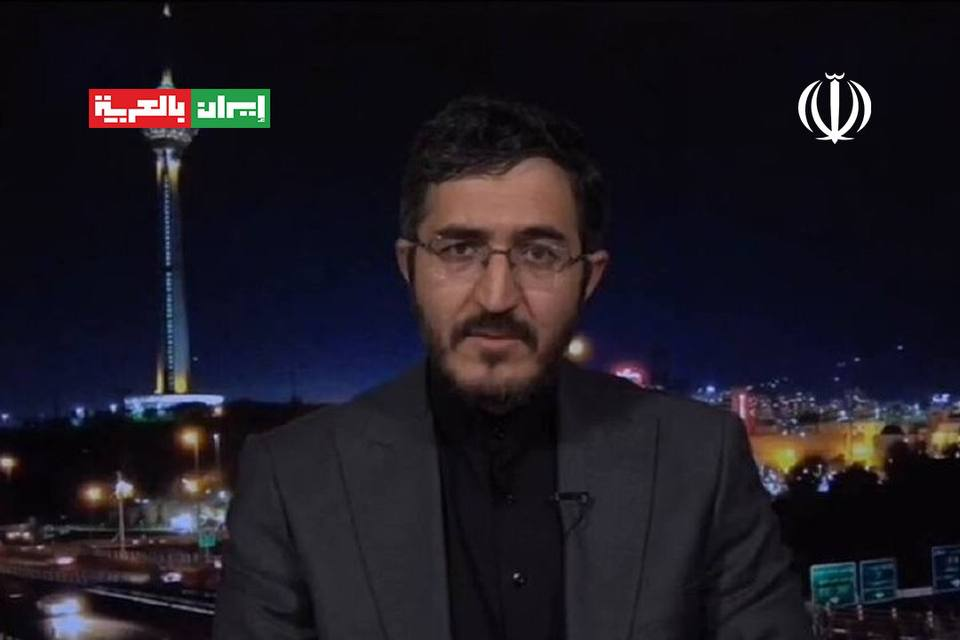
Head of the Iranian Parliament’s news agency Mehdi Rahimi said that some countries in the region that host American bases have contacted Iran and asked it to target Israeli sites in the United Arab Emirates instead, Iran in Arabic reported, adding that Iran has informed the countries of the region, led by the United Arab Emirates, that if the war resumes, Iran will launch devastating strikes on oil wells.
Member of the National Security Commission of the Iranian Parliament Ali Khezian said: “Last night (Wednesday), enemy drones appeared to assess the country’s air defence system, and Iran’s air defence gave a crushing response,” adding that Iran must give an offensive response to the appearance of small drones so that the ‘enemy does not dare to take similar actions again.’
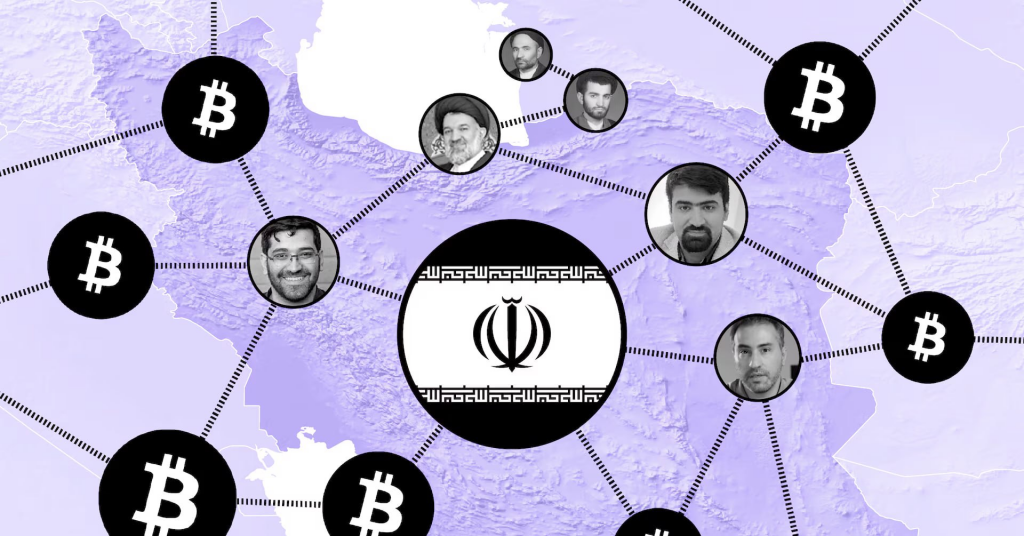
An investigative report by Reuters found that one of Iran’s most powerful families were in control of the country’s largest cryptocurrency exchange, Nobitex, which has processed between tens and hundreds of millions of dollars in transactions linked to sanctioned groups including Iran’s central bank and the IRGC, Reuters reported, claiming that the brothers from the Kharrazi family founded Nobitex in 2018 under an alternative surname.
The exchange currently claims more than 11 million users, more than 10 percent of Iran’s population, and handles an estimated 70 percent of the country’s crypto transactions, as blockchain analysis showed it had been used to move sanctioned central bank funds, with Elliptic identifying about $347 million sent from the central bank to Nobitex in the first half of 2025, but Nobitex has denied having direct government connections or assisting the state, saying any illicit funds have been moved without management approval, and the exchange continued to operate during the war, even under a government-imposed internet blackout that restricted access to most Iranians.
Iran executed at least 26 people in April, including 14 political prisoners, according to the Oslo-based Hengaw Human Rights monitor, pointing out the figure is a sharp drop from the same month last year, which saw 122 executions: “Among those executed was Hanifeh Avandi, a 24-year-old Turkish woman who was a victim of child marriage and forced marriage, and she was executed in Tabriz Central Prison after being convicted of killing her husband,” the monitor said.
Kpler Institute reported on Thursday that 7 ships had passed through the Strait of Hormuz, another 4 ships had exited the Strait, and 3 vessels had entered into the waterway, noting that on Wednesday, three ships related to Iran passed through the Strait despite the US Naval blockade, Tasnim News reported.
General news from around the region:
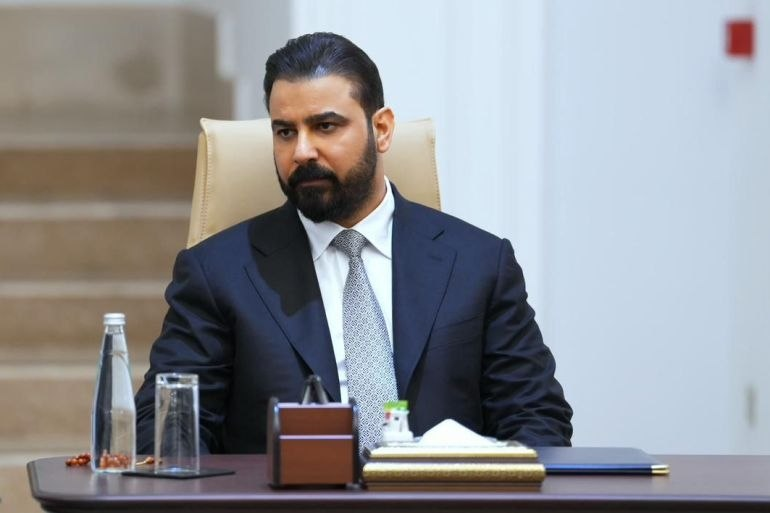
Some Iraqi political figures have warned the United States that Prime Minister-designate Ali al-Zaidi is not a good option, claiming he was responsible for financial support to pro-Iranian militias and that Tehran’s influence in Iraq would grow even more if he took office.
Officials allegedly pointed out that Zaidi is a business man who previously ran a bank that faced US sanctions over fund transfers to Iran, according to Kan News, adding that although the US embassy has welcomed Zaidi and President Trump called to congratulate him, but one Iraqi source said they had warned the Americans, accusing the head of the Shia-led judiciary of misleading Washington.
Iranian FM Araghchi congratulated Zaidi on his nomination for Iraq prime minister in a post on X: “I welcome the Coordination Framework’s decision to nominate a prime minister and congratulate my brother Ali Falih Al-Zaidi on his designation,” he said, wishing Zaidi success in forming a government and serving the Iraqi people: “Iran reaffirms its respect for Iraq’s sovereignty and its support for political stability, development, and enhanced cooperation in a way that serves the the interests of both peoples.”
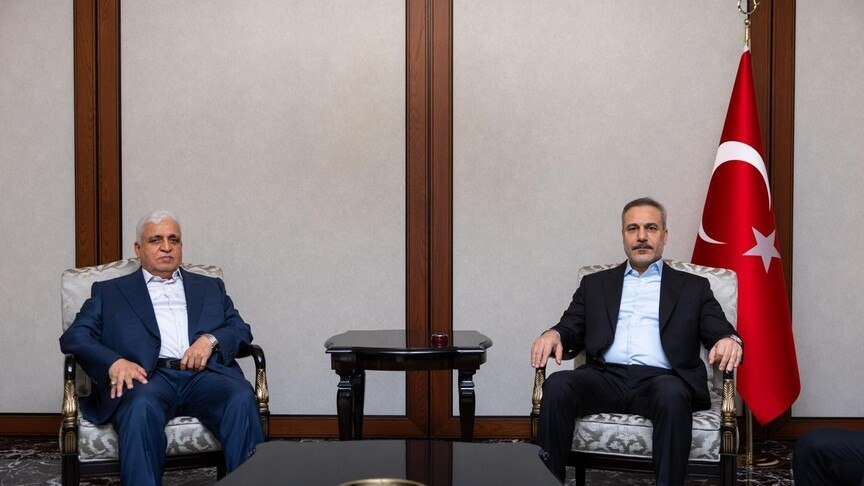
Head of Iraq’s Popular Mobilization Forces Commission Falah al-Fayyad met with Turkish Foreign Minister Hakan Fidan to discuss bilateral relations and regional issues, with talks coming amid ongoing diplomatic engagement between Baghdad and Ankara on border stability and threats.
French magazine ICL wrote that the war in West Asia had cost France at least one billion euros, which includes the cost of fighter patrol operations, crew wages, ammunition supply and aircraft fuel, Irib News reported.
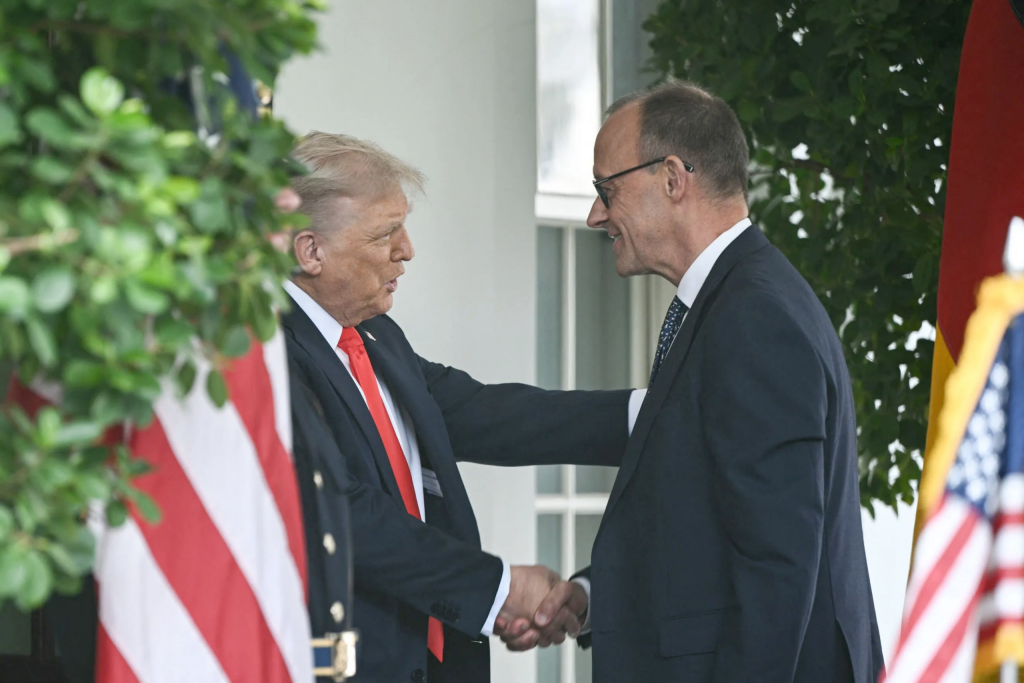
German Chancellor Friedrich Merz lost hard-won favour with President Trump after suggesting the US had been ‘humiliated’ by Iran, having sought to downplay the rift afterwards, insisting the transatlantic bond remains strong and that Germany is strengthening its military for mutual benefit.
However, Politico reported that Trump stated Merz should focus on Ukraine, immigration and energy, rather than interfering with those ‘getting rid of the Iran nuclear threat,’ adding that a rapid US withdrawal from Germany was seen as unrealistic due to deep military integration, but the rifts risk undermining Merz’s ability to influence Trump on support for Ukraine.
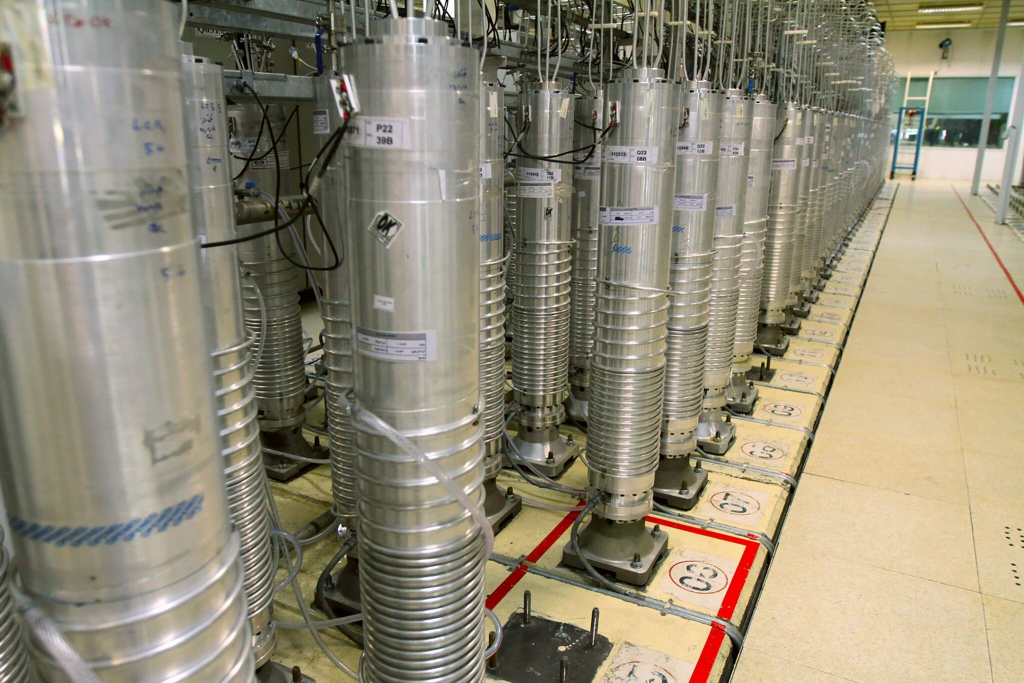
A senior IDF official told Israeli Army Radio that if Iran’s enriched uranium isn’t removed and enrichment not stopped in a political deal, ‘everything we did in Operation Roaring Lion will be one big failure,’ adding that the regime could then ‘pounce on the nuclear programme,’ and that the operation was not just a signal but a much more significant move, claiming the official expressed doubt about the rationality of Iranian leaders and said another attack may be needed if diplomacy fails, while acknowledging that Israel struck internal security and Basij bases hoping to spur protests and stopped when the operation failed.
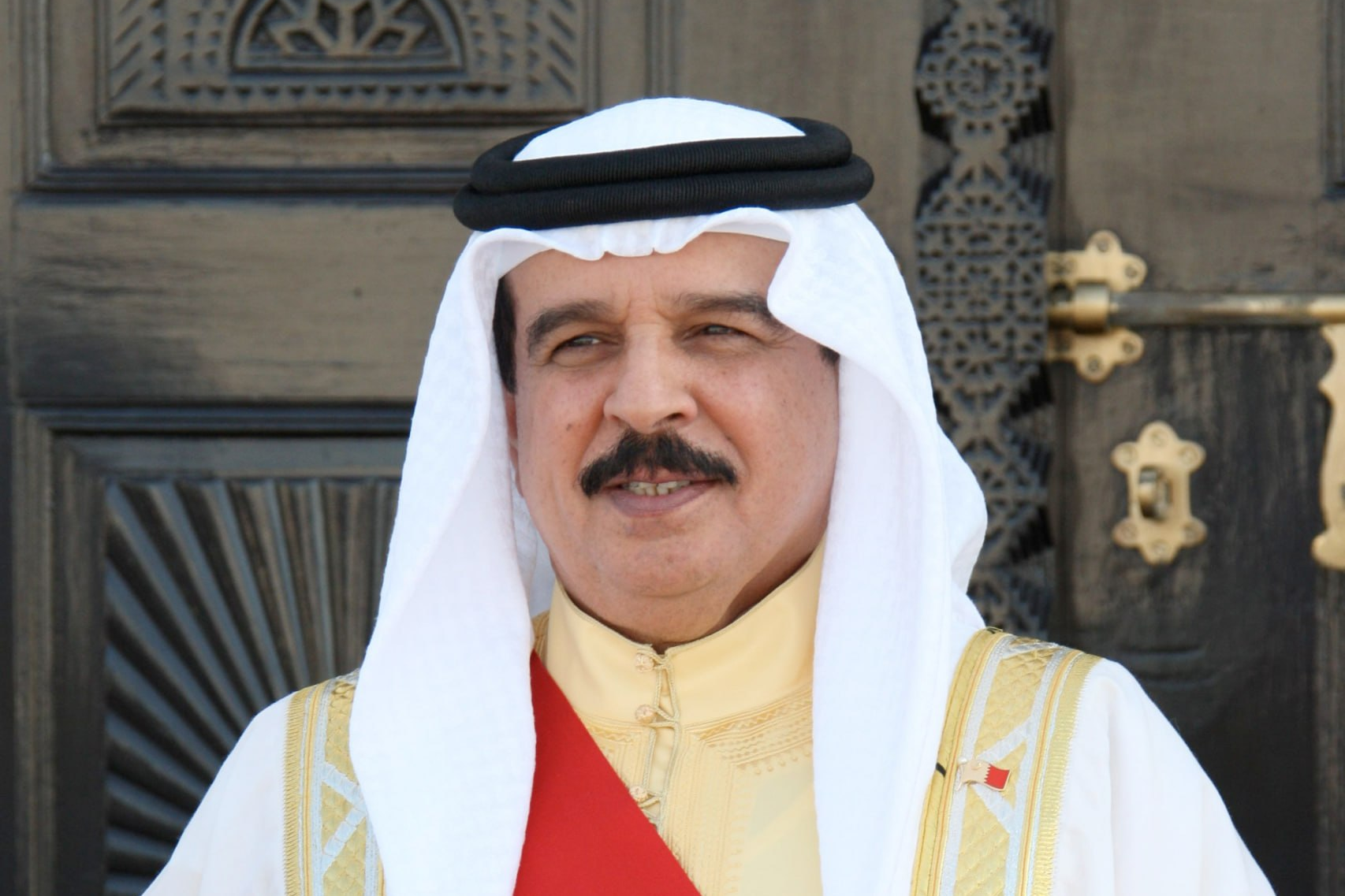
Bahrain’s King Hamad bin Isa Al Khalifa called on Iran to cease interfering in the internal affairs of Bahrain and the Gulf Arab states, stating that Iran’s ‘sinful aggression’ had exposed those who sold their consciences to the enemy, claiming that a small number of individuals, including military personnel and members of parliament, had collaborated with Iran, committing ‘treason beyond treason.’
The King expressed regret that some legislators stood with traitors instead of acting as a shield for the nation: “Those who stand with those who attacked the homeland, let them go and join them – there is no place among us for those who ally with our enemies,” he said, adding that citizenship had been revoked for those convicted of collaboration, and stated that Gulf public opinion strongly supported the measures, which he described as a safety valve to prevent the need for military rule.
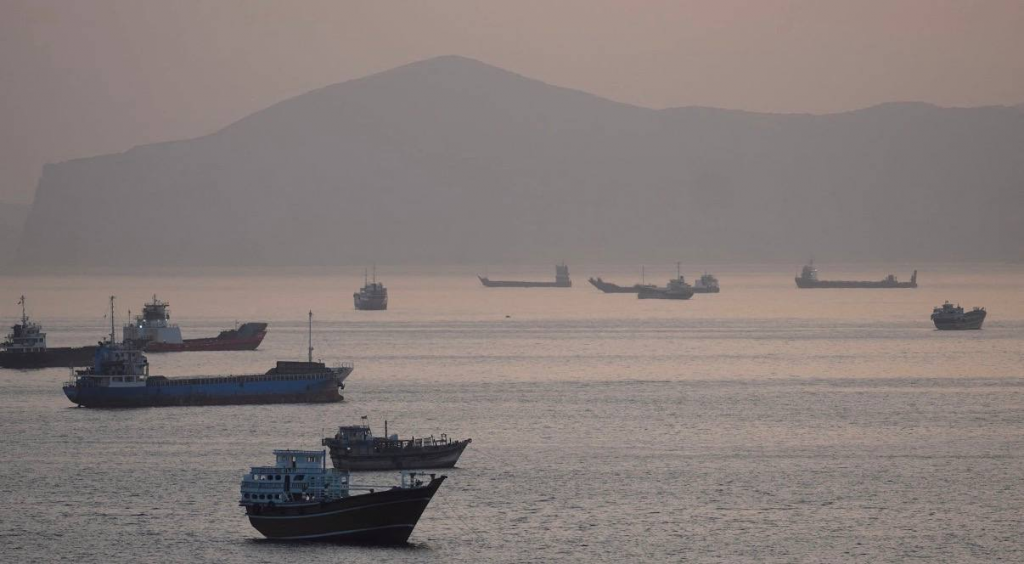
A senior Arab Emirates official told Reuters they were mistrusting over any unilateral arrangements made by Tehran for the Strait of Hormuz, amidst efforts to end the war, noting Iran has activated air defences and plans a wide response if attacked, with Iranian sources suggesting a short, intensive US strike could be followed by an Israeli strike, but the US hasn’t announced its next steps, with President Trump expressing unhappiness with Iran’s latest proposal.
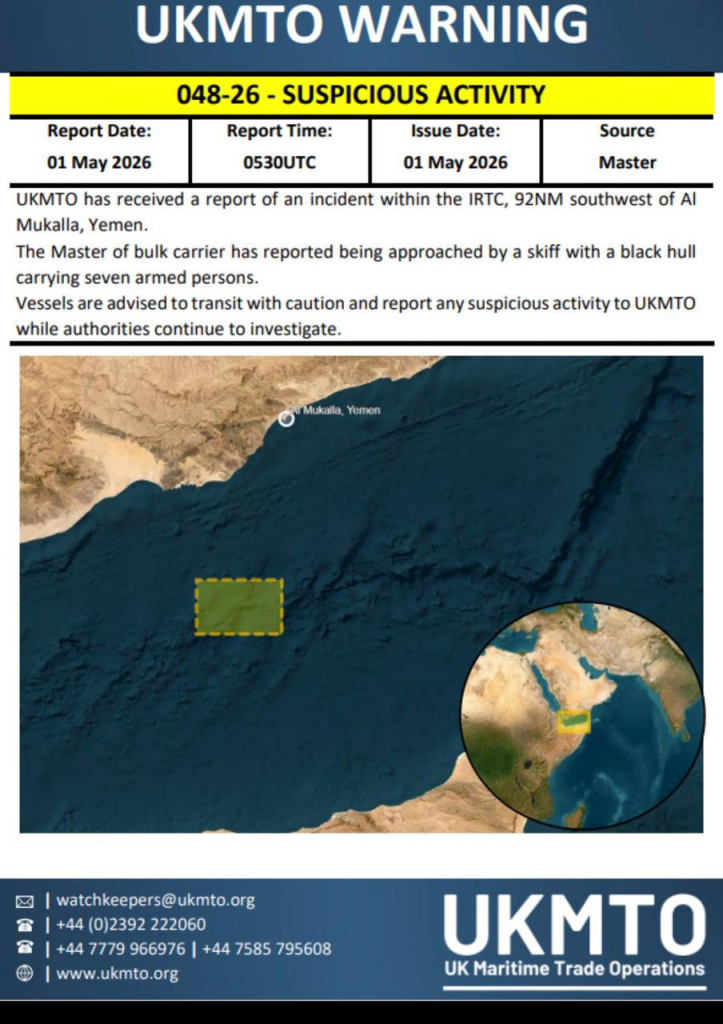
UKTMO reported a maritime incident 92 nautical miles southwest of the city of Mukalla in Yemen, where a cargo ship captain reported that his vessel was approached by a small black-hulled boat, which carried several armed individuals.
Amazon have said that repairing the damaged data centres in the Middle East will take months, reported Fars News Agency, claiming Amazon announced the company’s cloud data centres in Bahrain and the UAE were damaged during the conflict, causing some of its services to be disrupted, adding that the company said technical teams were working to fully restore services, but the process of repairing and rebuilding the infrastructure may take several months.
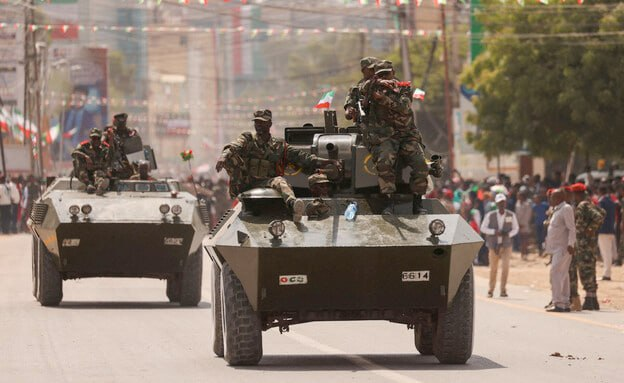
Somaliland are ready for security cooperation with Israel against the Houthis, a senior official told Israeli Channel 12, describing the Houthis as a common enemy, noting that Somaliland is strategically located near the Bab el-Mandeb strait, the vital global trade route which around 12% of the world’s trade passes, and which the Houthis have threatened to close the passageway.
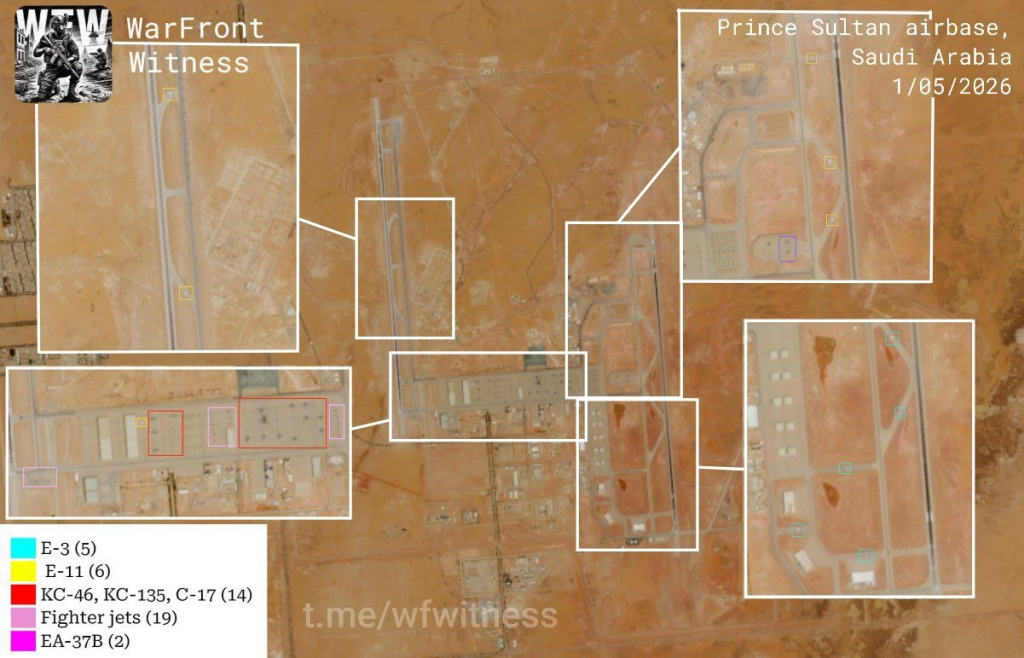
Warfront Witness reported that fresh satellite imagery from Prince Sultan airbase in Saudi Arabia showed constant readiness of American forces to take part in renewed operations against Iran, adding that despite successful strikes by Iran against grounded aircraft, many valuable planes remain packed on the main tarmac, but the E-3 AWACS and the E-11 have been scattered throughout the airfield, while also spotting 19 fighter jets, claiming its unusual for the base to be used by larger aircraft.