 AJ
AJ
Recap from the first day of the ceasefire, which looked into the attacks on Siri Island in Iran, further attacks inside Iran last night, as well as Iran’s retaliation to the UAE, the opening and closure of the Strait of Hormuz, and what the officials have said during day one.
Main News:
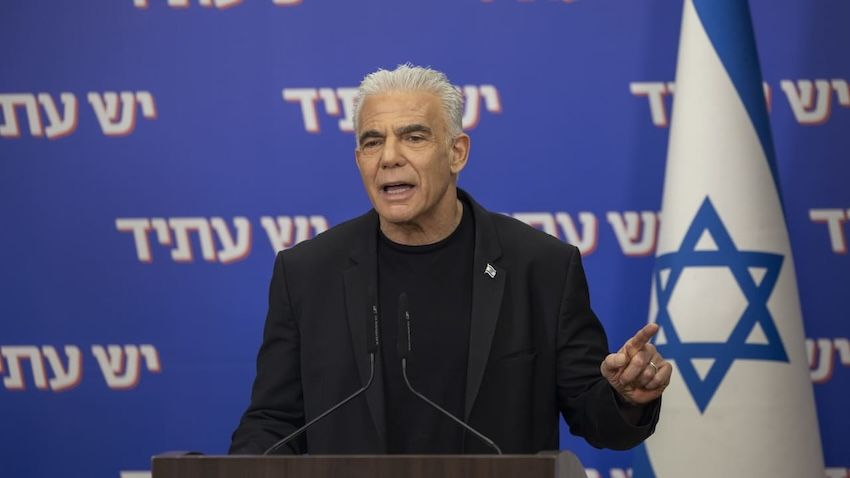
Israeli Prime Minister Benjamin Netanyahu claimed he accepted and backed the two-week ceasefire between the United States and Iran, but stated that the truce didn’t include Lebanon, because the ceasefire, announced as part of the efforts to de-escalate the conflict, was conditional on Iran halting attacks and reopening key routes such as the Strait of Hormuz, whereas Iran wanted all the proxies including Hezbollah to be involved in the ceasefire.
Officials from Israel emphasized that military operations in Lebanon would continue despite the agreement, contradicting claims the ceasefire would extend to all fronts, made by PM Shehbaz Sharif from Pakistan on X among a number of top leaders.
Throughout the early morning on Wednesday the 8th April, Israel continued to bombard southern Lebanon, including Jmaijmeh, Tyre, Srifa, and Yahmar Al-Shaqif area, despite Hezbollah being prepared to stand to a ceasefire they believed had been agreed and had included Lebanon, telling Reuters that an official statement from the party regarding Netanyahu’s announcement about the ceasefire not including Lebanon was expected later.
Israel Channel 12 reported from sources that the Northern Command of the Army had informed heads of authority that the ceasefire doesn’t include Lebanon, and an official Lebanese source told Al Jazeera that Lebanon has not been officially notified of any details regarding the ceasefire agreement between Washington and Tehran.
Lebanon’s Army redeployed in a number of positions it had previously evacuated in the border’s rear lines, from Al-Amriya to Beit Yahoun and Aitit in southern Lebanon, reported Al Akhbar, stating that there was still a state of confusion in the country about the ceasefire.
The Lebanese Deputy Parliament announced on Wednesday that the President would intensify talks with Washington and Riyadh following the ceasefire announcement, stressing the importance of diplomacy to reach a permanent end to the war and secure a full Israeli withdrawal from Lebanese territory.
According to the Lebanese Deputy Parliament, Lebanon will move forward fully implementing the Taif Agreement, including provisions that were not previously applied, most notably the disarmament of all militias and the establishment of a Senate to represent sectarian groups alongside a non-sectarian lower house.
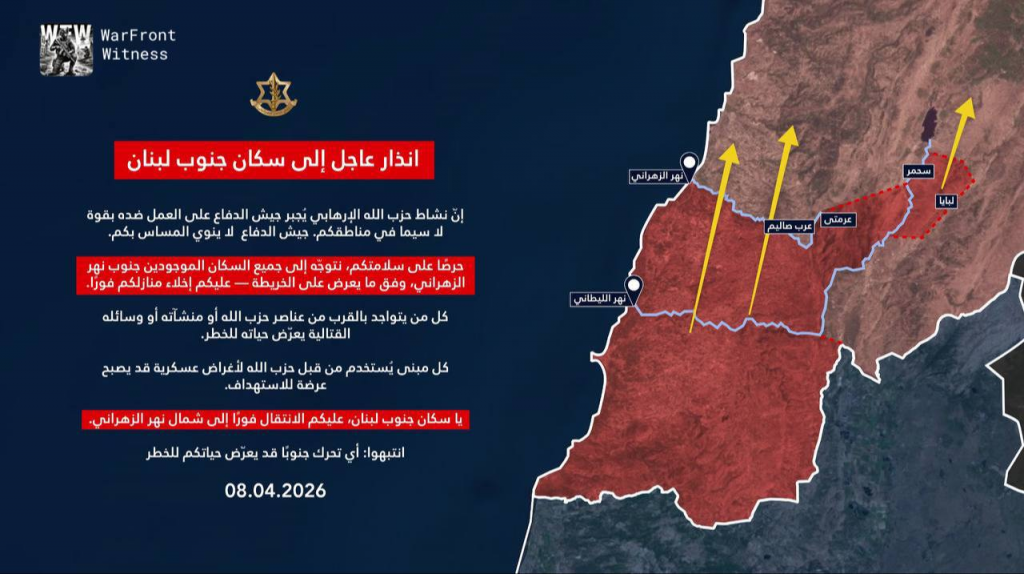
Israeli Defence Forces announced just before 11am local time that there was an urgent warning to the residents of Lebanon not to return home to southern Lebanon and the ceasefire didn’t apply to Lebanon.
French President Emmanuel Macron said on Wednesday morning that any ceasefire agreement must include Lebanon, a sentiment later backed by Australian Prime Minister Anthony Albanese.
British Prime Minister Sir Keir Starmer also welcomed the ceasefire agreement, promising to work alongside international partners to ensure freedom of navigation in the Strait of Hormuz.
Pakistan’s Prime Minister Shehbaz Sharif said on Wednesday afternoon that ceasefire violations had been reported at a few places across the zone which undermined the spirit of the peace process, while urging all parties to exercise restraint and respect the ceasefire as agreed, so that diplomacy can take the lead toward a peaceful solution.
An Iranian source warned shortly after that Tehran may withdraw from the ceasefire agreement if Israel continued strikes on Lebanon, considering recent actions a violation of the ceasefire framework, which it claimed applied across all fronts, including Lebanon, adding that if the US failed to restrain Israel, Iran could take action itself, underscoring the fragility of the ceasefire despite ongoing diplomatic efforts, according to Tasnim News and Al Jazeera.
Fars News reported that the navigation through the Strait had been halted and the Strait had been closed following the strikes on Lebanon.
President Trump told PBS that Lebanon wasn’t included in the ceasefire with Iran because of Hezbollah: “They were not included in the deal – they’ll get taken care of too, it’s alright,’ Trump said, describing the conflict with Hezbollah a ‘separate skirmish,’ then when asked about his Truth Social post threatening to wipe out a civilisation, Trump hung up.
Iran told mediators it would only joined planned talks with the US in Islamabad if a ceasefire is reached in Lebanon, leading Pakistan PM Sharif to remove an X post stating that the Iranian delegation were due to arrive on Wednesday evening.
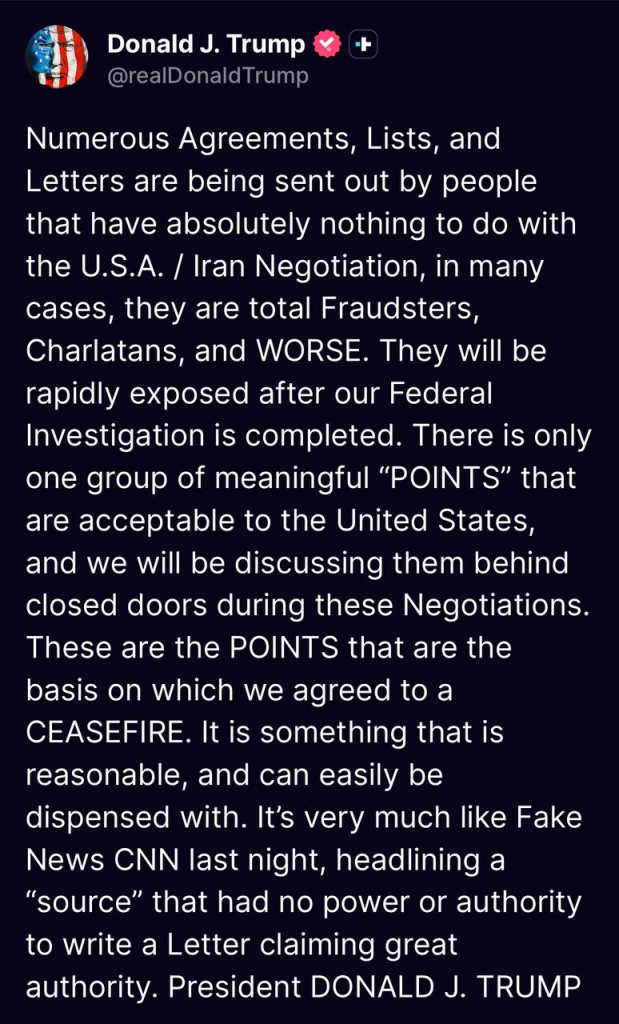
President Trump took to Truth Social to say that numerous agreements, lists or letters had been sent out by various people that had nothing to do with the negotiations, who will be revealed following a federal investigation, stating that people shouldn’t follow Fake News like CNN.
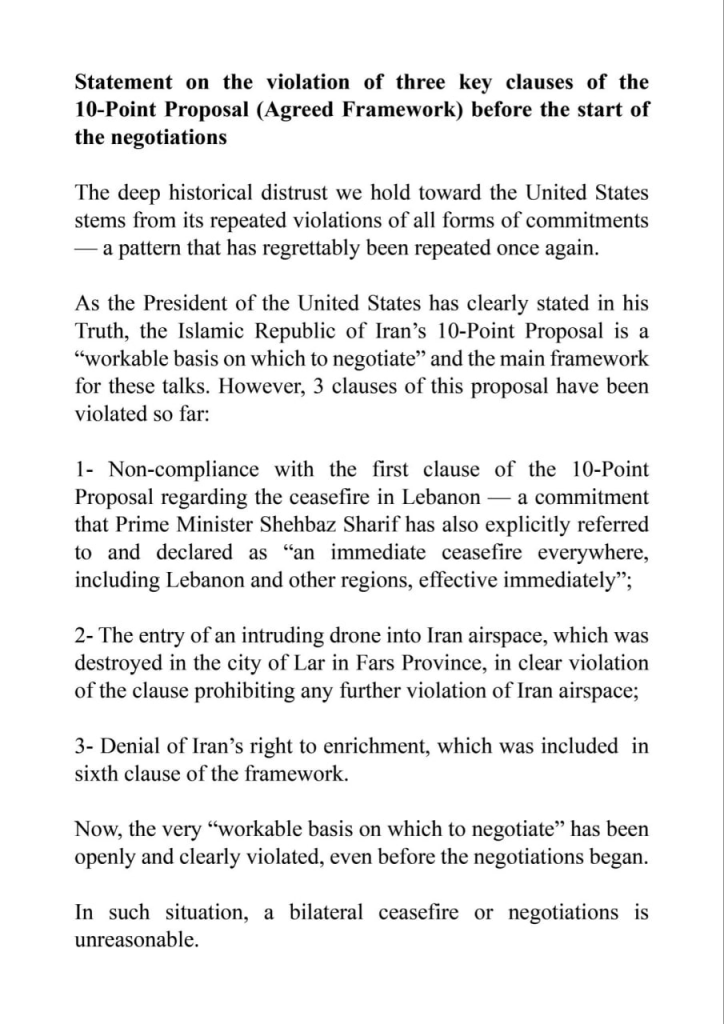
Iranian Parliament Speaker Ghalibaf said the deep historical distrust Iran held towards the United States stemmed from its repeated violations of all forms of commitments, a pattern that had regrettably been repeated once again: “As the President of the United States has clearly stated in his Truth, the Islamic Republic of Iran’s 10-point Proposal is a ‘workable bases on which to negotiate’ and the main framework for these talks.
Airstrikes were reported on Tehran and Karaj, with air defences active for more than 20 minutes, according to Mehr News, who stated that strikes also took place against Bandar Abbas and two strikes likely targeted the city of Isfahan. Later, it was reported the airspace had been invaded by Israeli drones, but Newsmax later said US military officials had told them no American strikes had hit Iran since the ceasefire began: “If anyone is striking Iran now, it isn’t our military.”
PM Netanyahu issued a statement claiming tremendous accomplishments had been achieved by fighters on the frontline as well as from the fighters [citizens] at the rear, noting that the Americans didn’t surprise officials with their decision on the ceasefire, adding that it wasn’t the end of the campaign, because negotiations were a stage on the way to achieving Israel’s goals. Netanyahu also claimed that Lebanon was not part of the ceasefire agreement, and on Wednesday Israel had submitted the hardest blow on Hezbollah since the beepers [September 17th-18th, 2024.]
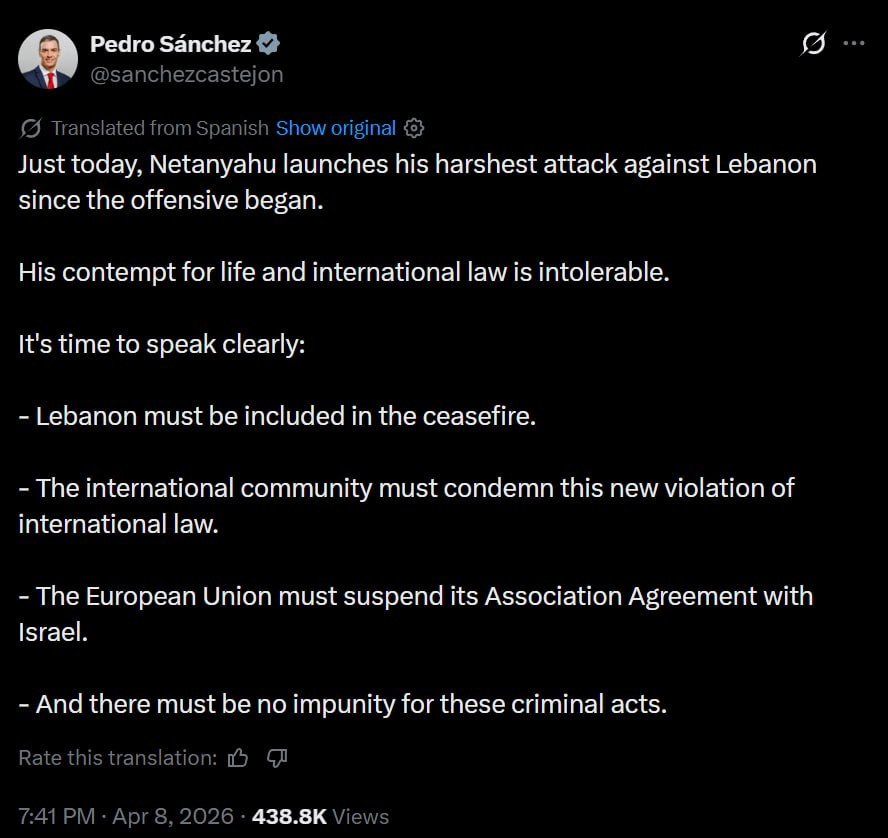
Spain’s Prime Minister Pedro Sánchez said on X that Netanyahu launched his harshest attack against Lebanon since the offensive began, noting that his contempt for life and international law was intolerable, adding that it was time to speak clearly, stating that Lebanon must be included in the ceasefire, the international community must condemn the new violation of international law, the European union must suspend its Association Agreement with Israel, and there must be no impunity for the criminal acts.
Italy’s government summoned the Israeli ambassador after the massacre on Lebanon which also injured a number of Italian UNIFIL forces.
An unhappy Saudi royal family source questioned what the conflict achieved if the current government isn’t overthrown, according to Israeli Channel 12, noting that religious leaders in Iran would return to develop a nuclear program they’ve already been working on for 20 years, as well as continue to develop missile capabilities – so why the war and why the loss of lives and resources?
Vice President JD Vance confirmed the Iranians thought Lebanon was part of the ceasefire agreement, but it didn’t, @alsaa_plus reported, stating the Israelis had shown restraint in Lebanon, that the Iranians must come to the negotiating table seriously, as well as take the next step, otherwise Trump has options to return to more, and the more concessions Iran makes to America, the greater the gains it will receive from the negotiations.
Other Ceasefire News:
US President Donald Trump announced the United States would work closely with Iran, which he said had undergone a ‘very productive regime change,’ stating there would be no enrichment of uranium, and that the US, working with Iran, would dig up and remove the buried nuclear material under satellite surveillance, adding that tariff and sanctions relief are being discussed, and that many of the 15 points had already been agreed.
Trump later warned any country supplying military weapons to Iran would face a 50% tariff on all goods sold to the United States, effective immediately, with no exclusions or exemptions.
Pakistan’s Army Chief General Asim Munir held a call with Iranian Foreign Minister Abbas Araghchi on Wednesday, in which Araghchi praised Pakistan’s ‘constructive and responsible’ role in efforts to end the war and promote regional peace and stability, with both stressing the need for continued coordination, and they also discussed reported ceasefire violations, which Iranian officials had attributed to Israel.
Iraq announced it would reopen its airspace to commercial flights from Wednesday, after the airspace had been closed since February 28, following comments from the Iranian-backed Iraqi militia stating they would adhere to any ceasefire agreement entered into by Iran.
Several explosions were reported on Iran’s Siri Island, with the cause of the situation unknown during the immediate aftermath, which came amid the declared ceasefire, and uncertainty arose surrounding the source of the blasts, but Iran’s armed forces stated that any violation or aggression would receive a ‘regret-inducing response,’ reported Mehr news agency.
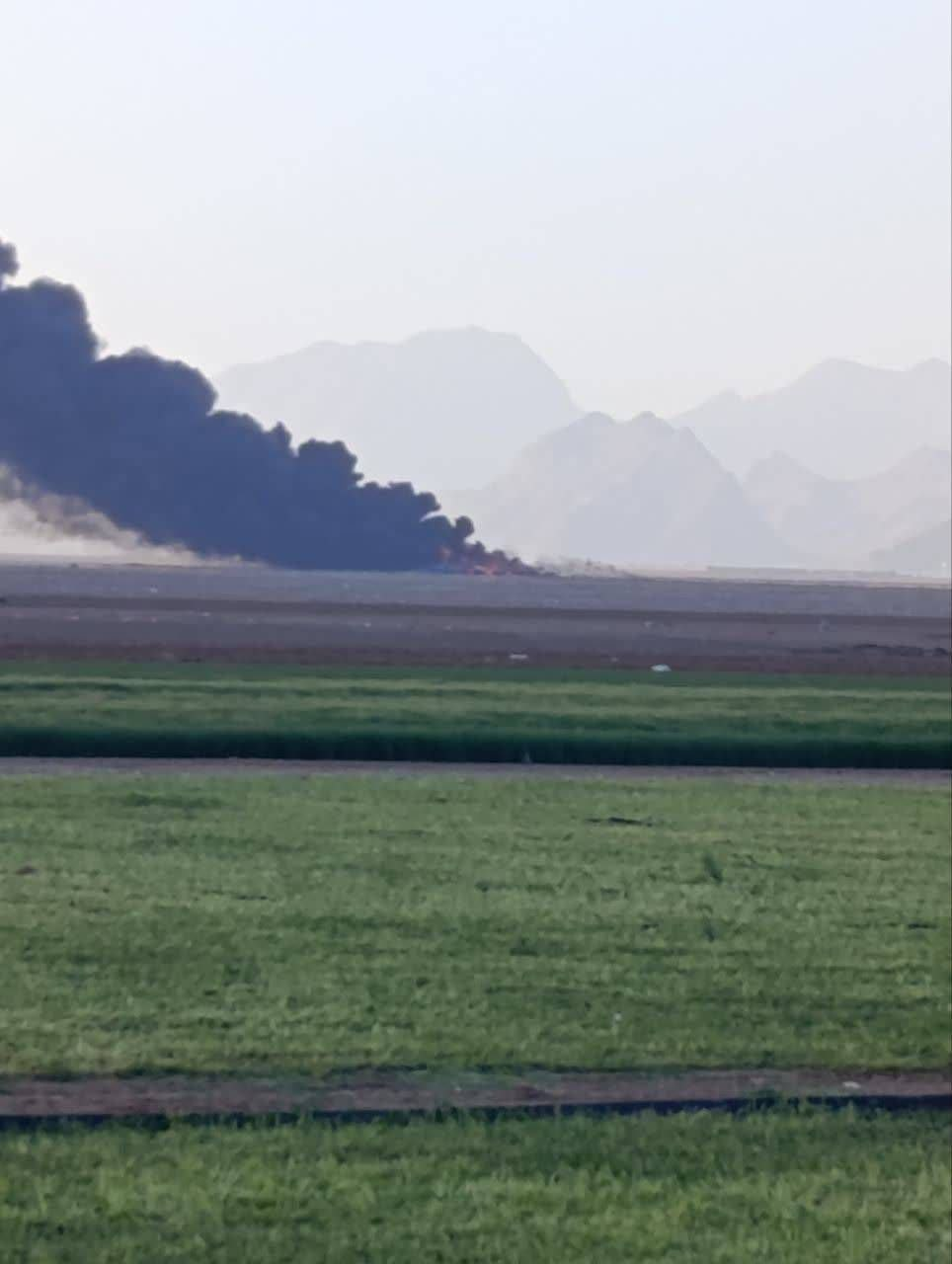
Iran’s National Oil Refining and Distribution Company announced that the Lavan Island oil refinery facilities on Siri Island in the Persian Gulf were attacked around 10am on Wednesday as firefighters and safety teams worked to control the blaze, with no casualties reported from the scene due to the timely evacuation of staff.
American and Israeli sources soon started to deny any involvement in the attacks, later confirmed by White House Press Secretary Karoline Leavitt, and images of a Mirage fighter jet captured by local residents in the morning over the skies of Siri seemed to suggest a local Gulf country that access to French Mirage jets, notably the UAE.
Soon after, Iran had started firing missiles and drones at the UAE, with 2 explosions reported in Fujeirah, which was a clear retaliation for the strikes on Siri, despite many claims it was Iran breaking the ceasefire, reported Iran’s state-run media IRIB news.
Iran confirmed later in the day that Mirage 2000-9 fighters, operated by the UAE, were behind the attacks on the Iranian refineries in the Persian Gulf earlier on Wednesday.
Kuwait’s army said it had also intercepted 28 drones aimed at the country since the morning, with some targeting oil facilities, others targeting power plants, causing heavy damage, which Iranian state television reported was carried out in a response to a strike on oil refining facilities on Iran’s Lavan Island in the Persian Gulf by Kuwait and UAE.
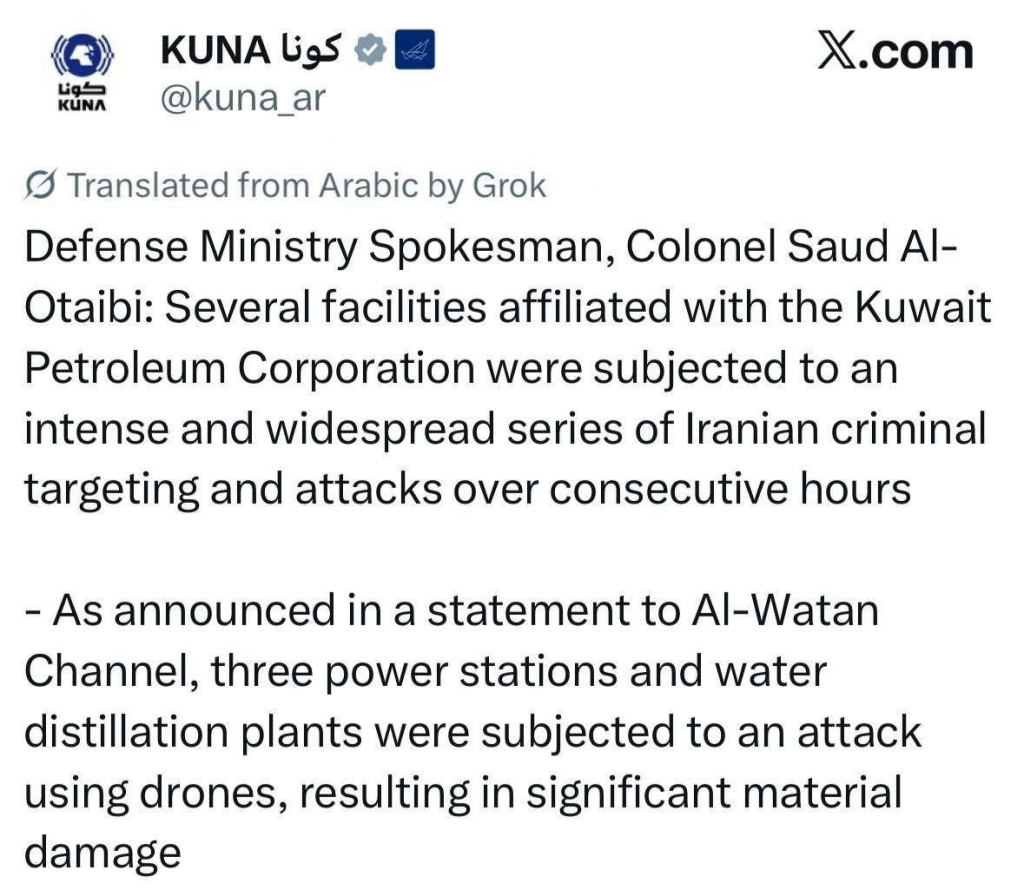
Defence Ministry Spokesman Colonel Saud Al-Otabi stated on X that several facilities had been subjected to intense and widespread targeting and attacks over consecutive hours, while a statement to the Al-Watan Channel claimed three power stations and water distillation plants were subject to an attack using drones, causing significant damage.
UAE’s Ministry of Defence announced the air defences had engaged 17 ballistic missiles and 35 drones that had been launched at the country from Iran in the previous 24 hours.
Saudi Arabia’s east-west oil pipeline, which carries crude oil fro the Gulf of the Red Sea, was hit by a drone attack at a pumping station, just hours after the US and Iran had agreed to the ceasefire, and Saudi Aramco declined to comment while the damage was still being assessed, reported the Financial Times. Saudi Arabia later announced they’d successfully intercepted nine drones within just a few hours on Wednesday morning.
Qatar’s Ministry of Defence stated they were attacked by seven Iranian ballistic missiles and several drones within the previous 24 hours.
According to Fars News Agency, a security military source said that Iran was finalising plans for a deterrent operation against Israeli military positions in Israel in response to Israel’s violations of a temporary ceasefire, including an attack on Beirut, stating that Tehran believed either the US cannot control Netanyahu or Centcom has given Israel freedom of action.
UN Secretary-General spokesperson Farhan Haq confirmed the UN Secretary-General’s Personal Envoy, Jean Arnault, had arrived in Iran, visiting the embattled country as part of a regional diplomatic mission aimed at supporting efforts to reach a comprehensive and lasting resolution to the conflict, and acting on the Secretary-General’s instructions, Arnault is engaging with Iranian officials to hear their views on the path forward while reinforcing the UN’s commitment to facilitate a peaceful settlement.
Kan News was told by an Israeli source that Israel assessed the ceasefire could become permanent leading to a broader agreement between the US and Iran, possibly including Iran giving up their enriched uranium stored underground: “The ceasefire was forced on us,” said the source, adding that once it became clear it would happen, Israel asked President Trump to separate Lebanon from the deal – “and it happened.”
Qatar stated that Iran must pay compensation for all the damages to the Gulf country, according to the Qatari Ministry of Foreign Affairs.
Egypt’s Foreign Ministry said the agreement between America and Iran must be reflected in Israel’s cessation of its attacks on Lebanon.
Pope Leo hailed the ceasefire as a ‘sign of great hope.’
Israeli Channel 11’s Roy Kays said: “The Israeli attack before 19:00 in Beirut targeted the nephew and secretary of the Hezbollah Security General, Naim Kassem.”
French President Emmanuel Macron wasn’t happy last night after hearing about the latest attacks from Israel, stating that France would act to protect Lebanon, without offering more of an explanation as to what the French would do to aid the country.
Strait of Hormuz:
Iran’s Navy told ships anchored near the Strait of Hormuz that they would require Iran’s permission to cross, warning any vessel that attempted to transit without permission ‘would be destroyed,’ reported the Wall Street Journal, stating that Iran sent the message broadcast hours after President Trump’s agreement to a two week ceasefire with Iran, conditional on the strait being reopened ‘completely, immediately and safely.’
Tolls are due to be demanded in cryptocurrency for laden tankers that pass through the Strait, the FT reported, citing a spokesperson for the state-backed Oil, Gas and Petrochemical Products Exporters’ Union, noting that each tanker must email cargo details, after which Iran would set a toll of $1 per barrel to be paid in Bitcoin within a few seconds to avoid sanctions, while empty tankers can pass freely.
President Trump told ABC News that the US was thinking of setting up a joint fund with Iran to collect tolls for ships passing through the Strait: “It’s a way of securing it – also securing it for lots of other people,” Trump said, calling it ‘a beautiful thing.’
Iran’s Armed Forces General Staff said it will intelligently manage and control the Strait with initiative, warning that all movements of the ‘American and Zionist’ enemies were being monitored, and any new mistake would be met with a more destructive response, while reiterating that Iran poses no threat to regional countries and urged Muslim nations to cooperate in expelling the US military, which it called the main source of insecurity in the region.
Omani Minister of Transport Saeed bin Hamoud Al Mawali reported that no fees are going to be charged for their vessels crossing the Strait: “We have signed all maritime transport agreements that stipulate no fees on passage through the Strait of Hormuz.”
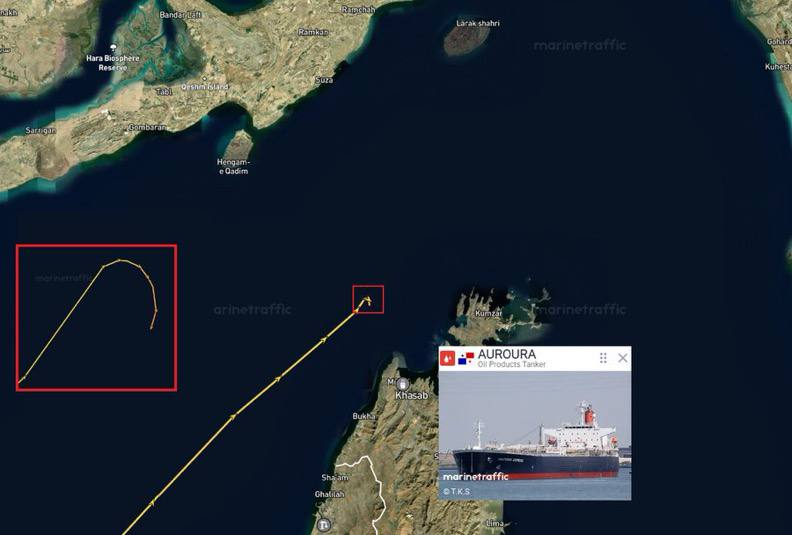
An oil tanker which hadn’t obtained position from Iran to pass through the Strait was turned back by Iran’s IRGC Navy, which confirmed the waterway had been closed, as per Tasnim News previous reports.
Iraqi news channel Naya reported that four ships were allowed to pass through the Strait on Wednesday, the lowest number so far in April, citing S&P Global, noting that more than 20 hours had passed since Iran was supposed to immediately open the Strait, but failing to announce the closures which Tasnim news reported following the attacks by Israel which killed more than 250 people in Lebanon on Wednesday.
Fars News Agency also confirmed shortly after the Naya report that Iran had closed the Strait to 99% of vessels as a result of the Israeli strikes on Lebanon.
An attack by Israel on Tuesday targeted the city of Kashan in central Israel which damaged the railroad connecting Iran to Xinjiang, which is notably the Iran-Xinjiang railroad line that China uses as a land-based alternative to obtaining oil while the Strait was closed.
Ceasefire Talks:
Iranian Parliament Speaker Mohammed Bagher Ghalibaf will head the Iranian delegation for the upcoming talks with US Vice President JD Vance, Envoy Steve Witkoff and Jared Kushner in Islamabad, reported Al-Alam, but Tasnim said the appointment wasn’t final, noting an official source said the Supreme National Security Council is still reviewing all aspects, and Iranian Deputy Speaker Ali Nikzad warned that if the US doesn’t accept Iran’s ten conditions, the Supreme Leader wouldn’t allow a permanent deal to be signed.
US President Trump said he expected in-person talks to happen in Pakistan ‘very soon,’ according to the New York Post, but noted that Trump said Vice President JD Vance may not attend due to the security concerns currently in the region.
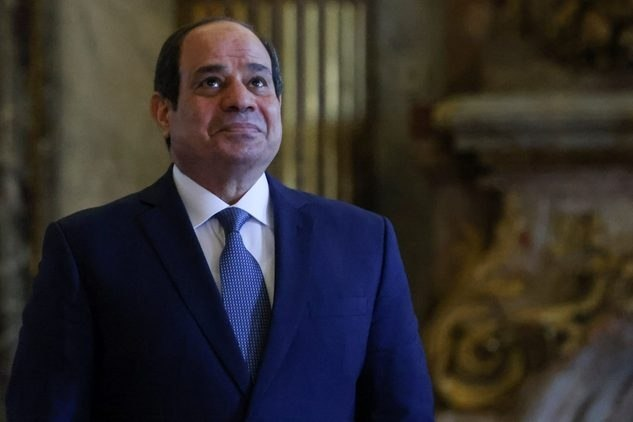
Egyptian President Abdel Fattah el-Sisi welcomed the ceasefire talks, expressing hopes that the positive development would lead to a permanent agreement to end the war and restore regional security and stability, praising President Trump’s decision to listen to the voice of reason and called on all parties to engage seriously in negotiations to achieve a lasting peace.
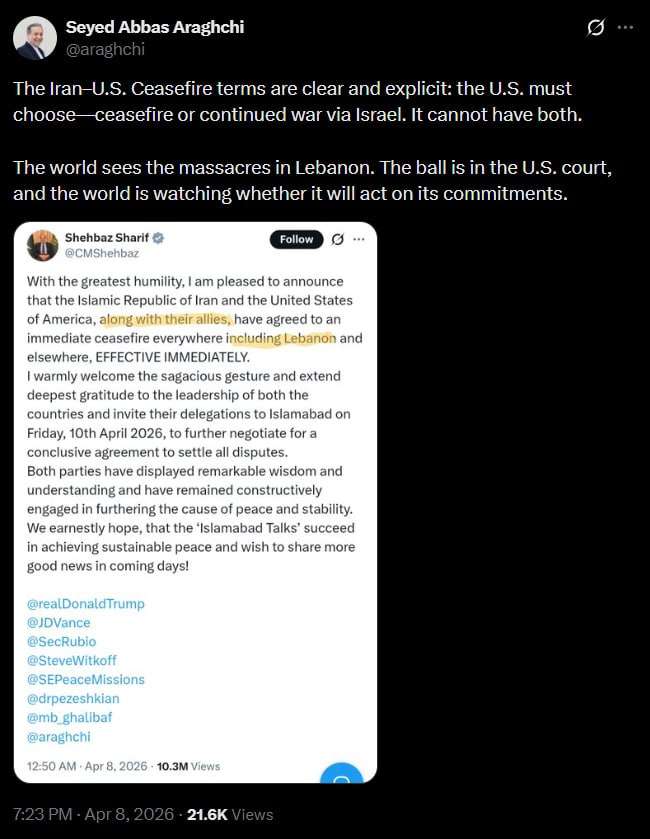
Iran’s FM Araghchi issued a post saying that the ceasefire terms were clear and explicit, so the US must either choose a ceasefire or a continued war with Israel, because it couldn’t have both, noting that the world saw the massacres in Lebanon, and the ball was now in the US court as the world was watching to see whether it would act on its commitments.