
 AJ
AJ
Israeli Media stated that an Iranian missile successfully struck a target in the South of Israel at around 3:30am, but according to Israeli media the censorship wasn’t giving away any details, however this was around the same time that a missile was reportedly launched at Dimona.
Iraqi militia attacks continued on the US Victoria Base in Baghdad over the night of March 20 into March 21, and was struck multiple times with drones, as alleged footage circulated showing a fire that had broken out at what was believed to be a logistics hub for the US Embassy alongside the Baghdad Diplomatic Support Centre.
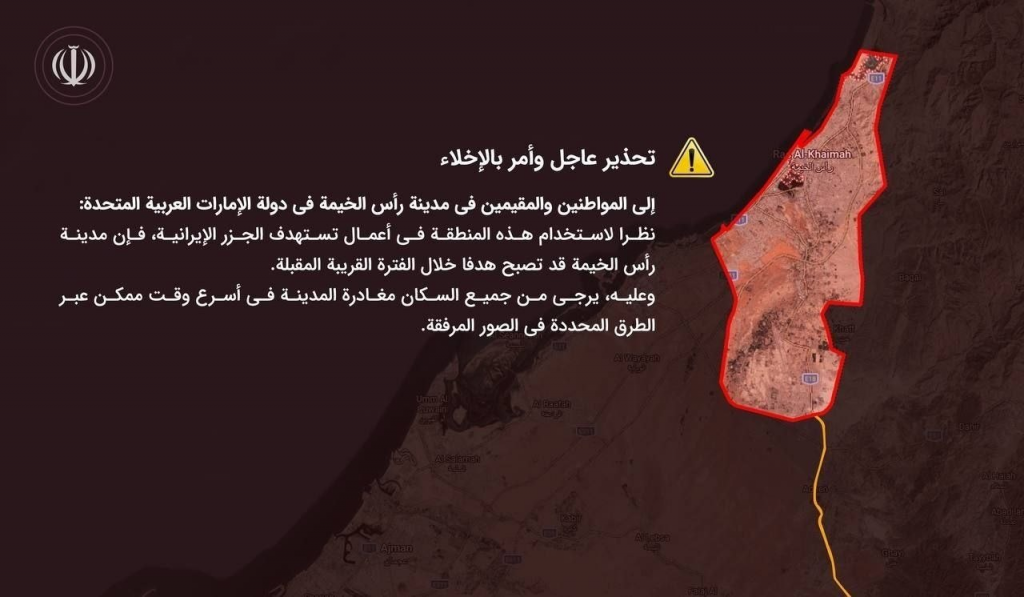
Iran issued an evacuation in the early hours of the morning for the entire 200,000-strong city of Ras al-Khaimah in the United Arab Emirates, saying that given the area is being used for operations targeting Iranian islands, the city of Ras Al-Khaimah had become a target during the upcoming period, asking all residents to leave the city as soon as possible.
Iranian Foreign Minister Abbas Araghchi said that Iran was ready to facilitate the passage of Japanese vessels through the Strait of Hormuz, having confirmed that ongoing talks with Japan had been held on the issue.
CBS reported that the Trump administration was exploring options to secure or extract Iran’s nuclear materials as the war entered an uncertain phase, noting that planning had reportedly focused on the potential deployment of forces from the Joint Special Operations Command, a highly classified US military unit that conducts sensitive counter-proliferation missions, but no final decisions had been made.
Footage captured from the border of Iraq showed interceptions efforts taking place over Kuwait as explosions were heard in the background, so whether there were any direct impacts remained unclear initially.
NATO Supreme Allied Commander Europe General Grynkewich announced that NATO personnel in Iraq would be relocated from Iraq, noting that the last departure took place on Friday, and thanking Iraq for their support in the process, reassuring that NATO Mission Iraq would continue to work from Joint Force Command Naples.
UN Secretary General António Guterres said that the UN was engaging with key actors to help de-escalate the Iran war and explore mechanisms to safeguard navigation in the Strait of Hormuz, stating that the UN was prepared to help manage a system that reduced attacks and ensured stability in the waterway, drawing on past efforts like the Black Sea Grain Initiative to maintain secure maritime corridors.
Iran fired two intermediate-range ballistic missiles at the Diego Garcia military base in the Indian Ocean, a joint US-UK facility, officials told the WSJ, which came less than eighteen hours after the UK authorised its use for attacks on Iran, and Araghchi responded by saying the UK was making a grave mistake.
Residents of western and north-western Tehran reported hearing explosions before power outages occurred as a result of Israeli airstrikes in the early morning of March 21, while reports suggested a media IRGC site in Chitgar was targeted during the airstrikes.
Iraq declared force majeure on oilfields operated by foreign company’s after military activity linked to the war in Iran severely disrupted navigation through the Strait of Hormuz, Reuters reported, stating the oil ministry said the security situation had effectively halted crude exports, as tankers are unable to transit the waterway, which would normally carry around 20% of global oil and LNG supplies.
Storage capacity units had reached their limits, forcing authorities to scale back production, noting that Production at Basra Oil Company had been cut sharply to about 900,000 barrels per day from over 3 million, with output redirected to domestic refineries as exports from southern ports remain suspended.
At least five explosions were heard in the western city of Ahvaz from what was likely an Israeli rather than an American strike on the city yesterday morning, as a smoke cloud seen by residents was captured in images and shared to news outlets.
The Israeli Air Force later announced that they had carried out large-scale strikes in Tehran overnight, hitting dozens of sites linked to the Iranian ballistic missile program, in which targets included a central IRGC complex for producing missile components, a storage site for those components, a defence ministry facility for rocket fuel production, and an additional ballistic missile components manufacturing site, while several air defence systems deployed across Tehran were also struck.
Airstrikes hit Popular Mobilisation Units (PMU) headquarters in Salah al-Din province in Iraq, in an attack that killed one fighter and wounded others, as the PMU blamed the United States and Israel, but there had been no official confirmation on who had launched the attack.
Reuters confirmed that America had issued a temporary licence allowing the sale of Iranian crude oil and petroleum products already loaded onto ships as of March 20, valid until April 19, in a measure limited to oil currently in transit and does not permit new purchases or production, which should help alleviate global supply pressures.
Axios journalist Barak Ravid responded to US Treasury Secretary Scott Bessent saying that the US move could allow Iran to receive roughly $14 billion in oil revenue, describing it as a significant financial concession, after Bessent had said the US is ‘winning’ against Iran through Operation Epic Fury and framed Tehran as a central threat, while Ravid highlighted the contrast between that messaging and the decision to allow limited oil sales.
Reuters reported that the Pentagon is set to make Palantir’s Maven AI system a permanent part of US military operations by designating it a ‘program of record,’ which ensures long-term funding and widespread adoption across all branches, embedding, AI-driven targeting and command systems as a core element of US military strategy.
Iranian President Masoud Pezeshkian said Islamic countries are not in conflict with Iran, adding that the only beneficiary of divisions is Israel, while calling for unity among Muslim nations on the occasion of Eid al-Fitr and emphasised cooperation to strengthen solidarity.
Iran’s Atomic Energy Organisation said the Natanz nuclear facility had been targeted this morning in a US-Israeli attack, adding that no radioactive leakage occurred due to precautionary measures and described the strike on the uranium enrichment complex as a violation of the Nuclear Non-Proliferation Treaty, as KAN Israel cited a source familiar with the details stating the US carried out the strike using heavy bombers and bunker-busting munitions.
Footage from other airstrikes showed a large explosion had occurred and thick smoke rising following a reported attack on an ammunition depot in Dezful and Andimeshk in Iran’s Khuzestan province.
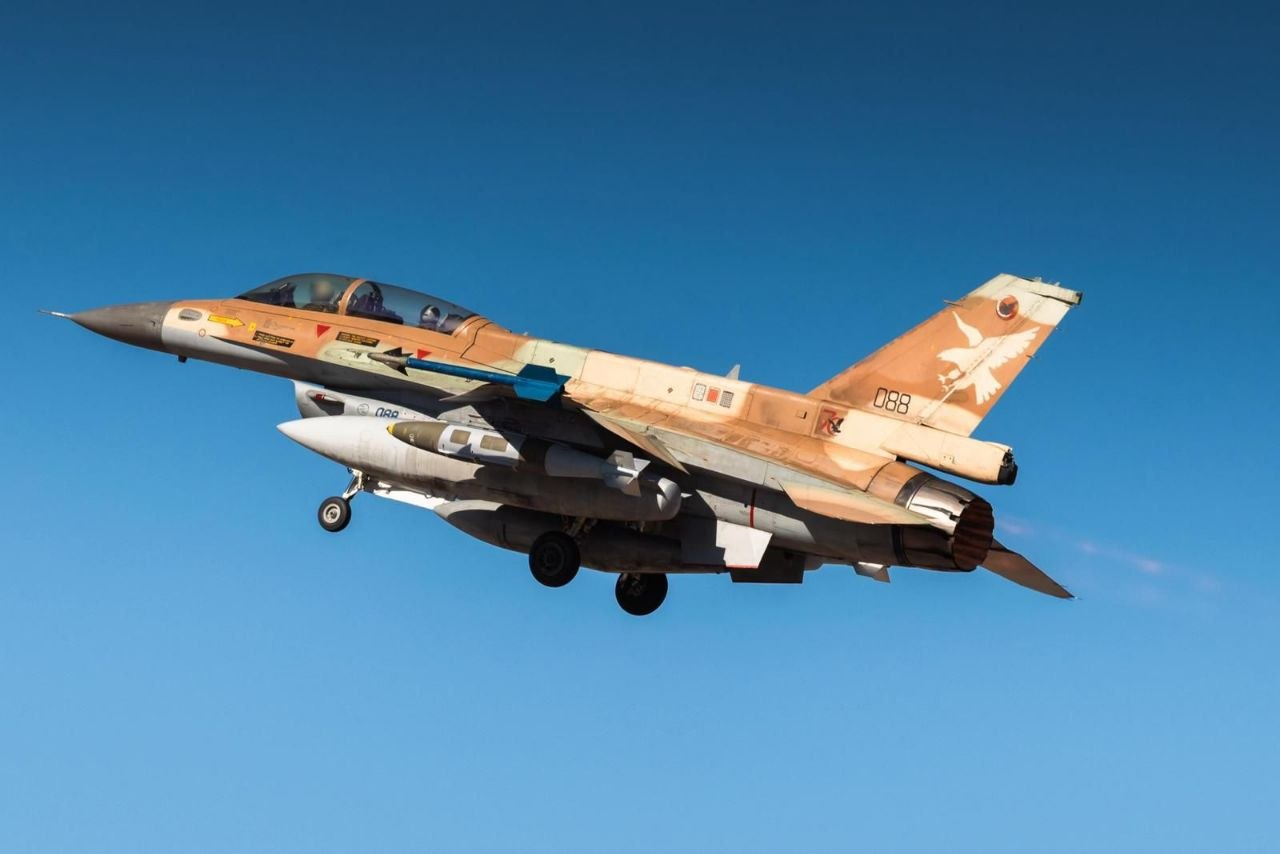
According to the IDF, a surface-to-air missile was launched at an Israeli Air Force fighter jet during an operation over Iran, noting that the crew followed procedures and evaded the missile, so no damage was reported and the mission was completed as planned, while the IRGC reported the attempted interception of an F-16 with advanced air defence systems at 03:45 early Saturday morning.
An Iraqi security source said a drone struck Iraqi intelligence headquarters in Baghdad, noting the site was cooperating with US advisers, and the report came amid continued attacks by pro-Iranian militias, with claims that NATO forces have withdrawn from Iraq in the past 24 hours.
The Iraqi National Intelligence Service later confirmed that the perimeter of its Bagdad headquarters was targeted in a ‘terrorist attack’ carried out by entities outside the law, resulting in the death of an officer, adding that the agency vowed to pursue those responsible and bring them to justice, but they did not confirm or deny the presence of US or coalition advisors.
The Iraqi electricity ministry announced the gradual resumption of Iranian gas supplies, with 5 million cubic metres being pumped today, the first since the flow had been temporarily halted after strikes on Iran’s South pars field, prompting the ministry to use domestic gas and oil alternatives, but with Iranian gas now returning the national grid has stabilised to 14,000 megawatts.
Israeli Defence Minister Israel Katz said the intensity of strikes would significantly increase in the coming days, adding that the IDF and US military intended to carry out attacks against the Iranian regime and the infrastructure it relied on.
UK is examining contingency plans to ration petrol and diesel if disruption continues in the Strait of Hormuz, reported The Times, stating that measures under review included purchase caps and restricting stations to emergency and critical services.
The Jordanian Army told Al Jazeera that it had intercepted and destroyed 222 missiles and drones out of 240 launched from Iran since the beginning of the war.
CIA and Mossad intelligence agencies were still trying to determine whether Iran’s new Supreme Leader Mojtaba Khamenei was actually in charge, three weeks after his father’s killing, because he hasn’t appeared in any video, only a written Nowruz statement was released, and a lot of speculation still surrounds his current condition.
US and Israeli intelligence believe Khamenei is alive, but officials who have tried to arrange in-person meetings were unsuccessful due to security concerns, meaning they had no proof that he was exercising his authority, while the assassination of de-facto leader Ali Larijani last Tuesday widened the power vacuum, which Israeli officials claimed was being filled mainly by the IRGC.
A senior Iranian official told Tasnim News that Trump’s suggestion of reducing military tensions does not reflect the situation on the ground, stating that Tehran didn’t trust Trump’s statements on ending military aggression, while adding that Iranian assessments showed no tangible change in the level of US military activity in the region, and the official described the remarks as psychological warfare aimed at influencing markets amid heightened tensions in the Strait of Ormuz, so Tehran had concluded it couldn’t give Trump a ‘simple lesson or temporary response’ but rather a ‘historical lesson.’
Iranian President Masoud Pezeshkian held a phone call with Indian Prime Minister Narendra Modi, in which Modi was informed Iran didn’t start the war, because the attack had come during nuclear negotiations and resulted in the death of the supreme leader and senior military commanders.
Masoud stated that an immediate halt to the aggression and guarantees against future attacks were prerequisites to ending the conflict, while responding to Trump’s claims by saying that the killed Khamenei opposed nuclear weapons and issued religious edicts to that effect, blaming the Israeli’s for destabilising the region through assassinations along with attacks on Lebanon, Gaza, Iraq, Qatar and elsewhere.
Footage published yesterday afternoon showed US airstrikes that had been targeting Isfahan, including a rare glimpse of a Tomahawk missile seen flying through the air towards the city located southeast of Tehran.
Tasnim News reported that an Iranian military source warned if the United States attempted to invade Kharg Island, it would face an ‘unprecedented response’ compared to the surprises of the past 21 days, adding that insecurity in other straits, including Bab el-Mandeb and the Red Sea was an option for the resistance front, warning that the situation would become ‘much more complicated for the Americans than it is today.”
The IDF posted a report as evening approached, stating that the Air Force had carried out five near-simultaneous strikes on a missile storage and launch site in western Iran, noting that the strikes targeted multiple infrastructure points within a large-scale ballistic missile array, acting on intelligence to disrupt preparations for attacks against Israel and other regions, while adding missile array operators were killed at the site as part of ongoing efforts to degrade Iran’s long-range capabilities.
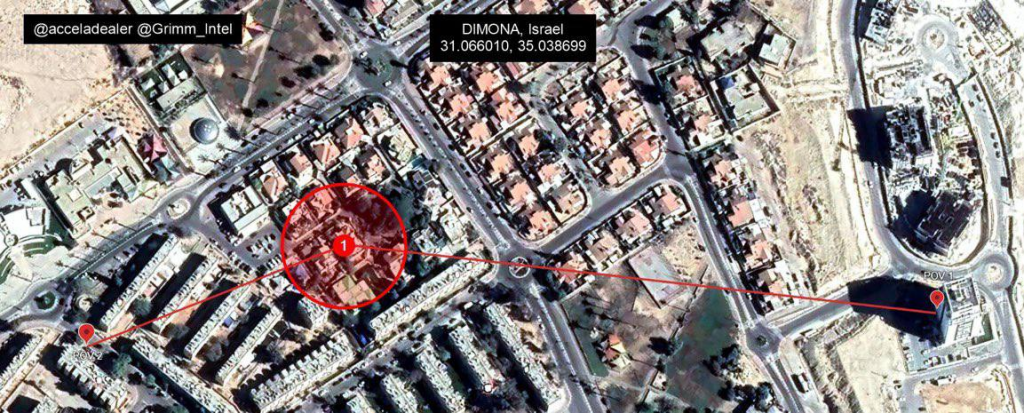
An attack by Iran targeted the area of Dimona in southern Israel that hosts the country’s main nuclear facility, widely believed to produce plutonium for an undeclared nuclear weapons programme estimated at 80-400 warheads, built in the 1960s with French assistance and central to Israel’s policy of nuclear ambiguity, which came after Israeli airstrikes had targeted Iran’s Natanz nuclear facility earlier in the day.
Initial reports from the scene noted multiple casualties, later clarified to be 59 people who had suffered injuries as a result of the direct impact, while a 10-year-old boy and a 40-year-old woman had been moderately injured, but by the evening the number had risen to 47 injured, according to Israeli Channel 12, as media channels speculated the missile hit an area around 12km from the Dimona nuclear facility.
Soon after the Dimona attack, the IDF claimed a 450kg Iranian missile hit Arad directly following several interception attempts, resulting in three buildings being completely destroyed, other buildings being damaged, and videos circulated from CCTV footage showing how close some locals had come to serious harm.
Magen David Adom spokesperson stated that the casualty count from the direct impact in Arad resulted in 88 people being evacuated to hospitals, 10 in serious condition, 19 in moderate condition, 15 with minor injuries and four suffering from anxiety, along with 11 people who died, while initial reports suggested more than 200 people had suffered injuries, with some given medical assistance at the scene.
Following the attack on Dimona, the Speaker of Iran’s Majlis Mohammed-Bagher Ghalibaf stated that if the Israelis regime failed to intercept the missiles in the heavily fortified area of Dimona, it will be an operational sign of entering a new phase of the battle, because the skies of Israel are defenceless, noting that as a result, the time had come to implement the next pre-planned phase.
Israeli Prime Minister Benjamin Netanyahu said it was a difficult evening in the battle for Israel’s future, noting that the PM had spoken with the Mayor of Arad, Yair Maayan, asking him to convey prayers on behalf of all Israeli citizens for the safety of the wounded, while instructing the Director General of the PMs office to provide full assistance together with all government ministries, and that Israel was strengthening the emergency and rescue efforts currently operating in the field, calling on everyone to obey the Home Front Command’s instructions.
The Deputy Director of Soroka Hospital described a complex evening following the missile strikes on the south, stating the first incident in Dimona brought 59 casualties into hospital, with one in a serious, one moderate, and the rest mild conditions, but the immediate strike on Arad afterwards forced the hospital to declare a mass casualty event, as 80 casualties from Arad were admitted to hospital, including at least seven in a serious condition (children included), around ten in moderate condition and the remainder suffered fro mild injuries or anxiety.
Israeli Defence Ministry stated the military heart was with the residents of Arad and Dimona last night, adding that air defence systems were activated but didn’t intercept the missile, so the incident was under investigation and lessons would be learned, as well as clarifying that it was not a special or unfamiliar type of munition used in the warheads.
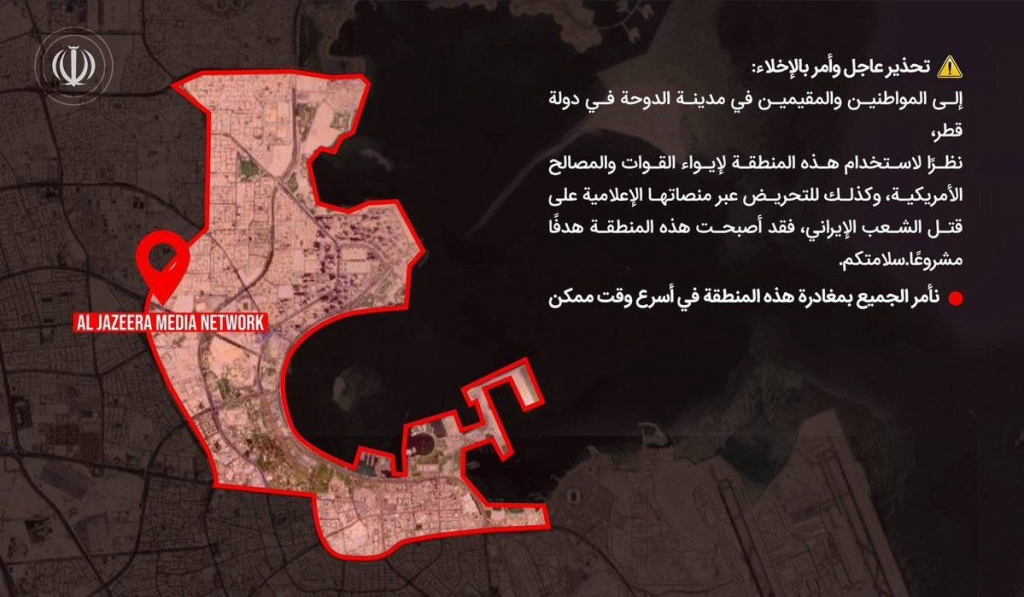
An evacuation notice similar to that issued for UAE was given for Qatar’s capital Doha, a city of 1.2 million people, but Iran’s state media IRIB denied the country issued an evacuation order for Qatar, while other reports suggested that Iran media had later retracted the alert.
Saraya Awliya al-Dam Military Spokesman Abu Mahdi al-Jaafari stated the group’s doctrine was clear: Whether the US or Iraq strikes the group, it will still only strike the United States, adding that the resistance had given precious blood to preserve the Shiite authority, and therefore refused to target diplomatic missions because such attacks harmed Iraq’s standing.
Abu Mahdi al-Jaafari urged political forces to exploit the resistance’s victories to end US hegemony over Iraqi decision-making, especially as America is ‘at its weakest,’ while also criticising the Security Media Cell for rushing to issue statements blaming the resistance before facts have been established.
According to an Axios report, the Trump administration was beginning to plan for potential peace talks, though fighting is expected to continue for several more weeks, but the US hoped Iran would agree to strict limits, including halting uranium enrichment and reducing missile capabilities, conditions which Iran has rejected in the past, while Iran demands a ceasefire, guarantees against future attacks, and compensation, terms which Trump also rejects.
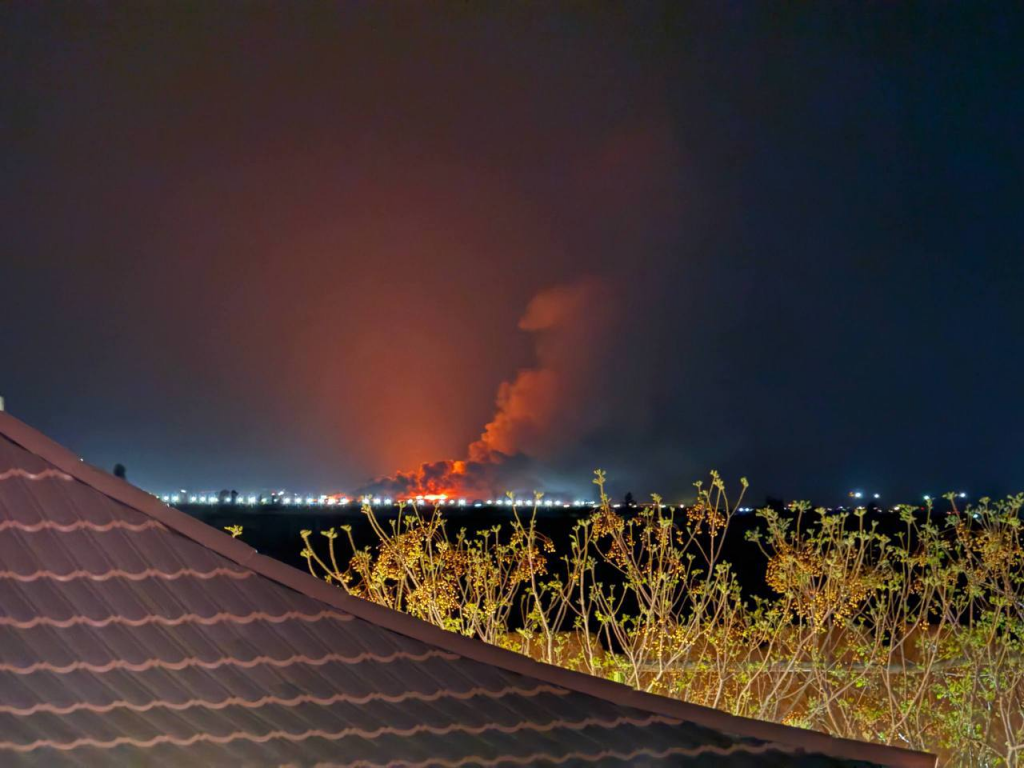
Images captured by locals from Rafsanjan in south-eastern Iran showed a largescale fire on the horizon as reports suggested it a warehouse had been struck earlier in the day and had been burning for several hours.
KAN News reported last night that the US and Israel were preparing for a major escalation of the war with Iran, potentially beginning as early as next week and expected to last several weeks, noting that the USS Gerald R Ford has returned to full operational service following a fire and repairs, as Israel estimated Trump intended to take control of the Strait of Hormuz by force.
Iran issued demands for ending the war last night, which included guarantees not to repeat the war, the closure of all US military bases in the Middle East region, the US and Israel to pay full compensation to Iran, the US and Israel to end wars on all fronts in the region including pro-Iranian groups, impose a new legal regime on the Strait of Hormuz, and hand over elements from ‘hostile media’ to Iran.
Trump blasted NYT journalist David Sanger on Truth Social last night, saying that the United States had blown Iran off the map, but Sanger said that Trump hadn’t met the initial goals of the operation, so Trump claimed that all the goals had been met weeks ahead of schedule, taking out the leadership, the navy and air force were dead, and there was absolutely no defence in Iran, once again insisting that they want to make a deal.
In another Truth Social last night, it appeared Trump had finally found a way to get the Strait of Hormuz opened without backup from NATO or European/Gulf countries, by saying: “If Iran doesn’t fully open, without threat, the Strait of Hormuz, within 48 hours from this exact point in time, the United States of America will hit and obliterate their various power plants, starting with the biggest one first!”
Saudi Arabia declared the Iranian military attaché, his assistant and three other embassy staff members persona non grata, ordering them to leave the Kingdom within 24 hours, in a move that is the latest diplomatic escalation following the repeated attacks on Saudi territory and the broader regional war, and the decision reflects Riyadh’s hardening stance towards Tehran as the conflict enters its fourth week, with Gulf states increasingly isolated by Iranian strikes on their energy infrastructure and shipping lanes.
The President of Cyprus Christodoulides held a phone call with British Prime Minister Starmer to discuss regional tensions and de-escalation efforts, in which Starmer reaffirmed that the Cyprus’ security is fundamental and confirmed that additional preventive measures would be implemented, while reiterating that its bases wouldn’t be used for offensive military6 operations.

A lot is going on right now. I will read this report tonight as a part of daily breifing. President Donald J Trump