 AJ
AJ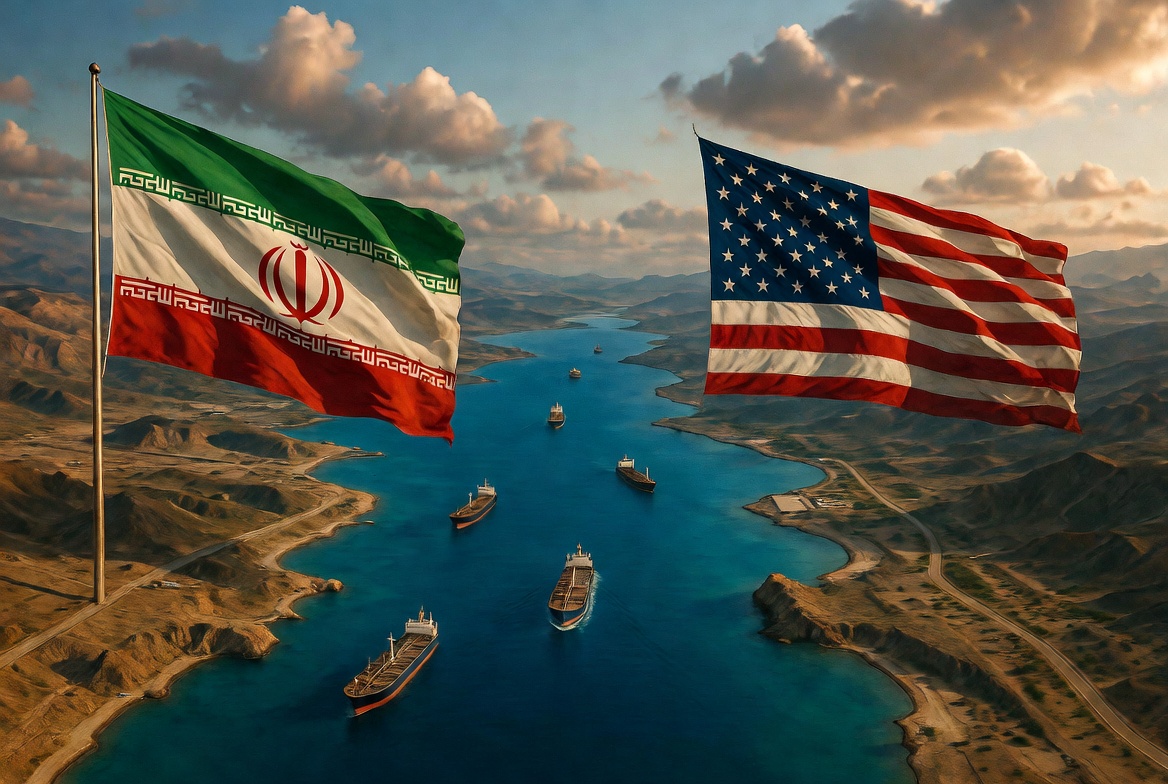
US President Donald Trump officially launched ‘Project Freedom’ to help ships in the Strait of Hormuz navigate through the waterways without paying tolls, despite warnings from Iran that this would be a contravention of the ceasefire agreement, while ships in the Strait during Sunday had been intercepted or attacked, others had been ordered to move from a port near the UAE, and other news from Iran, USA and around the world in relation to the consequences of the US/Israel Iran War.
Project Freedom:
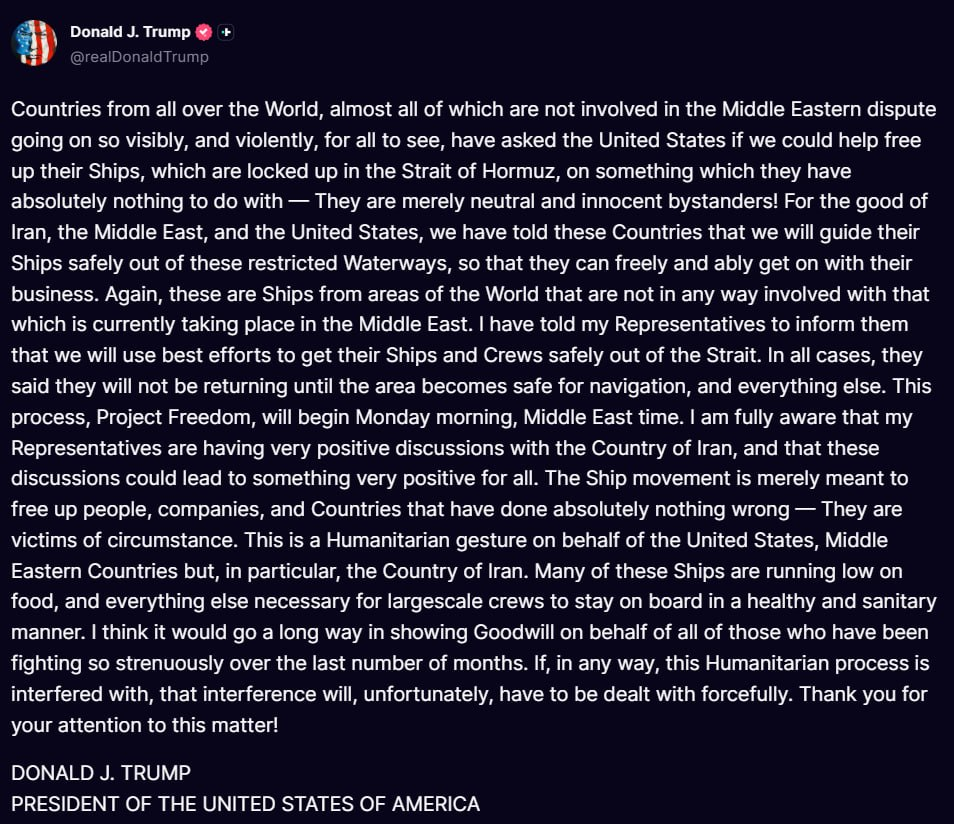

President Donald Trump announced that the US was launching ‘Project Freedom’ to guide neutral countries’ ships through the Strait of Hormuz starting on Sunday morning, describing it as a humanitarian mission while warning that any interference would have to be ‘dealt with forcefully.’
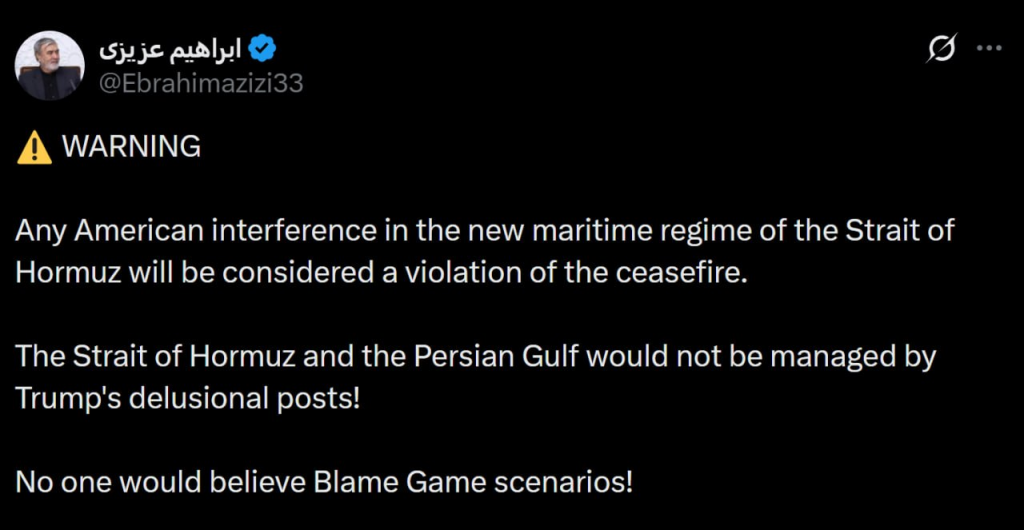
Head of the Iranian Parliaments National Security Commission Ebrahim Azizi issued an immediate warning: “Any American interference in the new maritime regime of the Strait of Hormuz would be considered a violation of the ceasefire,” adding that no one would believe ‘Blame Game scenarios.’
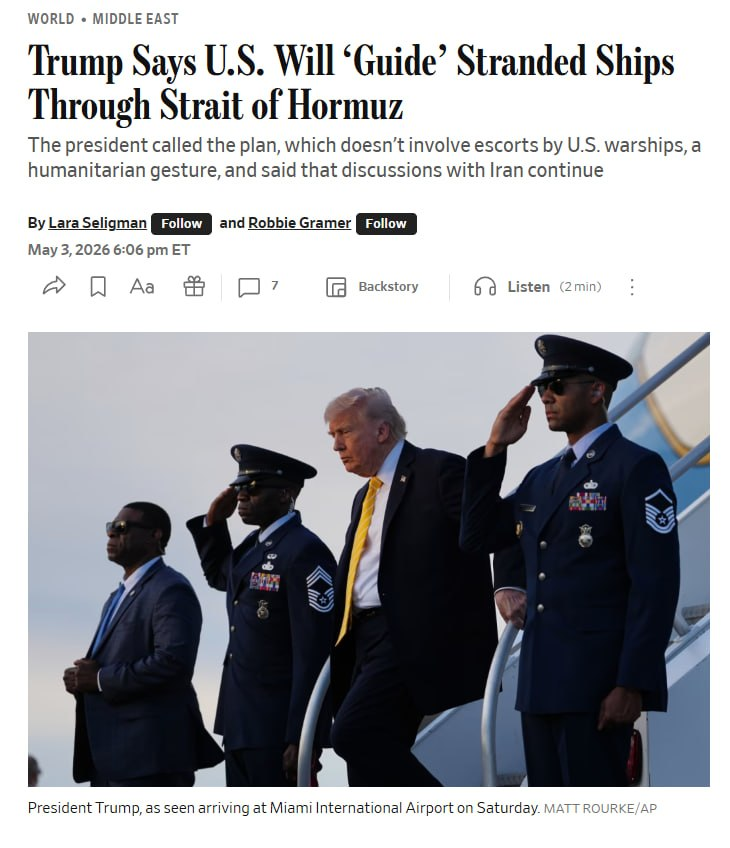
Project Freedom ‘is a process for countries, insurers, and shipping groups to coordinate vessel movement through the Strait of Hormuz,’ a senior US official told the WSJ, stating the initiative set to begin Monday morning didn’t include US Navy escorts, focusing instead on organising safe passage through coordination.
Axios reported that the new initiative wouldn’t necessarily involve American naval vessels directly escorting commercial ships, claiming an official said US navy ships would remain ‘in the vicinity’ to intervene if needed or to prevent Iranian forces from attacking vessels transiting the strait, while CNN said a US official clarified that Project Freedom is not intended to be an escort mission.
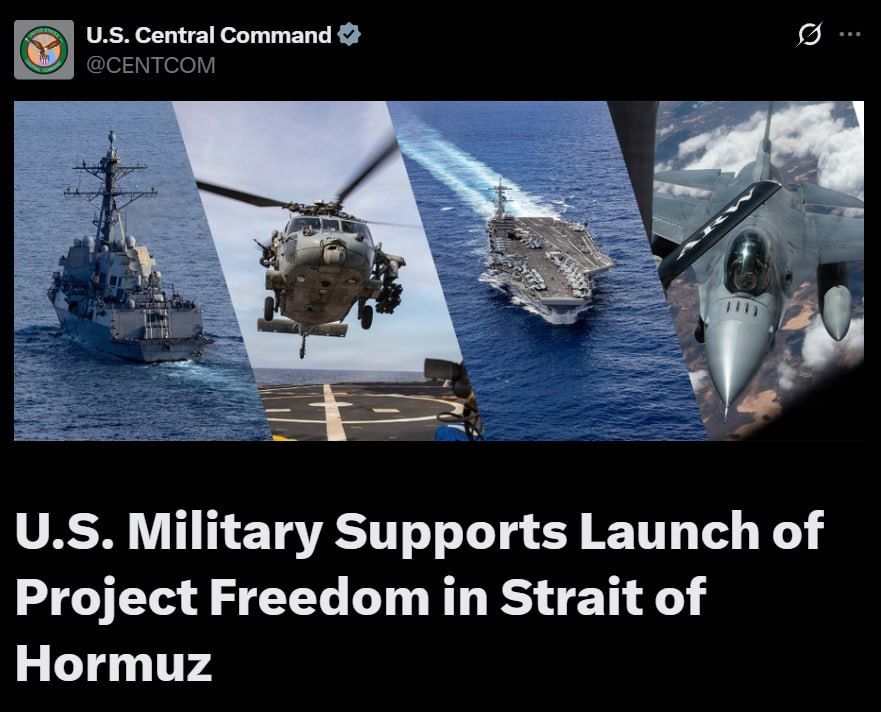
Central Command appeared to clear things up on X, stating that the forces would begin supporting Project Freedom on May 4 to restore freedom of navigation through the Strait of Hormuz, in a mission that has been directed by the President to support merchant vessels seeking to freely transit through the essential international trade corridor, stating that the Maritime Freedom Construct aimed to combine diplomatic action with military coordination, which would be critical during the Project, adding that the US military support would include guided-missile destroyers, over 100 land and sea-based aircraft, multi-domain unmanned platforms, and 15,000 service members.
Negotiation News:
Qatari news outlet Al Jazeera had been fairly accurate with Iranian reports in recent weeks, with a focus on Iran coming just before the US ceasefire was announced, and as the world waited for news from Iran or the United States in relation to the proposals and negotiations, Al Jazeera was the first to publish a report in the early evening, claiming to have access to the details of the plan.
According to Al Jazeera, the Iranian proposal to end the war included three stages, which included turning a ceasefire into a complete end to the war after at least 30 days, with an international body to prevent fighting, as well as mutual Iran-US non-aggression commitments covering Iran’s regional allies and Israel, along with the gradual reopening of the Strait of Hormuz and lifting of the US port blockade.
The second stage would call for a full freeze on uranium enrichment for up to 15 years, while Iran would resume enrichment after this time at a limit of under 4%, acceptable under IAEA conditions for energy use, while the proposal allegedly rejected dismantling nuclear infrastructure and included sanctions relief.
Al Jazeera alleged that the third stage of the proposal called for a dialogue between Iran and the Arab and regional community to build a region-wide security system.
However, Iranian officials including Foreign Ministry Spokesperson Esmaeil Baghaei soon started publishing to the Iranian television and social media that the claims made by Al Jazeera were from a previous proposal issued around 20 days ago, noting that the nuclear issue isn’t even up for discussion, while stating that the US had returned a 9-point proposal on Friday and Iran had returned a 14-point proposal on Saturday.
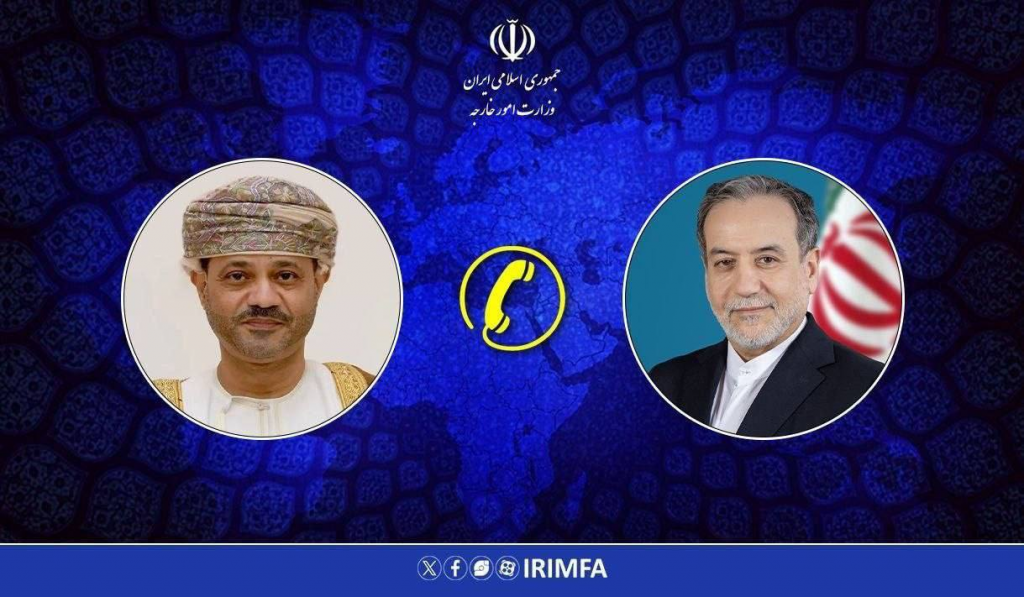
Phone calls had been taking place between Iranian Foreign Minister Abbas Araghchi and various counterparts around the world, discussing regional and international developments, as well as the latest efforts and diplomatic initiatives of Iran to end the war and provocations in order to establish peace in the region, speaking on Sunday to Omani Foreign Minister Sayed Badr al-Busaidi, German Foreign Minister Johann Wadephul, Pakistan Foreign Minister Ishaq Dar, Brazilian Foreign Minister Mauro Vieira, and Spanish Foreign Minister José Manuel Álvarez.
IRGC’s intelligence service said on Sunday that Iran granted the Pentagon a final deadline to lift the blockade, claiming China, Russia and Europe had changed their tone towards Washington, along with Trump’s ‘impulsive’ letter to Congress, and said that there is only one explanation for what has been happening, which is a decision that Trump needed to make: “An impossible military operation or a bad deal with the Islamic Republic of Iran,” they said.
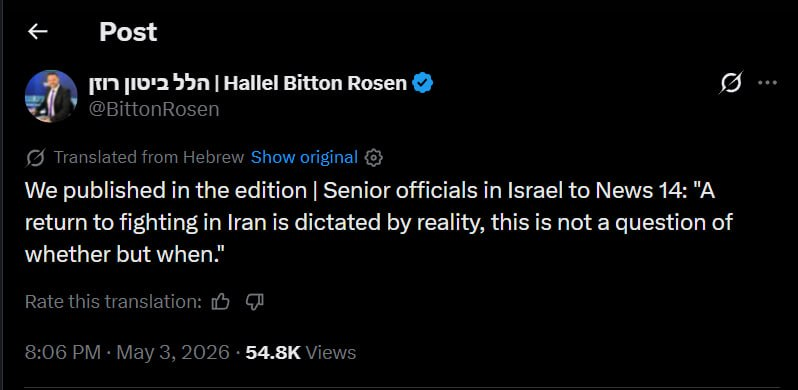
As the day passed, Israeli media became fearful that a deal was coming or that the war was over, as Axios and Channel 12 began publishing news that officials had informed them a return to war was ‘imminent,’ N12 reporting that the Israeli security cabinet met for more than 3 hours to discuss the Iranian issue, while Kan News, Israel Hayom and Channel 14 appeared to reshare a tweet issued by a broadcaster claiming that they had spoken to officials.
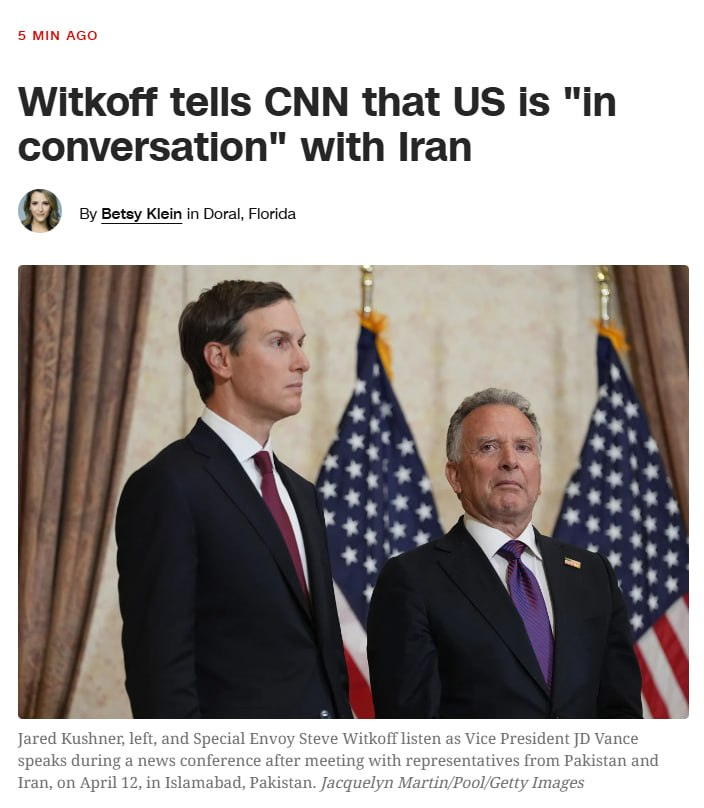
Messages were being passed back and forth via mediators in Pakistan, and Iranian Foreign Ministry Spokesperson Esmaeil Baghaei said that the American’s had responded to Iran’s 14-point plan through the Pakistani side and were reviewing it, before claims by CNN that Special Envoy Steve Witkoff had been making calls to Iran directly to discuss the proposals, and Fars News Agency reported that the proposal had been updated at least three times, noting Iran had fundamentally refused the proposal at this time.
Strait of Hormuz:
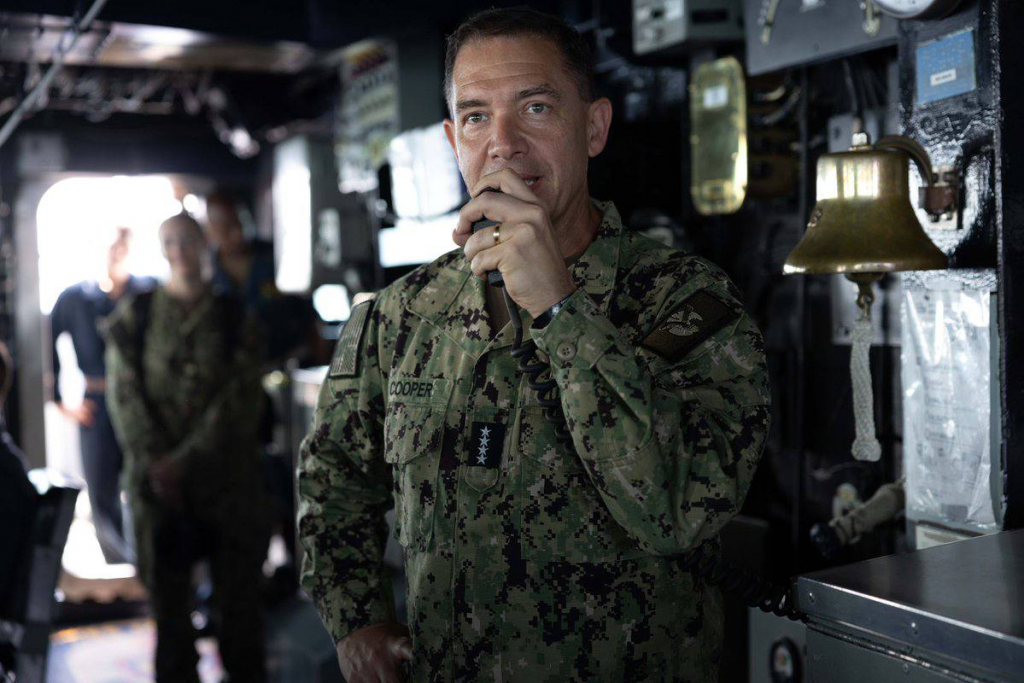
Admiral Brad Cooper of US Central Command visited the USS Milius (DDG 69) on May 2, as the guided-missile destroyer patrolled regional waters in support of the US blockade operations in Iran, and while on board, Cooper interacted with Sailors and addressed them on the 1MC while highlighting the importance of the ongoing mission, before publishing to social media that the US had turned around one more Iranian vessel on Sunday, taking the total to 49 commercial vessels since the start of the blockade.
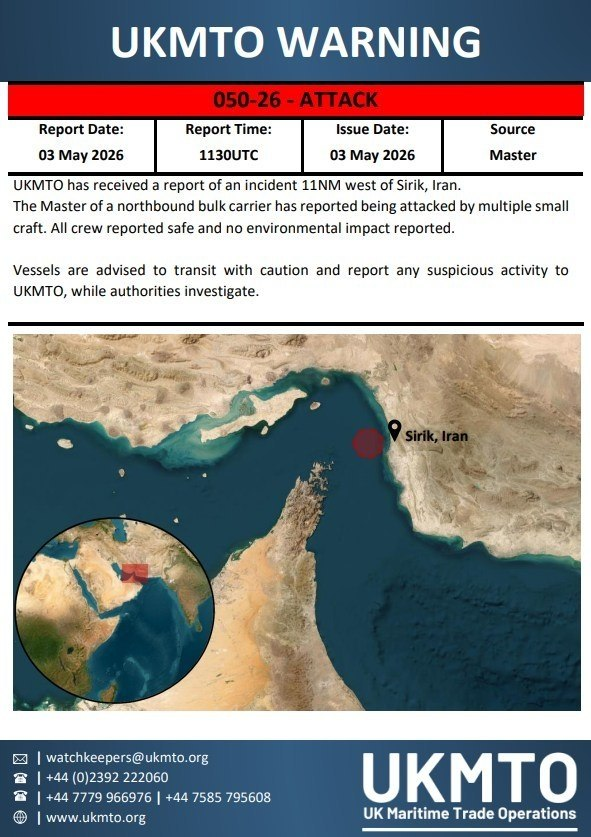
UKTMO reported an attack on a northbound bulk carrier that was 11 nautical miles west of Sirik, Iran, stating the master reported the vessel was attacked by multiple small craft, but all the crew was safe and there was no environmental impact.
Fars News Agency followed up about the reports that the vessel had been seized and was told that a passing ship was stopped by the order of the Iranian Navy to check the documents, and this action was carried out as part of supervisory procedures.
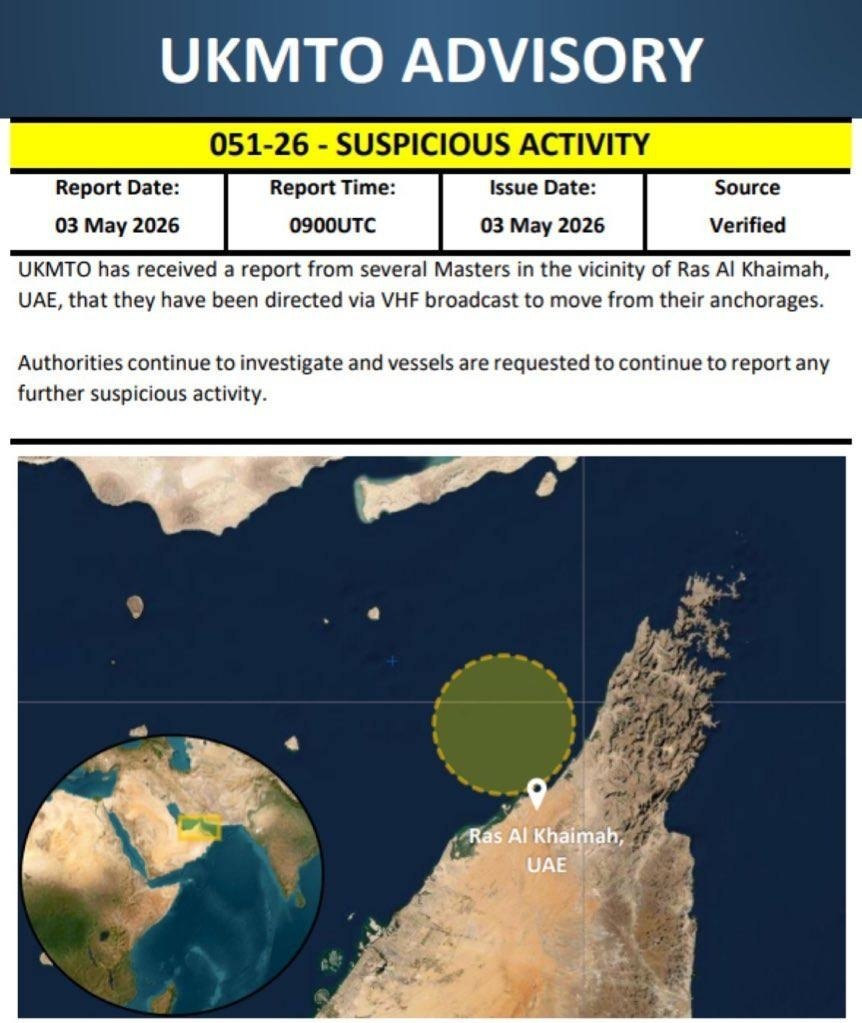
Another warning was issued soon after for suspicious activity that had been noted around the waters of Ras Al Khaimah, UAE, after several captains reported receiving unknown communications warning via VHF radio them to move from their anchored positions or face the consequences.
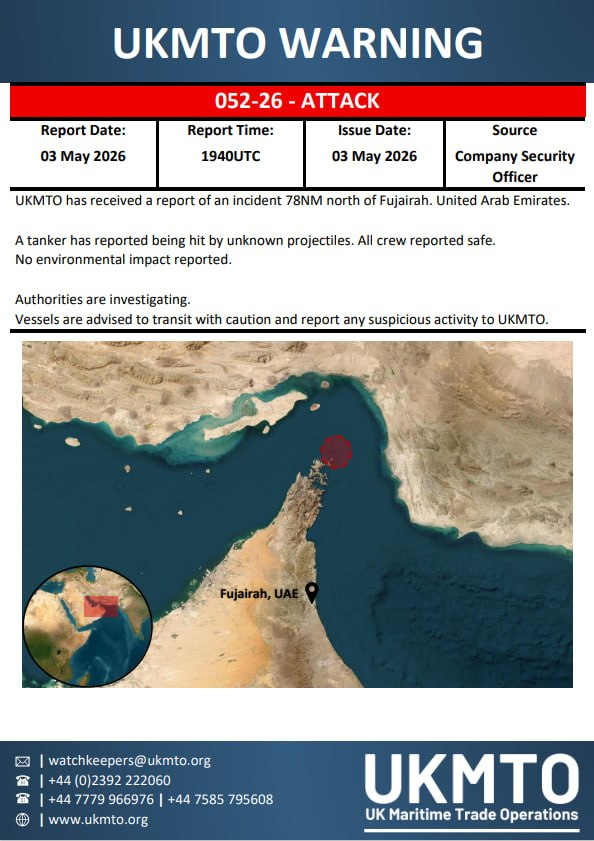
UKTMO reported in the early hours of Monday morning that an oil tanker was hit by unknown projectiles 78 nautical miles north of Fujairah, UAE on Sunday evening, noting the crew was safe and there was no environmental impact reported.
Guidance to mariners was issued by UKTMO in the Strait of Hormuz after the announcement of Trump’s Project Freedom, with mariners warned to expect increased naval presence, heightened security measures, possible VHF hailing and congestion near anchorage areas, with guidance including continuous monitoring of VHF Channel 16, maintaining AIS transmissions in line with company policy, and exercising caution regarding potential mines or other threats along transit routes.
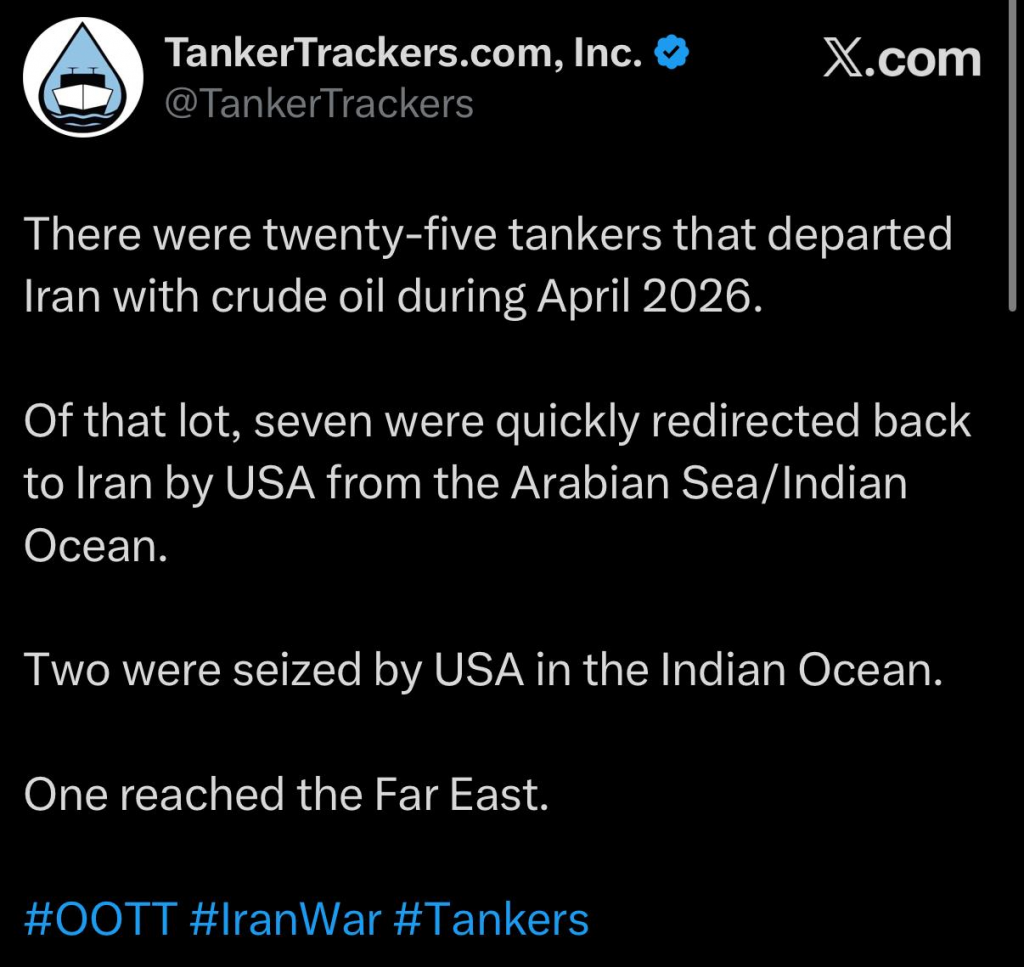
Tanker Trackers reported that there were 25 Iranian oil tankers in April that attempted to cross the Strait, noting that 7 were turned back, 2 were seized, and 1 delivered to port, while claiming that meant 16 vessels had successfully made it past the blockade.
Deputy Parliament Speaker Ali Nikzad said in an interview that the Strait of Hormuz would never return to its pre-war status, adding that the new law will permanently bar the US and Israeli vessels while imposing transit tolls on all other international shipping, PressTV reported.
The Iranian vessel Touska that was seized for attempting to breach the US naval blockade has been transferred to Pakistan for repatriation to Iran, along with its crew, a Centcom spokesman told ABC News, stating the US Forces transferred 22 crew members to Pakistan, while six others had already been transferred to a ‘regional country for repatriation last week,’ adding that custody of the ship is now being ‘transferred back to its original ownership’ after its interception in April.
USA News:
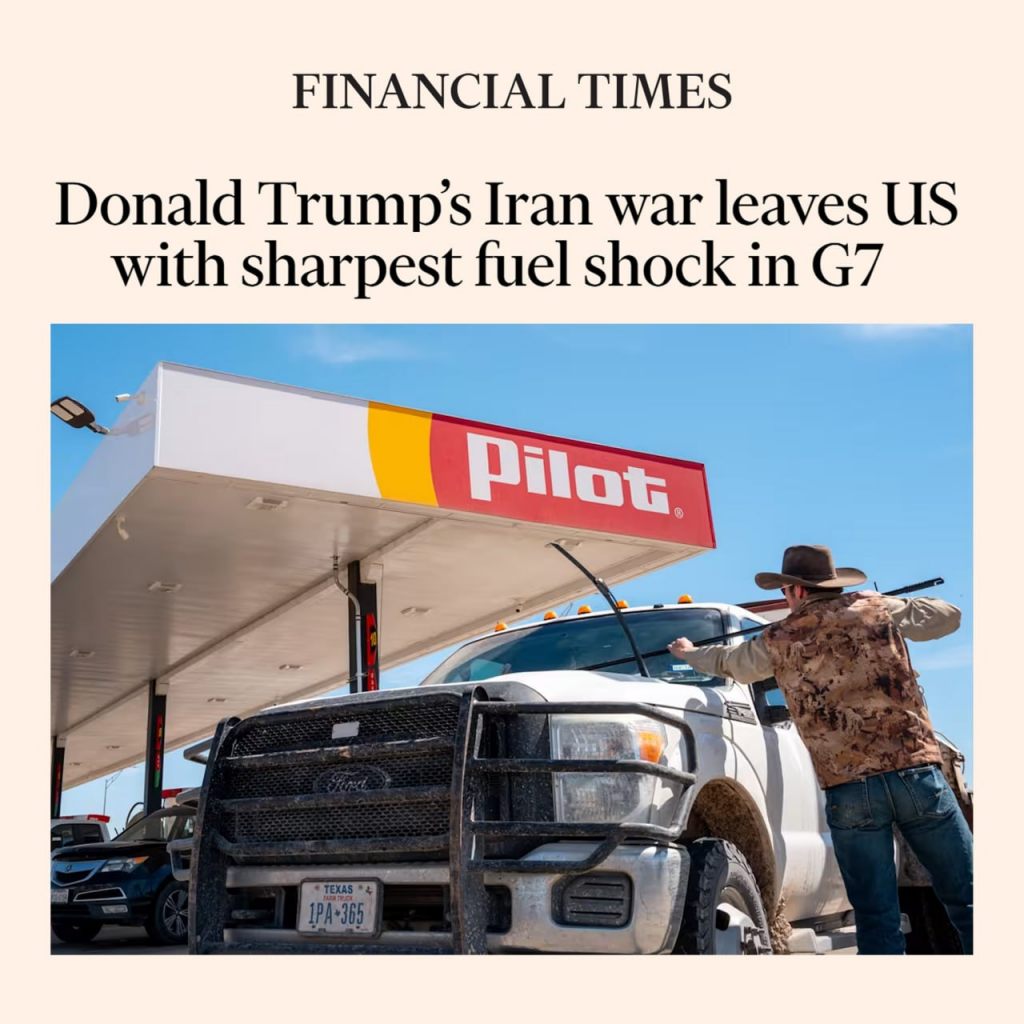
The US has experienced the harshest oil shock among the G7 countries due to the war against Iran, according to the Financial Times, stating that gasoline and diesel prices are rising faster in the US than other economies such as UK and Canada.
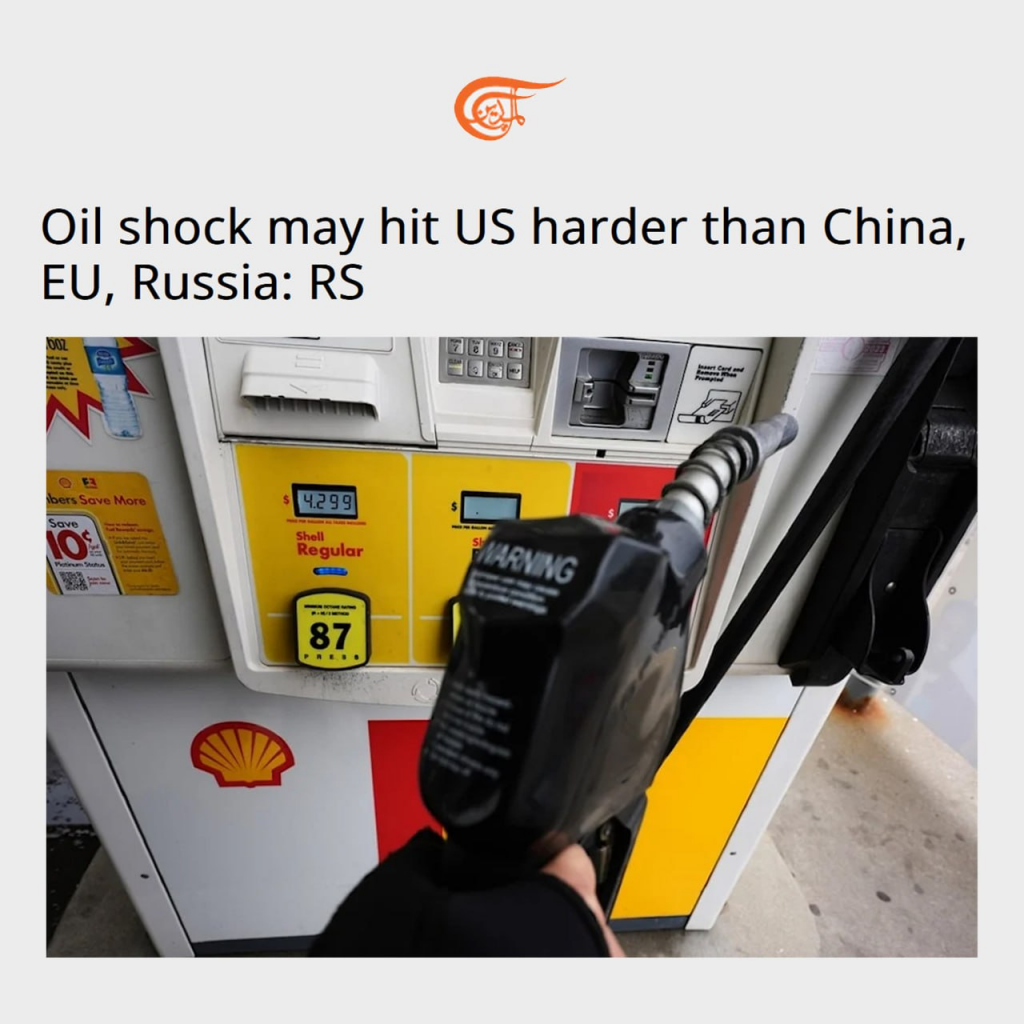
According to Al Mayadeen, the impact of the oil shock on the US would likely be greater than on China, Europe and Russia, noting that the US remained an importer of crude oil and its refineries were designed for specific types of oil, which reduces its flexibility, whereas China have a more diversified network of energy suppliers and centralised planning, allowing a greater ability to simply absorb or adapt to supply shocks.
Automotive companies in Detroit have warned about worsening consequences due to the war, stating the war will cause a $5 billion shock in goods costs, as General Motors, Ford and Stellantis announced: “The war has put pressure on supply chains for raw materials ranging from plastics and paint,” warning that rising inflation of goods have caused manufacturing costs to increase, which will lead to higher car prices in the United States.
Israeli news channel Haaretz said that Trump was angry that Iran wasn’t surrendering after several weeks of no progress in negotiations, claiming frustrations were growing in Washington over Tehrans refusal to stop uranium enrichment, while intense military and economic pressure hasn’t caused Iran to back down from its core positions, including nuclear enrichment, adding that Trump’s options have become limited, meaning he must either enter into negotiations and back down, or choose a path of military escalation that could spread the war through the region.
Iran News:
Ambassador to Pakistan Reza Amiri told IRNA that Tehran had been clear and transparent in its position and demands, while the negotiations depended on Washington, warning that Washington must change its policies if it sincerely seeks to resolve issues and open the door to negotiations, adding that Pakistan was still the mediator, and Iran had not made any decision regarding changing this.
Pakistan have now opened the new land trade routes to Iran amid the Hormuz blockade, allowing Iran to ship via land and avoid the maritime navigation disruption caused due to the tensions in the Strait, and the measure includes the establishment of six trade corridors that link major ports to border crossings, allowing the transport of goods under customs supervision.
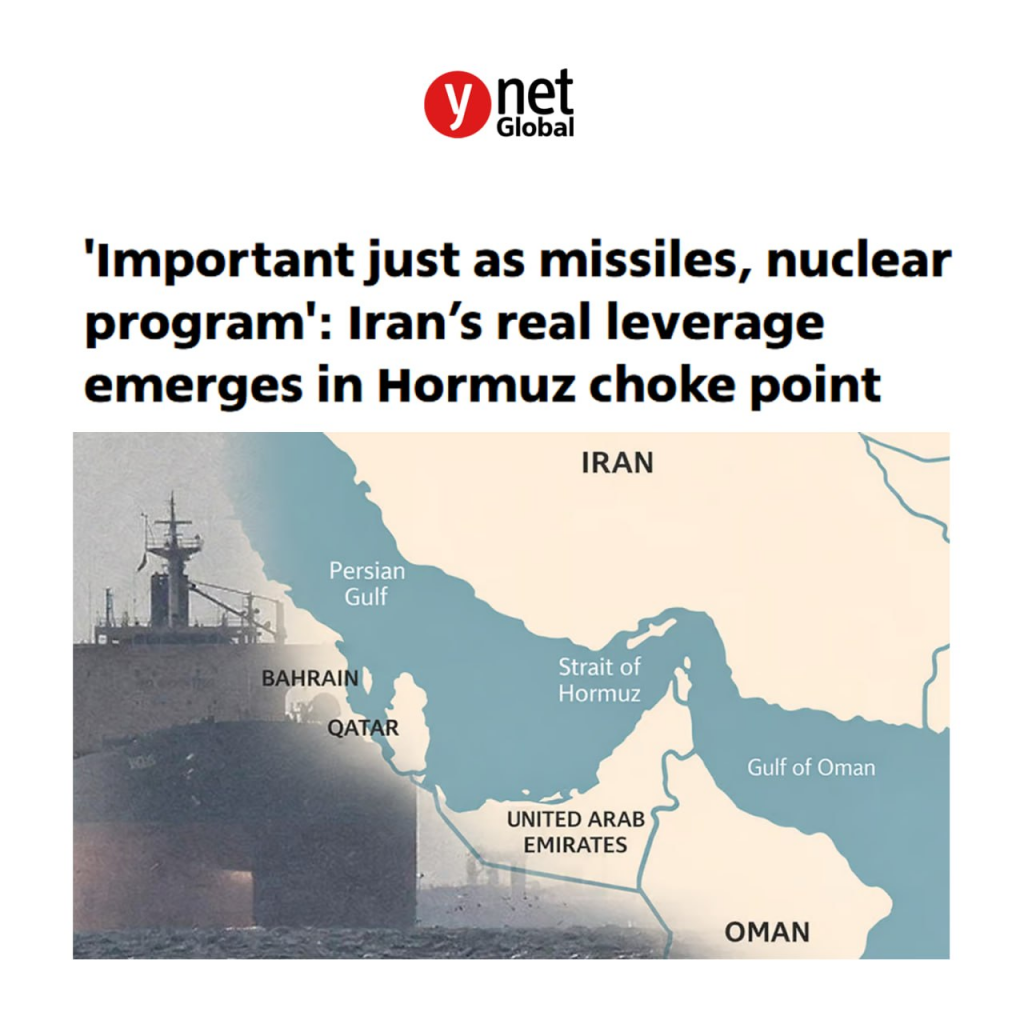
Yediot Ahronot reported that despite heavy damages, Iran maintained its control over the Strait of Hormuz, restricting the passage of ships and imposing costs on some passages, claiming Iran’s influence over the vital route had become as significant as its missile or nuclear program.
Russian President Vladimir Putin said the Iranian people had showed extraordinary courage and bravery during the war, stated Iran’s Ambassador to Russia Kazem Jalali, adding the comments came during his meeting with the country’s Foreign Minister Sergey Lavrov in St Petersburg.
Iranian and Arab news channels began sharing news that Iranian State Broadcaster IRIB had reported how they’d conclusively proven that Emirati fighter jets were directly involved in the bombing during the war, however, retractions were later published after it was revealed the channel had published a discussion offering hypothetical theories.
Channel 13 Israel reported that only the Israeli Air Force intelligence were tasked with tracking senior Iranian officials, including the now deceased Iranian Supreme Leader Ali Khamenei, in an admission that the air forces killed senior Iranian officials: “The intelligence they provided enabled the pilots to surprise Iran for a second time in eight months,” an insider said.
Iran’s Embassy in Beirut announced that following a Lebanese government’s decision to cancel the entry facilitation agreement between the two countries, the visa requirement system for Lebanese systems had been reinstated: “Visas can be facilitated via arrival at Iranian airports – 10€ for religious visit and 20€ for tourism.”
Other news and consequences of the war:
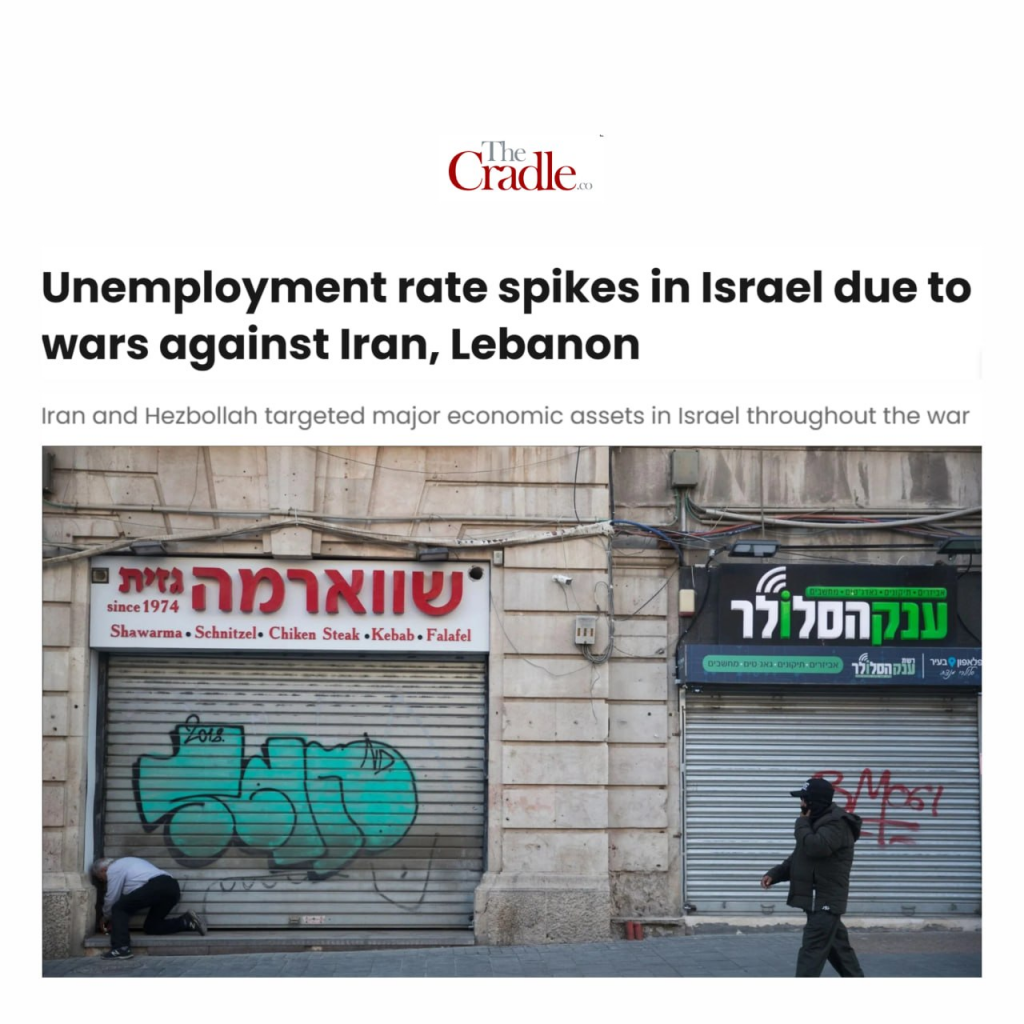
Israel’s unemployment rate rose to the highest level since the coronavirus pandemic, The Cradle website reported, claiming that Iran and Hezbollah targeted important assets in Israel during the war, leading to an unemployment rate of over 16%, and the situation has affected nearly one million Israeli.
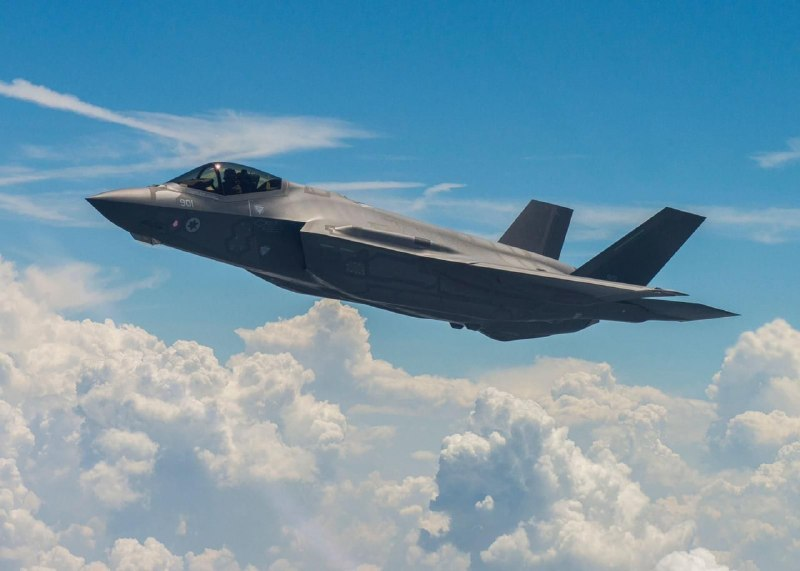
Despite the high unemployment rate, the Israeli government continued their mass spending following a budget approval, that allowed for the purchase of two new combat squadrons of the F35 and F15IA for the IDF, which will form part of the ‘Shield of Israel’ program, designed to ensure the IDF had a continuous, qualitive advantage, Prime Minister Benjamin Netanyahu said and Israeli N12 later published reports.
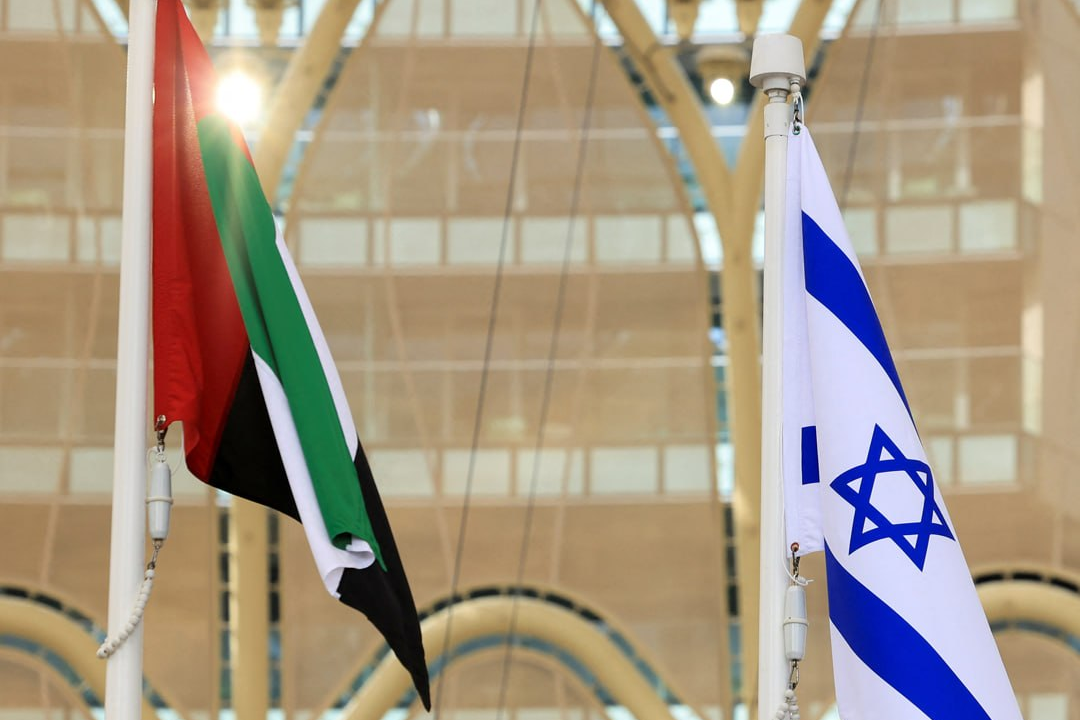
UAE have become the closest Arab partner to Tel Aviv, reported Israel Channel 12, stating that the Emirati country was no longer trying to hide its relationship with Israel and had consciously chosen a path of deepening the strategic alliance, noting that Abu Dhabi had decided to expand the alliance to include operational cooperation on the ground.
Dubai have lost $500 million per day due to the war, reported the Daily Mail and Middle East Observer, stating the war had destroyed Dubai’s tourism sector, but the real victims are millions of unemployed foreign workers who do not have the financial means to return home to their countries.
Saudi Arabia, Russia, Iraq, Kuwait, Kazakhstan, Algeria and Oman have joined forces to adjust production quantities and confirmed their commitment to ensuring global market security, OPEC reported.
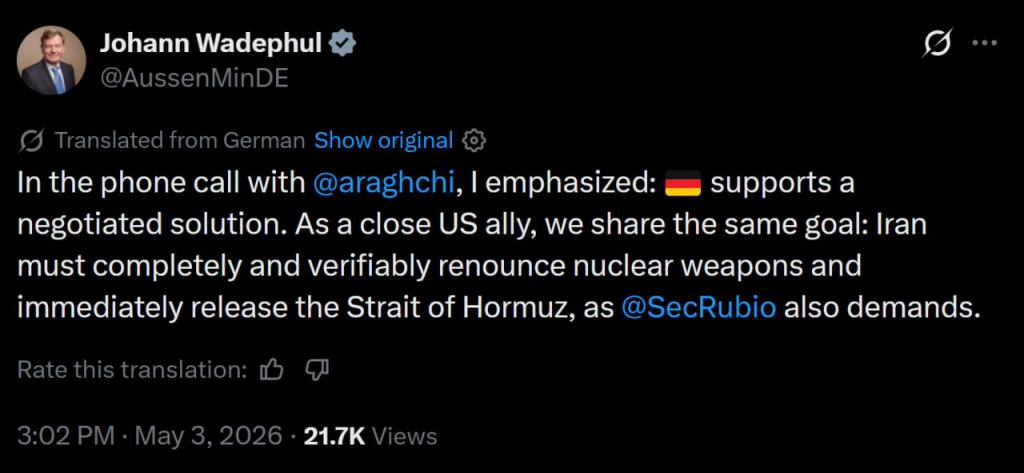
German Foreign Minister Johann Wadephul said on X that he had held a call with Iran’s Foreign Minister Araghchi, where he emphasised Germany supported a negotiated solution, and as a close US ally, Germany share the same goal, that Iran must completely and verifiably renounce nuclear weapons and immediately release the Strait of Hormuz, as Secretary of State Marco Rubio also demands.
Several Iranian dual nationals told the Sunday Times they had allegedly been approached by Iranian intelligence services over the past year in the UK and while travelling in Europe, Turkey, and Iran, claiming the approaches were reportedly linked to the Iranian Intelligence Ministry and the IRGC Intelligence Organisation, as the Times added some of them were threatened, while others were offered money to gather information in the UK or, in some cases, to carry out attacks on British soil.
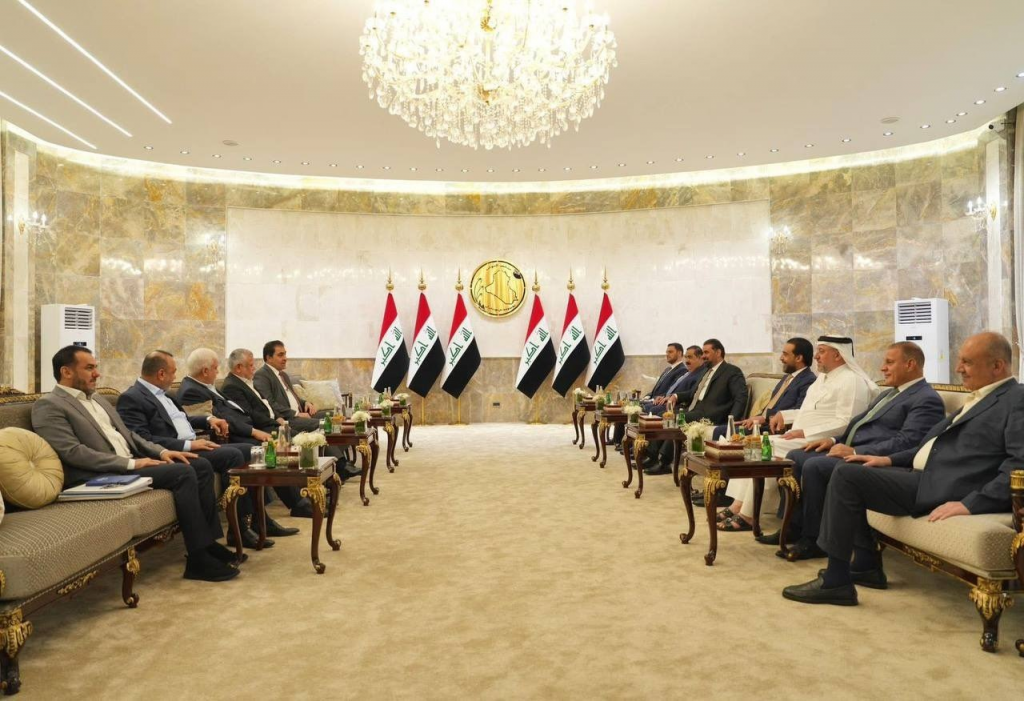
Leaders from Iraq’s Shiite Coordination Framework and Sunni National Political Council met on Sunday at the residence of Parliament Speaker Kaibat al-Halbousi, while PM-designate Ali al-Zaidi was also in attendance.
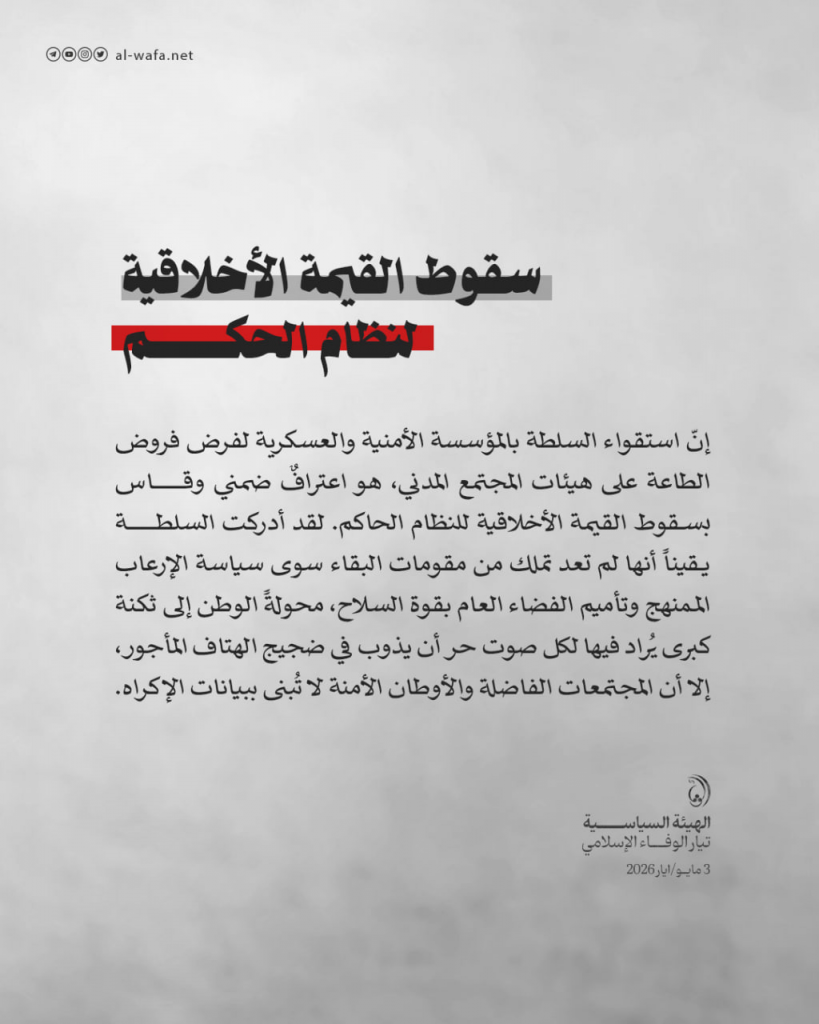
Bahraini Islamic Loyalty Movement issued a statement on Sunday night saying that the regime’s reliance on security and military institutions to impose obedience on civil society bodies is an implicit and harsh admission of the fall of the moral value of the ruling regime: “The regime has realised with certainty that it no longer possesses any means of survival other than systematic intimidation and the nationalisation of public space by force of arms, turning the homeland into a large barracks where every free voice is meant to dissolve into the noise of hired cheers,” they said, adding: “However, virtuous societies and secure homelands are not built on statements of coercion.”