 AJ
AJ
Recap of the war between US-Israel and Iran, including the latest political news and main talking points throughout April 6th.
Just as the sun was rising across Israel at around 5am local time, Axios reported that the US, Iran and other regional mediators were discussing a possible two-phase deal, which would have started with a 45-day ceasefire and could lead to ending the war, but chances of an agreement remained slim.
Pakistan’s army chief Field Marshal Asim Munir held talks with US Vice President JD Vance, Special Envoy Steve Witkoff and Iranian’s Foreign Minister Araghchi through the night of April 5th to 6th attempting to secure an immediate ceasefire and reopen the Strait of Hormuz, reported Reuters, adding that broader negotiations would follow in Pakistan within 2-3 weeks.
According to Reuters, the final deal was offered in two phases, the first to reopen Hormuz and an immediate ceasefire, the second to have negotiations tentatively called ‘the Islamabad Accord,’ noting a final deal could include limits on Iran’s nuclear program in exchange for sanctions relief, the release of frozen assets, and a broader regional framework for security of the Strait of Hormuz.
CBS was allegedly told by a White House official that the Pakistan-backed ‘Islamabad Accord’ was just one of ‘many ideas,’ and that Trump hadn’t signed off on anything and was still looking for options on ways to reopen the Strait, while WSJ noted the military was preparing for possible strikes on energy, with planners reviewing target lists to give to the President as options.
Foreign Ministry spokesman Esmail Baghaei spoke at length on Monday, and in one comment stated that negotiations were no way compatible with ultimatums, crimes, threats, and committing war crimes, adding that the Islamic Republic of Iran had ‘very bitter experiences’ of negotiating with the United States and didn’t gain these experiences easily to simply ignore them.
Baghaei also held an interview with Reuters in which he warned if the US attacked Iranian power plants and electricity grids, Iran would retaliate by striking similar US infrastructure in the region, stating it was a defensive and proportionate response which isn’t a choice but a necessary measure, while also accusing the US of lying about an Iranian nuclear threat and claimed that a deliberate strike on a primary school in Minab and a sports hall in Lamerd killed more than 210 children in less than an hour, calling on the American people to hold their government accountable for what he described as war crimes committed in their name.
Turkish President Recep Tayyip Erdogan said that if there was a chance to silence weapons and open up a space for negotiation, ‘we are in a sincere effort to evaluate it,’ and were determined to seize even the smallest chance, ‘hoping that this illegal, meaningless and extremely costly war for all humanity will end as soon as possible.’
European Council President António Costa said strikes on civilian infrastructure, including energy facilities, are illegal and unacceptable, adding that only a diplomatic solution could end the war in Iran.
However, Axios revealed that Prime Minister Benjamin Netanyahu had urged Trump in a phone call on Sunday not to go for any ceasefire at the moment or take a diplomatic route, expressing concerns about the risks of such a move, however Trump told Netanyahu that if Iran agreed to the United States’ demands, a ceasefire could happen, noting that he won’t give up on his demand that Iran hand over all of its enriched Uranium and agree not to resume enrichment.
By late afternoon, Iran had not only declined the offer of the Islamabad Accord, but offered their own 10-point response to the United States through Pakistan, rejecting a temporary ceasefire, calling instead for a permanent end to the war on its own terms, according to IRNA and the WSJ. Tehran has said a short-term truce is insufficient and is pushing for a lasting settlement that includes ending regional fighting, lifting sanctions, reconstruction support, and safe transit rules in the Strait of Hormuz. A US official told Axios that Iran’s 10-point response was ‘maximalist,’ adding that it’s unclear if it will allow moving forward to a diplomatic solution.
During the evening, the Wall Street Journal issued an update, stating that the US military was preparing potential strikes on Iranian energy targets, pulling existing target lists to provide options, after Iran rejected a ceasfire bid ahead of Trump’s Tuesday deadline to reopen the Strait of Hormuz, adding that Trump told the Journal he would destroy all of Iran’s power plants if the regime does not agree to reopen the waterway by Tuesday evening.
Israeli Kan News stated Pakistan still wasn’t giving up on brokering a ceasefire, even a short one, between the US and Iran, as talks were held with White House envoys Steve Witkoff and Jared Kushner, noting that Washington hadn’t ruled out a direct meeting between the two parties, however, significant gaps remain, with Trump insisting on zero uranium enrichment, a demand Iran rejects. Meanwhile, Israeli officials are awaiting Trump’s ultimatum deadline and are expecting a green light to strike Iran’s energy and national infrastructure targets, albeit with restrictions.
Iran is prepared to allow ships from some friendly countries to pass through Hormuz in exchange for paying ‘security fees,’ because Iran needed to obtain war reparations from security fees on the Strait, a senior Iranian official told Al Jazeera, stating that Iran intended to respond forcefully for the targeting of Mahshahr facilities and would obtain compensation for them through innovative methods, adding that several Indian, Pakistani, Turkish and French ships had obtained permits in recent days.
Two Qatari ships carrying liquified gas from Qatar were turned back as they headed towards the Strait of Hormuz, reported Fars News Agency, stating the ships named Rasida and al-Dhaain were now heading west and were near the coasts of the UAE.
Defence Minister Israel Katz said the IDF was striking with force the largest petrochemical facility in Iran that was located in Isfahan, following the attack on the main facility last week, saying that both facilities accounted for around 85% of Iran’s petrochemical exports, which had been put out of commission and were non-operational, adding that it was a severe economic blow amounting to tens of billions of dollars to the Iranian Regime, according to Israeli Channel 12.
Netanyahu later said Israel was systematically dismantling the IRGC’s ‘money machine by destroying factories and eliminating fighters and senior commanders,’ noting that he’d once again spoke with Trump, thanking him for the heroic rescue of the US air crew member, and that Trump praised Israeli assistance, adding: “We destroyed the largest petrochemical plant in Iran today,’ and that Iran is no longer the same Iran, while Israel is no longer the same Israel.
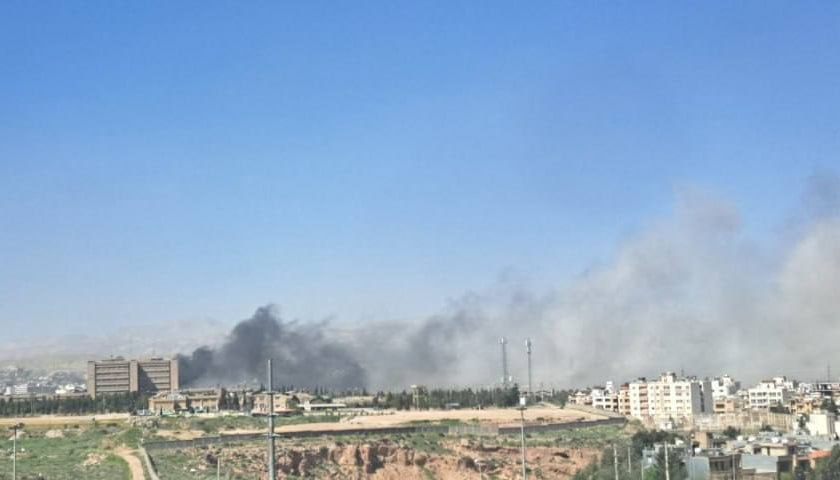
Airstrikes targeted petrochemical facilities in Asaluyeh, including the Jam and Damavand plants, reported Tasnim, stating that the attacks hit Mobin and Damavand companies which provide electricity, water and oxygen to the complex, and while Pars Petrochemical wasn’t damaged, several production units in the Pars Special Economic Zone were affected. Further strikes on the Shiraz Electronics Industries and other energy infrastructure in Shiraz, southwest Iran, resulted in power outages being reported.
Fars News Agency reported that there were no casualties among workers or civilians at the Mobin Energy Persian Gulf Company, after part of the power plant facilities were hit, stating that immediately after the incident, the company’s technical and safety teams took all the necessary measures while inspecting the facilities to assess the extent of the damages, and the situation was under control.
Damage was caused to labs, buildings, a mosque and possibility a datacentre, and a nearby gas facility was also struck following airstrikes by Israel on the Iran’s top engineering university the Sharif University of Technology, which Iran says was hit by a bunker-buster bomb. The university trains mainy of Iran’s top engineers, including tech entrepreneurs, along with scientists in the fields tied to aerospace, nuclear, and advanced research.
According to the Iranian Minister of Education, 60 teachers and 250 students have been killed during the American and Israeli attacks, while another 210 injured teachers and students had been hospitalised, reported the Middle East Observer.
Mayor of Tehran’s District 9 reported the gas post at Sharif University of Technology had been hit, noting that there had been cuts in supplies of energy as a result of the attack, but added this would be short term and the emergency services had the situation under control, reported Fars News Agency. Despite the projectiles hitting the gas station, and thanks to the rescuers’ efforts, the problem was resolved in a short time and the gas supply for Tehran’s customers remained stable, Fars News added in a later report.
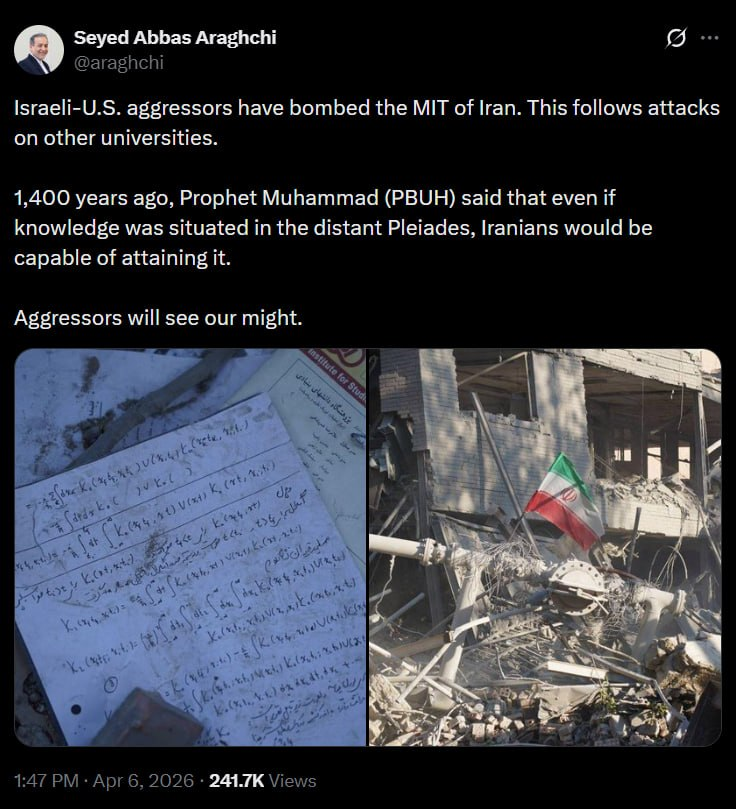
Foreign Minister Abbas Araghchi stated that the attack on the MIT of Iran followed attacks on other universities, adding that the Agressors would see Iran’s might.
Israeli UN Ambassador Danny Danon attempted to justify Israeli’s right to attack civilian targets in Iran, claiming: “In the last few days Iran continues to target the civilian targets in Israel and the Gulf like airports and hotels – so we have the legitimacy to target those civilian targets,” adding that he’d advise the Iranian to believe President Trump and Prime Minister Netanyahu, because they had both shown in the last month they were capable of striking any target in Iran.
An announcement by the IDF revealed the Air Force had conducted intensive strikes over the previous day targeting key ‘IRGC infrastructure in Tehran,’ noting the strikes hit a “central IRGC site responsible for suppressing the civilian population in Iran,” as well as important facilities at both the IRGC headquarters and its air force command, while additional targets allegedly included ballistic missile storage and launch sites, along with a facility used to produce air defence systems.
Israel’s Air Force announced they’d conducted a largescale overnight strike on Iran between April 5th and 6th against dozens of Iranian Air Force and IRGC Air Force aircraft and helicopters at three airports in Tehran: Bahram, Mehrabad, and Azmayesh. Mehrabad Airport has already been targeted multiple times during Operation Roaring Lion and was believed to be the Quds Force hub for arming and financing the ‘regime’s proxies’ across the Middle East.
Kataib Hezbollah Secretary General Abu Hussein al-Hamidawi said the ‘enemy’ had lost balance by attacking hospitals, bridges and civilian infrastructure in Iran, while the axis of resistance remained steadfast, declaring that the straight of Hormuz wouldn’t be opened for enemies: ‘Either security for everyone, or no security for anyone,” claiming that missile systems of the ‘Zionist entity’ and the US bases are collapsing, while the axis now included Syria.
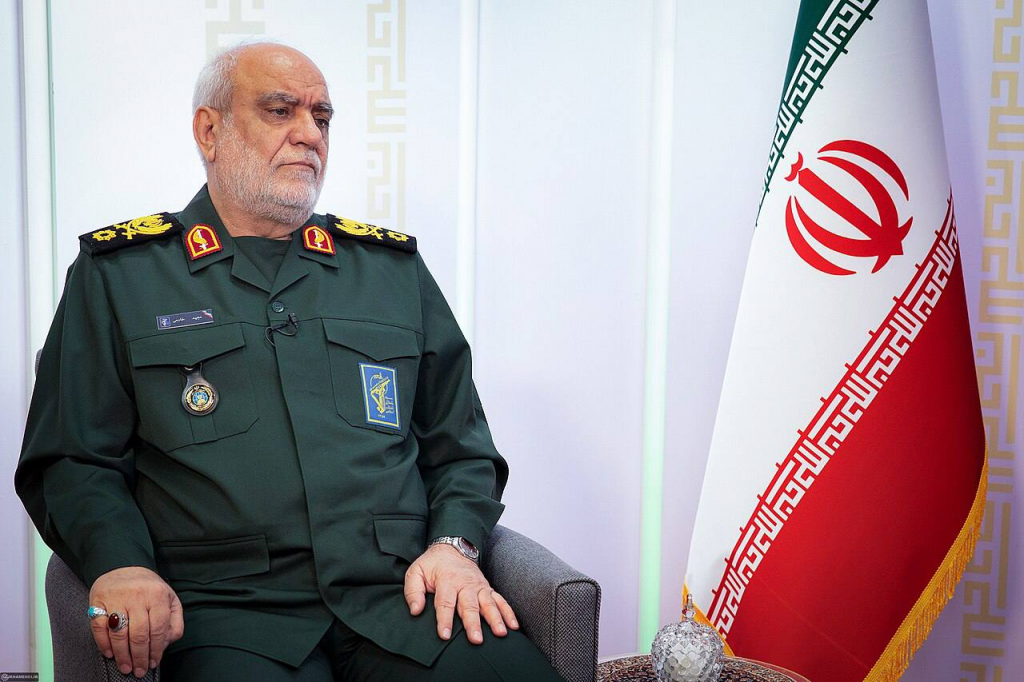
Israeli strikes on Tehran in the early morning of April 6 killed Iran’s IRGC intelligence chief, Brigadier General Majid Khademi.
A statement from Supreme Leader Mojtaba Khamenei condemned the strike that killed Khademi, wile stating: “It is a pity… that they are beating the drum of war, threats, and destruction more and more every day, while international institutions remain silent and indifferent, and perhaps even complicit in the aggression, becoming partners in the flaming of this fire.”
Satellite imagery showed around 28 craters blasted into roads in Iran’s Isfahan province near the area where the downed US F-15E crewmember was allegedly rescued, reported CNN, stating the craters were about 9 metres wide, appeared to be arranged in a line to block road access and were located roughly 20km from a remote airstrip where US forces destroyed damaged aircraft, adding that strikes were likely intended to prevent Iranian forces from reaching the area during the recue operation.
An Iranian drone and a missile evaded air defences and impacted at an unknown location in Jordan, according to Jordanian state media Petra News Agency, who noted that two individuals had been injured from the strikes, adding that Jordan’s Royal Air Force had downed two drones within 24 hours.
7,124 people have been injured and taken to hospitals in Tehran during the war, according to Israel’s Health Ministry, adding that 114 people are still hospitalised, including two in a critical condition, clarifying that 4,721 women and 1,917 children under 18 were injured, including 68 children under the age of two, reported Middle East Observer.
Iranian Ministry of Health said that 54 emergency centres, 46 medical units and 41 ambulances have been damaged, while another 8 hospitals had been evacuated.
373 US service members have been injured in the Iran war so far, CBS stated citing a Centcom spokesperson, adding that 330 of them had returned to duty but five were currently seriously wounded.
Four Iranian army officers were killed in combat against ‘enemy aircraft’ in the Mahyar area of the Isfahan province, as they engaged jets, helicopters and drones with shoulder-fired missiles, allegedly shooting down an aircraft before being hit by other hostile planes, which marked the first confirmed deaths that occurred because of clashes between the US Special Forces and Iranian ground units since the start of the conflict, and also the first confirmation from the Iranian side of any losses in the US mission to retrieve the downed F-15E colonel.
Qatar’s Minister of Defence announced its armed forced had intercepted a ‘number of drones’ that targeted the country within a 24 hour period.
Israeli Health Ministry confirmed a family of four was killed in the Iranian ballistic missile attack on Haifa on the evening of April 5th, stating the victims were identified as Vladimir Gershovich, Lena Gershovich, their only son Dima Gershovich, and Dima’s wife, Lucille‑Jean.
Saudi Arabia instructed businesses to keep staff out of Riyadh’s main financial district due to concerns over potential Iranian missile or drone attacks, according to Semafor, who stated that companies in the King Abdullah Financial District were told previously to evacuate on April 2 and not return to at least April 6.
CNN reported that senior Houthi leader Mohammed Ali Al Houthi told them the group doesn’t plan to target the Saudi Red Sea ports as long as Saudi Arabia continues de-escalation and does not join the US and Israel in escalating the Iranian war.
Security ties between Israel and the UAE have significantly tightened during the Iran War, with expectations of new and previously unseen cooperation, as both sides increasingly view Iran as a shared threat, reported Kan News.
Israeli Channel 13 said that the military system in Iran is still operating efficiently and is under clear control, pointing out that the Iranians are able to direct fire accurately towards specific areas within Israel, in parallel with the continuation of attacks by Hezbollah, along with the introduction of forces from Yemen and Syria, adding: We have seen many attempts to intercept Israeli Air Force planes in Iran, and this reminds us that there is an ‘enemy’ that is still active and capable of attacking.”
Daily Mail reported that a British flight attendant was facing jail in the UAE for sharing images of Iran’s drone attacks, stating that the flight attendant was on the verge of being sent to prison.
Six children were killed in attacks on Tehran overnight on the 5th to the 6th, including four girls and two boys under the age of ten.